
Why Final Rest Changes Your Yoga Practice
Savasana, or corpse pose, is often placed at the end of a yoga class as though it were a small pause between practice and the rest of the day. In reality, this quiet resting pose is a central part of the experience. It gives the body time to absorb movement, allows the breath to settle, and creates space to notice what has changed.
The posture may look simple: lie on your back, let your arms rest beside you, extend your legs, and become still. Yet stillness can feel surprisingly demanding. The mind may replay conversations, make plans, or search for something productive to do. Learning to remain present without fixing, performing, or achieving is a meaningful form of yoga in itself.
The importance of Savasana reaches beyond physical relaxation. It supports mindful awareness, nervous system regulation, self-compassion, and a sustainable relationship with practice. When final rest is treated as optional, students can miss the moment when effort becomes integration.
The Purpose Of Rest After Movement
A yoga sequence creates physical and mental stimulation. Even a gentle class may mobilize the spine, strengthen muscles, open the hips, challenge balance, and shift the rhythm of the breath. Savasana provides a deliberate transition after those experiences. Rather than moving immediately from exertion into conversation, screens, or errands, you have a chance to recognize the effects of your practice.
This pause can help distinguish relaxation from collapse. In Savasana, the body is supported by the ground while the mind remains gently awake. You are not trying to fall asleep, although sleep may happen if you are deeply tired. You are practicing conscious rest: receiving support, softening unnecessary effort, and observing sensations without needing to respond to each one.
The pose also completes the arc of a class. Movement prepares the body to be still, and stillness helps you understand the movement. A stretch may feel different after the breath has settled. A difficult emotion may become easier to name after the body is no longer bracing. The final minutes allow the practice to land rather than ending abruptly at the most active point.
Savasana And The Nervous System
During movement, the body may enter a state of alert engagement. Muscles contract, attention focuses, and breathing changes according to the demands of the sequence. Savasana offers a gradual shift toward a quieter state. With no pose to organize or alignment to monitor, the body can release some of the effort required for action.
This does not mean that a single resting pose solves stress or guarantees a particular physiological response. People arrive with different histories, energy levels, and sensitivities. For some, lying still feels calming. For others, it can initially feel vulnerable or uncomfortable. A constructive approach is to offer choices: bend the knees, place a bolster beneath them, lie on one side, or keep the eyes softly open.
Breath awareness can make this transition more accessible. Instead of controlling every inhale and exhale, notice the natural breath moving through the body. Feel the ribs widen, the abdomen respond, or the exhalation lengthen on its own. If the breath feels strained, return to ordinary breathing. The goal is not a perfect relaxation technique; it is a compassionate willingness to stay with present experience.
Releasing The Pressure To Perform
Many people bring achievement-based habits into yoga. They may measure success by flexibility, strength, balance, or the ability to hold a pose longer. Savasana gently challenges that mindset because there is no impressive shape to complete. The practice asks you to value awareness even when nothing appears to be happening.
This lesson connects with the balance between effort and ease throughout a class. While holding an active posture, you can explore effort and ease rather than forcing your way through discomfort. Savasana extends that principle: the body is supported, the breath is unforced, and attention can rest without grasping.
Rest is not a reward reserved for people who have worked hard enough. It is a basic part of a healthy practice. When students believe they must earn stillness, they may ignore fatigue, override pain, or leave class before the final pose. Choosing to rest earlier, modify a sequence, or shorten a practice can be an expression of wisdom rather than a failure of discipline.
| Experience During Savasana | A Supportive Response | What It Can Teach |
|---|---|---|
| Restlessness or busy thoughts | Notice thoughts and return to physical support | Presence does not require an empty mind |
| Lower-back discomfort | Bend the knees or place support beneath them | Comfort and adaptation matter |
| Drowsiness | Let the body rest without self-criticism | Tiredness is useful information |
| Emotional sensitivity | Open the eyes, change position, or sit up | Safety comes before staying in one shape |
| Difficulty settling | Focus on contact with the floor | Attention can begin with simple sensation |
Why Stillness Can Feel Uncomfortable
A quiet room removes many distractions, which means internal experiences may become more noticeable. You might suddenly feel tension in your jaw, hear a critical thought, or recognize how tired you are. This can make Savasana seem less peaceful than expected. Nothing has gone wrong. Awareness often reveals what busyness was helping you avoid.
The answer is not to force calm. Straining to relax creates another task and can make the body more guarded. Instead, use small anchors. Notice the weight of the heels, the temperature of the air, or the feeling of the back body being held by the floor. Allow thoughts to come and go without turning them into a problem that needs solving.
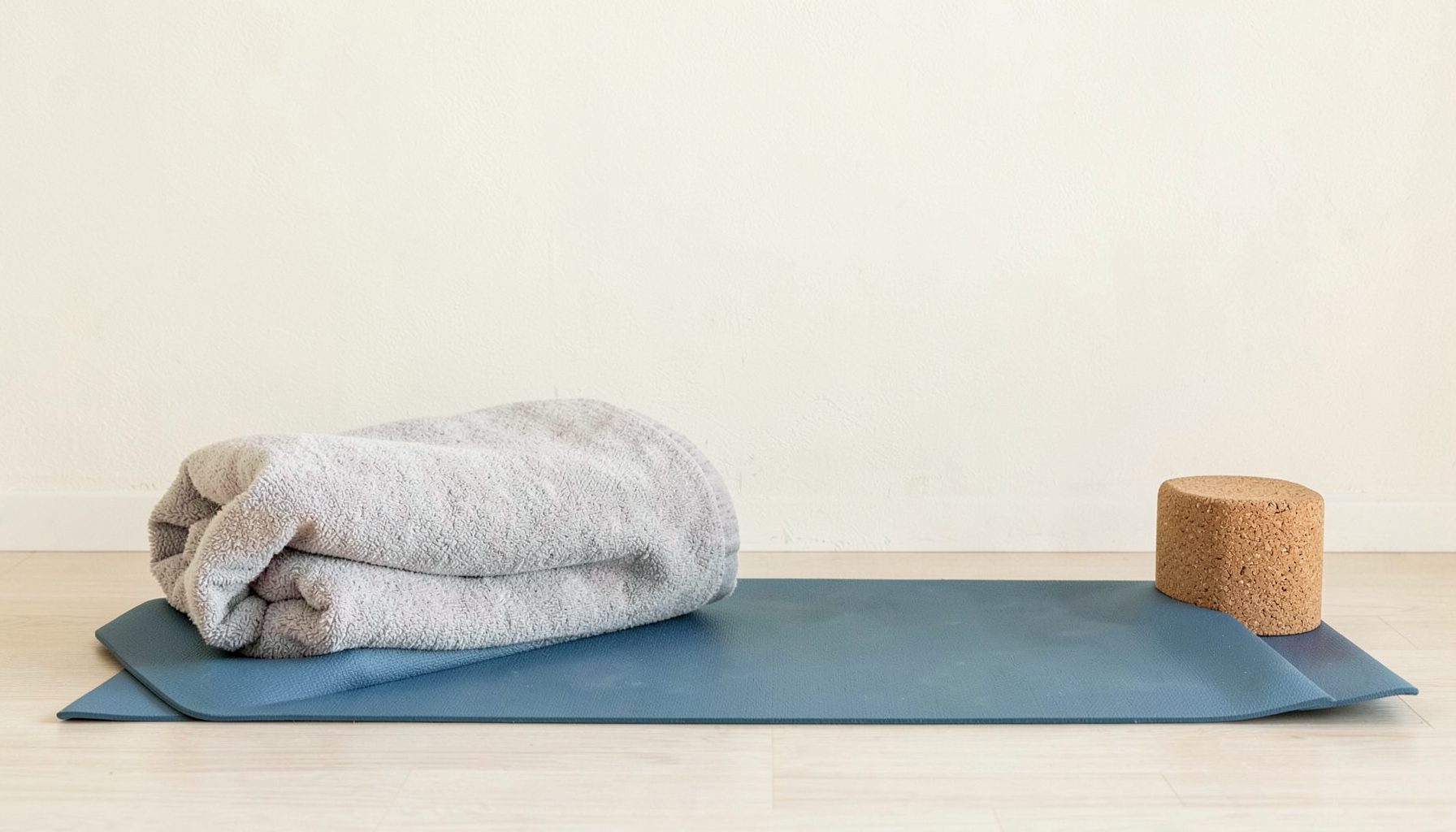
You can also adjust the setting. A folded blanket beneath the head may soften the neck. Support under the knees can reduce tension in the lower back. A blanket over the body may help with temperature changes, and a quiet alternative to guided language may suit someone who finds verbal instruction distracting. Accessibility is part of the pose, not an accommodation added afterward.
Making Final Rest More Accessible
Savasana does not need to last twenty minutes to be worthwhile. A brief, intentional pause can be meaningful when it fits your energy and circumstances. At home, try resting for three to five minutes after a short sequence. Set a gentle timer if you are concerned about losing track of time, and give yourself a clear transition afterward.
If lying flat is uncomfortable, choose another shape. Rest on your side with a pillow between the knees, recline with your upper body supported, or sit against a wall. People who are pregnant, recovering from illness or injury, or managing chronic pain may need individualized guidance from an appropriate health professional. Yoga can be adapted without losing its contemplative purpose.
A consistent cue can help establish the habit. After your final movement, place your hands somewhere comfortable and take several unhurried breaths. You might silently repeat a phrase such as “Nothing to prove” or “I can receive support.” For a practice that combines movement with compassionate inner language, affirmations in Sun Salutations can offer a similar reminder that intention matters as much as intensity.
Carrying The Practice Beyond The Mat
Savasana is valuable because it rehearses a way of relating to life. You notice what is present, release the demand to control every detail, and allow a moment to be complete. That attitude can appear in ordinary situations: pausing before replying to a message, taking one full breath between tasks, or allowing a finished piece of work to remain finished.
The pose may also change how you interpret productivity. Rest creates room for discernment. When you are always moving, it is difficult to tell whether an action is purposeful or simply habitual. A short pause can reveal that you need food, sleep, support, a boundary, or a change of pace. Listening to these signals is a form of practical mindfulness.
A sustainable yoga practice includes active days, restorative days, and periods when doing less is the most appropriate choice. Savasana reminds you that yoga is not measured only by the number of poses completed. The quality of attention, the kindness of your adaptations, and your ability to leave practice feeling more connected to yourself matter just as much.
Simple Ways To Protect The Final Minutes
Planning for rest makes it less likely that Savasana will be squeezed out by the clock. If you teach or practice at home, decide in advance how much time you can reserve. Even a short closing pause is more reliable when it is treated as part of the sequence rather than leftover time.
These approaches can help you create a supportive ending:
- Schedule at least three quiet minutes after a short home practice or class.
- Prepare props before beginning so you do not need to interrupt the transition.
- Choose a variation that supports your body instead of insisting on lying flat.
- Let the breath be natural and use physical sensations as a gentle anchor.
- Rise slowly afterward, carrying the sense of steadiness into your next activity.
When time is limited, you can practice a condensed version. Lie or sit comfortably, soften the muscles around the eyes and mouth, and feel three complete breaths. Notice one sensation, one emotion, and one thought without judging any of them. Then move gradually. This does not replace a longer rest when you need one, but it keeps the principle alive in a busy day.
Savasana matters because it gives your practice a place to settle. It honors recovery, reveals the difference between effort and force, and makes room for awareness that cannot be rushed. The next time you practice, protect those final minutes as deliberately as you protect the opening breath. Roll out your mat, choose the support you need, and allow stillness to be part of the yoga rather than something you have to earn.