


How to Hold a Pose Without Straining: Finding Effort and Ease
A yoga pose is not meant to be a test of how much discomfort you can tolerate. It is a living shape that changes with your breath, attention, energy, and circumstances. Learning to stay present without gripping allows the posture to support you rather than become another demand placed on the body.
The balance between effort and ease does not mean making every pose soft or passive. Strength, steadiness, and focus are valuable parts of practice. Ease means those qualities are supported by clear breathing, sensible alignment, and enough space to respond when the body offers useful information.
Holding a pose skillfully is therefore less about staying perfectly still and more about staying connected. You notice where you are working, where you are bracing, and whether the intensity remains appropriate. From there, small adjustments can turn strain into sustainable effort.
Why Strain Appears In Yoga Poses
Strain often begins when the mind treats a posture as a fixed shape to achieve. You may try to match a teacher, reach a certain depth, or remain in a pose for a prescribed number of breaths. The body responds by recruiting extra muscles, tightening the jaw, holding the breath, or forcing joints beyond their comfortable range.
Sometimes the problem is muscular effort in the wrong places. For example, a standing pose may require strong legs and active feet, while the shoulders remain relaxed. If the shoulders lift toward the ears, the hands clench, or the face becomes tense, the pose is asking for more effort than it needs.
Fatigue can also make a familiar posture feel suddenly demanding. A pose that feels spacious in the morning may require modification after a poor night’s sleep, a long period of sitting, or an intense workout. This is not a failure of consistency. It is useful feedback about the practice your body can support today.
Pain deserves particular attention. A broad sensation of muscular work may be manageable, but sharp, pinching, electric, or rapidly increasing pain is a reason to ease out or change the position. Mindfulness includes knowing when persistence is wise and when release is the more skillful choice.
Recognize Effort And Ease
Effort gives a pose structure. It may appear as steady legs in Warrior II, a grounded pelvis in Bridge Pose, or an engaged abdomen in a balance. Ease creates room around that structure: the breath can move, the eyes can soften, and the muscles that do not need to work can rest.
Try dividing your attention between these two qualities. First, identify the main action of the pose. Ask which muscles or points of contact are helping you stay stable. Then scan for unnecessary effort in the hands, brow, tongue, throat, shoulders, and toes. Releasing even ten percent of that extra tension can make the posture feel more sustainable.
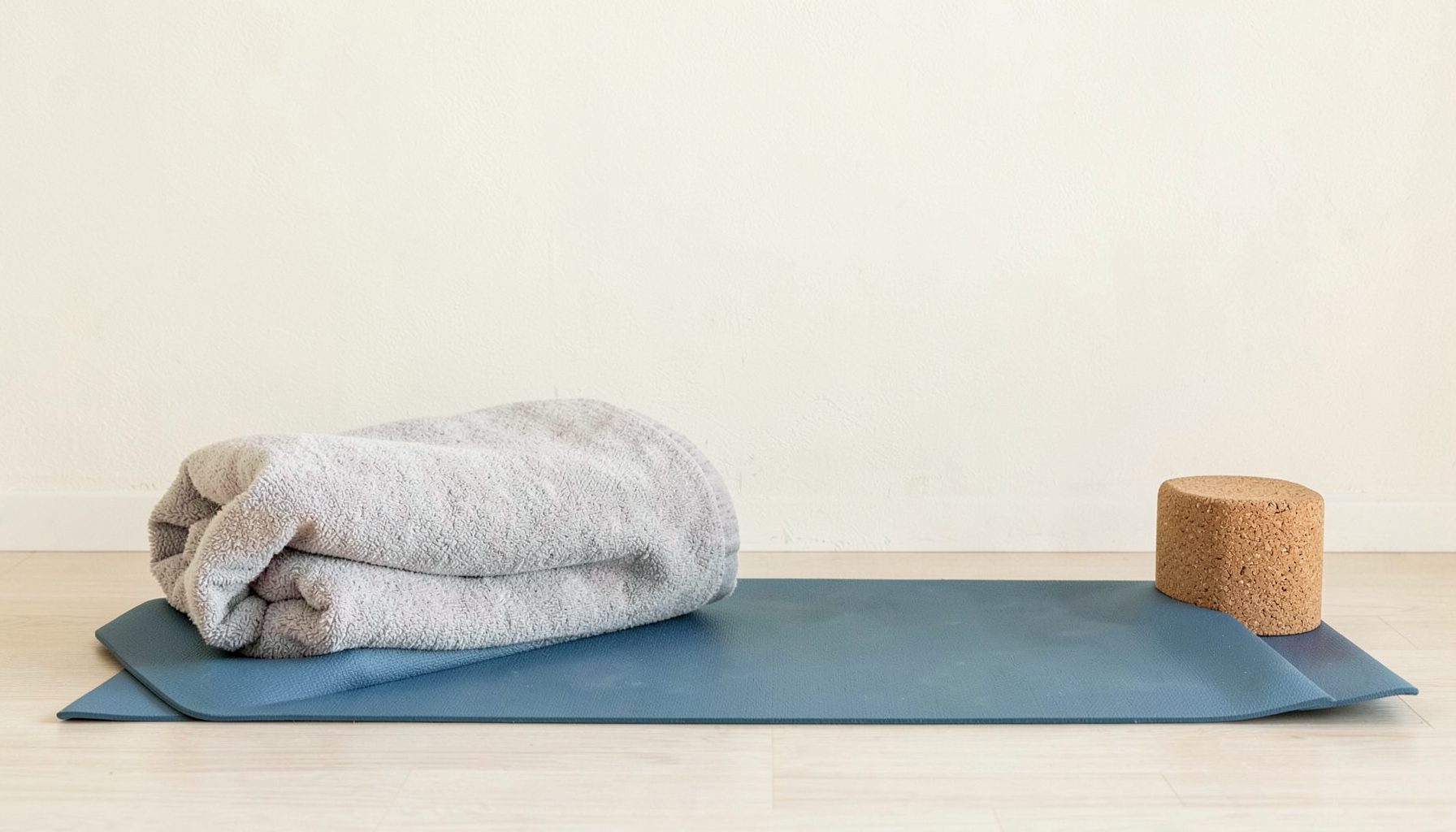
A useful principle is to choose the least intense version that still offers a clear experience of the pose. This might mean lowering the back knee, using a block, widening the stance, bending the elbows less, or practicing near a wall. Props do not reduce the value of a pose; they help place the challenge where it can be met with awareness.
Your breath is a practical measure of balance. If the inhale becomes shallow, the exhale feels blocked, or you are counting the seconds until release, the posture may be too demanding. You do not have to wait until the body is overwhelmed. Adjust when the breath first begins to lose its natural rhythm.
Let The Breath Guide The Hold
Breathing steadily while holding a pose helps the nervous system remain involved in the experience. A smooth inhale can create length and alertness, while a relaxed exhale may soften unnecessary gripping. This does not require exaggerated breathing. It means allowing the breath to remain available rather than sacrificing it to maintain the shape.
Notice what changes during each part of the breath cycle. In a forward fold, the inhale might encourage a long spine, while the exhale allows the hips and hamstrings to release without pulling. In a supported chest opener, the inhale may broaden the ribs, while the exhale reminds the shoulders to settle away from the ears.
When you feel restless or overactivated, a longer exhale can help you return to a quieter pace. A gentle evening practice can include a simple breathwork sequence before settling into restorative poses. The purpose is not to control every sensation, but to give the mind a steady point of attention.
Avoid using breath as a way to force yourself to stay longer. If you have to manipulate the breath, create pressure in the chest, or hold it between transitions, step back. Breath awareness should help you recognize your limit, not persuade you to ignore it.
Adjust Alignment Without Chasing Perfection
Alignment is most useful when it supports comfort, function, and awareness. It is not a single visual arrangement that every body must reproduce. Differences in bone structure, mobility, strength, proportions, and previous injuries mean that a sustainable version of a pose can look different from one person to another.
Start with the foundation. In standing poses, feel how the feet meet the floor. In seated poses, notice whether the sitting bones can ground without the spine collapsing. In arm balances, consider whether the hands, wrists, and shoulders are prepared for the load. A stable base often reduces the need for compensatory tension elsewhere.
Use small adjustments rather than dramatic corrections. Move the feet a little wider, soften the knees, reduce the range of motion, or place support beneath the hands. Then observe the effect for several breaths. If the adjustment creates more space for breathing and a clearer sense of stability, it is probably serving the posture.
The right alignment is also responsive over time. A pose may begin with active muscular engagement and gradually become quieter. When you sense shaking that is escalating, loss of coordination, or pressure in a joint, come out before the body has to protect itself through abrupt tension. A controlled exit is part of the pose.
Match The Pose To Your Capacity
The table below offers ways to recognize whether a hold is balanced and how to modify it. These are general guideposts rather than strict rules. Your experience matters more than any exact breath count or visual standard.
| What You Notice | Likely Meaning | Supportive Adjustment |
|---|---|---|
| Breathing stays smooth and attention feels steady | Effort and ease are working together | Remain for another breath or two |
| Muscles work clearly but the face and hands are relaxed | The pose is challenging in a useful way | Keep the shape and soften nonessential tension |
| Breath becomes shallow or hurried | The intensity may be too high | Reduce the depth, use a prop, or shorten the hold |
| A joint feels pinched, compressed, or unstable | Alignment or range may need attention | Exit slowly and try a different setup |
| The body shakes mildly but coordination remains | Fatigue is beginning to appear | Take one calm breath, then release or modify |
| The mind is focused mainly on enduring | The pose may have become performance-oriented | Return to the breath and choose a kinder variation |
A shorter hold can be more beneficial than a longer one performed with resistance. Three attentive breaths may teach you more than a minute spent bracing. You can build endurance gradually by repeating a manageable hold, resting, and observing how the body responds later.
Progress is not always measured by going deeper. It may show up as a quieter jaw, a more stable foot, a longer exhale, or the ability to leave a pose before strain takes over. These subtle changes develop trust between attention and movement.
Build A Practice Of Sustainable Attention
Before entering a posture, decide what you are exploring. You might focus on balance, hip mobility, grounding, spinal length, or the quality of your breath. A clear intention prevents you from trying to improve every aspect of the pose at once.
During the hold, use a simple internal scan. Feel the contact points first, then the main working muscles, then the breath. Finally, check the places that often reveal unnecessary effort: the eyes, mouth, throat, hands, and shoulders. This scan can take only a few seconds and gives you several opportunities to soften.
After releasing the pose, pause before moving on. Notice whether the body feels clearer, warmer, more spacious, or more tired. The transition out of a posture provides information about whether the hold was well chosen. If you feel relief that borders on collapse, the pose may have exceeded your current capacity.
Mindful yoga does not ask you to avoid challenge. It asks you to meet challenge with discernment. A sustainable practice includes effort that strengthens and ease that restores, with enough flexibility to move between them.
Simple Cues For A More Comfortable Hold
Short reminders can be easier to use than a long list of technical instructions. Choose one or two cues for each practice rather than trying to monitor everything simultaneously.
- Keep the breath audible enough to notice, but soft enough that it does not feel forced.
- Relax the muscles that are not needed for balance, support, or direction.
- Let the pose be smaller if a larger shape interferes with steady breathing.
- Use the floor, a wall, a chair, or a block to create reliable support.
- Leave while you still have enough control to exit slowly and deliberately.
These cues encourage an attitude of cooperation rather than correction. You are learning to listen while acting, which is different from waiting passively for the body to tell you what to do. With practice, the distinction between useful intensity and harmful strain becomes easier to recognize.
Self-compassion is especially important when the body does not perform as expected. A reduced variation can still contain concentration, strength, and insight. The value of a pose comes from the quality of your relationship with it, not from how closely you resemble someone else’s version.
When you hold a posture with balanced effort, you create a practice that can continue beyond one class or one ambitious session. Step onto your mat with a willingness to adapt, choose the variation that lets your breath remain present, and allow each pose to become an exercise in attention rather than endurance. Explore gentle classes, reflective resources, and practices that help you move with steadiness, kindness, and room to breathe.