



Using Affirmations During Your Sun Salutation Practice
Sun Salutations can be a familiar rhythm of movement, breath, and attention. The sequence may begin with standing still, move through a forward fold and plank, then return to an upright posture with a renewed sense of space. Adding affirmations gives that physical pattern an intentional inner direction.
An affirmation is a short, supportive phrase repeated with awareness. It does not need to feel grand or perfectly believable. During yoga, the most helpful words are often simple enough to meet you where you are: “I can move at my own pace,” “I am here,” or “I make room for ease.”
Used gently, affirmations can turn a habitual flow into a mindful personal practice. They can support self-compassion, steady breathing, body awareness, and a more respectful relationship with effort. The purpose is not to force a positive mood, but to notice what you need and offer yourself language that helps.
Why Pair Words With Movement
Sun Salutations naturally create repeated opportunities to connect an intention with a physical action. As you inhale and lift your arms, you might welcome energy. As you fold forward, you might release pressure to perform. In Downward Dog, you can practice patience rather than measuring the pose by how straight or deep it looks.
This connection between phrase and posture gives an affirmation a sensory anchor. Instead of repeating words while the mind wanders, you feel how they interact with breath, muscle tone, balance, and emotional response. “I soften” may be felt in the jaw and shoulders. “I am supported” may become more tangible through the hands and feet pressing into the mat.
Repetition also helps you recognize patterns. If a phrase feels comforting in Mountain Pose but irritating in a challenging transition, that response is useful information. You are learning how your inner language meets your lived experience, rather than trying to impose a fixed message on every moment.
Choosing Language That Feels True
A useful affirmation should encourage you without asking you to deny what is happening. If you feel tired, “I am overflowing with energy” may create distance from your actual state. A phrase such as “I honor the energy I have today” can be more honest and supportive.
Try using present-tense statements that are brief, personal, and open enough to include change. Words such as “allow,” “notice,” “trust,” and “choose” can feel less demanding than language based on perfection. You might say, “I choose steady breath,” “I allow this moment to be enough,” or “I trust myself to adjust.”
The best affirmation may change from day to day. Before beginning, pause in a comfortable standing position and notice what would serve you. A busy morning may call for “I return to what matters.” A restless practice may need “I do not have to rush.” A quiet, grounded session may invite “I receive this moment with gratitude.”
Matching Affirmations To The Flow
You can assign a phrase to each stage of the sequence, or repeat one intention throughout the entire practice. Both approaches are valuable. A single phrase creates continuity, while different phrases help you explore the qualities represented by each movement.
During the opening inhale, use language connected with arrival and possibility. As your arms rise, try “I make space for this breath.” In the forward fold, choose a phrase about releasing expectations, such as “I bow to the present moment.” When stepping back into a lunge or plank, you might repeat, “I move with care.”
Downward Dog often invites an affirmation about patience and adaptation. If your wrists are sensitive, modify the pose rather than treating discomfort as something to overcome. These wrist-friendly modifications can help you keep the practice supportive while repeating, “I listen before I push.”
As you move through Cobra, Upward Dog, or another heart-opening variation, consider “I meet myself with kindness.” Returning to standing can be paired with “I carry this steadiness with me.” The words are prompts, not rules; change them whenever they stop feeling relevant.
| Moment in the practice | Possible quality | Affirmation example | Physical focus |
|---|---|---|---|
| Standing at the beginning | Arrival | “I am here now” | Feel both feet and soften the breath |
| Inhaling arms upward | Openness | “I make space for possibility” | Lengthen through the sides of the body |
| Forward fold | Release | “I let go of what I cannot carry” | Relax the neck and bend the knees if needed |
| Stepping back or lowering | Courage | “I move with care” | Choose a stable, sustainable transition |
| Downward Dog | Patience | “I honor my pace” | Press evenly and adjust the shape |
| Heart-opening posture | Compassion | “I meet myself kindly” | Lift through the chest without forcing |
| Returning to standing | Integration | “I bring this calm with me” | Notice the effect of the full cycle |
Letting Breath Lead The Words
Breathing can keep affirmations grounded in the body. Rather than repeating a phrase quickly in your mind, divide it across an inhale and exhale. For example, breathe in with “I welcome” and breathe out with “this moment.” The pause between words can be as meaningful as the words themselves.
A short phrase often works best when the flow becomes more active. Inhale with “I am steady,” then exhale with “I soften.” On a slower practice, you may have enough space for a longer sentence, such as “I listen to my body and respond with respect.”
If the affirmation causes you to hold your breath, shorten it. If it makes you feel tense or pressured, replace it with a more neutral observation. “I am breathing” can be more helpful than “I am completely calm.” Mindful practice includes allowing the breath to be uneven, shallow, or changing without turning that experience into a problem.
You can also use the exhale to release self-criticism. As you fold or lower, silently say, “I release comparison.” As you inhale and rise, say, “I return to myself.” This pattern does not erase difficult thoughts; it gives you a compassionate way to stop feeding them.
Adapting Affirmations For Different Days
A gentle yoga practice makes room for changing capacity. The same Sun Salutation may feel energizing one day and demanding the next. Your affirmation can acknowledge that difference instead of trying to make every session look or feel identical.
For a low-energy practice, choose phrases that support conservation: “Rest is part of practice,” “Small movements count,” or “I respect my limits.” Move slowly, pause in Child’s Pose, or replace transitions with simpler shapes. An affirmation is most effective when your actions reflect its meaning.
When you feel distracted, use a grounding phrase such as “One breath, one movement.” If you are anxious, try “I can be present with uncertainty.” If you are frustrated by balance, strength, or flexibility, repeat “My worth is not measured by this posture.” These statements can interrupt the habit of turning a physical challenge into a judgment about yourself.
Affirmations can also support joyful practice. “I am allowed to enjoy moving,” “Curiosity guides me,” and “There is room for play” bring lightness without requiring a particular performance. Let your language be spacious enough to include effort, pleasure, rest, and discovery.
Building A Sustainable Personal Ritual
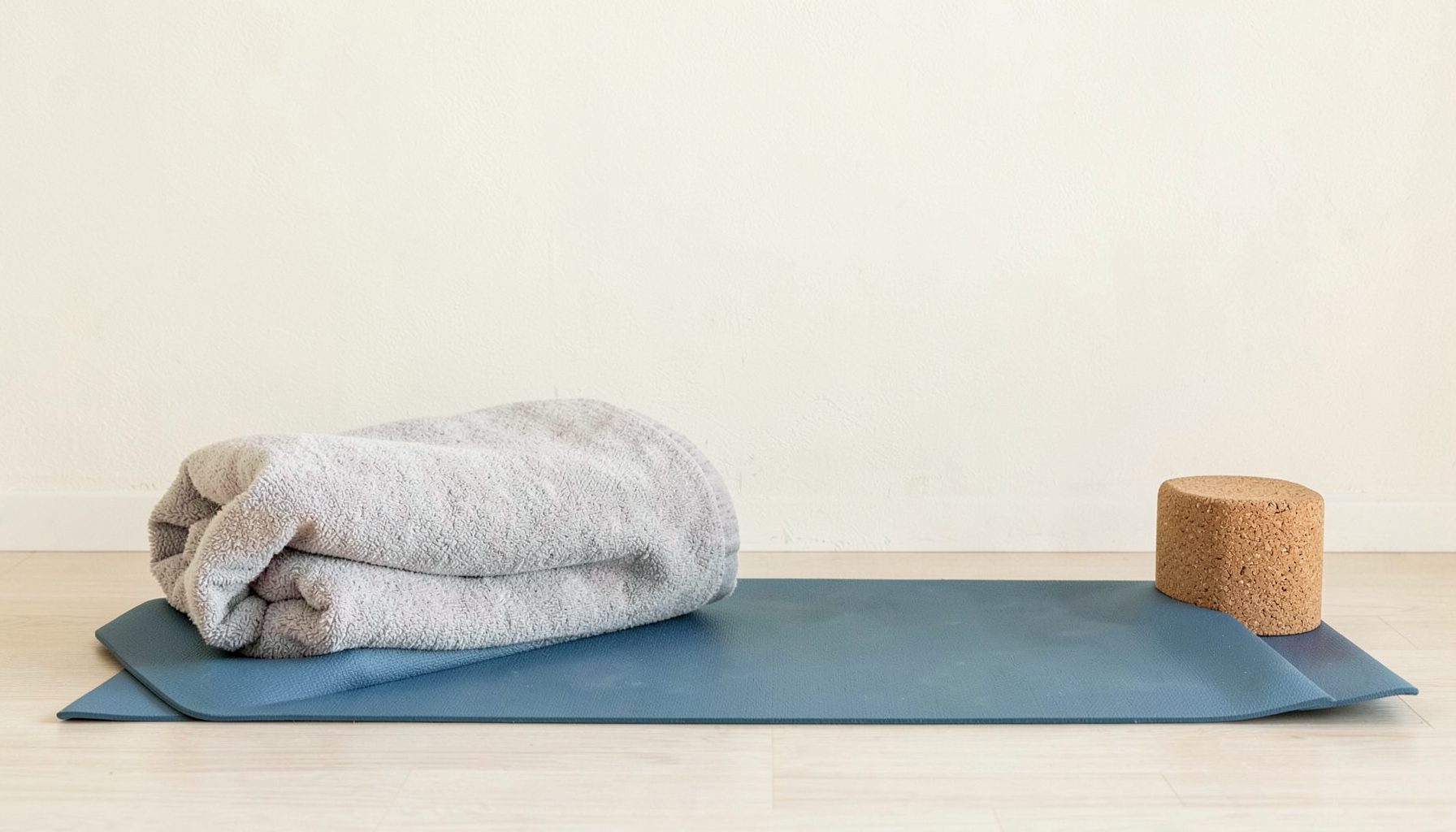
Begin with a small number of rounds rather than making the practice elaborate. Stand at the top of your mat, place one hand on the chest or abdomen if that feels comfortable, and take several natural breaths. Select one phrase that feels useful today. You can write it on a card, keep it near your mat, or record it as a quiet meditation.
During each round, repeat the affirmation once or twice rather than forcing it into every breath. Notice whether your shoulders, jaw, hands, and belly respond. If the phrase feels distant, adjust the wording. “I am safe” might become “I am creating more support.” “I am confident” might become “I am willing to stay present.”
At the end, return to standing or sit for a brief pause. Notice the quality of your attention, not just the physical effects of the sequence. Ask yourself silently what you want to carry forward: a slower pace, a kinder inner voice, a clearer boundary, or simply the memory of breathing fully.
- Choose one short phrase that feels believable enough to explore.
- Pair the words with a specific breath, transition, or posture.
- Modify the sequence whenever comfort, energy, or mobility calls for it.
- Let the affirmation change when your needs change.
- Close with a quiet pause so the intention can settle.
A Sun Salutation does not need to be perfect, powerful, or lengthy to become meaningful. When supportive language accompanies steady movement, each round can become a reminder that practice is a relationship with yourself. Step onto your mat with one kind phrase, breathe at a pace you can sustain, and allow the sequence to reflect where you are today.