




Yoga for Low-Energy Days: A Gentle Way to Keep Practicing
Some days, even the idea of changing into comfortable clothes and stepping onto a mat can feel like too much. Your body may feel heavy, your mind may be foggy, or your energy may be limited by poor sleep, stress, illness, hormonal changes, or a demanding schedule. On those days, yoga does not need to look like a full-length class.
A sustainable practice makes room for different levels of energy. Sometimes it may involve flowing through standing poses, while another day may call for five minutes of breathing, a supported stretch, or lying quietly on the floor. The purpose is not to perform yoga perfectly. It is to notice what you need and respond with care.
Practicing when you feel tired begins with releasing the belief that a valuable session must be strenuous. Gentle yoga, restorative yoga, mindful movement, and simple breathwork can support your nervous system without asking you to spend energy you do not have.
Begin by Redefining Practice
Before choosing poses, pause and assess your actual capacity. Are you physically tired, mentally drained, emotionally overwhelmed, or beginning to feel unwell? Each kind of fatigue may call for something different. Physical exhaustion might respond to stillness and support, while a restless mind may benefit from slow, rhythmic movement.
Try rating your energy from one to ten without judging the number. A two may suggest a restorative practice in bed or on the floor. A five could leave room for gentle mobility and a few standing poses. A seven might allow a familiar flow, provided you remain attentive to signs of strain. This small check-in turns yoga into a conversation with your body rather than another task to complete.
Let go of the idea that you must “make up” for missed sessions. Rest is not a failure of discipline. If your body needs sleep, food, hydration, medical care, or a quiet evening, honoring that need is part of mindful self-care. Yoga can help you listen, but it should never pressure you to ignore important signals.
Choose Movement That Restores
When energy is low, begin with movements that create space rather than demand effort. Gentle neck turns, shoulder rolls, wrist circles, ankle movements, and slow pelvic tilts can ease stiffness while helping you reconnect with physical sensation. Keep the range of motion comfortable, and move slowly enough to notice when a sensation changes.
A low-energy sequence might include child’s pose with support, cat-cow practiced gently, a seated side stretch, a reclined twist, and legs resting on a chair. You can stay for several breaths or leave a posture after one breath. The goal is steady awareness, not intensity. If a pose creates sharp pain, dizziness, breathlessness, or a sense of instability, come out of it and choose a simpler position.
If your fatigue is paired with agitation, a few slow standing movements may feel better than remaining still. Try reaching the arms overhead on an inhale and lowering them on an exhale, or move through a very small version of sun salutation with hands at the heart. When tiredness feels deep or physical, floor-based restorative yoga may be more appropriate.
For gentle support during a restorative backbend, you can explore this guide to wall-supported backbends, adapting the position so that your breathing remains easy and your lower back feels spacious.
Build a Short Low-Energy Sequence
A short practice is easier to begin because it removes the pressure of finding a large block of time. Set a timer for five, ten, or fifteen minutes, and decide in advance that stopping when the timer ends is enough. You may continue if you feel nourished, but you do not need to turn a brief session into a full workout.
Use the outline below as a flexible starting point. There is no requirement to complete every step. You can repeat one movement, rest between poses, or spend the whole practice in the first position if that is what your body needs.
| Time | Practice | Helpful focus |
|---|---|---|
| 1–2 minutes | Comfortable seated or reclined breathing | Let the exhale soften without forcing it |
| 2 minutes | Shoulder rolls, ankle circles, and gentle spinal movement | Wake up circulation gradually |
| 3 minutes | Supported child’s pose or reclined rest | Feel the ground carrying your weight |
| 3–5 minutes | Reclined twist, figure-four stretch, or legs on a chair | Release effort and reduce tension |
| 1–2 minutes | Quiet rest | Notice how your energy feels now |
Keep the transition between poses slow. Much of the restorative quality comes from moving carefully, arranging support, and giving your attention somewhere calm to settle. A practice that leaves you feeling slightly clearer or more comfortable has done its work, even if you never break a sweat.
Let Props And Support Do More
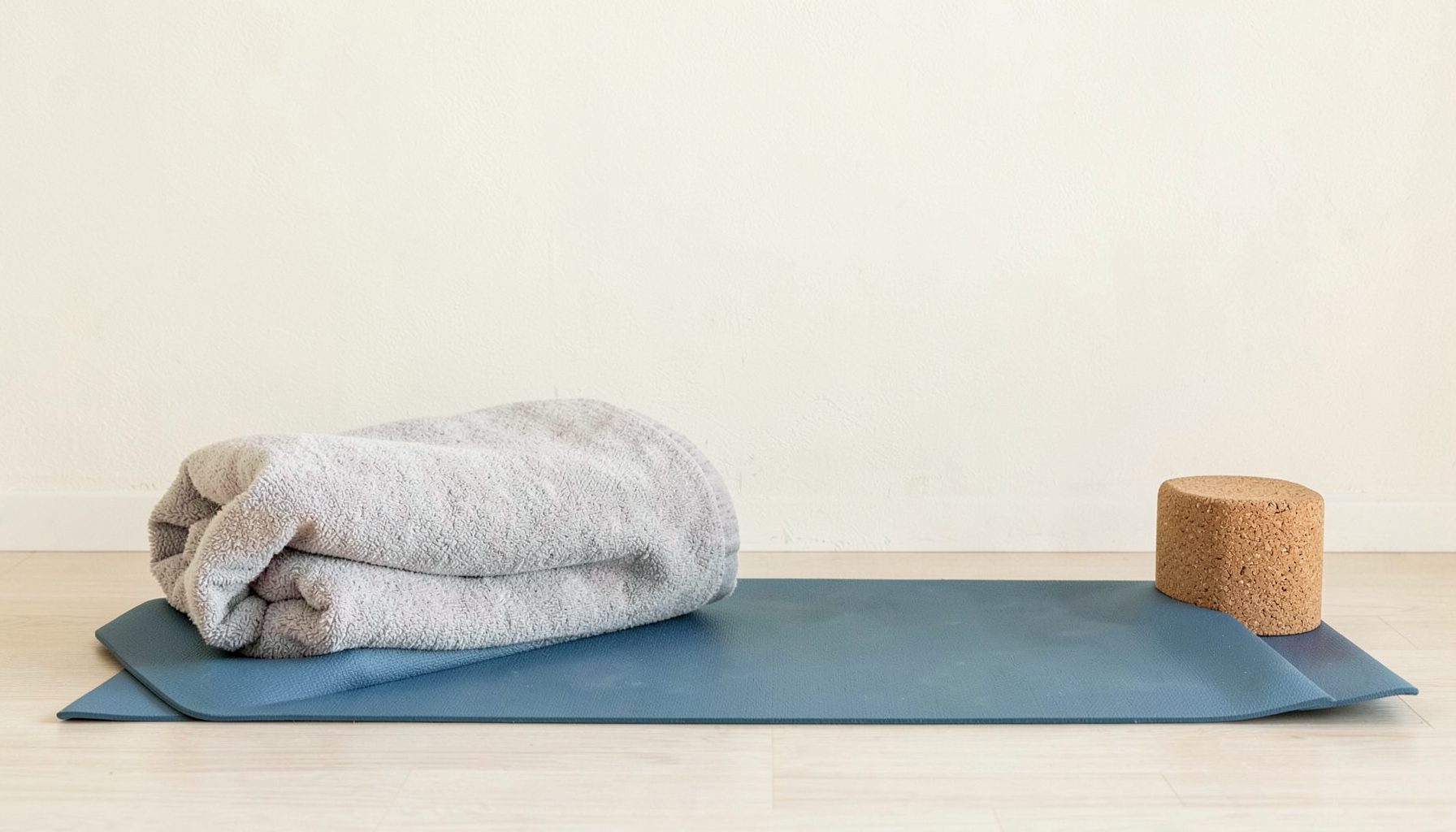
Yoga props are useful when your muscles and attention have limited energy. A bolster, folded blanket, cushion, block, strap, or sturdy chair can reduce the effort required to hold a pose. Support may also make it easier to remain present instead of constantly adjusting or bracing.
For ideas on choosing and using common equipment, this yoga props guide explains how blocks, straps, and bolsters can adapt familiar postures. You do not need a complete collection. A few household items can often provide enough comfort for a restful session.
Place a folded blanket under the head in child’s pose, rest the hands on blocks in a forward fold, or put the lower legs on a chair while lying on your back. Use a strap around the feet in a reclined hamstring stretch so your arms do not have to work hard. The right support should help you breathe easily and release unnecessary muscular effort.
Use Breath And Mindfulness Without Force
Breathwork can be a complete yoga practice when movement feels unavailable. Begin by noticing the natural breath instead of immediately trying to deepen it. Feel the ribs expand, the abdomen move, or the air pass through the nostrils. This kind of observation can settle attention without requiring concentration that feels strenuous.
If the breath is comfortable, allow the exhale to become a little longer than the inhale. For example, inhale gently for a count of three and exhale for a count of four. Keep the counts easy and abandon them if you feel strained, light-headed, or anxious. Breath practices should feel supportive, never like a test of control.
Mindfulness can also be practiced during ordinary actions. Notice the warmth of a mug, the contact between your feet and the floor, or the sensation of pulling a blanket around your shoulders. These moments help bring yoga into daily life and can be especially valuable when a formal session feels out of reach.
Make Rest A Sustainable Part Of Practice
A low-energy practice becomes more useful when it fits into your real life. Keep a mat, blanket, or cushion somewhere easy to access. Choose a few poses you already know well, and remove unnecessary decisions by creating a small personal menu for tired days. Familiarity makes it easier to begin when your focus is limited.
It can help to distinguish between gentle activation and genuine depletion. If slow movement leaves you warmer, calmer, and more awake, it may have offered the right amount of stimulation. If you feel weaker, dizzy, irritable, or unusually drained afterward, scale back and prioritize recovery. Persistent or unexplained fatigue deserves attention from a qualified healthcare professional.
Build your personal low-energy plan around these choices:
- Keep a five-minute version of your practice available for especially demanding days.
- Use a chair, wall, blanket, or bolster before you feel exhausted rather than waiting until support becomes essential.
- Favor comfortable breathing and steady awareness over deep stretches or ambitious poses.
- End with several minutes of rest so your body can absorb the effects of movement.
- Record which practices leave you refreshed, neutral, or more depleted.
Let Self-Compassion Guide The Pace
Self-compassion changes the quality of a tired-day yoga practice. Instead of asking why you cannot do what you usually do, ask what would feel kind and useful right now. This question creates room for honest choices, including a shorter sequence, a supported posture, or complete rest.
You may also discover that fatigue makes subtle sensations easier to notice. A slow practice can reveal where you hold tension, how quickly your breath changes, or which movements feel genuinely pleasant. These observations are valuable information. They help you shape a practice that supports your changing body rather than forcing your body into a fixed routine.
There is no single correct way to practice yoga when energy is low. Your session might be a few mindful stretches beside the bed, a restorative pose with a blanket, or quiet breathing before sleep. Consistency can mean returning to awareness in small ways, not completing the same sequence every day.
Let your next practice be small enough to begin without resistance. Settle onto a mat, chair, or bed, choose one comfortable breath, and give yourself permission to stop when you have received enough. Explore gentle classes, reflective resources, and supportive practices through Camille Dodson Yoga, allowing your yoga to meet you exactly where you are.