



Yoga for winter blues: warming sequences for cold days
Shorter days, dark mornings and the urge to stay under a doona can change the way winter feels in the body. In Australia, the season has many faces: Melbourne may bring rain and sharp southerly winds, Canberra can wake to frost, while Brisbane and Perth often remain bright enough for outdoor movement. Even in warmer regions, cooler mornings and earlier evenings can affect energy, mood and motivation.
Yoga can offer a steady way to meet that seasonal shift. A warming practice does not need to be vigorous, long or physically demanding. Rhythmic movement, fuller breathing, gentle strength and mindful attention can help you feel more present in your body without treating low mood as something you must push through.
The most useful winter routine is one you can repeat. Five minutes beside the bed, a sunlit sequence after breakfast or a quiet floor practice before dinner may be more supportive than an ambitious class attempted once. The aim is to create warmth, circulation and self-kindness while respecting the signals your body is giving you.
Why winter can affect mood and energy
Winter blues may show up as sluggishness, difficulty getting started, lower motivation, irritability or a wish to withdraw. Changes to daylight can influence sleep patterns and daily rhythms, while cold weather may reduce time outside and make familiar activities feel less appealing. In Australia, the end of daylight saving in April can make the evenings feel suddenly earlier in New South Wales, Victoria, South Australia, Tasmania and the ACT.
A gentle yoga practice can support a transition between states. Moving through familiar shapes gives the mind something simple to follow, while breathing with a slow, even rhythm can soften physical tension. The benefit is not about forcing cheerfulness. It is about making space for steadiness, warmth and a little more choice in how you respond to a difficult morning.
Yoga is not a substitute for mental health care. If low mood continues, affects sleep or appetite, limits your work or relationships, or includes thoughts of self-harm, speak with a GP or qualified mental health professional. In an emergency in Australia, call Triple Zero (000); Lifeline is available on 13 11 14.
Create warmth before you begin
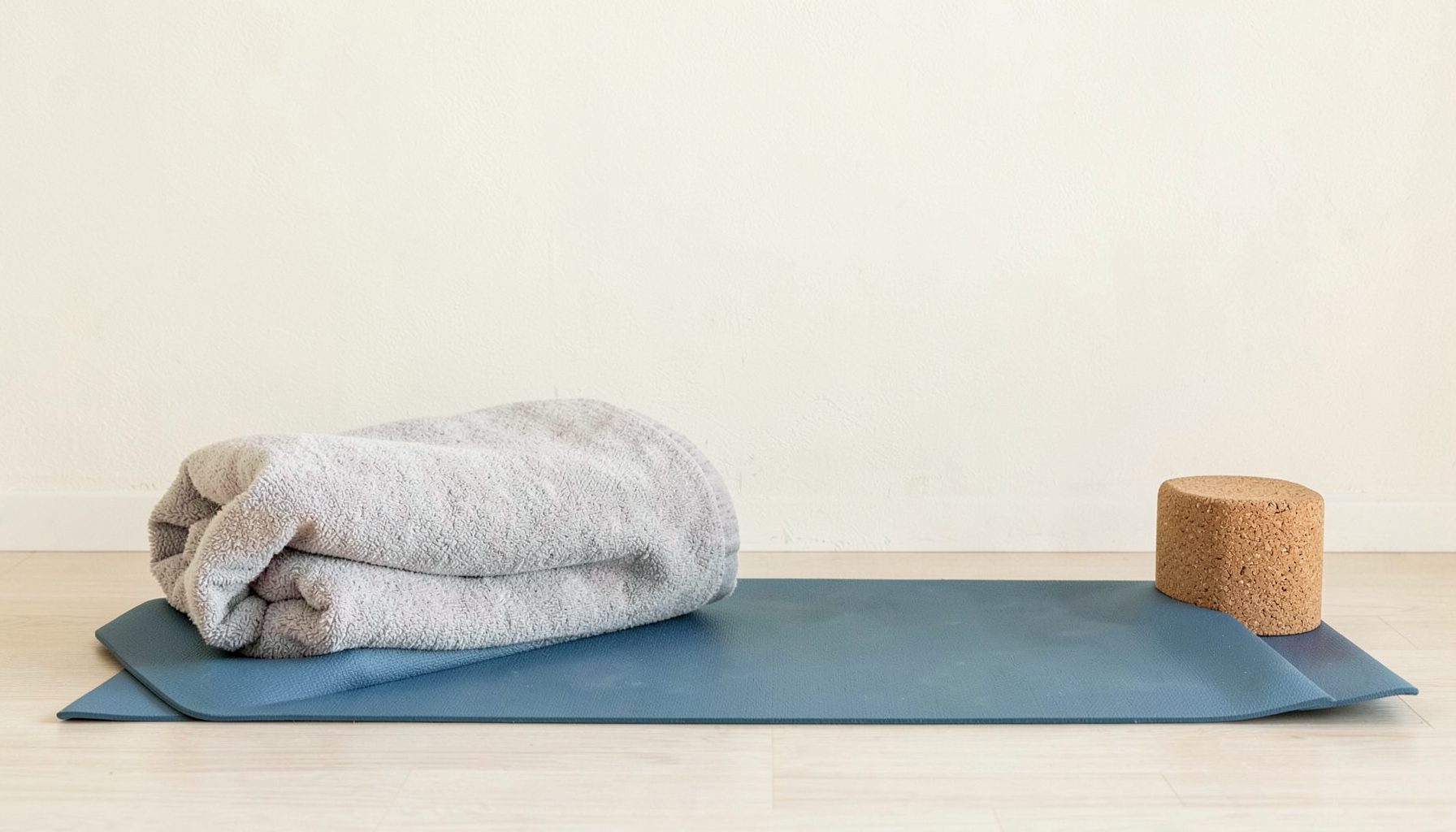
A cold room can make the body brace before you have even started moving. Put on warm layers, use socks if your feet are chilly and practise away from a draught. A rug or folded blanket under the mat can make a tiled floor more inviting. If you usually practise before work, keep your mat and clothing ready the night before so the first decision of the day is easy.
Begin with a few minutes of simple movement rather than going straight into a deep stretch. Sit on a chair and circle the shoulders, turn the palms open and closed, or march gently in place. From hands and knees, try slow spinal waves, moving between a comfortable rounded shape and a long back. Let the breath remain natural. Warmth comes from continuity, not intensity.
For a morning practice, face a window if possible and allow natural light into the room. A north-facing space may feel especially pleasant in a southern Australian winter, while an east-facing area can offer gentle morning sun. If the weather is clear, walking to your mat through a small amount of outdoor light can help mark the beginning of the day, even when a full walk feels beyond reach.
A grounding sequence for grey mornings
Start standing with your feet about hip-width apart. Bend the knees softly and sweep the arms out and up as you inhale. Exhale through the mouth or nose as you lower the arms and fold forward with bent knees. Let the head relax only as far as feels comfortable. Rise slowly, stacking the spine, and repeat five times. This simple wave warms the legs and shoulders without demanding a full sun salutation.
Continue with a supported half lift, placing your hands on your thighs rather than the floor. Step one foot back into a short lunge, lower the back knee if that feels better, and reach the same-side arm forward and up. Keep the front knee comfortable and the pelvis level. Return to standing, then repeat on the other side. The movement can be small; the purpose is to wake up the hips, chest and breath.
Finish with three to five rounds of an easy standing flow: inhale to lengthen, exhale to bend the knees, inhale to rise, and exhale as the hands return to the heart or rest by your sides. If your wrists, balance or blood pressure make floor-based transitions unsuitable, keep the entire sequence standing. A chair nearby can provide security, particularly on sleepy mornings.
Breathwork for a warmer inner rhythm
Breath practices can be useful when the winter blues come with heaviness or scattered attention. Sit on a chair, cushion or the edge of the bed with your spine supported. Place one hand over the lower ribs and notice whether the breath moves there without forcing it. After a few natural breaths, inhale for a comfortable count of three and exhale for four. Continue for six rounds, returning to normal breathing if you feel light-headed or strained.
A second option is gentle alternate-nostril breathing without breath retention. Use the right thumb to close the right nostril, inhale softly through the left, then close the left nostril with the ring finger and exhale through the right. Inhale through the right, switch sides and exhale through the left. Repeat for three rounds. Skip this practice if nasal congestion makes it uncomfortable, and never turn breathwork into a test of endurance.
For some people, an audible exhale is more regulating than a formal technique. Try a quiet humming sound, a long sigh or a slow “mmm” on the out-breath. The vibration can draw attention away from repetitive thoughts and into physical sensation. Keep the volume low and the effort easy. Warming yoga is still yoga when the most helpful practice is simply sitting, breathing and noticing that you are here.
Strength and circulation without overdoing it
Heat can be built through stable, moderate effort. Move from standing into chair pose by sending the hips back as though reaching for a seat. Keep the weight in the heels and lift the chest without arching the lower back. Hold for two or three breaths, then stand and rest. Repeat twice. You can practise beside a wall or keep the bend shallow if the knees are sensitive.
Warrior II offers another accessible way to engage the legs. Step one foot back, turn it slightly outward and bend the front knee only as far as feels steady. Extend the arms, soften the shoulders and take three slow breaths. Straighten the front leg, turn the feet forward and pause before changing sides. A shorter stance and hands resting on the hips can make the shape more manageable.
Bridge pose can add warmth while you are on the floor. Lie on your back with knees bent and feet planted. Press through the feet, lift the pelvis a little and lower with control. There is no need to clasp the hands or lift high. If lying down is uncomfortable, practise seated knee lifts or alternate heel raises while holding the back of a chair. The right variation is the one that leaves you feeling more supported rather than depleted.
Restorative shapes for low-energy days
Some winter mornings call for less stimulation. Restorative yoga uses props and longer pauses to make simple shapes feel held. Lie on your back with a bolster or firm pillow under the knees, place a folded blanket over the body and let the hands rest wherever they are comfortable. Stay for five minutes, observing the contact between your body and the floor.
Supported child’s pose is another option. Kneel with the knees wide enough to breathe freely and rest your chest on stacked cushions or a bolster. Turn your head to one side, changing sides halfway through. If kneeling does not suit your joints, sit in a chair and rest your forearms on a table or pillows. The shape can still provide a sense of containment without requiring flexibility.
Imagination can make restorative postures feel more spacious, especially when the body is tired or the room is cold. A soft visualisation, such as imagining warmth spreading from the centre of the chest to the hands and feet, may help you settle. Camille Dodson Yoga explores this approach in the role of imagination, with ideas for bringing inner imagery into supported practice.
Build a realistic winter routine
Consistency is easier when the practice fits the season you are actually living. A person in Hobart may need a shorter indoor sequence before the heater has warmed the room, while someone in Darwin may prefer breathwork and gentle floor movement during the cooler, drier mornings. In Sydney or Adelaide, a sunny midday practice may be more comfortable than an early start. There is no universal winter timetable.
Try creating three versions of the same routine. The smallest version might be three minutes of shoulder circles, standing side bends and slow breathing. The middle version could include a ten-minute warming flow with lunges, chair pose and bridge. The longer version may finish with supported rest. Having choices prevents an all-or-nothing mindset when sleep, work, illness or family responsibilities change your capacity.
Connect the practice to an existing habit, such as making tea, returning from the school run or changing out of work clothes. During winter sport season, yoga can also serve as a gentle recovery practice after running, netball, football or a long day outdoors. If you enjoy practising with others, look for a local class or retreat that values accessibility and rest; Camille Dodson Yoga’s retreat offerings provide a space to explore practice beyond the usual weekly routine.
A simple weekly rhythm might include warming movement on Monday, breath-led stretching on Wednesday and restorative rest on Friday. Add a walk when the weather allows, perhaps along a beach in Perth, beside the Yarra in Melbourne or through a local park after lunch. Natural light, social contact and moderate movement can work alongside yoga to support mood through the colder months.
Winter practice does not need to defeat winter. It can acknowledge tiredness, make room for stillness and offer a dependable point of connection with your body. Start with warmth, move at a pace that leaves you breathing comfortably, and use props or a chair whenever they make the practice kinder. Today, place your mat near a window and complete five slow rounds of arms lifting on the inhale and lowering on the exhale.