


The role of imagination in restorative yoga poses
Restorative yoga is often described as a practice of stillness, support, and release. With blankets, bolsters, blocks, and the floor doing much of the work, the body can soften without being pushed toward a deeper stretch. Yet physical support is only part of what makes these poses restorative. The quality of attention we bring to them can change the entire experience.
Imagination offers a gentle way to guide that attention. It can help us sense the body with greater kindness, picture spaciousness around areas of tension, and relate to the breath as something fluid rather than something we must control. In a supported posture, a simple image may make rest feel more available.
This does not require vivid visualization or artistic creativity. Imagination in yoga can be quiet and sensory: feeling the back body spread like warm earth, picturing the ribs moving like the sides of an umbrella, or imagining the nervous system receiving a message of safety. These inner images can make restorative poses more personal, accessible, and meaningful.
Why imagery belongs in a quiet practice
Restorative poses reduce the need for muscular effort, but the mind may continue working at its usual pace. Thoughts about responsibilities, plans, memories, or physical discomfort can remain active even when the body is supported. Imagination gives the mind a gentle place to rest without demanding that it become blank.
An image can also shift the way we interpret sensation. For example, tightness in the chest may feel less like a problem to solve when we imagine the sternum becoming a little wider with each exhale. The sensation has not necessarily disappeared, but our relationship with it has changed. We move from resistance toward curiosity.
This is especially useful for people who find traditional meditation difficult. Focusing on an image, texture, color, or natural landscape can offer a steady point of attention. Instead of forcing concentration, we allow the mind to follow something reassuring and return to it when distractions arise.
Creating safety through supported shapes
Restorative yoga depends on a sense of physical and emotional safety. Props should support the body rather than arrange it into an ideal shape. When the head, knees, spine, and limbs are comfortably held, the nervous system has fewer reasons to remain alert. Imagination can deepen this sense of being cared for.
In supported child’s pose, you might imagine the bolster as a steady hillside beneath the front body. The forehead can rest as though listening to the ground, while the back ribs widen with each breath. In supported reclined bound angle, the blankets beneath the knees may become a soft boundary that allows the pelvis and inner thighs to release gradually.
The image should never become another task. If picturing a meadow, ocean, or open sky feels distracting, choose something simpler. You might imagine weight moving downward, warmth spreading through the hands, or the floor receiving you without judgment. These suggestions are invitations, not requirements.
A gentle practice can be adapted through Camille Dodson Yoga, where mindfulness, breath awareness, and sustainable movement are treated as parts of everyday care. The most helpful visualization is the one that makes your actual body feel more welcome in the present moment.
Images that support common restorative poses
Different shapes can invite different kinds of inner imagery. The purpose is not to perform a pose perfectly, but to notice how a metaphor influences breathing, muscle tone, and emotional ease. A useful image often creates a little more room around the experience.
| Restorative pose | Possible image | Quality it may encourage |
|---|---|---|
| Supported child’s pose | A quiet hillside holding the front body | Grounding and inward attention |
| Legs up the wall | Roots extending from the legs into the earth | Stability and reduced effort |
| Supported bridge | A low, steady arch beneath the spine | Chest spaciousness and trust |
| Reclined bound angle | Petals opening without being pulled apart | Softness and patience |
| Supported twist | Water gently changing direction around stones | Ease and non-force |
| Savasana with support | A wide sky holding passing clouds | Spacious awareness |
In legs-up-the-wall pose, imagining the legs as tree trunks with roots can help reduce the urge to keep adjusting. The legs do not have to accomplish anything. They are simply supported, while the breath moves through the body. If the pose creates pressure or tingling, come out of it or change the setup; imagery should never override clear physical feedback.
A supported twist may benefit from an image of a slow river bending around stones. This can remind us that rotation is not something to force. The spine can be allowed to respond to gravity while the breath explores the side ribs and back body. The image supports a gradual unwinding rather than an attempt to reach an end point.
During savasana, a sky metaphor can be particularly helpful. Thoughts can appear as clouds, but they do not need to be chased away or analyzed. The practice becomes one of allowing mental activity to pass through a larger field of awareness. For some people, a more tactile image—such as sinking into warm sand—is easier to connect with.
Working with breath, sensation, and inner language
Imagination becomes more grounded when it is linked to something we can directly feel. Rather than leaving the body behind in a fantasy landscape, use an image to notice actual sensations. If you picture the breath as a wave, observe whether the inhale feels like rising water and the exhale like receding water. There is no need to make the breath larger than it naturally is.
Words can serve a similar purpose. A quiet phrase such as “I have time,” “nothing to prove,” or “supported enough for this breath” may help interrupt habitual self-criticism. The phrase should feel believable. If a statement creates pressure to feel calm, replace it with something more honest, such as “I am noticing what is here” or “I can soften one small place.”
Mindful imagery also helps distinguish effort from care. You may imagine the shoulders melting, but if you actively push them downward, the image has become a command. Try offering the picture and then waiting. The body may respond, or it may not. Restorative yoga values listening over achievement.
Some people experience images as colors, sounds, memories, or felt impressions rather than pictures. There is no correct form of visualization. A sensory cue such as the imagined warmth of sunlight on the face can be just as effective as a detailed scene. The practice is about cultivating compassionate attention, not producing a particular mental picture.
When imagination feels difficult or uncomfortable
Not everyone finds visualization soothing. An imagined landscape may bring up grief, loneliness, or memories that do not feel supportive. For someone living with anxiety or trauma, closing the eyes and entering an inner world can sometimes increase unease. A restorative practice must leave room for these responses.
If imagery feels uncomfortable, keep the eyes open and orient to the room. Notice the color of a blanket, the contact of the feet with the floor, or three ordinary objects nearby. You can focus on the real support beneath the body instead of creating an imagined one. This is still mindful rest.
It can also help to use neutral rather than emotionally charged images. Picture the shape of a pebble, the movement of curtains, or the steady rhythm of a clock. Avoid imagery that asks you to revisit a place, person, or memory unless you feel resourced and have appropriate support.
Restorative yoga is not a substitute for mental health care, and no visualization should be used to override distress. If a practice consistently brings up intense reactions, stop and seek guidance from a qualified teacher or healthcare professional. Compassion includes knowing when less inward focus is the wiser choice.
Building a personal imagery practice
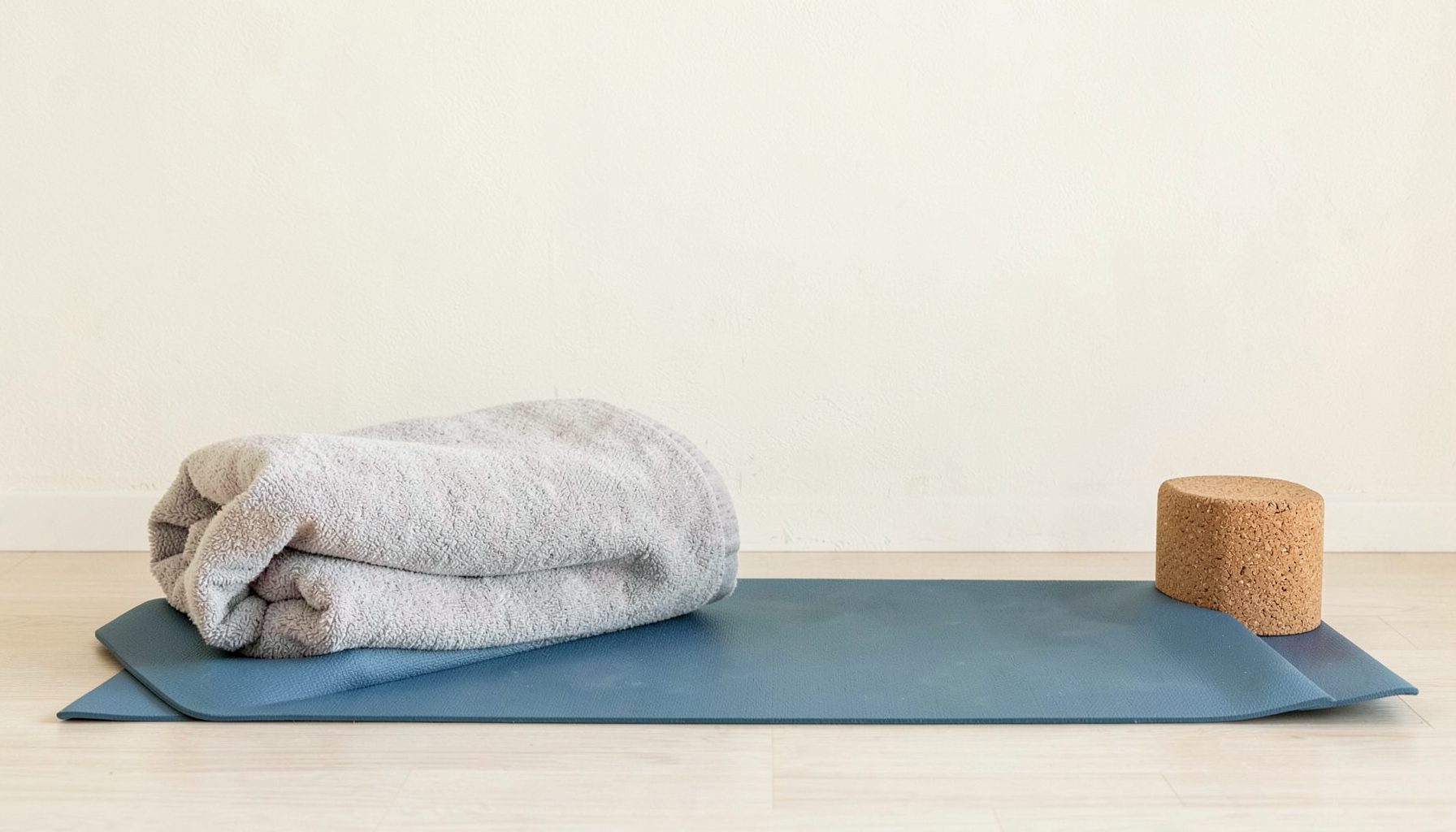
A short, consistent ritual is often more useful than a complicated sequence. Choose one supported pose and stay for five to ten minutes. Arrange the props carefully, let the eyes remain open or softly closed, and notice the body before introducing an image. This gives you a clear sense of how the pose feels without the added suggestion.
Then select one simple quality: heaviness, warmth, openness, steadiness, or spaciousness. Allow an image to express that quality. You might picture a weighted blanket of calm across the pelvis or a broad horizon behind the breath. Return to the physical sensations periodically so the practice remains embodied.
Keep a brief note afterward about what you noticed. You do not need to evaluate whether the pose was successful. Record whether the image supported ease, felt neutral, or created distraction. Over time, these observations can reveal which metaphors and restorative positions are genuinely helpful.
Digital meditations, printable sequences, and other restorative resources can provide a simple structure when you want support at home. Use them as adaptable guides rather than fixed instructions. Your energy, mobility, mood, and needs may change from day to day.
Gentle recommendations for practice
- Begin with one supported pose and one uncomplicated image instead of combining several visualizations.
- Keep the imagery connected to physical sensation, such as warmth in the hands or the back body resting on the floor.
- Choose language that feels kind and believable, avoiding phrases that create pressure to relax.
- Leave the eyes open and orient to the room whenever inward focus feels unsettling.
- Finish slowly, noticing how the body responds before returning to ordinary activity.
A few minutes of imagination can change the tone of a restorative session without making it more demanding. The image may help you recognize support, soften an inner struggle, or experience the breath as a companion rather than a technique. Sometimes the most powerful visualization is simply the understanding that you do not have to hold yourself up alone.
Set up one comfortable shape today, gather the props that allow you to be fully supported, and give yourself a few unhurried breaths. Let an image arise gently, or let the real sensations of the room be enough. With regular practice, restorative yoga can become a quiet space where imagination and embodied awareness meet in service of rest.