
Yoga for Tired Legs: Inversion and Elevation
Tired legs can make ordinary movement feel surprisingly demanding. A long day at a desk, hours spent standing, a heavy training session, or a warm afternoon can leave the calves, hamstrings and feet asking for a slower pace. Gentle yoga offers a way to pause, notice those sensations and support the body without turning rest into another task to complete.
Inversion and elevation are useful ideas for this kind of practice. You do not need to balance on your head or hold an advanced pose. Simply placing the legs higher than the heart, resting the pelvis on a folded blanket, or bringing the feet up a wall can create a quiet change in position.
For many people in Australia, tired legs are part of a familiar rhythm: commuting across Melbourne, walking between appointments in Sydney, standing through a shift in hospitality, or spending Saturday on the sidelines of local sport. Summer heat, long drives and uneven bush tracks can add to the sense of heaviness. A short, accessible sequence may fit more comfortably than an ambitious class.
The aim is comfort rather than intensity. Elevation may feel soothing, but it is not a treatment for persistent swelling, pain or circulation problems. If your legs are unusually swollen, hot, numb, painful or different on one side, seek medical advice before practising. During yoga, come out of any position that creates strain, dizziness or breathlessness.
What tired legs may be asking for
Leg fatigue can come from several sources, including muscular effort, prolonged stillness, dehydration, lack of sleep and sustained mental stress. The body may respond with a dull ache, restlessness, tight calves or the sense that the legs are too heavy to settle. A gentle practice begins by observing rather than immediately stretching.
Try lying on your back with your knees bent and feet resting on the floor. Notice whether one side feels different from the other, whether your lower back is gripping and whether your breath moves easily. This simple pause can help you distinguish between useful sensation and a position that is asking too much.
Elevation can change the relationship between the legs and the rest of the body. The support should feel stable and easy to leave. A wall, sofa seat or stack of cushions can be more appropriate than a complicated prop arrangement, especially after a tiring day when coordination and patience are limited.
If your hamstrings feel short or resistant, forcing the legs upward can create tension behind the knees or in the lower back. Gentle options such as bent knees, a strap held loosely around the feet, and gradual movement are described in gentle hamstring options, which can complement an elevated-leg practice.
Gentle inversions without acrobatics
In yoga, an inversion can be as simple as placing the legs above the level of the pelvis. Legs up the wall, supported bridge and a reclining pose with the calves on a chair all offer an inverted relationship without placing weight on the head, neck or hands. These shapes are often more suitable when the intention is recovery.
For legs up the wall, sit sideways with one hip close to the wall, then roll onto your back as you bring the legs upward. Your hips do not need to touch the wall. Move farther away if the backs of the legs feel stretched, and place a folded blanket under your head if your chin lifts towards the ceiling.
Another option is calf support on a chair. Lie on your back and place your lower legs over the seat so your knees are comfortably bent. This can be especially useful if straight legs create hamstring tension or if the wall position feels too intense. Let the arms rest by your sides and allow your feet to soften.
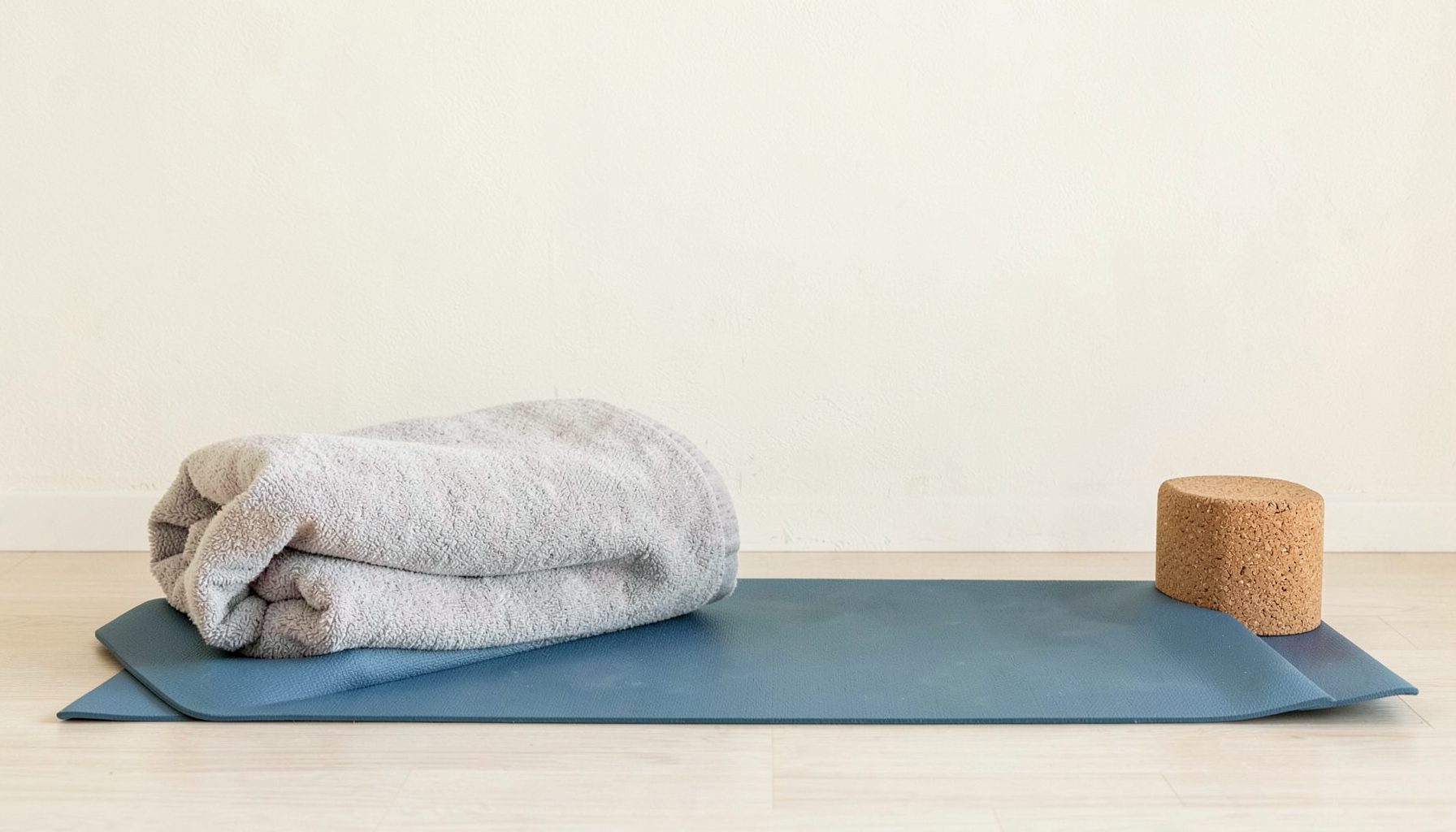
Supported bridge adds a small amount of elevation beneath the pelvis. Lift the hips only enough to slide a firm cushion or yoga block beneath the sacrum, then lower your weight onto the support. The prop should sit under the broad, bony part of the pelvis rather than the lower back. Keep the knees pointing towards the ceiling and leave the pose if your back feels compressed.
A short sequence for heavy legs
Begin with two or three minutes of constructive rest. Lie on your back, bend the knees and place the feet as wide as the mat, allowing the knees to lean gently towards one another. Let the hands rest on the abdomen or ribs. This position gives the legs a break while maintaining enough contact with the floor to feel grounded.
After a few quiet breaths, move through ankle circles and slow ankle pumps. Draw the toes towards you, then point them away without forcing the range. Circle each ankle in both directions, keeping the movement small and smooth. These actions can bring attention to the feet and lower legs after standing, walking or sitting for a long period.
Transition to calves on a chair for three to five minutes. If the position feels comfortable, extend one leg at a time for a few breaths, then return both calves to the chair. Keep the movement optional; the purpose is to explore ease, not to test flexibility. A rolled towel beneath the ankles can make the support feel more even.
Finish with legs up the wall or a lower-elevation alternative. Stay for five to ten minutes, breathing naturally. When you come down, roll onto one side and pause before sitting so the change in position feels gradual. The whole sequence can take less than fifteen minutes and can be shortened further when energy is low.
Breath and mindfulness in restorative poses
A supported inversion becomes more useful when the nervous system has time to register the support. Rather than trying to empty the mind, notice the physical details of the moment: the pressure of the calves against the chair, the temperature of the feet, the movement of the ribs and the places where the jaw or shoulders are holding.
Try breathing in for a comfortable count of four and out for a count of six, but only if the longer exhale feels natural. There is no need to take unusually deep breaths. A soft, ordinary breath can be more calming than a dramatic breathing technique, particularly when you are overheated or physically depleted.
You might use a simple phrase such as “I can soften without fixing everything.” This is not a performance cue. It is a reminder that rest can be valuable even when the legs do not feel completely different by the end of the practice. Self-compassion makes it easier to respond to the body with patience.
For people who prefer guidance, a short meditation or printable sequence can make home practice easier to begin. The downloadable yoga resources offer practical support for creating a quiet routine without needing to remember every step while you are tired.
Making elevation work in Australian life
A restorative pose needs to fit the conditions around you. On a hot Brisbane or Perth day, practise in the coolest room available and avoid staying in a position that makes you feel flushed or light-headed. In winter, especially in cooler homes in Canberra or Hobart, keep a blanket nearby so relaxation does not become physical discomfort.
After a long drive between towns, a commute on public transport or several hours at a computer, begin with feet on the floor before elevating them. The body may need a few moments to adjust after being still. If you have just finished a run, a surf, a bushwalk or weekend sport, allow your breathing and temperature to settle first.
Australian yoga students also encounter a wide range of class styles, from studio-based restorative sessions to outdoor community classes and online resources. A local class can be helpful when you want hands-on support, but a home sequence may be more realistic during school holidays, shift work or a busy week. Use the version that encourages consistency rather than the one that looks most impressive.
Practical ways to keep the practice comfortable
- Choose a firm wall, stable chair or supportive sofa rather than balancing cushions in a way that could slide.
- Keep the knees slightly bent if the hamstrings or backs of the knees feel strained.
- Set a timer for five minutes so you can relax without checking the clock repeatedly.
- Practise away from a full meal and give yourself time to cool down after exercise.
- Leave the pose slowly, especially if you have been still for several minutes.
Building a sustainable rest practice
The most effective routine is one you can repeat without resentment. Three minutes with the calves on a chair may be more sustainable than a demanding forty-minute session attempted once a month. You can practise after work, before bed or while waiting for dinner, provided the space is safe and you are alert enough to move carefully.
Keep track of how different forms of elevation feel. A wall may suit you after walking, while a chair may be better after a day of sitting. Supported bridge may feel pleasant one week and too strong the next. Adapting the pose is a form of body awareness, not a sign that you are doing yoga incorrectly.
Restorative yoga can sit alongside strengthening, walking and mobility work. Elevating the legs does not replace gradual conditioning or medical care, and it should not be used to ignore ongoing symptoms. The practice is a pause that helps you notice what your body needs next.
For this week, place a chair near your mat and complete five calm minutes with your calves supported, then record one sentence about how your legs feel before and after.