

Yoga for the feet after a long walk
A long walk can leave your feet feeling pleasantly tired, tender across the soles, or tight around the ankles and calves. Even when there is no obvious pain, the small muscles that support the arches may be working hard to adapt to pavement, hills, uneven ground, footwear, and changes in pace. A few mindful yoga practices can help restore mobility while gently building strength.
Foot-focused movement does not need to be intense. The aim is to notice sensation, improve circulation, release unnecessary gripping, and reconnect the feet with the rest of the body. Slow transitions, comfortable breathing, and a willingness to do less can make a short post-walk practice more useful than forcing a deep stretch.
This approach fits naturally with a sustainable yoga routine. Rather than treating your feet as separate from your practice, you can use them as a foundation for balance, posture, and grounded movement. The following sequence is suitable for many people, but sharp pain, swelling, numbness, or a recent injury calls for professional medical advice before exercising.
Why walking can tire the feet
Every step requires the feet to absorb impact, adjust to the surface, and help propel the body forward. The plantar fascia, the connective tissue along the sole, works with the intrinsic foot muscles, ankle stabilizers, and calf muscles to create a responsive base. A long walk increases the number of times these structures must contract and release, even at a relaxed pace.
The body may also develop temporary habits as fatigue sets in. You might curl your toes, roll toward the outer edges of the feet, collapse inward through the arches, or shorten your stride. These are common compensations rather than personal failures. Gentle awareness can help you recognize them without turning recovery into another task to perform perfectly.
Footwear plays a role as well. Narrow toe boxes can restrict the toes, while stiff soles may limit natural movement. Walking uphill often asks more from the calves, and downhill walking can increase the demand on the front of the ankles and thighs. A post-walk practice should therefore include both strengthening and mobility, with the emphasis adjusted to how your body feels that day.
Begin with sensation and easy mobility
Before stretching, take a moment to feel the soles of your feet. Sit comfortably or lie down and let your legs rest. Notice where the heels, balls of the feet, and toes make contact with the floor or mat. Rather than searching for a particular sensation, observe temperature, pressure, pulsing, and areas that feel less distinct.
Try spreading the toes slowly, then relaxing them. Lift all ten toes, keep the balls of the feet grounded, and lower the toes without gripping. Next, lift the big toes while the other toes remain down, then reverse the movement if it is available to you. It may feel awkward at first; the purpose is coordination, not achieving a perfect shape.
Circle each ankle in both directions, keeping the movement small and smooth. Point and flex the feet several times, then move through gentle ankle waves. If the feet are particularly sensitive, reduce the range of motion and keep your attention on ease. These simple exercises encourage circulation and help restore movement after many repetitive steps.
A gentle sequence for strength and release
Begin seated on a chair, cushion, or the floor with one ankle crossed over the opposite thigh. Hold the foot with both hands and gently massage the sole with your thumbs, moving from the heel toward the ball of the foot. You can pause beneath the arch and around the base of each toe, but avoid pressing hard into a tender area. A tennis ball or massage ball may be useful, though body weight should remain light.
Move into a seated calf stretch by extending one leg forward with the heel supported. Draw the toes toward you only until you feel a mild lengthening through the sole and calf. Keep the knee soft rather than locking it. Hold for several breaths, then release gradually. Repeat on the other side, remembering that the two feet may need different amounts of time and intensity.
For gentle foot strength, stand behind a chair and rise onto the balls of the feet. Press evenly through the base of the big toe, the base of the little toe, and the heel before lifting. Lower slowly, using the chair for balance. Begin with five repetitions and rest. If the movement feels stable, add a second round, but stop before the calves or toes start to cramp.
A supported squat can combine ankle mobility with whole-body grounding. Place a folded blanket beneath the heels if they lift, and lower only as far as you can keep the breath steady. Let the knees track in the same general direction as the toes. The practice of holding poses gently can help you find useful effort without turning a recovery session into a test of endurance.
Choosing movement for your needs
The best post-walk exercise depends on what the walk asked of you and how your feet respond afterward. Stretching may feel welcome when the calves and soles are tight, while strengthening may be more appropriate when the feet feel generally tired but not sore. Mobility work can be especially helpful after time spent in restrictive shoes.
| What you notice after walking | Helpful focus | A gentle option | What to avoid |
|---|---|---|---|
| Tight calves or stiff ankles | Length and mobility | Seated calf stretch and ankle circles | Forcing the heel down |
| Tired arches without sharp pain | Support and circulation | Toe spreading and light sole massage | Deep pressure on tender tissue |
| Toes that feel cramped | Toe mobility | Lift, spread, and relax the toes | Curling the toes to create control |
| Unsteady balance | Foot and ankle strength | Supported heel raises | Standing on an unstable surface |
| General heaviness | Restorative movement | Legs supported while breathing slowly | A long, demanding sequence |
| Localized pain or swelling | Assessment and rest | Gentle, pain-free movement only | Stretching directly into pain |
Keep the distinction between productive sensation and warning signs clear. A mild stretch, warmth, or feeling of effort can be appropriate. Burning, stabbing, electric, or worsening pain is a reason to stop. Recovery is not measured by how much sensation you can tolerate; it is measured by whether you finish feeling more supported.
Connect the feet to alignment and breath
The feet influence the knees, hips, pelvis, and spine. This does not mean there is one correct way to stand, but it can be useful to explore how weight is distributed. In mountain pose, feel the heel, the mound below the big toe, and the mound below the little toe. Allow the toes to soften while the legs remain awake.
Take several slow breaths and notice whether the jaw, shoulders, or belly tighten when you concentrate. On the exhale, soften any effort that is no longer necessary. This pairing of breath awareness and foot grounding can turn a basic standing pose into a full-body reset after walking.
You can explore balance by shifting weight gently from side to side and forward and back. Keep one or both hands near a wall. When you feel centered, lift one heel or one foot for just a moment, then return it to the floor. The goal is not to hold a dramatic tree pose; it is to let the ankle and foot make small adjustments without panic or gripping.
A mindful standing practice can also reveal differences between the two sides. One foot may feel more stable, while the other may have a wider or less distinct contact with the floor. Observe these variations with curiosity. Your practice can respond to the body you have today rather than forcing symmetry.
Adapt the practice to the day
If your feet are simply tired, five to ten minutes of movement may be enough. Choose toe articulation, ankle circles, a few supported heel raises, and a comfortable calf stretch. If you walked on hills or uneven trails, spend extra time with ankle mobility and balance, using support whenever needed.
When the soles feel tender, reduce strengthening and prioritize rest, elevation, and gentle circulation. You might lie on your back with the lower legs resting on a chair, then breathe quietly for several minutes. Small movements such as flexing and pointing the feet can be included if they feel soothing, but there is no need to push into a stretch.
Morning-after stiffness can call for a slightly more active approach. Try a few rounds of seated foot exercises before standing, then move slowly through supported mountain pose and heel raises. Warmth in the feet and smoother walking are useful signs that the intensity is appropriate. Increased soreness later is a sign to scale back.
Your wider practice can support this same balance of attention and kindness. Learning more about Camille’s approach may offer context for using yoga as an accessible personal practice rather than a performance or fixed routine.
Build a simple recovery rhythm
A short foot-care sequence works best when it is easy to repeat. You might practice after a weekend walk, at the end of a travel day, or whenever your feet have spent hours standing. Consistency matters more than duration. Two mindful minutes can reinforce body awareness just as effectively as a longer session when energy is low.
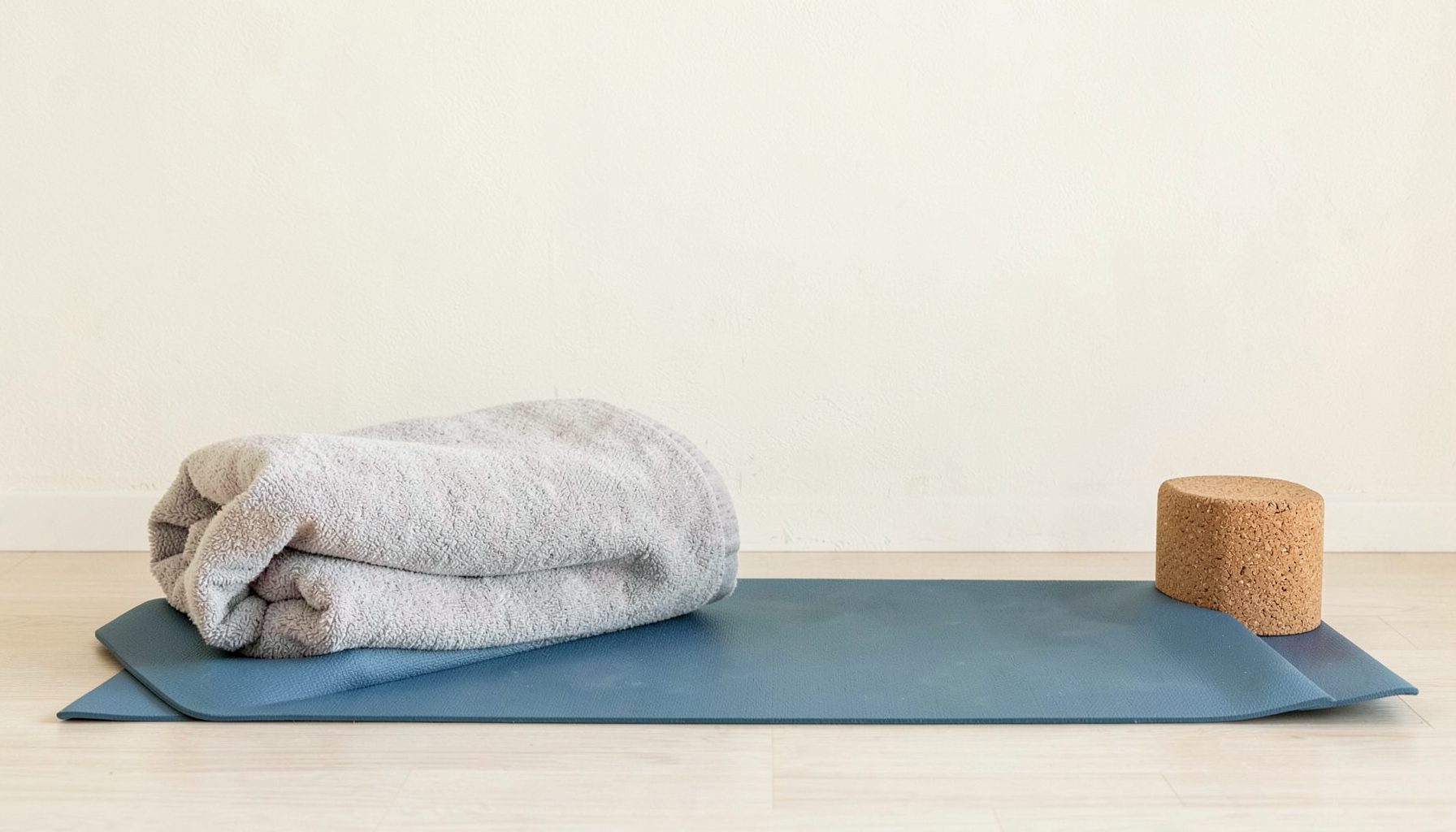
Consider practicing barefoot on a stable surface so you can sense the distribution of weight. A mat, folded towel, or firm carpet can provide enough comfort without making balance unpredictable. Keep a chair nearby for standing exercises, and avoid practicing on a slippery floor.
Use these ideas as a flexible menu rather than a fixed prescription:
- Start with toe spreading, toe lifts, and ankle circles to restore coordination.
- Add light sole massage when the feet feel tight, but avoid pressing into painful spots.
- Include supported heel raises to strengthen the arches, ankles, and calves gradually.
- Finish with a slow calf stretch or legs-supported rest while breathing comfortably.
- Track how your feet feel later that day and the next morning before increasing effort.
Foot yoga can become a quiet way to appreciate the work your body does with every step. Move slowly through the sequence, choose the least forceful option that feels useful, and let your breath guide the pace. Explore a class, retreat, or downloadable practice from Camille Dodson Yoga to keep that sense of mindful support present beyond the end of your walk.