Yoga After Travel: A Gentle Way To Come Back To Yourself
A long day of travel can leave you feeling strangely disconnected from your own body. Hours in an airport, a cramped seat, heavy luggage, bright terminals and disrupted meals may create tight hips, a stiff back, swollen ankles and a mind that still feels in transit. Even after reaching your destination, your nervous system may take time to recognise that the journey is over.
Yoga for recovery after a long day of travel does not need to be a demanding workout. A few quiet movements, steady breaths and moments of stillness can help you settle into the room around you. The aim is to restore comfort and awareness, whether you have arrived home after a short domestic flight or crossed Australia from Perth to Sydney.
Why Travel Leaves The Body Tired
Travel places the body in positions it was never designed to maintain for hours. Sitting with limited legroom can shorten the front of the hips, round the upper spine and reduce circulation through the legs. Carrying a suitcase adds another layer of effort, especially when lifting bags into an overhead locker or pulling them across a station platform.
There is also the less visible fatigue of travel. Announcements, queues, security checks, unfamiliar beds and changes in routine keep the brain alert. A red-eye flight or an early connection can interfere with sleep, while airport food and irregular hydration may leave you feeling flat. If you have spent the day moving through several terminals or driving long distances between regional towns, your body may crave support rather than intensity.
Australian distances can make this especially noticeable. A journey between Melbourne and Cairns involves a very different climate at either end, while a Perth-to-east-coast trip can alter your sense of time even without crossing an international border. A practice that begins with simple grounding is often more helpful than immediately attempting strong twists, deep forward folds or a vigorous flow.
Start With Arrival, Not Achievement
Before unrolling a mat, make the first part of your recovery practical. Put your luggage somewhere safe, drink some water and change out of restrictive clothing. If your feet feel swollen, take a few minutes to walk gently around the room. You might also lie down with your lower legs resting on a chair or the edge of the bed, provided the position feels comfortable.
When you are ready to move, sit or stand and notice the contact between your body and the floor. Let your eyes soften. Rather than trying to fix every area of discomfort, observe where you feel pressure, numbness, restlessness or ease. This approach reflects the gentle teaching philosophy described in Camille’s approach, where movement can become a way of listening instead of another task to complete.
Begin with movements that are easy to stop. Circle the shoulders slowly, turn the head within a comfortable range and stretch the fingers after gripping bags or armrests. From standing, shift your weight from one foot to the other. From a chair, press both feet into the floor and lengthen through the crown of the head without forcing the spine upright.
A Simple Sequence For Tight Hips And Legs
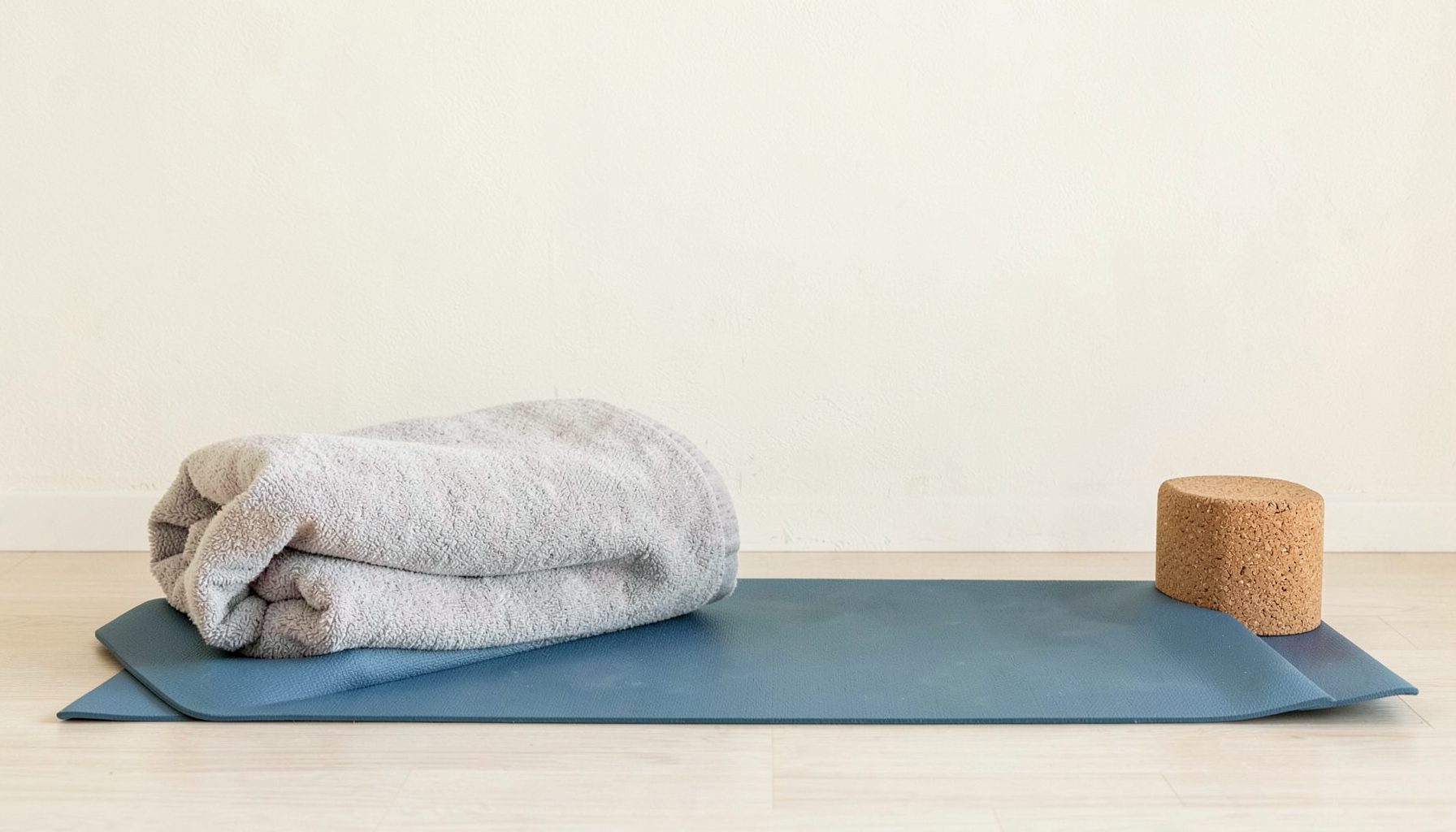
A short post-travel sequence can focus on circulation, mobility and calm. Start in a supported position, using a folded towel, cushion or pillow if you need extra comfort. Supine knee movements, ankle circles and gentle pelvic tilts can wake up areas that have been still without placing much demand on tired muscles.
From lying on your back, draw one knee towards the chest while the other leg remains bent or extended, whichever feels better. Move slowly between sides. Then place both feet on the floor, let the knees sway a small distance from side to side and pause whenever your lower back feels supported. The movement should remain smooth, with no pulling sensation through the hips.
A low lunge can be useful when the front of the hips feels shortened, but keep the back knee down and the range modest. You may place your hands on a chair, blocks or the bed for balance. A gentle standing fold with bent knees can release the back of the legs, although it is sensible to avoid forcing the stretch if you are dizzy, dehydrated or unusually fatigued.
| Travel symptom | Gentle yoga option | Helpful emphasis |
|---|---|---|
| Stiff hips from prolonged sitting | Supported low lunge or reclined knee-to-chest movement | Small range and relaxed breathing |
| Heavy or restless legs | Ankle circles, heel lifts and a short mindful walk | Gradual circulation rather than force |
| Aching lower back | Pelvic tilts and supported bridge preparation | Keep the spine comfortable |
| Tight shoulders and neck | Shoulder rolls, arm movements and gentle side bends | Relax the jaw and avoid pulling the head |
| Busy, wired thoughts | Longer exhalations and a supported resting pose | Reduce stimulation and allow pauses |
The table is a guide, not a checklist. You do not need to work through every option. Select one or two movements that match how you feel on the day. If you experience sharp pain, significant swelling on one side, chest pain, unusual shortness of breath or persistent numbness, stop and seek appropriate medical care rather than treating the symptoms as ordinary travel stiffness.
Let The Breath Bring You Back
Breathwork can help mark the transition between being in transit and being settled. Sit in a chair or lie down with your hands resting wherever they feel natural. Notice the breath without immediately changing it. After a few rounds, allow the exhalation to become slightly longer than the inhalation, such as breathing in for four counts and out for six.
There is no need to breathe deeply or force the belly to expand. A quiet, unhurried breath is enough. If counting creates tension, release the numbers and focus on the sensation of air moving through the nose. You might repeat a simple phrase silently, such as “I have arrived,” on the exhalation.
An affirmation can be especially useful when travel has left you irritable, scattered or critical of your body. This short affirmation practice offers a gentle way to step onto the mat without demanding immediate calm. The words do not need to feel perfectly true; they can simply create a little space around the moment.
Finish with five to ten minutes of stillness. Place a cushion beneath the knees in a resting position, cover yourself if the room is cool and let the body absorb the effects of the movement. In Australia, that may mean adjusting for a humid Darwin evening, a chilly Melbourne night or the dry heat that can linger after a day on the road. Comfort is part of the practice.
Make Recovery Easy To Repeat
The most useful travel routine is one you can do when energy is low. A full-length class may feel appealing when you are planning your trip, yet a five-minute sequence is more likely to happen after baggage collection, a long drive or an exhausting family visit. Keep your expectations flexible and let the practice change with the journey.
A downloadable sequence can be useful because it removes the need to remember what comes next. It can also support people staying in hotels, holiday apartments or spare rooms where there is little open floor space. A towel can replace a strap, a pillow can replace a bolster and a wall can provide balance. Yoga equipment is helpful, but it should not become a barrier.
Australian schedules can be varied, with early flights, long weekends, school-holiday traffic and large distances between towns. Online classes and digital resources can fit around those realities, especially when a local studio is closed or you have arrived outside its usual timetable. If you are attending a retreat in a place such as Byron Bay or the Mornington Peninsula, the same principle applies: allow the first session to be restorative if your body is still catching up.
Choices That Support A Softer Landing
- Choose a quiet space with enough room to extend your arms, even if you practise beside the bed.
- Use a chair, wall, folded towel or cushion to make unfamiliar poses feel stable.
- Keep the first session between five and twenty minutes, depending on your energy.
- Drink water and allow time for a light meal before attempting stronger movement.
- Finish with rest rather than adding extra poses simply to make the practice feel complete.
Return To Ordinary Movement
Recovery continues after the mat is rolled away. Walk gently, notice how your feet meet the ground and avoid staying in the same seated position for the rest of the evening. A few shoulder rolls while waiting for the kettle, a calf stretch against the wall or a mindful pause before unpacking can extend the benefits of the practice into ordinary tasks.
The following morning, reassess rather than automatically repeating the same sequence. You may feel ready for a more active class after a good night’s sleep, or you may need another slow session if jet lag, dehydration or travel anxiety remains. Restorative poses, breath awareness and compassionate pacing are valid forms of practice, especially when the body is asking for time.
The purpose of post-travel yoga is not to erase every trace of tiredness. It is to rebuild a relationship with the body after hours of disconnection and demand. A few deliberate movements can help you notice what you need, while steady breathing reminds you that arrival is a gradual process. What to remember is simple: after a long journey, gentle attention is often more restorative than effort.