
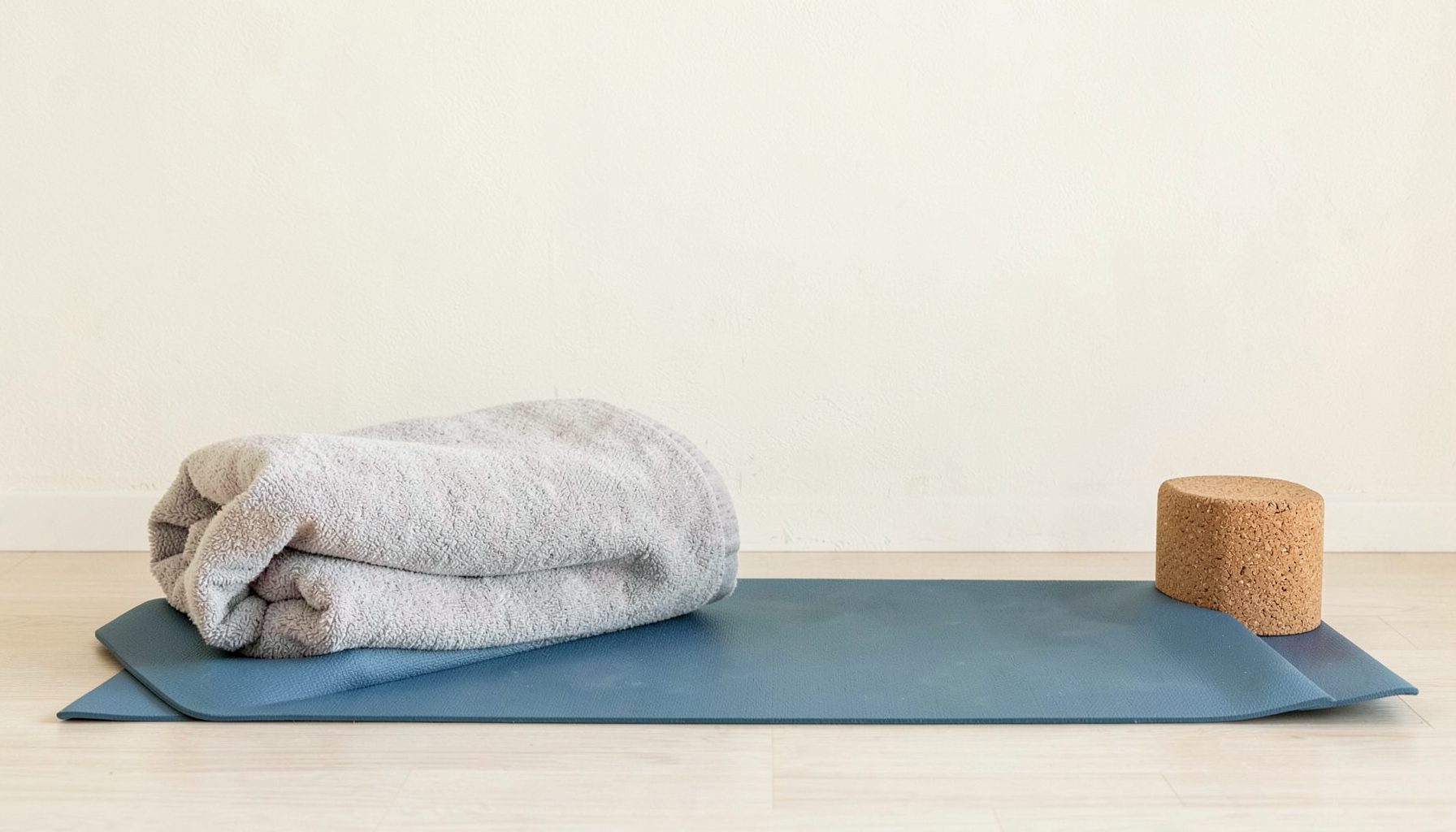




A Short Affirmation Practice for Stepping Onto the Mat
Beginning a yoga practice can feel surprisingly significant. The body may be tired, the mind may be busy, or a familiar inner voice may already be listing reasons to wait. An affirmation offers a gentle way to meet that moment. It gives attention somewhere kind to rest before movement begins.
An affirmation is not a demand to feel positive. It is a phrase that supports presence, patience, and self-trust. Repeated quietly alongside the breath, it can help you arrive without needing to perform, achieve, or change your mood first.
This short practice is designed for the first few minutes on the mat. You can use it before a full class, during a few seated stretches, or whenever you want to reconnect with your body. The words are simple by design, leaving room for whatever is true today.
Arriving Without Needing To Feel Ready
Place your mat somewhere you can pause without interruption. Sit, kneel, or lie down in a position that feels supported. Let your hands rest wherever they naturally fall, and notice the contact between your body and the floor. There is no need to create a special atmosphere or make the space perfect.
Take one unhurried breath. Feel the inhale move in its own time, followed by the exhale. Then repeat silently: I am here now. The phrase does not ask you to become calm immediately. It simply acknowledges that you have arrived, even if thoughts, tension, or reluctance are present.
You might notice your mind moving toward the rest of the day. That is ordinary. When attention wanders, return to the sensation of breathing and the words. Think of the affirmation as a soft landmark rather than a test you must pass.
Choosing Words That Support Your Practice
The most useful affirmation is one your nervous system can receive. Grand statements may feel distant when you are anxious, fatigued, or self-critical. A grounded phrase tends to work better because it meets you close to your actual experience.
Try speaking the sentence internally and notice how your body responds. Does your jaw soften? Does your breath become easier? Do you feel resistance? Resistance is useful information, not failure. You can adjust the language until it sounds steady and believable.
| When you arrive feeling | A supportive affirmation | A gentle focus for practice |
|---|---|---|
| Distracted | I can return one breath at a time | Reconnecting with the present |
| Tired | I am allowed to move slowly | Conserving energy |
| Self-critical | I do not have to earn care | Practising self-compassion |
| Anxious | I can feel the ground beneath me | Finding stability |
| Unmotivated | Beginning gently is enough | Taking one manageable step |
| Energised | I can move with awareness | Balancing effort and ease |
You do not need to choose a new affirmation every day. Repetition can make a phrase feel familiar and dependable. At the same time, allow the words to change when your needs change. A statement that supports you before a vigorous practice may not be the right one for a quiet evening sequence.
Letting Breath Give The Words Rhythm
Once you have chosen an affirmation, connect it with your breathing. On the inhale, silently say the first part of the phrase. On the exhale, complete it. For example, breathe in with I meet this moment, and breathe out with with kindness.
Keep the breath natural. If fitting the words into the inhale or exhale makes you strain, shorten the phrase or repeat it across several breaths. The purpose is to support awareness, not to control the body. A slow, comfortable rhythm is more important than saying the sentence perfectly.
Try this simple pattern for five rounds:
- Inhale: I am here
- Exhale: I am safe enough to begin
- Inhale: I listen inward
- Exhale: I move with care
The phrase “safe enough” can be especially helpful because it leaves space for complexity. You may still feel nervous, uncomfortable, or uncertain. The words do not deny those sensations; they offer a little steadiness alongside them. If anxiety feels intense, a grounding sequence can provide additional support before you continue with movement.
Bringing The Affirmation Into Movement
After a few breaths, begin with a small motion. Circle your wrists, roll your shoulders, tilt your head gently from side to side, or move through cat and cow at a pace that feels comfortable. Let the affirmation travel with the movement instead of repeating it mechanically.
For example, you might think I make space as you inhale and lengthen your spine, then I release pressure as you exhale and soften forward. During a standing sequence, use I am supported when your feet meet the ground. In a resting posture, use I can receive as you allow the floor to hold more of your weight.
The practice is not about forcing a connection between every pose and a particular idea. Some movements may feel neutral, and some may bring up emotion or resistance. Stay curious. If a phrase begins to feel restrictive, let it go and return to simple sensory awareness: the soles of your feet, the movement of your ribs, or the temperature of the air.
A helpful affirmation should make room for choice. You can pause, modify, skip a posture, or come out of a shape when your body asks for something different. This is part of mindful movement. Listening is an active form of participation.
Making The Practice Your Own
A short affirmation practice can take two minutes or twenty. On busy mornings, repeat one phrase while standing at the edge of the mat. Before sleep, pair a calming statement with a supported child’s pose or a few reclining breaths. You can also write your chosen words on a card and place it beside your props.
Keep the language personal and present-focused. Phrases such as I can begin where I am, My body deserves patience, and I am allowed to take up space may offer support at different times. If the word “deserve” feels uncomfortable, try I offer myself patience instead. Small changes can make a sentence feel more genuine.
Use the following ideas as a starting point:
- Choose one affirmation and repeat it for five steady breaths.
- Pair a phrase with a simple gesture, such as placing a hand over the heart or belly.
- Replace words that feel forceful with language that offers permission.
- Write down any change in breath, posture, or mood after the practice.
- Revisit the phrase during daily transitions, such as waking, commuting, or closing a laptop.
There is no requirement to feel transformed when you finish. Perhaps you feel more settled, or perhaps you simply noticed how unsettled you were. Both experiences are valuable. The practice builds a relationship with honest attention, and that relationship grows through small, repeated acts of care.
Carrying Kindness Beyond The Mat
The affirmation can continue into the rest of your day. As you wash dishes, walk outside, or move between tasks, remember the quality you wanted to bring to your practice. I can go slowly may be useful during a crowded schedule. One thing at a time may help when your attention is scattered. I am allowed to pause can create a moment of space before an automatic response.
Yoga becomes sustainable when it fits real life. A meaningful practice does not have to be long, intense, or visually impressive. It can be a few conscious breaths before stretching, a hand on the body during uncertainty, or the decision to stop when effort turns into strain. These small choices strengthen awareness in ways that extend well beyond the mat.
For further reflections on mindful movement, self-compassion, and everyday practice, explore the yoga blog. You may find language, sequences, and ideas that help you build a rhythm suited to your own energy and circumstances.
Step onto your mat today with one gentle phrase. Settle into a comfortable position, take five unhurried breaths, and let the words meet you exactly where you are. Begin with care, move with attention, and allow the practice to unfold one breath at a time.