




Yoga for Menstrual Cramps: Calming Sequences for Your Cycle
Menstrual cramps can make the body feel contracted, heavy, and resistant to movement. The lower abdomen may ache or pulse, the back can feel tense, and even simple tasks may require more effort than usual. A gentle yoga practice cannot remove every symptom, but it can offer warmth, spaciousness, and a more settled relationship with discomfort.
The most supportive approach is rarely a demanding flow. Slow stretches, relaxed hip movements, steady breathing, and restorative positions can encourage the muscles around the pelvis, abdomen, and lower back to soften. The intention is comfort rather than performance: you are creating conditions in which your body can rest and regulate.
Your cycle may also change from month to month. One practice might feel nourishing during light cramping, while another may be too much during fatigue or heavier bleeding. Use these sequences as adaptable options rather than fixed instructions, and let your energy, pain level, and need for support guide each choice.
Why Gentle Movement Can Help
Cramps are linked to uterine contractions, and the surrounding muscles often respond by bracing. The hips, pelvic floor, glutes, and lower back can all become involved in this protective pattern. Gentle movement may help interrupt that tension by bringing circulation and awareness to areas that feel compressed.
Breathwork is an important part of the process. A slow exhale can encourage the nervous system to shift away from a fight-or-flight response, while relaxed abdominal breathing gives the belly permission to move. Rather than forcing the breath into the abdomen, imagine creating room around the ribs and allowing the front body to soften naturally.
Yoga for period pain should feel steady, quiet, and optional. Avoid treating discomfort as something to push through. If a pose increases sharp pain, dizziness, nausea, or pressure, come out of it and rest. A short practice completed with care is more valuable than a longer session that leaves you depleted.
Prepare Your Space And Body
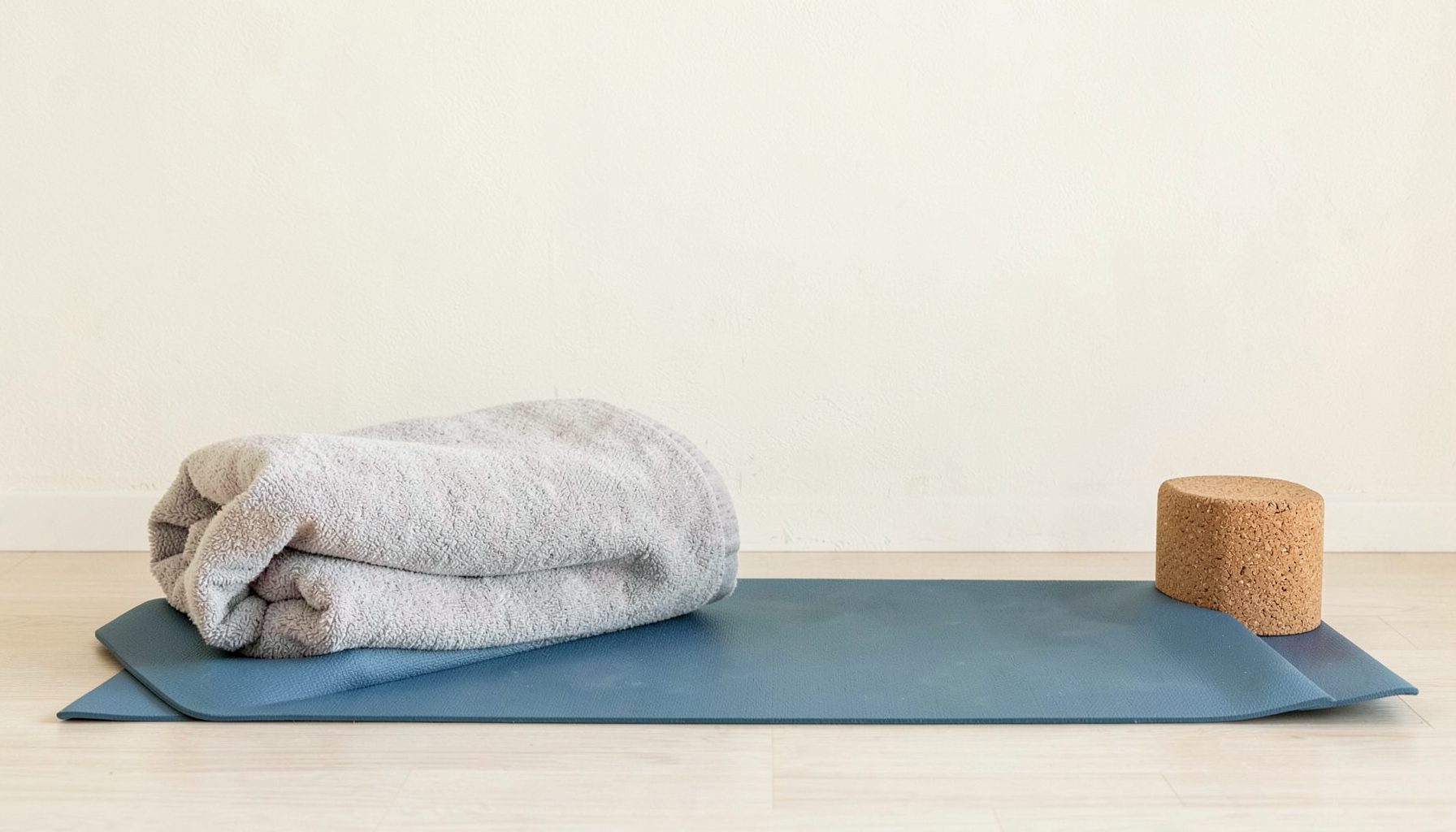
Choose a warm, quiet area where you can lie down without needing to rush. A folded blanket, bolster, cushion, or pillow can support the knees, hips, and head. You may also want socks, a sweater, or a warm water bottle nearby. Comfort is part of the practice, not an extra reward for finishing it.
Begin on your back with the knees bent and feet resting on the floor. Place one hand over the lower belly and one over the chest. Take five unhurried breaths, allowing the inhale to arrive without effort and making the exhale a little longer. Notice whether your jaw, shoulders, and hands are gripping, and release only what you can release today.
If your upper body also feels tense, add a few slow shoulder rolls or a supported arm stretch before working with the pelvis. Camille Dodson Yoga’s gentle shoulder flow can complement a cramp-focused practice, especially when discomfort has led you to curl forward or stay in one position for a long time.
A Breath-Led Floor Sequence
Start with supported constructive rest. Lie on your back, bend your knees, and rest them together, or place a cushion beneath each knee if that feels better. Let your arms settle alongside you. Stay for one to three minutes, breathing softly and noticing the weight of your back against the floor.
Move into windshield-wiper legs. Keep the feet a little wider than the hips and slowly allow both knees to sway to one side, then return through center and travel to the other side. The movement can be very small. Continue for six to ten rounds, keeping the pace slow enough that the pelvis feels supported rather than pulled.
Bring the soles of the feet together for a supported reclined butterfly, using cushions beneath the outer thighs. If this position creates strain in the groins or abdomen, return to bent knees. Remain for five to eight breaths, relaxing the tongue and softening the muscles around the eyes.
From there, roll onto one side and come to hands and knees if that feels comfortable. Practice a gentle cat-cow variation by rounding and lengthening the spine within a small range. On the inhale, let the chest move slightly forward; on the exhale, allow the tailbone and forehead to move toward one another without forcing the shape. Five slow rounds may be enough.
Finish in child’s pose with the knees wide or together, depending on what feels best. Rest the forehead on stacked hands, a block, or a pillow. You can also place a cushion beneath the chest for a more restorative version. Stay for several breaths, then move slowly onto your side before sitting up.
Choose The Right Practice For Your Energy
There is no single ideal sequence for every phase of menstruation. Some people feel better with a little rhythmic movement, while others need stillness, heat, and sleep. Use the guide below to match the practice to your current symptoms rather than following a calendar rigidly.
| How you feel | Helpful focus | Suggested poses | Timing |
|---|---|---|---|
| Mild cramps with steady energy | Gentle mobility | Cat-cow, pelvic tilts, supported bridge | 10–20 minutes |
| Stronger abdominal or back ache | Rest and warmth | Constructive rest, child’s pose, side-lying rest | 5–15 minutes |
| Fatigue or heavy bleeding | Nervous system calming | Reclined butterfly with support, legs on a chair, quiet breathing | 3–10 minutes |
| Tight hips and low back | Small, comfortable range of motion | Windshield-wiper legs, knee-to-chest, supported twist | 8–15 minutes |
| Irritability or mental tension | Exhale-focused regulation | Seated breathing, humming, body scan | 5–12 minutes |
For a supported twist, lie on your back and draw the knees toward the chest. Lower both knees to one side while keeping the shoulders relaxed, then return to center and change sides. Place a pillow under the knees if they do not rest easily. The twist should feel spacious and soothing, never compressed.
Legs on a chair can be especially useful when the whole body feels tired. Lie on your back with the lower legs resting on a seat so the knees and hips are comfortably bent. Cover yourself with a blanket and allow the breath to become quiet. This position reduces the work required from the legs and can make it easier to pause.
Adapt Poses For Comfort
During menstruation, flexibility and strength can vary. A pose that normally feels accessible may suddenly create pressure in the lower belly or pelvis. Use props generously and reduce the range of motion. There is no need to seek a deep stretch when the body is already asking for protection.
For low-back discomfort, try a small pelvic tilt. Lying down with bent knees, gently draw the front of the pelvis toward the ribs so the lower back becomes a little heavier on the floor. Release immediately and repeat five to eight times. Keep the movement subtle; the purpose is to explore support, not flatten the spine aggressively.
If lying down is uncomfortable, practice seated breathing with your back supported by a wall. Place both feet on the floor and rest your hands on the thighs. Inhale for a natural count and exhale slowly, without holding the breath. A few minutes of this simple rhythm may be more beneficial than a full series of poses.
Avoid strong abdominal exercises, forceful twists, intense backbends, and inversions if they increase pressure or feel unsuitable for your body. Heated rooms may also worsen fatigue or light-headedness. Hydrate, eat when needed, and stop whenever your body communicates a clear no.
Create A Sustainable Cycle Ritual
A menstrual yoga routine becomes easier to return to when it is connected to ordinary moments. You might practice supported rest after waking, take five breaths before using a heat pack, or spend ten quiet minutes on the mat before bed. A small ritual removes the pressure to make every session impressive.
Keep a simple record of what you notice: the first day of bleeding, pain intensity, energy, sleep, digestion, and which movements felt helpful. This is not a demand to track every detail. It is a way to recognize patterns and choose more intelligently next time. If digital habits contribute to stress, a brief pause to review your transaction history can also support honest awareness of routines that affect your sense of calm and security.
Mindfulness here means listening without turning symptoms into a personal failure. You may feel impatient, emotional, or disconnected from your body. Notice those reactions with kindness, then return to one physical point of contact: the feet on the floor, the hand on the belly, or the support beneath your back.
A Gentle Plan For Practice
Use the following sequence as a flexible starting point. You can complete it in order, choose only one or two options, or replace any posture that does not suit your symptoms. Resting between movements is part of the sequence.
- Begin with one minute of supported breathing and relaxed shoulders.
- Continue with six slow rounds of windshield-wiper legs.
- Rest in supported child’s pose or constructive rest for two minutes.
- Add five small pelvic tilts or gentle cat-cow movements.
- Finish with legs on a chair, a body scan, or quiet sitting.
Pain that is severe, sudden, worsening, or accompanied by fainting, fever, vomiting, unusually heavy bleeding, or pain between periods deserves medical attention. Speak with a qualified healthcare professional if cramps regularly disrupt work, sleep, movement, or daily life. Yoga can complement appropriate care, but it should not replace assessment or treatment.
Let your practice change with you. On one day, that may mean a few slow hip movements; on another, it may mean lying down with a blanket and breathing for three minutes. Return to the mat when it offers support, and allow gentleness to be a meaningful form of movement.
Explore these calming practices through Camille Dodson Yoga’s classes, reflections, retreats, and downloadable resources. Choose one sequence, create a comfortable space, and give yourself permission to move at the pace your cycle requires.