




Yoga for headache relief: gentle inversions and temple massage
Headaches can make even ordinary movement feel demanding. A tight neck, clenched jaw, long hours at a screen, dehydration, poor sleep, or emotional stress may all contribute to the pressure behind the eyes or across the temples. When the head hurts, an intense yoga class is rarely the most supportive choice. A quiet practice with slow breathing, gentle mobility, and mindful touch can offer a more appropriate path.
Gentle yoga for headache relief is less about forcing the body into a shape and more about reducing unnecessary effort. Supported forward folds, restorative inversions, neck awareness, and temple massage may help soften muscular tension and create a calmer internal environment. These techniques are simple, but they work best when practiced with patience and clear attention to the body’s signals.
Yoga cannot diagnose or treat every kind of headache. A sudden, severe, unusual, or rapidly worsening headache requires prompt medical attention. Seek professional care for headaches accompanied by weakness, confusion, fainting, vision changes, fever, stiff neck, difficulty speaking, or injury. The practices below are intended for mild, familiar tension and stress-related discomfort when gentle movement feels appropriate.
Begin with safety and body awareness
Before practicing, pause for a moment and notice what kind of headache you have. Is the discomfort familiar? Does it feel connected to tight shoulders, a stiff upper back, jaw tension, or prolonged concentration? A mild tension headache may respond well to relaxation, while movement may aggravate a migraine or a headache linked to illness.
Skip inversions if they increase throbbing, pressure, dizziness, nausea, or visual disturbance. Even a mild pose can feel too stimulating when the nervous system is already overwhelmed. Resting in a comfortable position, drinking water, eating if you have missed a meal, or taking prescribed medication may be more suitable.
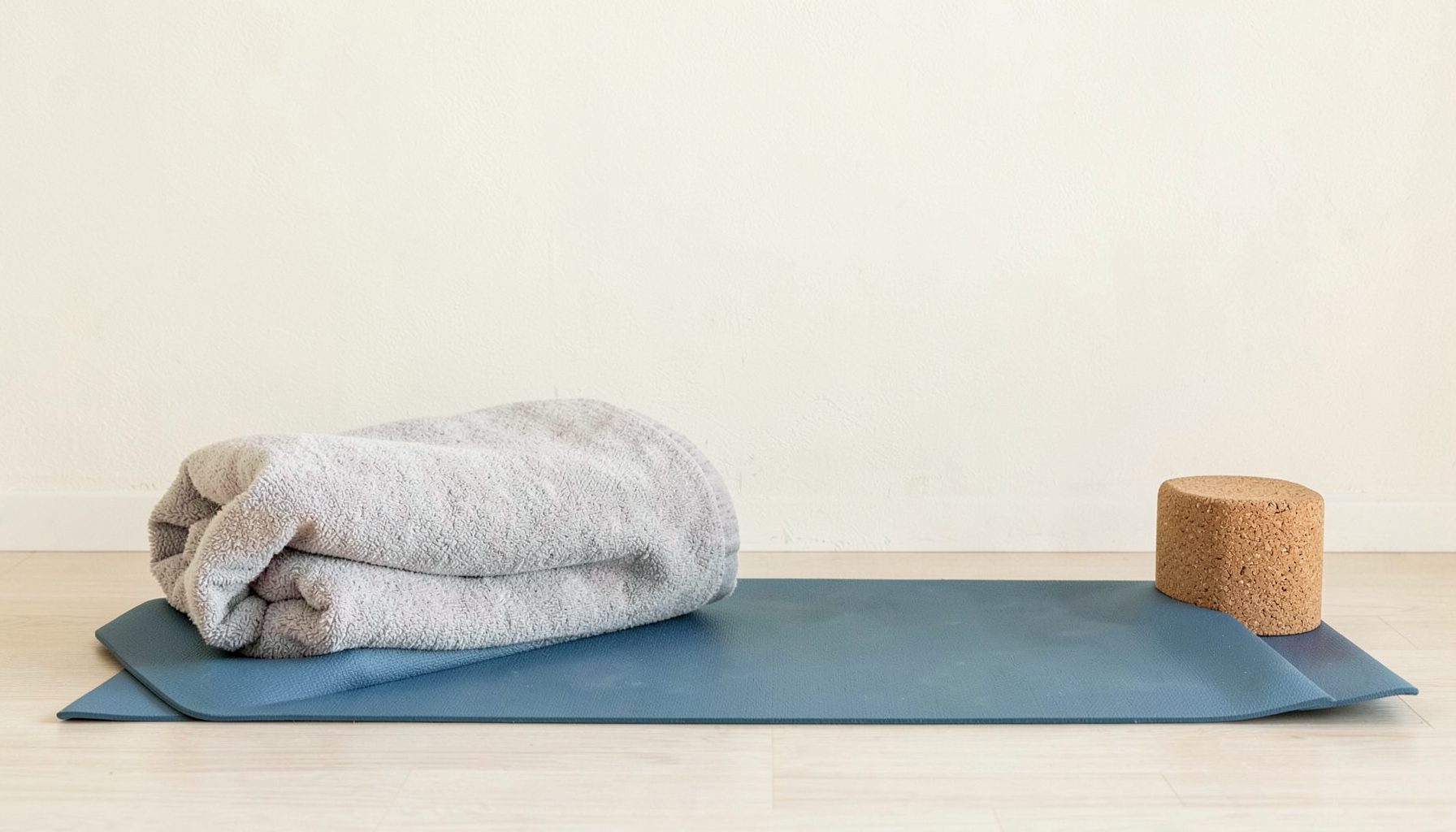
Choose a quiet space with soft lighting. Remove glasses if they create pressure, loosen restrictive clothing, and keep a folded blanket or pillow nearby. The aim is to make the practice easier, not to complete a fixed sequence. Let comfort determine the duration and depth of every movement.
Prepare the neck, shoulders, and breath
Start seated on a chair, cushion, or the edge of a bed. Place both feet on the floor and allow your hands to rest loosely on your thighs. Lengthen through the crown of the head without pulling the chin back. Take several easy breaths, letting the exhalation become slightly longer than the inhalation.
Move slowly through small shoulder rolls, drawing the shoulders up toward the ears and then releasing them down. Repeat three to five times. Follow with gentle neck movements: turn your head a little to the right, return to center, and then turn a little to the left. Keep the range small and stop if you feel strain, dizziness, or increased pain.
You can also soften the jaw by allowing the teeth to separate. Let the tongue rest comfortably rather than pressing it against the roof of the mouth. Many people unconsciously clench during concentration or stress, and releasing the jaw may reduce tension that radiates toward the temples, forehead, and base of the skull.
Try a simple breathing pattern without holding the breath. Inhale naturally through the nose if that feels comfortable, then exhale slowly and quietly. If nasal breathing is blocked, breathe through the mouth without forcing it. Five to ten relaxed breaths may be enough to shift the practice from effort toward ease.
Explore gentle inversions without pressure
Inversions place the head below or level with the heart, but they do not need to be dramatic. For headache support, choose restorative variations that keep the neck long and the face relaxed. Child’s pose with the forehead supported on stacked cushions is one option, provided the position feels soothing rather than compressive.
Kneel with your knees comfortably apart and bring your torso forward onto a bolster, pillows, or a folded blanket. Turn your head to one side, then change sides halfway through if that feels comfortable. Keep the arms relaxed. Stay for five to eight breaths, allowing the support to carry your weight instead of pressing the forehead into the floor.
A standing forward fold can be adapted with generous support. Stand with feet hip-width apart and bend the knees deeply. Rest the forearms on a chair seat or place the head on a stack of cushions positioned on a table or yoga blocks. The head should feel supported, and the spine should not be pulled downward.
Legs up the wall is another restorative posture, although it is technically a mild inversion rather than a head-down pose. Sit sideways beside a wall, lower onto your back, and extend the legs upward. Keep the hips a comfortable distance from the wall rather than forcing them close. Place a folded blanket beneath the head only if it keeps the neck neutral.
Remain for two to five minutes, breathing naturally. If you notice pulsing pressure, facial flushing, ear discomfort, or a sense that the headache is intensifying, slowly come out of the posture. Roll onto your side before sitting up, giving your circulation time to adjust.
| Practice | How to set it up | Potential benefit | When to stop or modify |
|---|---|---|---|
| Supported child’s pose | Rest the torso and forehead on cushions | Encourages upper-back release and quiet breathing | Stop if the forehead feels compressed or breathing is restricted |
| Chair-supported forward fold | Bend the knees and support the forearms or head | Reduces effort through the neck and shoulders | Modify if the position causes throbbing or dizziness |
| Legs up the wall | Lie on the back with legs elevated comfortably | Offers a restful change in circulation and posture | Avoid if pressure increases or the pose feels disorienting |
| Seated rest | Sit on a chair with feet grounded | Provides a neutral option when inversions feel wrong | Choose lying down instead if sitting increases fatigue |
Use temple massage with a light touch
Temple massage can complement gentle yoga by bringing attention to areas that often hold stress. Begin by warming your hands through friction or simply resting them together for a few breaths. Place the pads of the index and middle fingers on the soft area between the outer corner of the eye and the upper ear.
Make small, slow circles with very little pressure. The touch should feel soothing rather than corrective. Try five circles in one direction and five in the other, then pause and notice whether the sensation is calming. Keep your facial muscles relaxed and avoid pressing directly on the eyeball or rubbing the skin vigorously.
You can extend the massage along the brow line. Starting near the inner brow, glide outward with the pads of your fingers toward the temples. Repeat slowly two or three times. Then trace along the ridge beneath the eyebrows if that feels comfortable. This can be especially pleasant after screen use, though it should never cause tenderness or visual symptoms.
The base of the skull is another useful area to explore. Interlace the fingers behind the head or place the fingertips where the skull meets the neck. Rather than digging into the muscles, let the fingers provide gentle contact while the head remains supported. You might combine this with a slow exhale, imagining the back of the neck widening.
Massage is not suitable for every headache. Avoid it over irritated skin, recent injury, unexplained swelling, or areas that are acutely painful. If the headache is migraine-like and touch feels intolerable, keep the hands still or place a cool cloth over the forehead instead.
Pair movement with meditation and rest
After massage, settle into a supported seated position or lie down. Let the arms rest by your sides, and place a cushion beneath the knees if you are on your back. Notice the points of contact beneath you: feet, legs, pelvis, shoulders, and the back of the head. This grounding awareness can help reduce the urge to monitor or fight the discomfort.
A short meditation can make the practice more sustainable. Rather than trying to empty the mind, observe the breath, sounds, and physical sensations as they arise. If the headache becomes the main focus, gently shift attention to the hands, feet, or the feeling of the floor supporting you. The goal is presence without judgment.
For a clear, beginner-friendly approach, try this seated meditation guide as a separate practice or after gentle movement. Even a few minutes of mindful breathing may be enough. There is no need to prolong meditation if stillness makes the symptoms more noticeable.
You can finish with a simple body scan. Bring awareness to the forehead, eyes, jaw, throat, shoulders, chest, and abdomen. At each area, ask the body to use a little less effort. Avoid commanding the headache to disappear; instead, create conditions in which the rest of the body can feel safer and more supported.
Build a supportive headache-care routine
A single practice may provide comfort, but regular habits can make it easier to notice patterns. Keep track of when headaches occur, how long they last, what you have eaten and drunk, your sleep quality, screen time, stress levels, and any movement that helped or aggravated symptoms. This information can be useful when speaking with a healthcare professional.
Practice gentle shoulder and neck mobility before discomfort becomes intense. A few minutes of movement during a workday may be more helpful than waiting until the body feels locked up. Set the screen at a comfortable height, allow the eyes to look into the distance regularly, and check that the jaw is not clenched.
Hydration, consistent meals, restful sleep, and appropriate medical guidance also matter. Yoga can support these habits through awareness, but it cannot replace assessment for recurring or severe headaches. If headaches are frequent, changing, disabling, or requiring regular pain medication, consult a qualified healthcare provider.
Use the following choices as a simple guide:
- Choose seated breathing when you feel sensitive, tired, or uncertain about movement.
- Try supported child’s pose or a chair-supported fold when the neck and shoulders feel tight.
- Use legs up the wall only when a mild inversion feels calming and symptom-free.
- Practice temple massage with feather-light pressure, stopping at the first sign of irritation.
- Finish with rest, hydration, and a gradual return to standing rather than rushing into activity.
A gentle yoga practice for headaches should leave you feeling more settled, not tested. Some days that may mean several supported postures and a few minutes of massage. On other days, the most skillful choice may be to lie down in a quiet room and seek appropriate care.
Explore mindful movement through Camille Dodson Yoga classes, retreats, reflections, and downloadable resources designed to support a sustainable personal practice. Return to these techniques when they feel useful, move slowly, and let self-compassion guide the amount of effort you offer.