




Yoga for grief: movement that holds space for sorrow
Grief can alter the texture of an ordinary day. A familiar room may feel strange, the body may seem heavy or restless, and simple decisions can require unusual effort. Sorrow does not follow a tidy sequence, and it rarely stays in one place. It may appear as tears, silence, anger, numbness, fatigue, relief, or a sudden ache brought on by a song or scent.
A yoga practice cannot remove loss, explain it, or hurry the grieving process. It can offer a quiet place to notice what is present without demanding that anything be fixed. Through supported movement, steady breathing, and moments of stillness, practice can help someone remain gently connected to their body while making room for pain.
This approach is less about achieving poses and more about relationship: a compassionate relationship with breath, sensation, memory, and changing capacity. On some days, that may mean several minutes of mindful movement. On others, it may mean lying down, placing a hand over the heart, or choosing rest without judgment.
Meeting grief with presence
Grief often brings a complicated relationship with the body. Some people feel disconnected from physical sensations, while others experience tension, agitation, shallow breathing, or a constant sense of exhaustion. These responses are understandable. The nervous system is adapting to a profound change, and its need for safety may shift from hour to hour.
A gentle yoga practice begins by respecting that reality. There is no requirement to feel peaceful, flexible, or emotionally open. Instead, practice can start with simple observations: the support beneath the body, the temperature of the air, the movement of the ribs, or the contact between feet and floor. These details can provide an anchor without denying sorrow.
Mindfulness in this setting is not forced positivity. It is the willingness to notice a difficult moment with kindness. If sadness rises during a stretch, the response does not need to be analysis or suppression. Pausing, breathing naturally, and allowing the feeling to exist can be a meaningful form of self-compassion.
Why gentle movement can help
Slow movement gives grief somewhere to be felt. Rolling the shoulders, circling the wrists, stretching the calves, or moving between supported shapes may ease some of the muscular bracing that accompanies stress. The aim is not to produce a dramatic emotional release. Small, rhythmic actions can simply remind the body that movement remains available.
Breathwork may offer another pathway toward steadiness, though breathing practices should remain comfortable and unforced. A longer exhale can feel soothing for some people, while others may become more anxious when focusing closely on breath. There is no universally correct technique. Natural breathing, humming softly, or noticing one full exhalation may be enough.
Restorative yoga can be especially supportive because props reduce the need to hold the body up. A blanket beneath the knees, a cushion under the head, or a bolster along the spine can create a sense of being held. Supported child’s pose, reclined bound angle pose, legs resting on a chair, and a spacious savasana can all be adapted to meet the day’s needs.
The practice remains beneficial when it is brief. Five intentional minutes can matter. A few movements beside the bed can matter. The value lies in listening rather than completing a demanding sequence.
Practices for difficult days
When energy is low, begin close to the ground. Sit in a chair or lie on a mat, and notice three points of contact between the body and its support. From there, try slow ankle movements, opening and closing the hands, or turning the head gently from side to side. These actions are simple enough to perform without leaving the room, yet they bring attention back to present-time sensation.
For a restless or agitated body, gentle standing movement may feel more appropriate. Press the feet into the floor, sway slowly, or raise and lower the arms in rhythm with comfortable breathing. A supported forward fold over a table or chair can provide containment without requiring the body to reach deeply.
The following guide can help match practice to capacity rather than expectation:
| If the day feels like… | Consider… | Keep in mind… |
|---|---|---|
| Heavy and depleted | Reclined rest, ankle movements, legs on a chair | Short practice is enough |
| Restless or tense | Slow standing sway, shoulder rolls, supported folds | Keep the eyes open if that feels safer |
| Numb or disconnected | Pressing hands together, mindful walking, gentle tapping | Focus on clear physical sensations |
| Overwhelming or anxious | Feet on the floor, natural breathing, orienting to the room | Stop any technique that increases distress |
| Emotionally raw | Side-lying rest, cushions, quiet humming | Tears or pauses do not mean failure |
A sequence should remain optional from beginning to end. If a pose creates strain, dizziness, pain, or emotional flooding, come out slowly and return to a neutral position. Grief-sensitive movement is shaped by consent: the body gets to change its mind.
Letting the practice change
A sustainable practice during bereavement cannot be measured by consistency in the usual sense. There may be weeks when attending a class feels supportive, followed by days when leaving home feels impossible. Adapting the practice is not abandoning it. It is responding honestly to available energy.
Consider creating several versions of the same routine. A full version might include gentle sun movements, standing poses, and a longer rest. A shorter version could include cat-cow movements, a seated twist, and three quiet breaths. The smallest version might involve placing both feet on the floor and stretching the fingers.
This flexibility can reduce the pressure to perform wellness. The purpose is not to become a better grieving person or to appear calm. The purpose is to establish a reliable invitation back to the body. Repetition may eventually make that invitation easier to accept, though progress may remain uneven.
A journal can accompany movement without becoming another task. After practice, write one word for the body, one word for the mood, and one kind action for the next hour. This keeps reflection grounded and modest. It also acknowledges that care may look like eating something warm, calling a trusted person, taking medication as prescribed, or going to bed early.
Building a supportive home practice
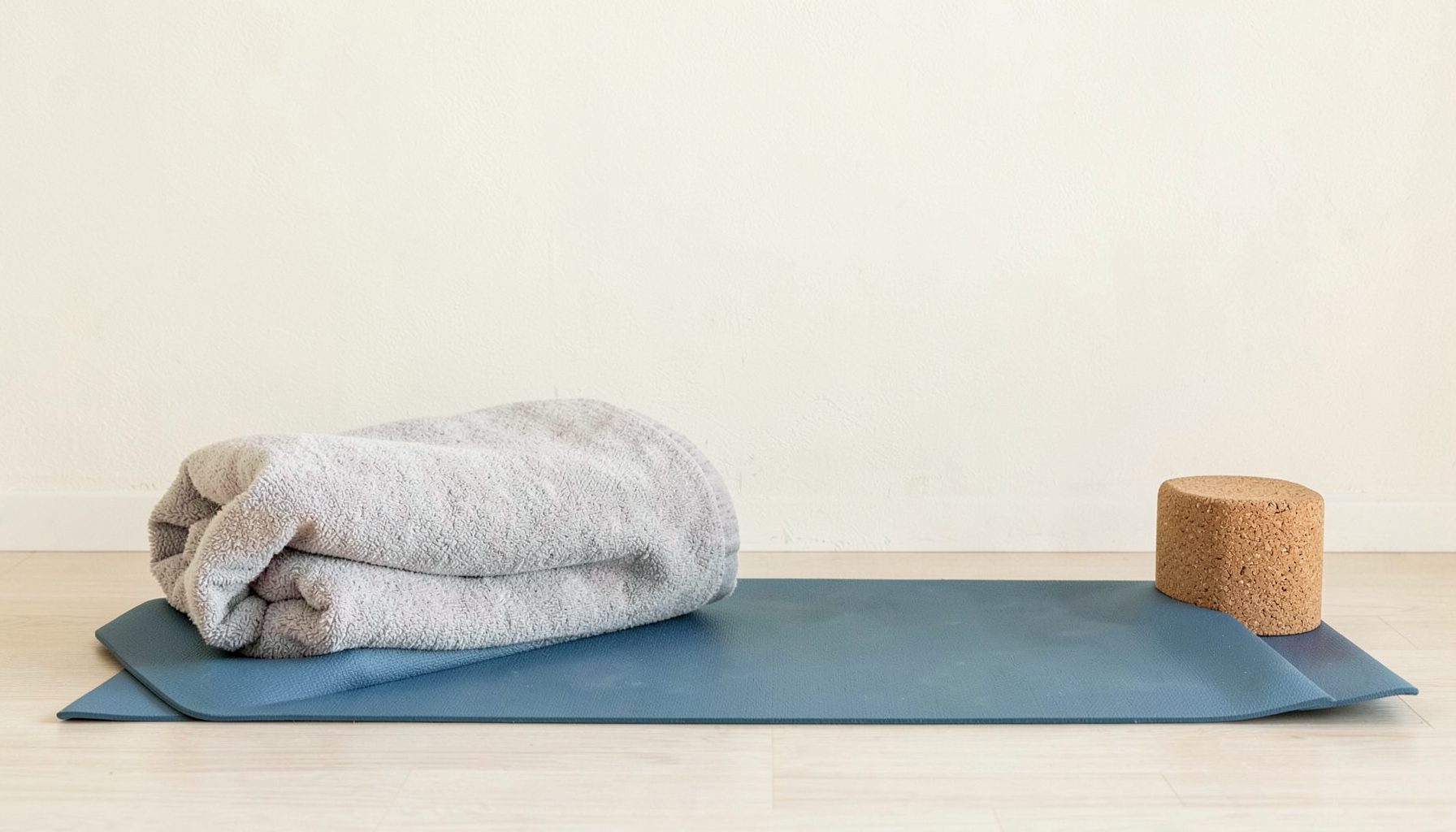
A home practice can be shaped around sensory comfort. Use soft lighting, familiar music, a warm layer, or a clear patch of floor. Keep props nearby so that choosing support requires little effort. A folded blanket, firm cushion, wall, and chair can make many poses more accessible.
Begin with orientation rather than performance. Look around the room and name a few neutral details: a color, a shape, a source of light. Feel the floor beneath the feet. Then allow the first movement to be almost imperceptible. This approach can be particularly helpful when grief has brought dissociation or a sense of unreality.
For days when sorrow arrives alongside worry, a grounding sequence can offer a gentle structure before or after movement. Grounding does not ask grief to disappear; it helps create enough steadiness to meet the next moment.
Silence is also a valid component of practice. Some people find comfort in a guided meditation, while others prefer to hear only the breath and the sounds of the home. Let the environment support rather than distract. There is no need to fill every pause with instruction.
Ways to practice with care
Yoga can accompany grief, but it should not be expected to carry grief alone. Trusted friends, family members, grief counselors, support groups, spiritual communities, and healthcare professionals can provide forms of care that movement cannot. Reaching for support is a sign of connection, not inadequacy.
It may help to establish a few boundaries around practice. Avoid pushing through sharp pain or intense emotional distress. Give yourself permission to stop. Choose open-eyed movement if closing the eyes feels uncomfortable, and keep a phone nearby if being alone feels difficult. If grief includes thoughts of self-harm or an inability to stay safe, contact emergency services or a crisis support service immediately.
A compassionate approach might include these choices:
- Choose a five-minute practice when a longer session feels impossible.
- Use props, walls, and chairs to reduce effort and increase a sense of support.
- Replace breath retention or intense techniques with natural, easy breathing.
- Invite a trusted person to practice nearby or attend a gentle class together.
- Finish with a practical act of care, such as water, food, warmth, or rest.
Teachers can help by offering options rather than assumptions. Language matters: “if it feels supportive,” “you might explore,” and “you can rest here” preserve agency. A grief-aware class leaves room for emotion without drawing attention to anyone’s private experience.
Carrying the practice gently
There may be no clear point at which grief is finished. Over time, its expression may change, but love and loss can remain part of a person’s inner landscape. Yoga can provide a recurring place to meet that landscape with patience, breath, and embodied kindness.
Let the practice be small enough to return to and spacious enough to change. Come to the mat for movement, stillness, grounding, or rest. Explore gentle classes, reflective resources, and practices that honor the whole range of human experience, and allow each session to begin exactly where you are.