


Yoga for anxiety: a grounding sequence for overwhelming days
Anxiety can make an ordinary day feel unusually loud. Thoughts race ahead, the body tightens, and even simple decisions may seem difficult. In those moments, a yoga practice does not need to be ambitious or physically demanding. A few steady movements, a supported posture, and an unhurried breath can help you reconnect with the present.
This grounding sequence is designed for days when your nervous system feels overstimulated. It combines gentle yoga, mindful movement, breath awareness, and sensory attention. You can practise it on a mat, beside your bed, or in a quiet corner with no special equipment.
There is no perfect way to move through the sequence. If a posture increases discomfort, reduce the range of motion, return to natural breathing, or rest. The purpose is to create a little more space around anxious sensations, with patience rather than pressure.
Why grounding can help with anxiety
Anxiety often pulls attention towards imagined future events, unfinished tasks, or possible problems. Grounding practices offer a different direction: they bring awareness back to physical sensations that are available now. Feeling your feet against the floor, noticing the support beneath your body, or following one complete exhalation can interrupt the momentum of spiralling thoughts.
Yoga may support this process through a combination of movement and stillness. Slow transitions give the mind a simple task, while accessible postures help release habitual tension in the shoulders, jaw, hips, and abdomen. The goal is not to force calm. A grounded practice gives your system a safe, manageable experience of being present.
Approach each movement as an invitation. You might feel calmer after the sequence, or you might simply feel more aware of what is happening. Both responses are valid. Self-compassion matters because anxiety can become stronger when you judge yourself for having it.
Create a supportive setting
Before beginning, choose a position that feels stable. Sitting on a folded blanket, lying on your side, or standing near a wall are all suitable options. Lower the lights if that feels comforting, silence notifications, and keep water nearby. You can practise for five minutes or continue for twenty, depending on your energy and attention.
Start by looking around the room. Name three neutral things you can see, two sounds you can hear, and one point of contact between your body and its surroundings. This simple sensory check can soften the feeling that anxiety is taking up the whole of your awareness.
Let your breathing remain natural at first. Avoid taking large, dramatic breaths if you already feel light-headed or tense. A gentle breath that stays comfortable is more useful than an exaggerated technique. If breath-focused practices make you uneasy, keep your eyes open and place more attention on the floor, wall, or objects around you.
A gentle grounding sequence
Begin standing in mountain pose, with your feet about hip-width apart. Let your arms rest by your sides, soften your knees, and notice the weight of your body moving towards the floor. Press down through your feet for two or three breaths, then release the effort while keeping the sense of support.
Move into a slow standing side stretch. Inhale as your arms float overhead, or raise one arm at a time if your shoulders feel sensitive. Exhale as you lean gently to the right, keeping both feet grounded. Return to centre and repeat on the left. Take two easy rounds, moving slowly enough to track each part of the transition.
From standing, fold forward with bent knees and let your upper body hang towards the floor, or rest your hands on a chair or a stack of books. Allow your head and neck to relax only if that feels comfortable. Stay for three breaths, then roll up gradually, keeping your knees soft. This movement can help you notice the difference between effort and release.
Come onto hands and knees for a quiet version of cat-cow. As you inhale, lengthen your spine without forcing your chest forward. As you exhale, gently round your back and allow your head to follow the curve. Move through four to six rounds, using the breath as a steady rhythm rather than trying to stretch deeply.
Finish on your back with your knees bent and feet on the floor. Place one hand on your chest and one on your abdomen, or rest both arms beside you. Feel the back of your body being held by the ground. Stay here for several breaths, allowing the sequence to settle.
| Practice | How to do it | Grounding focus |
|---|---|---|
| Mountain pose | Stand with soft knees and feet firmly supported | Pressure beneath the feet |
| Side stretch | Reach up and lean gently from side to side | Length through the ribs |
| Supported forward fold | Bend the knees and rest hands on a support | Release in the neck and shoulders |
| Cat-cow | Move between a long spine and a soft rounding | Breath-led coordination |
| Constructive rest | Lie down with knees bent and feet grounded | Support from the floor |
Let the breath stay simple
When anxiety is high, complicated breathing instructions can feel like another task to complete. Begin with an easy inhale and a slightly longer, relaxed exhale. Do not strain to empty the lungs. You might silently count in for three and out for four, then return to ordinary breathing whenever counting creates tension.
Try placing attention on the end of the exhalation. Notice the small pause before the next inhale arrives without needing to control it. This can encourage a sense of steadiness while keeping the practice gentle. If you feel dizzy, breathless, or unsettled, stop counting and breathe normally.
For evening anxiety or a busy mind at bedtime, Camille Dodson Yoga’s sleep breathwork guide offers a slower practice that can be explored separately. During the grounding sequence, the most important principle is comfort. Your breath should support awareness, never become a test of endurance.
You can also pair breathing with a phrase such as “I am here” on the inhale and “I can soften” on the exhale. Choose language that feels believable. Grounding affirmations work best when they acknowledge the present rather than making promises about how you must feel.
Adjust the practice to your nervous system
An anxious body may respond well to movement, or it may need stillness. If you feel restless, repeat the standing side stretch or take a slow walk around the room while noticing each footfall. If you feel frozen or depleted, skip the standing postures and practise constructive rest with your eyes open.
Some people find closed-eye practices soothing, while others feel more secure with their eyes open. You can focus on a fixed point, soften your gaze, or look around the room throughout the sequence. These choices are part of making yoga accessible and responsive to your needs.
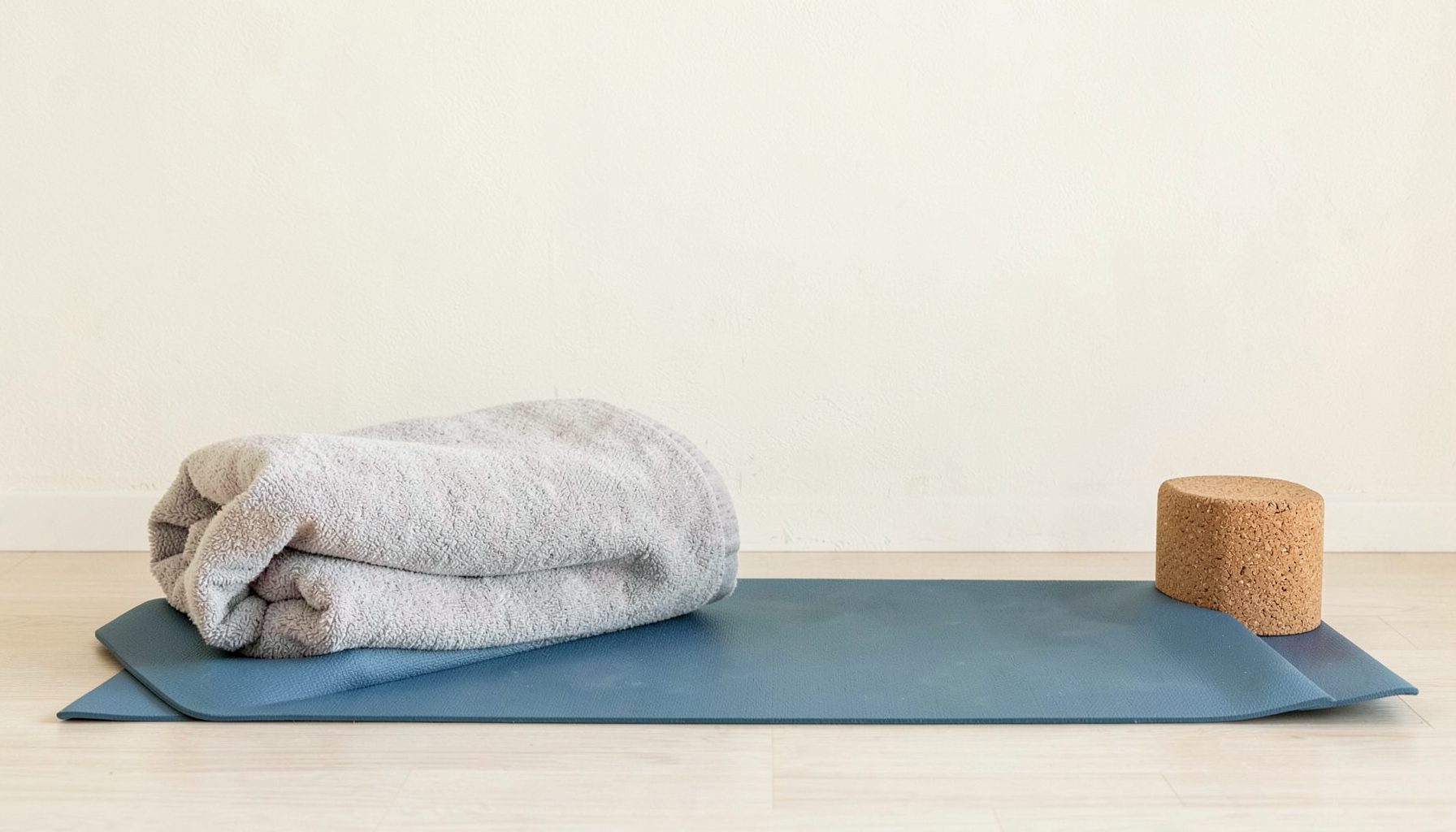
Props can make a meaningful difference. A wall can support balance, a chair can replace a deep forward fold, and a cushion can reduce strain while sitting. There is no requirement to perform a posture in its traditional shape. A sustainable yoga practice is one you can return to without fear, pain, or unnecessary effort.
If anxiety feels intense, persistent, or connected to trauma, yoga should sit alongside appropriate professional support rather than replace it. A mental health professional can help you find care suited to your circumstances. Stop any movement that causes sharp pain, numbness, or a sense of danger, and seek medical advice when needed.
Build a small daily ritual
A short practice can be easier to maintain than an occasional demanding session. Consider choosing one consistent anchor, such as after waking, before lunch, or at the end of the workday. Even three minutes of feet-on-the-floor awareness and gentle spinal movement can reinforce the habit of checking in with yourself.
Keep the sequence flexible. On one day, you may complete every movement. On another, you may use only mountain pose and a supported rest. Progress can mean recognising what you need sooner, taking a pause before overwhelm peaks, or responding to anxious thoughts with less criticism.
A simple journal note can help you observe patterns without turning practice into a performance. Record the posture that felt supportive, the quality of your breath, or one sensation you noticed. Over time, these observations can show which forms of mindful movement help you feel more anchored.
Ways to make the practice easier to return to
- Keep a blanket, cushion, or chair available in the place where you usually practise.
- Set a gentle timer for five minutes so you do not need to monitor the clock.
- Begin with sensory grounding before breathwork if focused breathing feels uncomfortable.
- Choose one phrase that encourages patience rather than demanding immediate calm.
- End with a moment of appreciation for showing up, whatever the practice felt like.
Anxiety does not have to disappear for grounding to be worthwhile. The practice may simply help you feel your feet, notice your surroundings, and create a pause before reacting. Those small moments can become a reliable form of support during demanding days.
Return to this sequence whenever your attention feels scattered or your body is holding more tension than usual. Explore gentle classes, reflective resources, and downloadable practices from Camille Dodson Yoga to develop a kinder, sustainable relationship with movement, breath, and rest.