



Yoga for desk workers: seven poses to lengthen and restore the spine
Long hours at a desk can leave the body feeling compressed. The head drifts forward, the shoulders round toward the keyboard, and the hips remain folded for much of the day. Even when the chair feels comfortable, stillness can gradually reduce the natural movement available through the spine, ribs, shoulders, and pelvis.
A gentle yoga practice offers a practical way to counter these patterns. Spine-lengthening poses do not force the back into a dramatic stretch. Instead, they create space through the vertebrae, encourage fuller breathing, strengthen postural support, and bring awareness to areas that may have become numb or tense.
The following sequence is designed for desk workers, remote employees, writers, drivers, and anyone whose daily routine involves prolonged sitting. You can practise the full series on a yoga mat or choose two or three poses for a short movement break beside your desk. Move slowly, breathe comfortably, and treat sensation as information rather than something to overcome.
Why sitting changes the way the spine feels
A seated posture commonly places the pelvis behind the centre of the body, especially when the lower back rounds toward a screen. The upper back may follow that curve, while the neck reaches forward to keep the eyes level. Over time, this position can make the back feel stiff even if there is no serious injury.
The body is adaptable, so these effects are not permanent. Small, regular changes in position can help restore mobility and reduce the sense of compression. Alternating between sitting, standing, walking, and floor-based movement gives the spine a wider range of experiences throughout the day.
Lengthening does not mean pulling the crown of the head upward while tightening every muscle. It means allowing the breath to expand the ribs, grounding through the pelvis or feet, and creating a sense of spaciousness from the base of the spine to the top of the head. That approach supports mindfulness and reduces the urge to push into a stretch.
Prepare your body with breath and gentle movement
Begin by standing or sitting comfortably and noticing your natural breathing pattern. Let the jaw soften, lower the shoulders away from the ears, and feel the points of contact beneath you. Take three slow breaths, allowing the exhalation to release unnecessary effort without collapsing the chest.
If you are sitting, place both feet on the floor and move away from the back of the chair if that feels stable. If you are standing, keep the knees relaxed rather than locked. A few shoulder rolls, wrist circles, and gentle side bends can prepare the body before the deeper shapes in this sequence.
Avoid practising through sharp pain, tingling, numbness, dizziness, or pain that travels into an arm or leg. People with recent spinal injuries, significant osteoporosis, or persistent symptoms should seek appropriate medical advice before beginning. Yoga can support everyday mobility, but it does not replace individual assessment or treatment.
Seven poses for a longer, more comfortable spine
Each pose offers a different way to counter desk posture. Some open the front of the hips and chest, while others mobilise the thoracic spine or strengthen the muscles that help you sit and stand with greater ease. Hold each shape for three to six breaths, or move gently in and out of it.
| Pose | Main area of focus | Helpful desk-related effect | Simple cue |
|---|---|---|---|
| Mountain pose | Whole spine and feet | Rebuilds upright alignment | Grow tall without stiffening |
| Cat-cow | Entire spinal column | Mobilises flexion and extension | Follow the breath slowly |
| Child’s pose with side reach | Back body and side ribs | Releases the low back and waist | Breathe into the outer ribs |
| Sphinx pose | Upper back and chest | Counters rounded shoulders | Draw the chest forward |
| Low lunge | Hip flexors and front body | Opens areas shortened by sitting | Keep the pelvis steady |
| Thread the needle | Upper back and shoulders | Relieves shoulder and neck tension | Let the shoulder soften |
| Supine twist | Spine and waist | Restores gentle rotation | Keep the breath smooth |
Mountain pose
Stand with your feet about hip-width apart, or bring the big toes together if that feels natural. Spread the toes, feel the soles connect with the floor, and let the knees remain soft. Stack the pelvis, rib cage, and head without forcing them into a rigid line.
Imagine the crown of the head floating upward while the tailbone releases toward the ground. Keep the ribs from flaring and allow the shoulder blades to settle. Take five breaths here, noticing how upright posture can feel supported rather than effortful.
Cat-cow
Come onto hands and knees with wrists beneath shoulders and knees beneath hips. On an inhale, broaden across the collarbones, lengthen the front of the body, and allow the spine to move toward a gentle arch. On an exhale, press the floor away and round through the back, letting the head follow naturally.
Move at a pace that matches your breathing. The aim is to explore the full length of the spine rather than achieve a particular shape. If kneeling is uncomfortable, practise the same movement seated, placing hands on the thighs and alternating between a lifted chest and a rounded back.
Child’s pose with side reach
From hands and knees, bring the hips toward the heels and lower the forehead toward the floor, a cushion, or stacked hands. Widen the knees if that creates more room for the abdomen. Extend the arms forward and take several breaths into the back ribs.
To add a side-body release, walk both hands to the right until you feel a stretch along the left side of the waist. Breathe into that space for three breaths, then repeat on the other side. This variation can feel especially useful after working with a mouse or leaning toward a laptop.
Sphinx pose
Lie on your stomach and place the forearms on the floor with elbows beneath or slightly ahead of the shoulders. Press gently through the tops of the feet and pubic bone, then draw the chest forward rather than pushing it forcefully upward. Keep the back of the neck long.
Sphinx pose encourages movement through the upper and middle back, areas that often become quiet during computer work. If you feel compression in the lower back, move the elbows farther forward or lower the chest slightly. Stay for three to five calm breaths, then rest with your head turned to one side.
Low lunge
Step the right foot forward from hands and knees and place the left knee on a folded blanket. Bring the hands to the floor, blocks, or the front thigh. Keep the front knee tracking toward the second toe and gently draw the left side of the pelvis forward.
The focus is the front of the left hip, which remains shortened during prolonged sitting. Avoid sinking heavily into the pose or arching the lower back. Instead, lift through the lower abdomen and imagine the spine rising away from the pelvis. Switch sides after several breaths.
Thread the needle
Return to hands and knees. Slide the right arm underneath the left, allowing the right shoulder and side of the head to rest on the mat or a cushion. Keep the hips above the knees and extend the left arm forward, or reach it toward the ceiling for a stronger shoulder variation.
This pose creates gentle rotation through the upper back and may ease tension around the shoulder blades. Keep the neck relaxed and stop if the position creates pain in the shoulder joint. After three to five breaths, press into the left hand to return and repeat on the opposite side.
Supine twist
Lie on your back with knees bent and feet on the floor. Draw the knees toward the chest, then lower them to the right while extending the arms out in a comfortable T shape. Keep both shoulders as relaxed toward the floor as possible, without forcing either one down.
Turn the head only if the neck feels comfortable. Breathe into the ribs and waist, then return to centre and change sides. A folded blanket beneath the knees can make the twist more accessible. This closing movement restores rotation after hours of facing one direction at a screen.
Build a sustainable movement break
A long session is not required to support spinal mobility. A two-minute pause every hour may be more useful than an ambitious practice that happens once a week. Stand up, look away from the screen, take a few steps, and choose one movement that addresses what you feel in the moment.
For example, Mountain pose can reset your standing alignment, Cat-cow can mobilise a stiff back, and Thread the needle can release tension around the shoulders. If the hips feel tight, practise Low lunge near the desk. If the nervous system feels overstimulated, Child’s pose with slow breathing may provide a quieter transition.
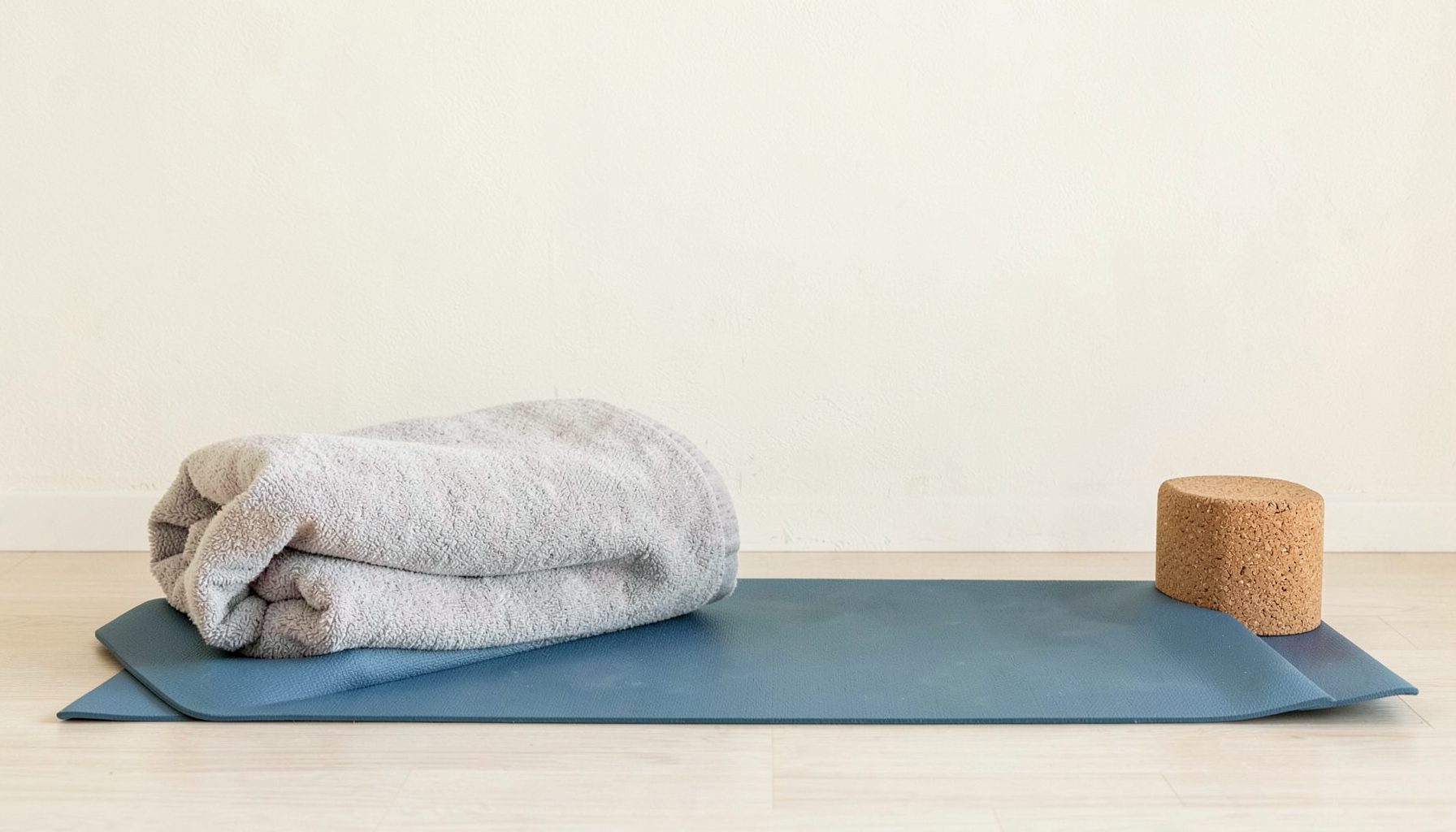
A simple home setup can make these pauses easier to maintain. You do not need a dedicated studio or a large room; a clear section of floor and a folded blanket may be enough. Camille Dodson Yoga’s guide to building a home practice offers ideas for working with limited space and making practice fit naturally into daily life.
Let breath guide the lengthening
Breathing is central to the feeling of spaciousness in these poses. The inhale can create lift through the chest, sides of the ribs, and back body. The exhale can soften the jaw, shoulders, and muscles that are working harder than necessary. There is no need to exaggerate either phase.
Try counting four gentle breaths in and five or six breaths out, provided that feels comfortable. A slightly longer exhalation may help settle after a demanding work period, while a natural, uncounted breath may be preferable if counting creates pressure. The best rhythm is one that remains smooth and unforced.
Notice whether the breath stops at the upper chest when you sit for long periods. Without trying to inflate the abdomen aggressively, invite movement into the side and back ribs. This awareness can make posture feel less like a rule to obey and more like an ongoing conversation with the body.
Make the practice work during a busy day
The most effective desk yoga routine is one that respects your schedule and energy. You might practise the complete sequence before work, use Mountain pose and Cat-cow during a morning break, then finish with a supine twist in the evening. Consistency matters more than duration or complexity.
Use these principles to keep the practice comfortable and realistic:
- Change position regularly instead of waiting until stiffness becomes intense.
- Choose a smaller range of motion when the body feels tired or sensitive.
- Support poses with a chair, wall, blanket, or blocks whenever that improves ease.
- Keep the breath steady and stop before sensation becomes sharp, gripping, or alarming.
- Notice which movements help, then return to those poses throughout the week.
A mindful practice also includes attention to the working environment. Raise the screen so the eyes can look forward, keep frequently used items within easy reach, and allow the feet to rest firmly rather than dangling. Ergonomics and yoga address different parts of the same pattern: one changes the surroundings, while the other restores movement and awareness.
The spine does not need to remain perfectly straight all day. Healthy alignment includes variation, rotation, rest, and movement in many directions. These seven poses can help desk workers reconnect with that variety while building a gentler relationship with posture and physical effort.
Set aside a few quiet minutes today for Mountain pose, Cat-cow, and one pose that meets your most noticeable area of tension. Return to the sequence regularly, adapting it to your body and your working day. With patient repetition, a short yoga break can become a dependable space to breathe, lengthen, and come back to yourself.