



How to Build a Home Yoga Practice When You Have No Space
A home yoga practice does not require a spare room, a studio floor, or a perfectly quiet household. It can begin beside your bed, between the sofa and coffee table, or on a small patch of floor where you can stretch your arms without touching the walls. The value of practice comes from regular attention, not from the size of the room.
Limited space can even encourage a more mindful approach to movement. Instead of flowing through a long sequence simply because there is room to do so, you can focus on breath, alignment, sensation, and the small choices that make practice feel supportive. A few intentional minutes may be more sustainable than an ambitious routine that is difficult to maintain.
The aim is to create a personal yoga space that works with your real life. With a few practical adjustments, gentle variations, and a flexible schedule, you can develop strength, mobility, calm, and self-compassion without rearranging your entire home.
Make Any Corner Feel Intentional
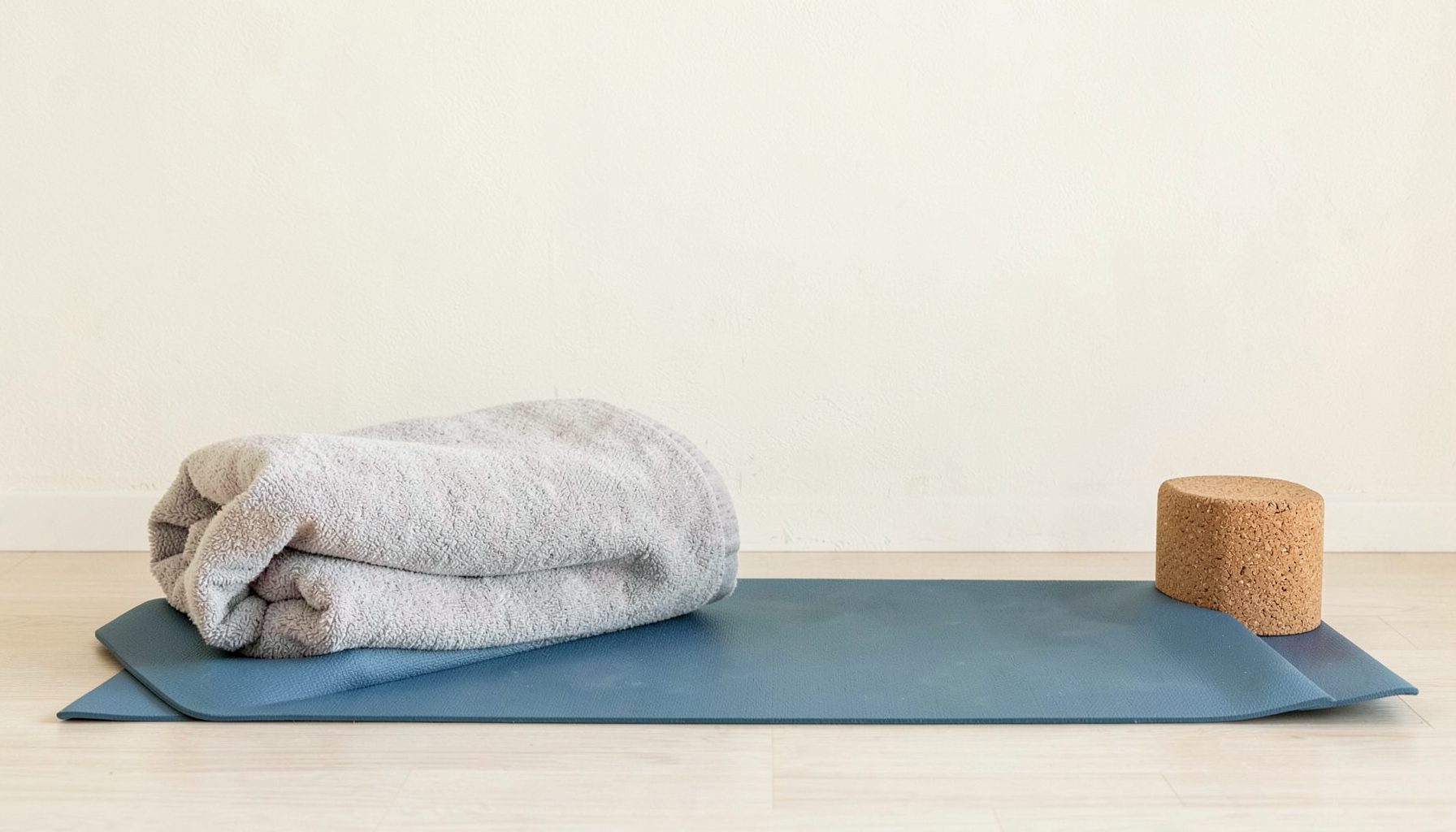
Start by identifying the smallest area where you can sit or stand comfortably. You may need less room than expected: a yoga mat can be rolled out lengthwise beside a bed, placed diagonally in a living room, or folded in half for seated breathing and floor-based postures. If a full mat is impractical, use a folded blanket, rug, or nonslip towel.
Clear only what is necessary for the session. Move one chair, shift a small table, or place a cushion against the wall. You do not need to create a permanent yoga studio. A repeatable setup is enough. When the same corner becomes associated with breathing and movement, your mind may begin to settle as soon as you arrive there.
Check the area for basic safety. Keep pathways clear, avoid practicing near sharp furniture, and make sure the surface does not slide. If you will raise your arms overhead, test the space before beginning. Small adjustments can prevent frustration and allow you to give your attention to the practice rather than to the room.
Let Breath Lead The Practice
When there is little room to move, breathwork offers an expansive form of yoga. Begin seated or lying down and notice the natural rhythm of inhalation and exhalation. You might place one hand on the chest and one on the abdomen, lengthening the exhale gradually without forcing a deeper breath.
Simple movements can follow the breath without requiring transitions across the floor. Try shoulder rolls, neck movements, wrist circles, seated side bends, and gentle spinal waves. On an inhale, create length through the spine; on an exhale, soften the shoulders and jaw. These small actions can release tension from desk work, commuting, caregiving, or extended screen time.
A compact sequence might include three minutes of breathing, five minutes of seated mobility, and several rounds of cat-cow performed on hands and knees. If kneeling is uncomfortable, practice the same spinal movement seated on a chair. The purpose is to connect breath and body, not to reproduce a particular studio class.
Adapt Poses For A Small Floor Area
Standing yoga poses can be modified so that your feet remain in one place. Mountain pose, standing side stretches, chair pose, and gentle twists need very little horizontal space. You can practice a slow half sun salutation by keeping the feet grounded, folding only as far as comfortable, and returning to standing without stepping forward or backward.
Use the wall, countertop, or back of a sturdy chair as a source of support. A supported warrior pose can be practiced with a shorter stance, while balance poses may become more accessible when one hand rests lightly on a wall. The goal is stability and awareness rather than creating a dramatic shape.
For floor work, select postures that do not require long extensions. Bridge pose, constructive rest, supine twists with a small range of motion, and knees-to-chest can all fit within a limited area. If the room is narrow, bend the knees rather than extending the legs fully, or practice one side at a time.
| Practice need | Small-space option | Helpful adjustment |
|---|---|---|
| Warm up the spine | Seated cat-cow or standing spinal waves | Keep the feet planted |
| Open the hips | Figure-four stretch on a chair | Support the lifted foot with a block |
| Build strength | Wall squat or tabletop hold | Shorten the hold and rest often |
| Improve balance | Supported tree pose | Keep fingertips on a wall |
| Relax the nervous system | Legs on a sofa or bent-knee rest | Use cushions under the head |
| Finish the session | Seated meditation or body scan | Stay in the same spot |
Choose Props That Earn Their Place
Props can make a small home practice more comfortable, though you do not need specialized equipment. A folded blanket can cushion knees, raise the hips for meditation, or support the head in a resting pose. Two firm books can act as temporary blocks, and a scarf or belt can help you reach the feet without rounding the back.
Keep useful items together in a basket, drawer, or fabric bag. Easy access reduces the number of decisions between you and practice. If your props are stored across several rooms, gathering them may become an unnecessary barrier, especially on busy days.
Comfort is more important than appearance. Wear clothing that allows easy breathing and does not distract you. A quiet lamp, a blanket, or a familiar scent may help signal that practice has begun, but none of these additions is essential. The most supportive environment is one that feels simple enough to return to.
Build A Rhythm That Fits Real Life
A sustainable routine begins with a manageable commitment. Ten minutes of movement several times a week can establish consistency more effectively than an occasional hour-long session. Choose a time connected to an existing habit, such as after brushing your teeth, before opening your laptop, or once children are settled.
Create different versions of your practice for different energy levels. A full session might include standing movement, strength, stretching, and relaxation. A moderate session could focus on mobility and breathwork. On a difficult day, your practice may be three minutes of seated breathing and a supported rest. Each version keeps the relationship with yoga alive.
A written sequence can help when decision-making feels tiring. Keep it short enough to remember: arrive, breathe, mobilize, strengthen, soften, rest. You can find reflections and practical ideas for maintaining a meaningful routine in the yoga blog, then adapt what resonates to your available space and energy.
Try tracking how practice feels rather than recording performance. Note whether your shoulders feel softer, your breathing steadier, or your attention less scattered. This kind of observation encourages self-awareness without turning yoga into another task to complete perfectly.
Create A Small-Space Sequence
Begin in a seated position on a cushion or chair. Take five slow breaths, allowing the exhale to become smooth. Notice the contact between your body and the floor or seat. This brief arrival helps mark a transition from whatever came before into the present moment.
Move into seated side bends, shoulder rolls, and gentle twists. Continue with seated cat-cow, or place your hands on a countertop and move through a standing version. If you have room to kneel, add a few rounds of tabletop to child’s pose; otherwise, remain standing and fold forward with bent knees.
From standing, practice mountain pose, supported chair pose, and a short warrior variation on each side. Add a wall-supported balance if it feels appropriate. Keep the movements slow enough to maintain steady breathing, and avoid stepping widely if the room does not allow it.
Finish with a floor-based rest, seated meditation, or legs supported on the sofa. Stay for at least one minute, releasing the effort of the sequence. The final pause is part of the practice, giving your body and mind a chance to absorb the effects of movement.
Keep The Routine Kind And Flexible
A small home practice should make space for changing needs. You may feel energetic one morning and depleted the next. Adjust the intensity, duration, and posture choices accordingly. Resting is not a failure to practice; it can be a wise response to fatigue, pain, illness, or emotional strain.
Avoid forcing a pose to make it fit the room or your expectations. If a movement causes sharp pain, stop and choose a gentler alternative. When balance feels uncertain, use support. When the floor is uncomfortable, move to a chair. Accessibility comes from adapting the practice rather than asking your body to meet a fixed standard.
- Keep a clear area that is large enough for your safest movements.
- Prepare one short sequence for busy days and one longer sequence for spacious days.
- Use a wall, chair, blanket, or books to support comfort and stability.
- Let breath, sensation, and steady attention guide the pace.
- Finish with rest, even when the session lasts only a few minutes.
A retreat can offer a deeper experience of mindful movement, reflection, and supportive community when you are ready to step beyond your usual corner. Explore the available yoga retreats as a way to nurture your practice without treating home practice as something that must be perfect first.
Your home yoga practice can begin today with one clear patch of floor, a comfortable seat, and a few unhurried breaths. Move gently, adapt freely, and return often. Over time, that small space can become a dependable place to listen to your body, settle your mind, and practice meeting yourself with care.