




Yoga for Brain Fog: Gentle Inversions to Refresh Your Mind
Brain fog can feel like a slow, cloudy distance between your thoughts and the task in front of you. You may reread an email several times, lose your place in conversation, or struggle to begin ordinary activities. Poor sleep, stress, hormonal changes, illness, medication, dehydration and long periods of screen use can all contribute. Yoga cannot diagnose or treat the underlying cause, yet a short, mindful practice may help you reconnect with your body and create a clearer transition into the next part of your day.
Inversions are often associated with impressive shapes, but they do not need to involve a headstand or a demanding handstand. A supported forward fold, legs up the wall, or downward-facing dog can offer a gentle change in orientation while combining movement, breathing and attention. The aim is a steadier nervous system and a refreshed sense of presence, rather than forcing concentration or chasing a dramatic sensation.
| Practice | How your head is positioned | Potential use when foggy | Main consideration |
|---|---|---|---|
| Legs up the wall | Head remains supported and level | Settling, breathing and a quiet reset | Avoid if the position increases pressure or discomfort |
| Supported child’s pose | Head rests on a bolster or stacked cushions | Grounding and reducing sensory input | Turn your head to breathe easily |
| Downward-facing dog | Head is below the heart for a short time | Waking up the body and creating energy | Bend the knees and keep the neck relaxed |
| Standing forward fold | Head hangs below the chest | A brief pause between tasks | Rise slowly to avoid light-headedness |
| Half inversion at a chair | Upper body lengthens with hands supported | Gentle movement without bearing weight on the head | Keep the spine long and the shoulders comfortable |
What brain fog may be telling you
Brain fog is a description rather than a medical diagnosis. It can appear after a restless night, a demanding work period, a respiratory infection or a day of eating irregularly. In Australia, a long commute across Sydney or Melbourne, bright office lighting and hours spent switching between video calls can leave the mind feeling overloaded before the evening begins. A hot Brisbane afternoon or a dry inland climate may add to fatigue when fluid intake has been low.
A brief practice can help you notice the conditions around the fog instead of treating it as a personal failure. You might discover that you need water, food, fresh air, a break from notifications or medical advice rather than a stronger pose. If confusion is sudden or severe, or if brain fog occurs with fainting, weakness, trouble speaking, a severe headache or chest pain, seek urgent medical care. Ongoing or worsening symptoms deserve a conversation with a GP.
The most useful intention is gentle curiosity. Rather than telling yourself to “clear your mind”, try observing whether your breath is shallow, your jaw is tense or your eyes are tired. This shift makes the practice more compassionate and can prevent you from turning yoga into another performance measure.
Begin with supported shapes
Legs up the wall is a simple place to start because the head and neck remain supported on the floor. Sit sideways beside a wall, lower onto your back and extend your legs upwards, or rest your calves on a chair if the wall feels too intense. Place a folded blanket under your head if that keeps your neck neutral. Let your arms rest by your sides and take six slow breaths without trying to make each inhale unusually large.
If your hamstrings or lower back pull, move farther from the wall or keep the knees softly bent. The pose can last for two to five minutes, though even a few breaths may be enough during a work break. Keep the transition out of the shape unhurried: bend your knees, roll onto one side and pause before sitting up.
Supported child’s pose offers another low-pressure option. Kneel with your knees comfortably apart, place a bolster or several firm cushions lengthwise in front of you, and lower your torso onto the support. Turn your head to one side, changing sides halfway through if that feels comfortable. If kneeling does not suit your knees or ankles, sit in a chair and fold your forearms onto a table instead. An accessible practice can be modified at every stage; flexible to start yoga is not a requirement.
Explore a safe change of orientation
Downward-facing dog can feel refreshing when the fog is paired with sluggishness. Begin on hands and knees, tuck your toes and lift your hips only as high as feels steady. Keep your knees bent, press through the hands and let the head hang between the upper arms without pulling it towards the knees. Three to five calm breaths are sufficient. You can also pedal the feet slowly or shift your weight from hand to hand.
The pose should never become a battle with the shoulders, wrists or neck. Place your hands on a kitchen bench or the back of a sturdy chair for a higher version. This is particularly useful in a small flat, a home office or a workplace where getting down onto the floor is impractical. Check that the furniture cannot slide, and keep enough space around you to step away safely.
A standing forward fold can be even simpler. Stand with feet hip-width apart, soften the knees and hinge from the hips, allowing your hands to rest on thighs, blocks or a stack of books. Keep the abdomen relaxed and let the head remain heavy only if that feels pleasant. To come up, bend the knees further, place the hands on the thighs and rise gradually. A slow exit matters because sudden changes in position can bring on dizziness, especially if you are dehydrated or already unsteady.
Pair movement with breath and attention
Inversions are more useful for brain fog when they include deliberate attention. Try inhaling through the nose for a comfortable count of four and exhaling for a count of four, without holding the breath. If counting feels effortful, notice the physical rhythm of the breath instead: the ribs widening, the belly moving and the air leaving through the nose or mouth. The practice is successful when it feels sustainable, not when the breath becomes deep or forceful.
After a pose, take ten seconds to notice the effects. Is your vision clear? Do you feel more settled, more alert or exactly the same? This pause helps you distinguish a helpful reset from a shape that creates pressure, agitation or dizziness. You can then choose a seated position, a gentle side stretch or a short walk rather than moving automatically into a stronger inversion.
A practical sequence might take eight minutes: one minute of standing and noticing, two minutes of shoulder rolls and slow reaching, three minutes of legs up the wall or a chair-supported fold, then two minutes seated with natural breathing. This is easy to fit between school drop-off and work, after a tram ride in Melbourne or before an early shift in Perth. A few minutes repeated consistently may be more supportive than an ambitious session attempted once a month.
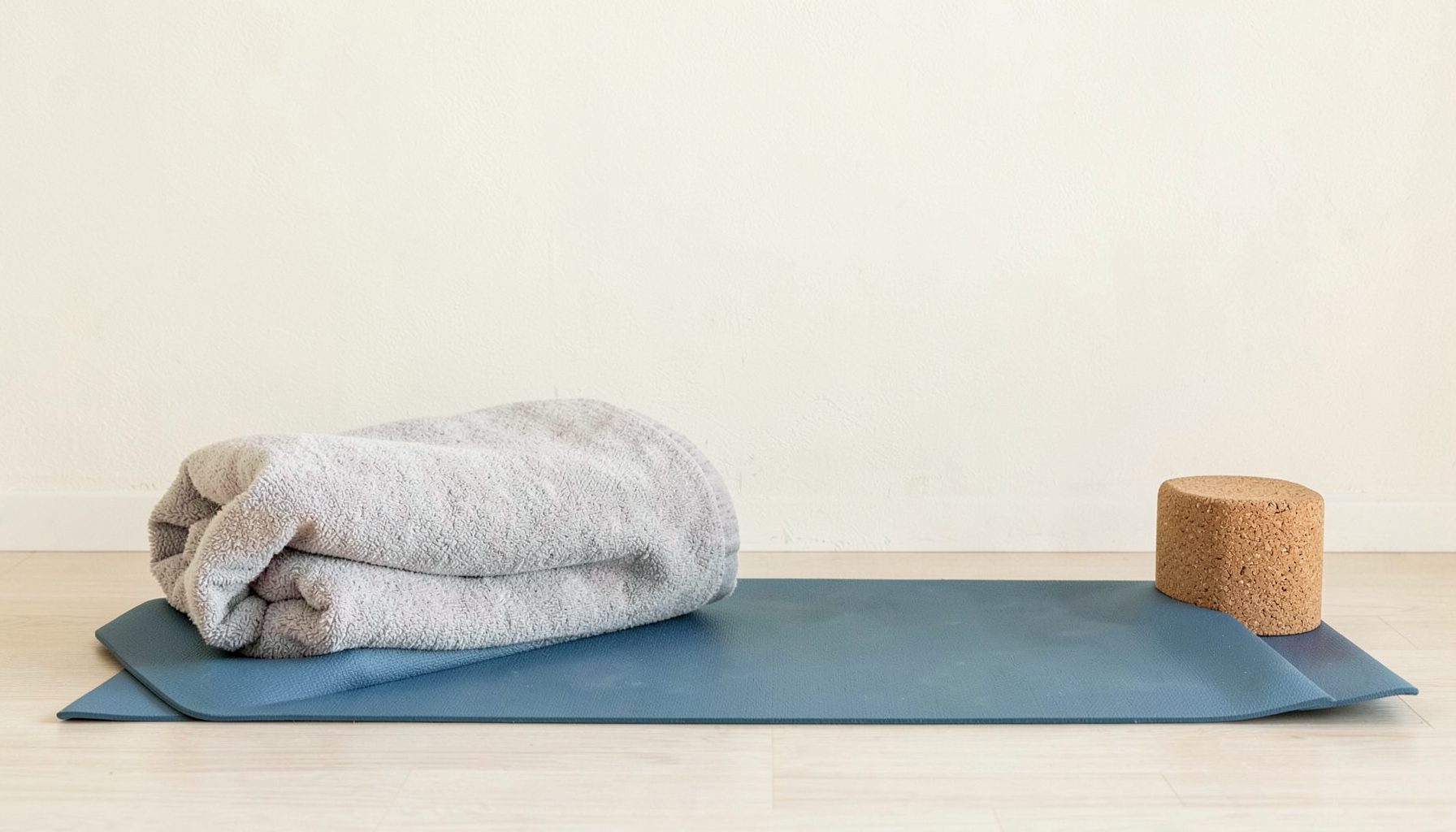
The Australian wellness market offers plenty of props, online courses and branded programmes, but you do not need specialised equipment to begin. A towel, wall, chair and cushions can provide adequate support. Be cautious with claims that promise guaranteed mental clarity or medical outcomes. Under Australian consumer law, services and products must meet consumer guarantees, while advertising should not mislead people about health benefits. A calm practice does not need exaggerated promises to be worthwhile.
Know when to modify or pause
Inversions are not suitable for everyone in the same way. Speak with a qualified health professional before practising if you have uncontrolled high blood pressure, glaucoma, a retinal condition, significant neck or shoulder problems, vertigo, a recent stroke or heart event, or a condition affecting balance. Pregnancy, the postnatal period and some medical treatments also call for individual guidance. A yoga teacher can offer variations, but they should not replace advice from your GP or specialist.
Stop the pose if you experience sharp pain, pressure in the eyes or head, nausea, blurred vision, tingling, unusual breathlessness or a feeling that you may faint. Return to a neutral seated or standing position slowly. If symptoms continue, seek appropriate medical care. A teacher should be comfortable with you choosing rest, declining an inversion or practising near a wall without needing to explain yourself.
The idea of “refreshing the mind” should remain modest and personal. You may feel more awake after a short downward-facing dog, while someone else may feel better after lying down with their legs supported. For some people, an inversion late at night can feel stimulating rather than calming. Experiment with timing and intensity in small amounts, and keep notes if you are trying to understand patterns in sleep, energy or concentration.
Build a practice that lasts
A sustainable brain-fog routine begins with a clear limit. Choose one supported shape, one breathing pattern and one finishing action, such as drinking water or stepping outside. This structure reduces decision-making when concentration is already limited. It also prevents the common habit of adding more poses simply because the first few minutes did not produce an immediate change.
Use the environment to make the practice realistic. Keep a cushion near the wall, place a folded blanket beside your desk or save a short audio meditation for days when movement feels like too much. In a warm Australian climate, practise away from direct afternoon heat and allow extra time to cool down. On a cold morning in Canberra or during a rainy week in Hobart, a chair-based sequence may be more inviting than getting onto a chilly floor.
Finish with an ordinary, grounding activity rather than rushing straight back to notifications. Wash a cup, look out a window, write down the next single task or take a gentle walk around the block. Yoga can create a pause in which the mind becomes easier to inhabit, even when the original cause of the fog still needs attention.
For a practical reset, place a chair near a wall, take six easy breaths, practise legs up the wall or a supported forward fold for two minutes, rise slowly, drink some water and choose one manageable next task.