



Yoga for Better Sleep: A Gentle Bedtime Routine
Sleep can feel elusive when the body is tired but the mind is still reviewing the day. A late message, unfinished task, or familiar worry can keep the nervous system alert long after the lights go out. A short evening yoga practice offers a gradual way to shift from activity into rest without asking the body to work harder.
Gentle twists are especially well suited to a bedtime routine. They can release tension around the spine, ribs, shoulders, and hips while encouraging slower breathing and quiet attention. The aim is not to stretch deeply or achieve a particular shape. It is to create a calm transition that feels supportive, steady, and easy to repeat.
A sleep-focused practice works best when it is sustainable. Ten mindful minutes can be more useful than an ambitious sequence that leaves you energized or uncomfortable. Move slowly, keep the breath soft, and let comfort guide every choice.
Why Evening Yoga Can Support Sleep
Yoga before bed can help mark the end of the day. When the same quiet movements are repeated in a familiar setting, they become a gentle signal that it is time to reduce stimulation. Lower lights, a warm layer, and a few minutes away from screens can strengthen that signal.
The physical practice also brings attention out of busy thought patterns and into present-moment sensation. Feeling the feet, noticing the movement of the ribs, or following a longer exhale gives the mind a simple place to rest. This kind of mindful awareness does not require you to force thoughts away. It allows them to pass while you return to the body.
A restorative bedtime yoga sequence should feel noticeably different from a vigorous class. Avoid strong backbends, fast sun salutations, challenging balances, and intense core work close to sleep if they make you feel alert. Choose grounding postures that leave you feeling settled rather than accomplished.
Prepare A Calming Space
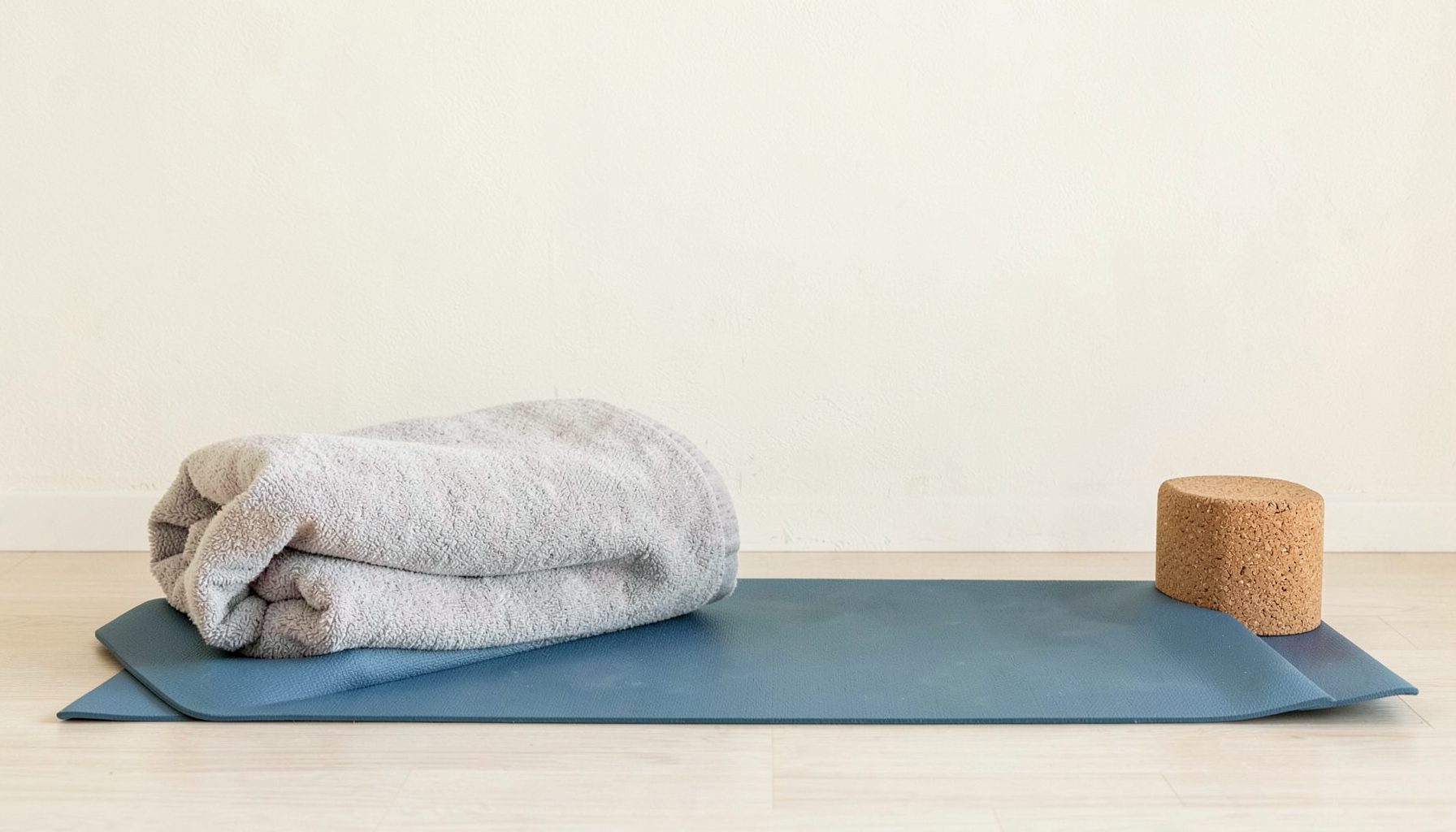
Set up your practice so that beginning requires very little effort. A yoga mat is useful, but a carpet, folded blanket, or firm bed can also work for gentle movements. Keep a cushion, pillow, or folded towel nearby to support your knees, head, or hips.
Give yourself enough warmth. Muscles can tighten when you are cold, and a comfortable sweater or blanket makes it easier to relax into stillness. Lower the brightness in the room and silence notifications before you begin. These small adjustments reduce the number of decisions competing for your attention.
Your intention might be as simple as, “I am allowed to slow down.” This is a practice of care rather than correction. The principles behind ahimsa on the mat can be especially meaningful at night: listen to your limits, avoid forcing sensation, and treat your body with patience.
A few minutes of preparation can prevent the routine from becoming another task on an already full schedule. If you are practicing in bed, keep the range of motion small and avoid movements that destabilize your support.
Start With Breath And Simple Movement
Begin seated or lying down with your hands resting wherever they feel comfortable. Let your jaw soften and allow the tongue to rest naturally in the mouth. Notice the rhythm of your breathing without trying to change it immediately.
After several natural breaths, make the exhale slightly longer than the inhale. You might breathe in for a count of four and out for a count of six, but the numbers are optional. If counting creates effort, simply allow the out-breath to become smooth and unhurried.
Add gentle shoulder rolls, moving slowly enough to feel the muscles around the neck and upper back. Then stretch the arms overhead on an inhale and release them alongside the body on an exhale. Repeat only a few times. The movement should follow the breath, not overpower it.
A small pelvic tilt can help bring awareness to the lower back. Lying on your back with knees bent, gently tip the pelvis so the lower back moves toward the floor, then release. There is no need to press or hold. This subtle action can ease stiffness before the twists begin.
Gentle Twists For The Spine
From a reclined position with both knees bent, allow the knees to drift a little toward the right while the shoulders remain heavy. Keep the twist modest. If the left shoulder lifts, place a pillow beneath the knees or reduce the range of motion.
Stay for three to five slow breaths. Rather than pulling the knees farther down, notice the movement of the breath through the ribs and back body. With each exhale, imagine making space around the waist without trying to deepen the pose.
Return the knees to center and pause. Then repeat on the left side. A pause between sides matters because it lets you notice how the body feels after coming out of the twist. The transition itself can become part of the relaxation.
For a second option, extend the arms into a comfortable T shape and cross the right knee over the left. Let both legs move slightly left while the head remains centered or turns gently right, whichever feels better. Keep the pose supported and release it immediately if you feel pinching, strain, or discomfort in the spine, hip, or shoulder.
| Gentle practice | How it may feel | Helpful support |
|---|---|---|
| Knees side to side | Easy movement through the waist and lower back | Pillow beneath the knees |
| Reclined knee drop | A quiet, supported spinal rotation | Blanket under the outer knee |
| Seated twist | Upright, spacious, and steady | Cushion beneath the hips |
| Supine figure four | Soft release around the hips and glutes | Head supported with a folded towel |
| Constructive rest | Grounding stillness with bent knees | Blanket over the body |
Explore A Seated Evening Twist
If lying down is uncomfortable, try a simple seated variation. Sit cross-legged on a cushion or sit with your legs extended and knees softly bent. Lengthen through the crown of the head without making the spine rigid.
Place the left hand behind you and the right hand to the outside of the left thigh. Inhale to create a little height through the torso. Exhale as you turn gently toward the left, keeping the movement centered around the upper body rather than pulling with the arms.
Stay for two or three breaths, then return to center slowly. Repeat on the other side. The goal is a mild sense of spaciousness, not maximum rotation. Keep the chin level and allow the shoulders to remain relaxed.
A seated twist can become stimulating if practiced forcefully. Keep the eyes soft, release the pose before fatigue appears, and follow it with a forward fold supported by cushions or with a quiet seated pause. The transition from movement into stillness is more important than the depth of the twist.
Finish With Restful Shapes
After twisting, lie on your back with the knees bent and feet resting on the floor. Let the knees lean toward one another, which can make the abdomen and lower back feel more relaxed. Rest your hands on the belly or by your sides and notice the natural breath.
You can then move into a supported version of legs-up-the-wall pose if it feels soothing. Keep the hips a comfortable distance from the wall rather than trying to place them directly against it. Alternatively, rest the calves on a chair or sofa. Elevation should feel easy and steady, never like a strain.
Finish in a comfortable resting position for two to five minutes. Cover yourself with a blanket and allow the breath to return to its natural rhythm. This final pause gives the nervous system time to absorb the practice and prevents you from moving immediately back into activity.
If your mind begins planning tomorrow, acknowledge the thought and return to a physical sensation: the weight of the body, the movement of the belly, or the feeling of the blanket. Rest does not require an empty mind. It requires a kind response when attention wanders.
Adapt The Routine To Your Evening
A bedtime sequence should be flexible enough for different energy levels. On a restless evening, you might spend more time with slow breathing and supported twists. On a tired evening, skip the seated work and move directly from a few shoulder rolls into reclined rest.
If you are pregnant, recovering from an injury, managing chronic pain, or living with a condition that affects balance or mobility, adapt the practice with guidance from an appropriately qualified healthcare professional or yoga teacher. Twists may need to be smaller, more open, or replaced with another comfortable movement.
Pain, numbness, dizziness, breathlessness, or sharp sensations are reasons to stop and reassess. A pose can be beneficial without feeling intense. Props are not a sign that you are doing less; they help make the practice more accessible and sustainable.
Consistency matters more than duration. Practicing the same three or four movements several evenings each week may create a stronger sleep association than changing the routine constantly. Let the sequence serve your life, rather than turning it into another standard you must meet.
Keep A Gentle Nightly Rhythm
- Begin with five minutes and add time only if the practice continues to feel calming.
- Use a longer, comfortable exhale instead of forcing deep breaths.
- Support the knees, head, and hips so each twist remains easy and pain-free.
- Leave a few minutes for stillness after the final movement.
- Practice with self-compassion, especially on nights when sleep does not come quickly.
A yoga routine cannot guarantee immediate sleep, and it does not need to. Its value may be in creating a reliable pause between the demands of the day and the quiet of the night. Over time, those repeated signals can help bedtime feel more spacious and less pressured.
Try this gentle sequence tonight: soften the lights, settle onto your mat or bed, move through a few supported twists, and finish with several quiet breaths. Let the practice be small enough to return to tomorrow, and allow that steady act of care to become part of your evening rhythm.