




What It Means to Practice Ahimsa on the Mat
Ahimsa is often translated as nonviolence, but its meaning reaches beyond avoiding physical harm. In yoga, it invites a kinder relationship with the body, the breath, the mind, and the people around us. It asks us to notice where force has become automatic and to consider whether another way of practicing is available.
What it means to practice ahimsa on the mat will look different from person to person. For one student, it may mean resting in Child’s Pose instead of completing a demanding sequence. For another, it may mean staying with an unfamiliar sensation without immediately judging it. The central question is not whether the practice looks impressive, but whether it supports awareness and care.
This principle does not require a perfectly gentle or passive practice. Strength, challenge, discipline, and heat can all have a place in yoga. Ahimsa helps us explore those experiences without turning effort into punishment or discomfort into proof of worth.
Ahimsa begins with how you pay attention
The first expression of non-harming is often attention itself. Many people arrive on the mat carrying a critical inner voice: a voice comparing flexibility, measuring progress, or pointing out everything the body cannot do. Before changing a pose, ahimsa asks us to change the quality of our listening.
This kind of listening is specific rather than vague. You might notice whether your breath is smooth, whether a joint feels compressed, or whether muscular effort is steady enough to support you. You might recognize the difference between a sensation that feels challenging and one that feels sharp, unstable, or unsafe. These details give you useful information without turning the body into a problem to solve.
Mindful movement creates room between sensation and reaction. Instead of automatically pushing farther because a teacher or a memory tells you to, you can pause and choose. A smaller range of motion, an extra prop, or a slower transition may be the most skillful option in that moment.
Moving away from force and comparison
Yoga culture can sometimes make intensity appear more valuable than presence. Deep backbends, advanced arm balances, and long holds are visible expressions of practice, while restraint is quieter. Ahimsa reminds us that an impressive shape is never the full measure of a meaningful practice.
Comparison often encourages us to override our own experience. We may copy the person beside us, chase an earlier version of our body, or assume that discomfort means we should try harder. When this happens, the mat becomes another place where achievement takes priority over relationship. A compassionate practice replaces competition with curiosity.
This does not mean avoiding every difficult sensation. There is a difference between meeting a healthy edge and crossing a boundary. The edge may feel spacious, steady, and responsive; the boundary may feel like gripping, holding the breath, or losing connection with the ground. Ahimsa supports the ability to recognize that difference and respond before the body has to shout.
Letting the breath guide your effort
The breath is one of the clearest ways to observe whether effort is supportive. When breathing becomes strained, shallow, or hurried, the nervous system may be signaling that the current demand is too high. You do not have to treat that signal as failure. It can be an invitation to soften the pose, slow down, or take a pause.
A breath-centered practice also includes emotional awareness. Some postures, transitions, or moments of stillness may bring frustration, restlessness, sadness, or vulnerability to the surface. Ahimsa does not ask you to push those feelings away or make them disappear. It encourages you to meet them with patience, allowing them to be present without adding a second layer of self-criticism.
A short meditation can help develop this steadiness away from physical movement. The five-minute meditation offers a simple way to return to the breath when the mind feels crowded. Even a few quiet minutes can strengthen the habit of noticing thoughts without letting them dictate every response.
Small changes that make practice kinder
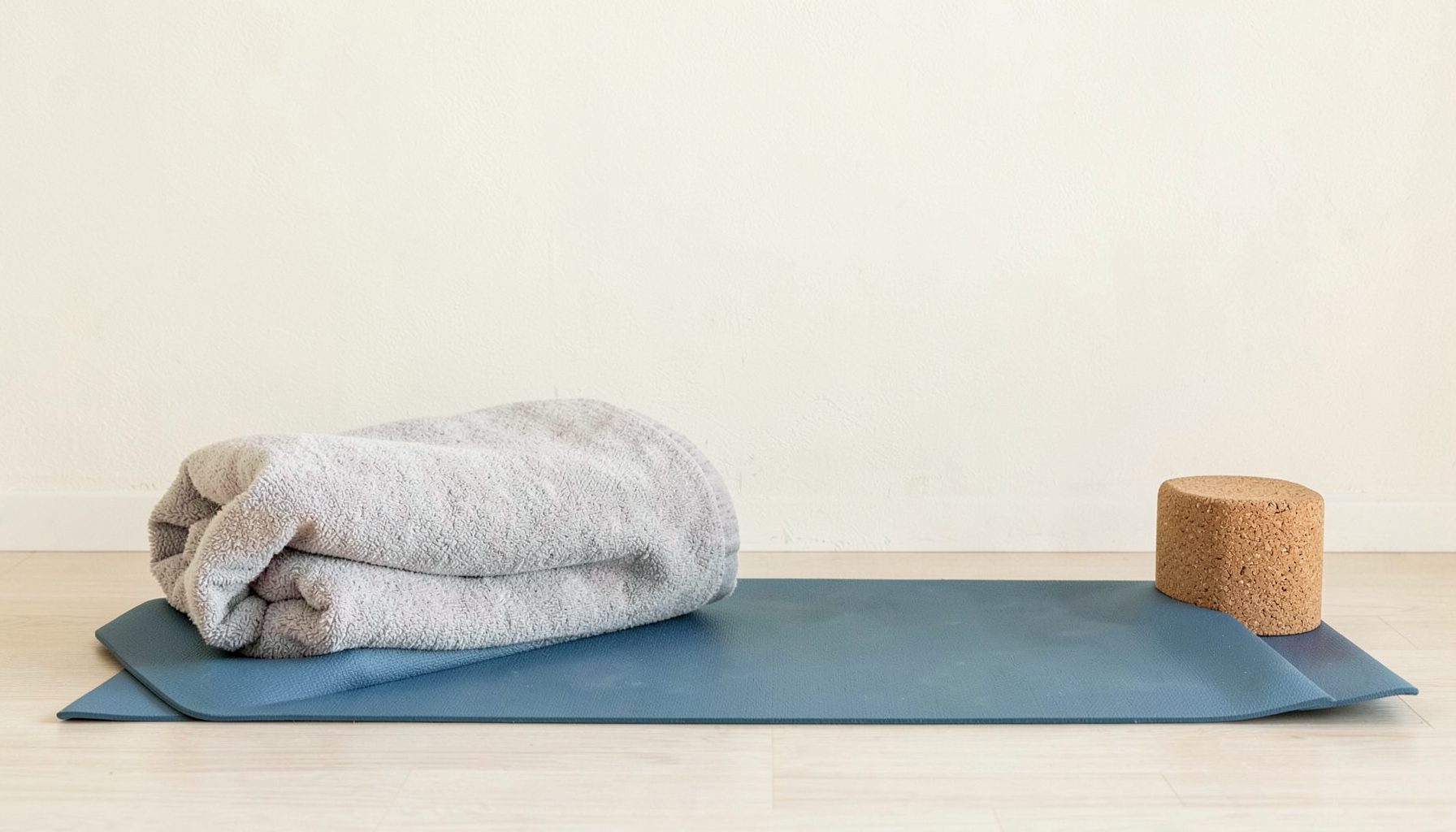
Ahimsa often becomes practical through small adjustments. The way you set up your space, enter a pose, and finish a session can all communicate respect for your current needs. Props are not signs that you are less capable; they are tools that help you create stability, support, and choice.
| Common habit | Ahimsa-centered shift | Possible effect |
|---|---|---|
| Holding a pose because you feel you should | Leave when the breath or body asks for a change | Greater trust in internal signals |
| Comparing your shape with someone else’s | Focus on sensation, alignment, and steadiness | Less pressure and more presence |
| Treating rest as weakness | Include pauses as part of the practice | More sustainable energy |
| Forcing a range of motion | Explore a smaller, comfortable variation | Reduced strain and clearer awareness |
| Practicing through pain | Stop, assess, and modify or seek guidance | Safer decision-making |
You might place a folded blanket under the hips, use blocks beneath the hands, bend the knees in a forward fold, or keep the back knee down in a lunge. These choices do not dilute the practice. They make it more responsive, helping you stay connected to breath and sensation rather than enduring unnecessary strain.
A kinder practice also honors recovery. Restorative yoga, gentle stretching, meditation, and complete rest can be appropriate on different days. A sustainable personal practice is flexible enough to change with sleep, stress, illness, injury, hormonal shifts, work demands, and the ordinary unpredictability of life.
Bringing non-harming beyond the mat
The attitudes cultivated during yoga can shape how we speak to ourselves throughout the day. If you learn to notice harsh thoughts during a difficult balance, you may begin to recognize similar patterns while working, parenting, exercising, or making decisions. The aim is not to eliminate self-doubt. It is to stop treating doubt as a reason for cruelty.
Self-compassion is a practical form of ahimsa. It can sound like, “This is difficult right now,” or, “I am allowed to adjust my expectations.” Such language does not excuse harmful behavior or remove responsibility. Instead, it creates enough steadiness to respond honestly and make a wiser choice.
Ahimsa also extends into relationships. Listening without rushing to correct, respecting another person’s limits, and communicating clearly are forms of nonviolence. So is recognizing when your own capacity has been exceeded. A compassionate boundary can protect energy and reduce resentment, making care more genuine rather than forced.
The same principle can influence how we consume, work, rest, and use our attention. Choosing fewer demands, taking breaks before exhaustion, or stepping away from media that leaves you agitated may be quiet but meaningful forms of practice. Yoga becomes less about performing kindness for an hour and more about embodying care in ordinary decisions.
Building an honest and sustainable routine
There is no single sequence that expresses ahimsa for everyone. A strong vinyasa class may feel nourishing one day and excessive the next. A gentle practice may be exactly what the body needs, or it may become a way of avoiding sensations that deserve attention. The principle is not attached to a particular style; it is reflected in the honesty of your relationship with the practice.
Before beginning, take a moment to identify your available energy. You might choose a grounding sequence after a restless night, a few standing poses when you feel sluggish, or breathwork and rest when concentration is limited. Planning with flexibility helps you respond to reality instead of forcing reality to match a fixed plan.
A simple personal check-in can guide your choices:
- Notice the quality of your breath before moving.
- Identify one area that needs support or extra care.
- Choose a clear stopping point for the session.
- Leave space for rest, reflection, or a quiet closing.
These steps are small, yet they shift yoga from obligation toward relationship. Over time, you may notice that you recover more easily, recognize tension sooner, and feel less dependent on external measures of progress.
For additional practices to adapt at home, the downloadable resources can offer printable sequences and supportive tools. Use them as invitations rather than instructions you must complete exactly. A resource becomes useful when it helps you meet the present moment with greater clarity.
When discipline and gentleness work together
Some people worry that practicing ahimsa will make them undisciplined. They may imagine that compassion means giving up whenever something feels uncomfortable. In reality, non-harming can make discipline more intelligent. It helps distinguish between the discomfort of learning and the damage caused by ignoring clear signals.
You can commit to showing up without committing to a predetermined performance. You can practice regularly while changing the length, pace, or intensity of each session. This kind of consistency is rooted in trust: you return because the practice supports your life, not because you are trying to earn approval from your body or your mind.
Gentleness can include courage. It may take courage to rest when others continue, to modify a pose in a group class, or to acknowledge that a familiar goal no longer serves you. It may take courage to explore a challenging posture slowly, with patience, rather than rejecting challenge altogether. Ahimsa makes room for both tenderness and strength.
Over time, the mat can become a place where you practice making choices without violence toward yourself. You learn to value sensation over appearance, steadiness over strain, and curiosity over judgment. Those lessons can quietly reshape the way you inhabit the rest of your life.
Return to your mat with one simple intention: to listen before you push. Let your breath, energy, and physical sensations take part in every decision. When you need support, rest, or a different variation, treat that choice as an active expression of wisdom.
Begin with a few mindful movements today, and allow the practice to meet you exactly where you are. Each time you choose awareness over force, you give ahimsa a living place in your body and in your daily life.