




Yoga for a Stiff Lower Back: Cat-Cow With Intention
A stiff lower back can make ordinary movements feel surprisingly demanding. Getting out of bed, standing after a long meeting, or bending to pick something up may bring attention to an area that usually works quietly in the background. Gentle yoga can help you reconnect with the spine without forcing it into a larger range than feels appropriate.
Cat-Cow is often presented as a simple warm-up, yet its value depends on how you practice it. The pose becomes more supportive when you slow down, coordinate movement with breathing, and notice where the motion begins and ends. Rather than trying to make the back look deeply rounded or dramatically arched, you can use the sequence to explore comfort, mobility, and steadiness.
This mindful approach suits beginners, desk workers, and anyone returning to movement after a period of inactivity. It does not require flexibility or complicated equipment. A folded blanket, a little floor space, and a willingness to move gently are enough to begin.
Understanding Lower Back Stiffness
Lower back stiffness can have many everyday causes. Staying in one position for a long time, moving less than usual, sleeping awkwardly, or carrying tension through the hips may make the lumbar area feel restricted. Sometimes the sensation is less about one isolated muscle and more about how the pelvis, rib cage, hips, and breathing patterns share movement.
Cat-Cow does not need to “fix” the back to be useful. Its purpose is to create a gradual conversation between different parts of the body. When the spine moves slowly, you may notice whether your shoulders, neck, pelvis, or breath are taking over. That information can be more valuable than achieving a larger shape.
Stay within a comfortable range and avoid treating stiffness as a problem that must be pushed away. A mild sense of movement or warmth can be appropriate, while sharp pain, tingling, numbness, weakness, or symptoms traveling into a leg call for professional guidance. If you have a diagnosed back condition, recent injury, osteoporosis, or have had spinal surgery, ask a qualified healthcare professional how to adapt movement safely.
Setting Up For A Supportive Practice
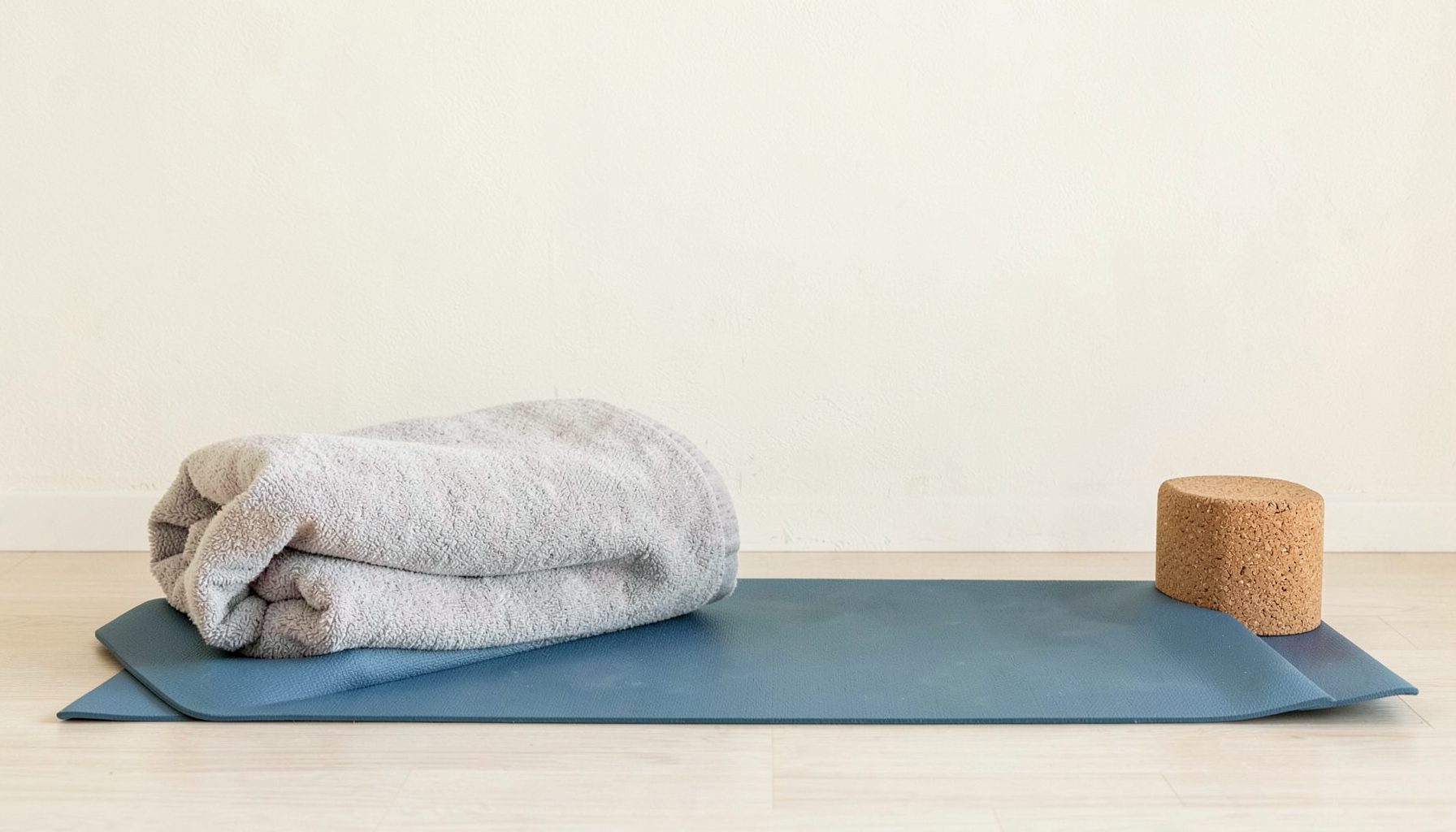
Begin on hands and knees, with wrists beneath or slightly ahead of the shoulders and knees beneath the hips. If kneeling is uncomfortable, place a folded blanket under the knees. Spread the fingers and press through the pads of the hands so the shoulders do not collapse toward the ears. The exact alignment can be adjusted to suit your proportions.
Before moving, pause in a neutral tabletop position. Let the back be natural rather than deliberately flat, and allow the head to follow the line of the spine. Notice the contact between your hands, knees, and the floor. This grounding gives the nervous system a clear reference point and helps you distinguish intentional movement from habitual bracing.
Take two or three unhurried breaths. On each inhale, feel the ribs expand in several directions rather than lifting only through the chest. On each exhale, soften the jaw, the belly, and the space around the lower ribs. You are preparing the entire body for movement, not isolating the lumbar spine.
If the wrists are sensitive, make fists, place the hands on yoga blocks, or practice seated with your hands resting on your thighs. A wall-supported version can also work: stand with your hands on the wall and gently alternate between lengthening the spine and rounding through the upper back.
Practicing Cat-Cow With Attention
From tabletop, inhale and allow the pelvis to tilt back slightly. Let the chest move forward between the arms while the sitting bones rise. Keep the movement modest; the lower back does not need to create a dramatic curve. Think of length through the front of the body, with the crown of the head reaching away from the tailbone.
As you exhale, press the floor away and let the tailbone release toward the knees. Allow the middle and upper spine to round gradually. The chin may move toward the chest, but avoid pulling the head down. Imagine each section of the spine responding in sequence rather than folding all at once.
Repeat for five to eight slow cycles. Let the breath lead, with the body following a moment later. If the lower back feels compressed during the cow phase, reduce the arch and focus on lifting the sternum while keeping the ribs from thrusting forward. If rounding feels restricted, imagine widening the back of the pelvis instead of forcing the spine into a deeper curve.
| Practice choice | What it emphasizes | Helpful adjustment |
|---|---|---|
| Larger Cat-Cow | More visible spinal movement | Keep the pace slow and avoid end-range strain |
| Small Cat-Cow | Subtle mobility and body awareness | Move only a few degrees while tracking the breath |
| Seated Cat-Cow | A wrist- or knee-friendly option | Sit on a chair and place hands on thighs |
| Wall-supported version | Standing accessibility | Press hands into a wall and keep feet grounded |
| Pelvic-only movement | Awareness of the lower spine and hips | Keep the ribs and shoulders relatively still |
After several rounds, return to neutral and observe the difference between sides of the body, the ease of breathing, and the quality of contact with the floor. The goal is not to produce a particular visual result. A smaller, clearer movement can be more beneficial than a large movement performed with tension.
Making Every Phase More Intentional
The transition between Cat and Cow is where much of the practice happens. Rather than switching abruptly at the top or bottom of the breath, let the change unfold continuously. Feel the pelvis initiate the movement, then notice how the spine, ribs, shoulders, and head respond. This can reduce the tendency to hinge repeatedly through one area of the lower back.
Use the hands actively. In the rounding phase, pressing down and forward helps create space between the shoulder blades. In the lengthening phase, keep the arms steady while allowing the chest to glide forward. Strong hands do not mean rigid shoulders; they provide support so the spine can move with less effort.
Your gaze can remain soft. Look toward the floor beneath you in tabletop, slightly ahead of the hands during the lengthening phase, and toward the space between the knees during the rounding phase. There is no need to force the neck into a specific position. If the neck feels strained, keep the head nearly still and concentrate on the ribs and pelvis.
You can also experiment with pauses. At the end of an inhale, notice the spaciousness through the front ribs without adding more arch. At the end of an exhale, sense the back body widening without pulling the abdomen inward aggressively. These brief pauses turn a familiar spinal exercise into a mindful movement practice.
Avoiding Common Sources Of Strain
A frequent mistake is moving only from the lumbar spine. This may happen when the pelvis tips forward quickly in Cow or when the ribs flare to create the impression of a deeper backbend. Reduce the range, keep the lower ribs quieter, and imagine the whole spine lengthening in both directions.
Another pattern is collapsing into the shoulders. When the chest moves forward, the upper arms may rotate inward and the neck may shorten. Press the floor away, broaden across the collarbones, and let the shoulder blades move without gripping them down. The aim is support, not stiffness.
Holding the breath is another sign that the movement is too demanding or too fast. Return to a smaller range and make the exhale longer than the inhale if that feels comfortable. You might complete only three careful cycles instead of ten rushed ones. Consistency and ease are more useful measures than repetition count.
For additional ideas that complement a gentle spinal sequence, explore spine-lengthening poses that can be practiced during a workday. Cat-Cow can be a helpful starting point, but changing position regularly is just as important as any single pose.
Bringing Mobility Into Daily Life
A short practice often works best when it is connected to an existing routine. You might move through Cat-Cow after brushing your teeth, before opening a laptop, or at the end of a walk. Even two minutes can remind the body that it has options beyond sitting, standing, or bracing.
If you work at a desk, consider taking movement breaks before stiffness becomes intense. Stand up, let the arms swing gently, rotate the shoulders, or walk around the room. When you return to your chair, place both feet on the floor and allow the pelvis to settle evenly. A supportive workstation cannot replace movement, but it can reduce the amount of strain accumulated during the day.
Pairing Cat-Cow with breathwork may help you notice tension earlier. For example, take three breaths in a comfortable seated position, observing whether the exhale allows the belly and pelvic floor to soften. Then practice a few small spinal waves. This sequence encourages you to respond to sensation rather than waiting until the back feels completely stuck.
Rest also belongs in a sustainable yoga practice. If the back feels irritated after movement, choose a comfortable supported position and allow the body to settle. Mobility is not measured by how much you can do in one session. It develops through repeated experiences of safe, manageable movement.
A Gentle Practice You Can Repeat
Use the following sequence when your lower back feels stiff but you want to keep the practice simple:
- Set up on hands and knees, or choose a seated or wall-supported variation.
- Take three breaths in neutral, releasing unnecessary tension in the jaw and shoulders.
- Complete five slow Cat-Cow cycles, letting the breath guide each transition.
- Pause in a neutral position and notice warmth, ease, or areas that still feel guarded.
- Finish with a comfortable rest, such as sitting back toward the heels or lying on your back with knees bent.
You can repeat this sequence once or twice a day, provided it remains comfortable. Some days, a small pelvic tilt or gentle rib movement may be the most appropriate choice. Other days, the full spinal wave may feel natural. Let the practice respond to your current energy, symptoms, and surroundings.
Keep a simple mental note of what changes over time. Perhaps standing feels easier, breathing becomes less shallow, or you recognize the first signs of desk-related tension sooner. These subtle results are meaningful. Yoga offers a way to build trust with the body through attention, patience, and repeated choice.
Make Cat-Cow a quiet pause rather than another task to complete. Clear a small space, place support beneath the knees or wrists if needed, and give yourself several unhurried minutes today. Through gentle spinal movement and steady breathing, you can begin creating a more comfortable relationship with your lower back.