




Yoga for a sore neck: gentle movements to relieve stiffness
A stiff neck can make ordinary moments feel surprisingly difficult. Turning to check traffic, looking down at a phone, carrying a shopping bag or settling into bed may bring attention to tight muscles around the neck, shoulders and upper back. Gentle yoga can offer a calm way to explore that tension through small movements, steady breathing and greater awareness of posture.
The aim is not to force a stretch or search for a dramatic release. A sustainable neck-care practice respects the body’s signals and creates enough space for muscles to soften gradually. The sequence below is suitable for many people with mild, everyday stiffness, but it should never replace medical assessment when pain is severe, persistent or accompanied by concerning symptoms.
Why the neck becomes tight
Neck stiffness often develops through repeated, low-level habits rather than one obvious event. Hours at a laptop, a long commute on Sydney trains, looking down at a phone or sleeping with the head turned can keep the muscles around the cervical spine working without much variation. Stress may add another layer, encouraging the shoulders to lift and the jaw to clench.
Australian routines can also influence how tension feels. A warm day in Brisbane may lead to less movement indoors, while cooler mornings in Melbourne can make the upper body feel guarded. People working from home may shift between a kitchen bench, sofa and laptop without an ergonomic setup. Even regular strength training, cycling or swimming can contribute to tightness when mobility and recovery are overlooked.
Yoga does not need to correct every aspect of posture. There is no single perfect position to maintain all day. Instead, mindful movement can help you notice when the chin is jutting forward, the ribs are held rigidly or the shoulders are creeping towards the ears. Changing position regularly is usually more helpful than trying to hold an ideal posture for hours.
A gentle approach is especially important because the neck contains sensitive joints, nerves and connective tissues. Move slowly, keep the range of motion comfortable and avoid using your hands to pull the head into a deeper stretch. A sensation of mild tension may be acceptable; sharp pain, tingling, numbness or dizziness is a clear reason to stop.
Preparing for a safe, soothing practice
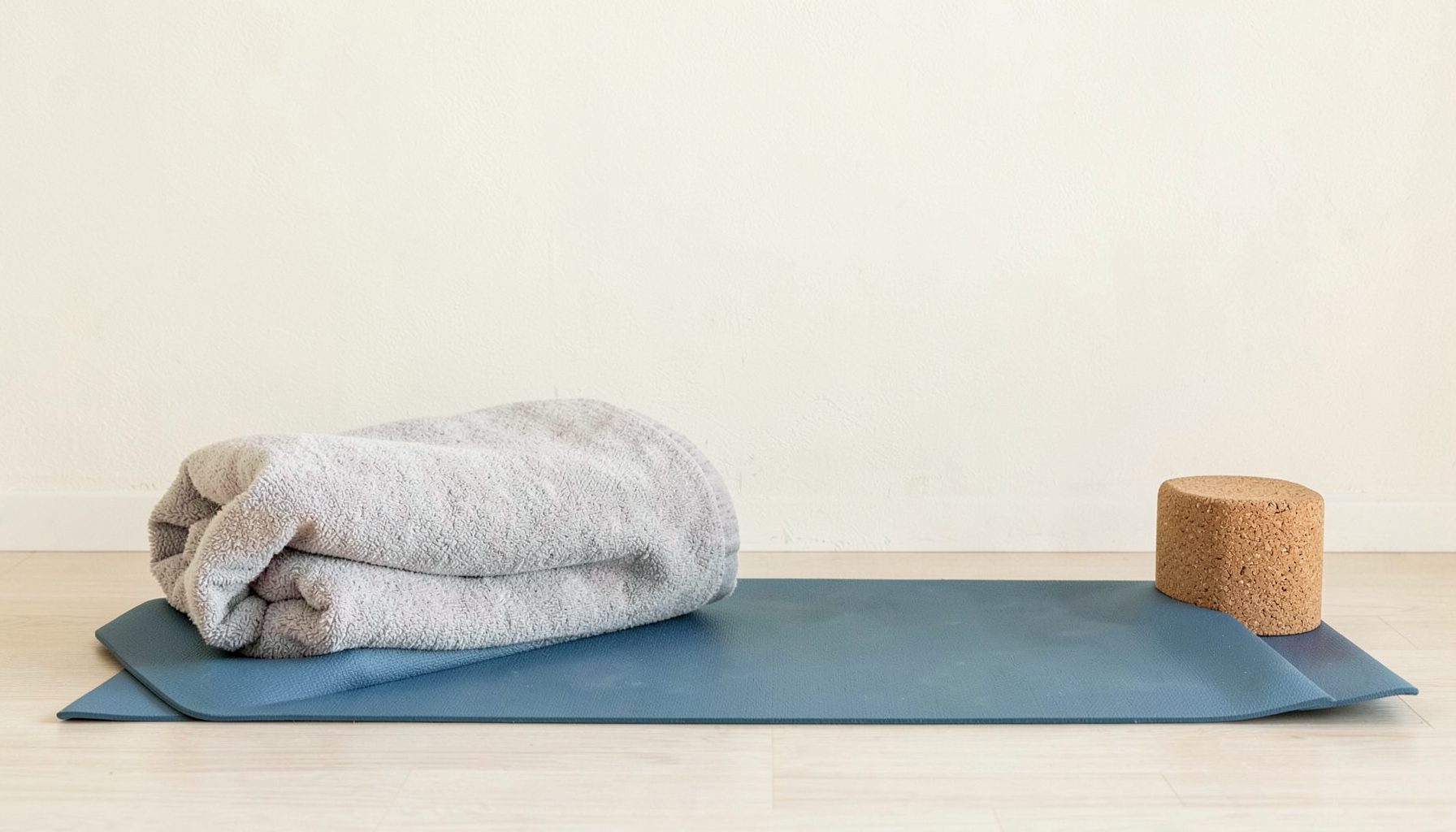
Choose a quiet space where you can sit or lie down without rushing. You do not need specialised equipment: a folded towel, firm cushion or yoga mat is enough. If you have recently had a whiplash injury, surgery or fall, seek advice from a doctor or physiotherapist before trying neck exercises.
Begin by resting your hands on your thighs and allowing your gaze to soften. Notice whether your breathing is shallow, whether your teeth are pressed together and whether one shoulder sits higher than the other. Take five unforced breaths, allowing the exhalation to become slightly longer without holding the breath or trying to breathe deeply.
A simple seated setup is to sit towards the front of a chair with both feet supported on the floor. Let the pelvis feel steady, lengthen through the crown of the head and keep the ribs relaxed. You can also practise lying on your back with a low folded towel beneath the head. If the towel makes the chin tilt towards the chest, remove it.
The following movements should feel exploratory rather than corrective. Perform one or two rounds at first, pausing whenever your body asks for stillness. A short routine of five minutes may be more beneficial for an irritated neck than a demanding session that leaves the area sore.
Gentle movements for neck and shoulder relief
Start with shoulder rolls. As you inhale, allow the shoulders to float up; as you exhale, guide them back and down in a slow circle. Reverse the direction after four rounds. Keep the movement relaxed and avoid squeezing the shoulder blades together forcefully. This can warm the upper back without asking the neck to move through a large range.
Next, practise a small chin nod. Looking straight ahead, gently draw the chin back as though making space at the base of the skull, then release. The head should travel only a few millimetres. This is different from dropping the chin towards the chest. Repeat six times, moving with an easy breath and keeping the jaw loose.
For side-to-side mobility, turn your head slowly towards the right until you meet the first sign of resistance, then return to centre. Repeat to the left. Imagine the nose tracing a level line rather than lifting or dipping. Four careful repetitions per side are enough. If one direction feels restricted, do not push to make both sides match.
A supported ear-to-shoulder movement can bring awareness to the side of the neck. Keep the shoulders heavy while the right ear moves slightly towards the right shoulder, then return to centre and change sides. Avoid lifting the shoulder to meet the ear. You can rest the right hand on the left thigh to create a gentle sense of grounding, but do not pull on the head.
Finish with a chest-opening movement. Interlace the hands loosely behind the back, or place each hand on the opposite forearm, and allow the collarbones to broaden as you breathe. There is no need to push the chest forward. Alternatively, place the forearms against a doorway and step back a little, keeping the shoulders away from the ears. This helps vary the rounded shape created by desk work.
Building the practice into everyday life
Consistency matters more than intensity. You might practise the sequence after waking, before bed or during a work break. A two-minute reset between online meetings can include three shoulder rolls, three chin nods and a few breaths with the feet firmly planted. These small pauses are practical for people balancing work, school runs and long periods of driving.
For a more spacious weekend session, combine neck mobility with movements for the upper back, wrists and hips. The weekend yoga routine can provide a useful framework for making practice feel restorative rather than another task to complete. Keep the neck movements small if stiffness is already present, and let the breath set the pace.
Breathwork can support the physical movements by reducing the urge to brace. Try breathing in through the nose for a natural count and exhaling slowly through the nose or softly parted lips. Rather than chasing a particular breathing ratio, notice whether the shoulders remain relaxed. Five calm breaths between movements can make the practice feel more spacious.
It can also help to change the environment around the habit. Position your screen near eye level, support your forearms at the desk and place your phone down for a few minutes each hour. If you are working in an Australian home during summer, avoid practising in a very hot room and drink water as usual. Gentle yoga should complement ordinary movement, not become a reason to stay still for longer.
Ways to keep neck care simple
- Take a brief movement break every 30 to 60 minutes of desk work.
- Keep the range of motion small and stop before pain begins.
- Relax the jaw and let the shoulders drop during every exercise.
- Use a chair, wall or cushion for support rather than forcing balance.
- Pair neck mobility with upper-back and chest-opening movements.
- Record which activities increase stiffness, such as driving, phone use or sleeping position.
- Seek qualified medical advice for persistent, worsening or unusual symptoms.
When to pause and seek professional guidance
Mild muscular tightness may respond well to warmth, rest, gentle movement and a change of position. However, neck pain deserves more careful attention when it follows a fall, collision or sudden force. Stop the practice and seek prompt medical care if you experience weakness, loss of coordination, significant swelling, severe headache, fever, vision changes, numbness or pins and needles extending into an arm.
Persistent symptoms also warrant assessment rather than repeated stretching. A general practitioner or registered physiotherapist can help identify whether the discomfort relates to muscles, joints, nerves or another condition. In Australia, registered physiotherapists are regulated through the Australian Health Practitioner Regulation Agency under the National Registration and Accreditation Scheme. Yoga teachers generally are not registered health practitioners under that scheme, so their role is education and movement guidance rather than diagnosis or treatment.
This distinction matters as yoga becomes easier to access through studios, workplace programmes, online memberships and wellness retreats across the Australian market. A class may be gentle and well taught, yet still not be the right setting for an acute injury. Look for clear instructions, options to rest and a teacher who welcomes you to modify or stop. Be cautious of promises that a particular pose can cure a medical problem.
A personal practice should leave you feeling more settled, not anxious about doing every movement correctly. If turning the head remains limited after several days, if pain repeatedly returns or if sleep and daily activities are affected, professional support is the sensible next step. Yoga can then be adapted around that guidance, perhaps focusing on breathing, supported positions and comfortable movement elsewhere in the body.
Begin with three slow shoulder rolls and a few relaxed chin nods rather than attempting a long routine. Keep your breath easy, stay within a comfortable range and finish while the neck still feels calm. The practical takeaway is simple: use gentle movement to create choice and ease, and treat persistent or unusual neck symptoms as a reason to seek qualified care.