




What Does It Mean to Have a Sustainable Practice?
A sustainable yoga practice is one that can remain part of your life through changing seasons, energy levels, responsibilities, and emotions. It is not defined by how advanced a posture looks or how many classes you attend each week. Instead, it grows from a relationship with movement, breath, and awareness that feels supportive enough to return to again and again.
Sustainability asks you to consider what genuinely helps you feel more present and at home in your body. Some days, that may be a strong physical sequence. On other days, it may be five quiet minutes of breathing, a restorative pose, or the decision to rest without judging yourself. A lasting practice has room for all of these choices.
This approach moves yoga away from performance and toward participation. You do not have to earn rest, reach a particular level of flexibility, or follow a perfect routine. You are learning to listen, respond, and make choices that respect your whole life.
Start with consistency rather than intensity
Many people begin yoga with ambitious plans. They may decide to practise for an hour every day, attend several classes a week, or master a demanding sequence within a short period. While enthusiasm can be motivating, an intense routine may become difficult to maintain when work, family, travel, illness, or low energy enters the picture.
Consistency is often quieter. It might mean unrolling your mat twice a week, taking a mindful pause before bed, or practising a few familiar movements when your schedule allows. The aim is to create a rhythm that feels realistic rather than impressive. A smaller commitment that you can honour regularly is more nourishing than a demanding plan that leaves you discouraged.
This does not mean that your practice must look the same every day. Sustainable consistency includes flexibility. You might have a longer session on a spacious morning and a brief breathing practice during a busy afternoon. Both can belong to the same path because both keep you connected to your intention.
Let your body set the pace
A sustainable practice is shaped by body awareness. Instead of forcing yourself into a pose because it appears a certain way, notice the information arising from your muscles, joints, breath, and nervous system. Sensations can guide you toward an appropriate variation, a slower transition, or a pause.
Listening does not mean avoiding challenge altogether. Growth can include effort, heat, steadiness, and the unfamiliar feeling of trying something new. The difference lies in how you meet that challenge. You can explore your edge without treating discomfort as proof that you should push farther.
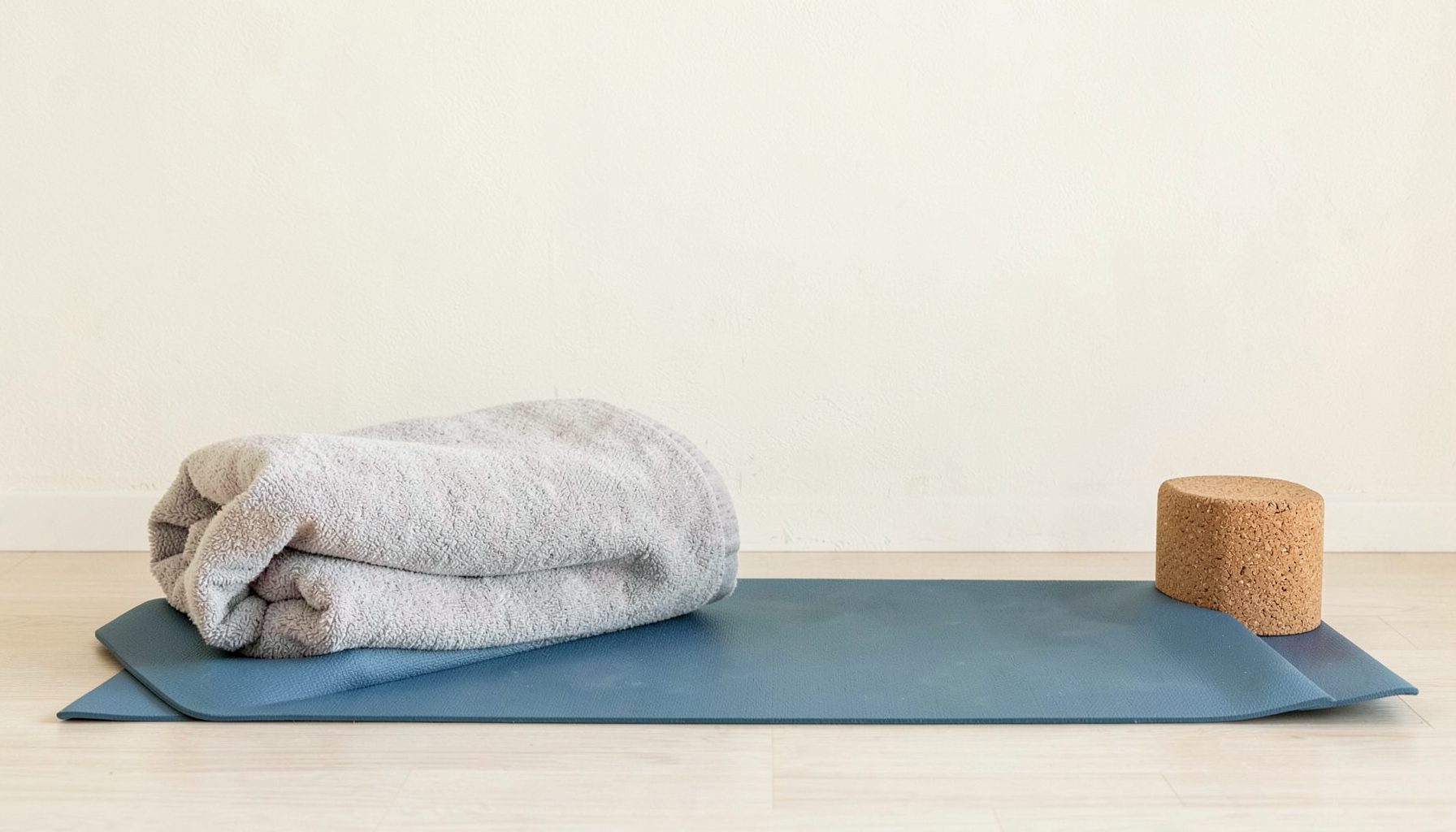
Props, modifications, and shorter sequences are valuable parts of an accessible practice. A blanket, block, chair, or wall can help you find stability and ease. Choosing support is not a sign of failure; it is a practical way to make movement more responsive to your needs on a particular day.
Make space for breath and attention
Physical movement is only one part of a lasting yoga practice. Breathwork, meditation, and mindful attention can help you stay connected to yourself when a full sequence is not possible. They also deepen the quality of your movement by bringing awareness to pace, tension, and habitual reactions.
A few conscious breaths before getting out of bed may change the tone of the morning. Pausing to feel your feet on the floor can interrupt a cycle of rushing. A short body scan may reveal that you are tired, overstimulated, or holding tension in your jaw and shoulders. These moments are simple, yet they build self-knowledge.
If meditation feels unfamiliar, begin with a comfortable seat and a modest amount of time. This simple meditation guide can help you approach seated awareness without needing to make the experience complicated. The purpose is not to empty your mind, but to practise returning gently when attention wanders.
Measure progress by relationship
Progress in yoga is often described through visible achievements: touching the floor, holding a balance, or moving into a more advanced posture. These milestones can be meaningful, but they represent only a small part of what practice can offer. A deeper measure is the relationship you develop with yourself while practising.
Perhaps you notice that you recover from stress more quickly, recognise your limits sooner, or speak to yourself with greater kindness. Maybe you are becoming more willing to rest, more aware of your breath, or less attached to comparing your body with someone else’s. These changes may not be obvious from the outside, but they can influence how you move through daily life.
Mindful yoga also invites you to notice the difference between discipline and punishment. Discipline can provide a caring structure that helps you return to what matters. Punishment relies on guilt and criticism. When a practice is rooted in self-compassion, missing a session becomes information rather than a personal failure. You can begin again without needing to make up for lost time.
| Approach that may not last | A more sustainable alternative |
|---|---|
| Planning an ideal routine for every day | Choosing a flexible rhythm with realistic options |
| Treating intensity as the main sign of progress | Valuing awareness, steadiness, and recovery |
| Ignoring pain or exhaustion | Adjusting, resting, or seeking appropriate support |
| Comparing your body with other practitioners | Observing your own needs and changing capacity |
| Practising only when you have a full hour | Keeping brief options for busy or low-energy days |
| Using guilt to maintain motivation | Returning through curiosity and self-compassion |
Build a practice that belongs to real life
The most useful routine is one that fits the life you actually live. Consider when you naturally have a little privacy or quiet. For some people, morning movement creates a grounded beginning. Others find that an evening practice helps them transition away from work. There is no universal ideal time, and your preferred rhythm may change over the years.
You can also create different versions of your practice. A full session might include warm-up movements, standing postures, hip or shoulder work, and a final rest. A medium session could focus on a few essential poses and conscious breathing. A minimum version might consist of sitting quietly, stretching your spine, or taking three deliberate breaths.
Useful sustainable choices include:
- Keep your mat, cushion, or other essentials easy to reach.
- Choose two or three short sequences for busy days.
- Set an intention based on how you want to feel, rather than what you want to achieve.
- Include rest days and restorative practices as part of your routine.
- Record brief notes about energy, mood, and helpful discoveries instead of tracking performance alone.
A practice can also extend beyond the mat. Eating with attention, walking without your phone, taking a pause before responding, and noticing your inner dialogue are all opportunities to apply yogic awareness. When the principles of yoga accompany ordinary activities, practice becomes less dependent on having ideal conditions.
Allow your practice to evolve
Sustainability requires adaptation. Your body changes with age, stress, sleep, injury, pregnancy, illness, work patterns, and emotional experience. A sequence that once felt appropriate may need to be modified, shortened, or set aside. This is not a disruption of your practice; it is part of practising honestly.
Teachers, classes, retreats, and carefully chosen resources can offer guidance when you feel uncertain or ready to explore. A supportive teacher will encourage curiosity and provide options rather than insisting that every student move in the same way. The right environment can help you develop greater confidence in your own ability to choose.
It is also helpful to revisit your reasons for practising. You may have started for flexibility but discovered that yoga supports your sleep. You may have wanted exercise and found a way to manage stress. Your intention can change without invalidating your original motivation. Letting the purpose of practice mature keeps it relevant and alive.
Return gently and keep going
There will be periods when yoga feels easy to prioritise and periods when it falls away. Travel, caregiving, deadlines, grief, health concerns, and ordinary fatigue can all interrupt a routine. A sustainable approach expects these changes rather than treating them as obstacles that should never happen.
When you return, begin with less than you think you need to do. Notice your breath, move slowly, and let the first session be an act of listening. You do not need to recreate your previous ability or compensate for time away. The practice is available in the present moment, exactly where you are.
Sustainable yoga is ultimately a form of trust. You learn to trust gradual change, useful rest, honest boundaries, and the intelligence of your own experience. Start with one manageable practice that supports your current life, whether that is a gentle class, a short sequence, or a few minutes of meditation. Explore Camille Dodson Yoga’s classes, retreats, reflections, and downloadable resources to find ways of returning to yourself with steadiness and care.