The Power of Intentional Pacing in Your Vinyasa Practice
Vinyasa yoga is often described as movement linked with breath, yet the quality of that connection can vary widely. A quick transition may look energetic and flowing, while a slower one can feel spacious, attentive, and deeply revealing. When you reduce the speed of your practice, each posture has time to become an experience rather than a shape you pass through.
Slowing down does not make a sequence less powerful. Intentional pacing can build strength, improve balance, refine body awareness, and create room for the nervous system to settle. It also gives you more opportunities to notice when you are gripping, rushing, holding your breath, or asking too much of yourself.
A mindful vinyasa practice is not a race toward the most advanced pose. It is a moving meditation shaped by breath, sensation, and choice. With a few practical adjustments, a familiar sun salutation can become a sustainable personal practice that supports you well beyond the mat.
Why Slower Movement Changes Your Practice
Fast-paced flow can be enjoyable, especially when you want to generate heat or feel invigorated. However, speed can make it difficult to sense subtle feedback from your joints, muscles, and breath. You may move into a lunge before noticing that your front knee has shifted, or arrive in downward-facing dog while your shoulders remain tense.
A slower rhythm gives your attention somewhere to land. You can feel the ground beneath your hands, observe how your spine responds to each transition, and recognize the difference between useful effort and unnecessary strain. This increased body awareness helps you make adjustments before discomfort becomes pain.
Intentional pacing also changes your relationship with effort. Instead of treating intensity as proof that a practice is working, you can explore steadiness, patience, and responsiveness. A held pause between poses may challenge you more than a rapid sequence because it asks you to remain present without relying on momentum.
There is a mental benefit, too. When you lengthen transitions, the mind has fewer opportunities to drift into planning or self-criticism. The practice becomes a place to return to the current breath, current sensation, and current decision.
Build A More Supportive Foundation
Before slowing a vinyasa sequence, consider the conditions you are practicing in. A rushed class may begin with ambitious movement before the body has fully arrived. Starting with a few minutes of quiet breathing, gentle joint movements, or simple spinal waves can make the later flow feel more coordinated.
Choose a pace that allows you to breathe through your nose when that feels comfortable. Nasal breathing is not a requirement for every practitioner, but it can provide useful information. If you cannot inhale or exhale smoothly, the sequence may be moving faster than your body can comfortably manage.
Your hands and feet also deserve attention. In plank, place the hands beneath or slightly wider than the shoulders and spread the fingers. In standing poses, notice whether the feet are stable enough to support the next transition. Small foundations create greater freedom higher in the body.
For days when your lower back feels restricted, move with particular care through spinal flexion and extension. This guide to cat-cow with intention offers a useful way to explore mobility without forcing range. The emphasis is on sensing the movement, coordinating it with breath, and respecting the body’s current limits.
Let The Breath Set The Rhythm
The breath can act as an internal metronome, though it does not need to dictate a rigid count. Begin by allowing each inhale and exhale to have enough time to complete. If a transition ends before the breath does, pause rather than adding speed to catch up.
Try assigning one full breath to each distinct action. For example, inhale as you lengthen through the spine, exhale as you fold, inhale to step or float back, and exhale to settle into the next shape. The exact pattern may vary, but the principle remains: let movement serve the breath instead of using the breath to push through movement.
You can also introduce pauses at natural turning points. Stay for one breath at the top of an inhale before folding forward. Pause in tabletop after coming out of a spinal wave. Rest in downward-facing dog for several quiet breaths before beginning the next side. These moments are valuable rather than empty.
If the breath becomes shallow, noisy, or held, treat that as information rather than failure. Bend the knees, shorten the stance, lower the gaze, or return to child’s pose. A sustainable practice is one in which you can respond to changing needs without judgment.
Refine The Transitions Between Poses
Many practitioners focus on arriving in a pose and overlook the movement that takes them there. Yet transitions often reveal habitual patterns. Moving slowly from warrior two to extended side angle, for instance, allows you to feel how the pelvis, ribs, shoulders, and gaze coordinate.
Experiment with separating the transition into smaller stages. From downward-facing dog, bend the knees and shift forward before stepping one foot between the hands. Pause to organize the foot, then rise into the lunge. This may take longer, but it can reduce strain and create a clearer sense of direction.
You do not need to make every movement extremely slow. The aim is to choose the right speed for the action. A controlled step may be helpful when balance is uncertain, while a smooth exhale through a familiar transition can remain fluid. Intentional pacing means responding rather than applying one tempo to the entire class.
The following comparisons can help you decide how to adapt a flowing sequence to your energy, experience, and physical needs.
| Practice element | Rushed approach | Intentional alternative | What to notice |
|---|---|---|---|
| Stepping forward | Swing the foot quickly between the hands | Lift the heel, shift weight, and place the foot with care | Foot placement and hip comfort |
| Moving through plank | Drop immediately toward the floor | Lower halfway or bring knees down with control | Shoulder stability and breath |
| Folding forward | Pull the head toward the legs | Soften the knees and lengthen the spine first | Hamstring sensation and lower-back ease |
| Changing sides | Start before the breath settles | Complete the exhale, then prepare the next movement | Mental clarity and steadiness |
| Resting in down dog | Treat the pose as a default pause | Use it deliberately or choose child’s pose | Whether the posture restores you |
Make Strength More Conscious
Slowing a vinyasa does not mean removing challenge. It changes the kind of challenge you experience. A three-breath plank, a controlled knee-to-chest movement, or a gradual lowering toward the floor can build strength through sustained awareness rather than speed.
When moving from plank to chaturanga, consider whether your shoulders can remain stable and whether your elbows track comfortably. You might lower only a few inches, place the knees down, or skip the transition entirely. These are intelligent variations, not lesser versions of the practice.
The same principle applies to standing sequences. Rather than reaching immediately for a deeper lunge or wider stance, explore the muscular work of staying upright and steady. Notice the outer hip, the back leg, the arches of the feet, and the relationship between your pelvis and rib cage.
A slower practice makes it easier to distinguish muscular effort from compression in a joint. Strong sensations may be appropriate, but sharpness, pinching, numbness, or persistent pain deserve a change in position. Respecting these signals is part of yoga’s mindfulness, not an interruption to it.
Use Stillness To Deepen Awareness
A pause can be as meaningful as a transition. After moving through several rounds of a sequence, stop in mountain pose and observe the effects. Feel your heartbeat, the temperature of your skin, the movement of the breath, and the emotional tone of the moment.
These short pauses help you recognize the difference between stimulation and regulation. You may notice that a vigorous flow leaves you energized, while a slower rhythm makes you feel grounded. Neither response is inherently better. Each provides information about what your body and mind need that day.
Stillness also creates space for self-compassion. You might discover that a pose feels different from yesterday, or that your balance is less steady than expected. Rather than interpreting this as a problem, practice meeting the present version of yourself with patience. Yoga becomes a relationship with change rather than a performance of consistency.
For more context on a gentle, accessible approach to movement, breathwork, and mindful practice, explore Camille's approach. A supportive practice leaves room for individuality, adaptation, and rest.
Shape A Flow That Meets You Today
A sustainable sequence begins with an honest assessment. Consider your energy, sleep, mood, available time, and any areas of discomfort. You may choose a slower full-body flow, a few standing poses, or a short practice centered on mobility and breathing. The most useful sequence is the one you can meet with attention.
Try building a simple arc: arrive with breath, warm the spine and joints, explore a few strength-based poses, move through one or two mindful standing sequences, and close with quieter postures. Keeping the structure familiar can make it easier to focus on sensation rather than deciding what comes next.
You can also repeat fewer rounds. One deliberate sun salutation may teach you more than five hurried repetitions. Use the first round to learn the pathway, the second to refine it, and the final round to notice what has changed. Repetition becomes a form of listening.
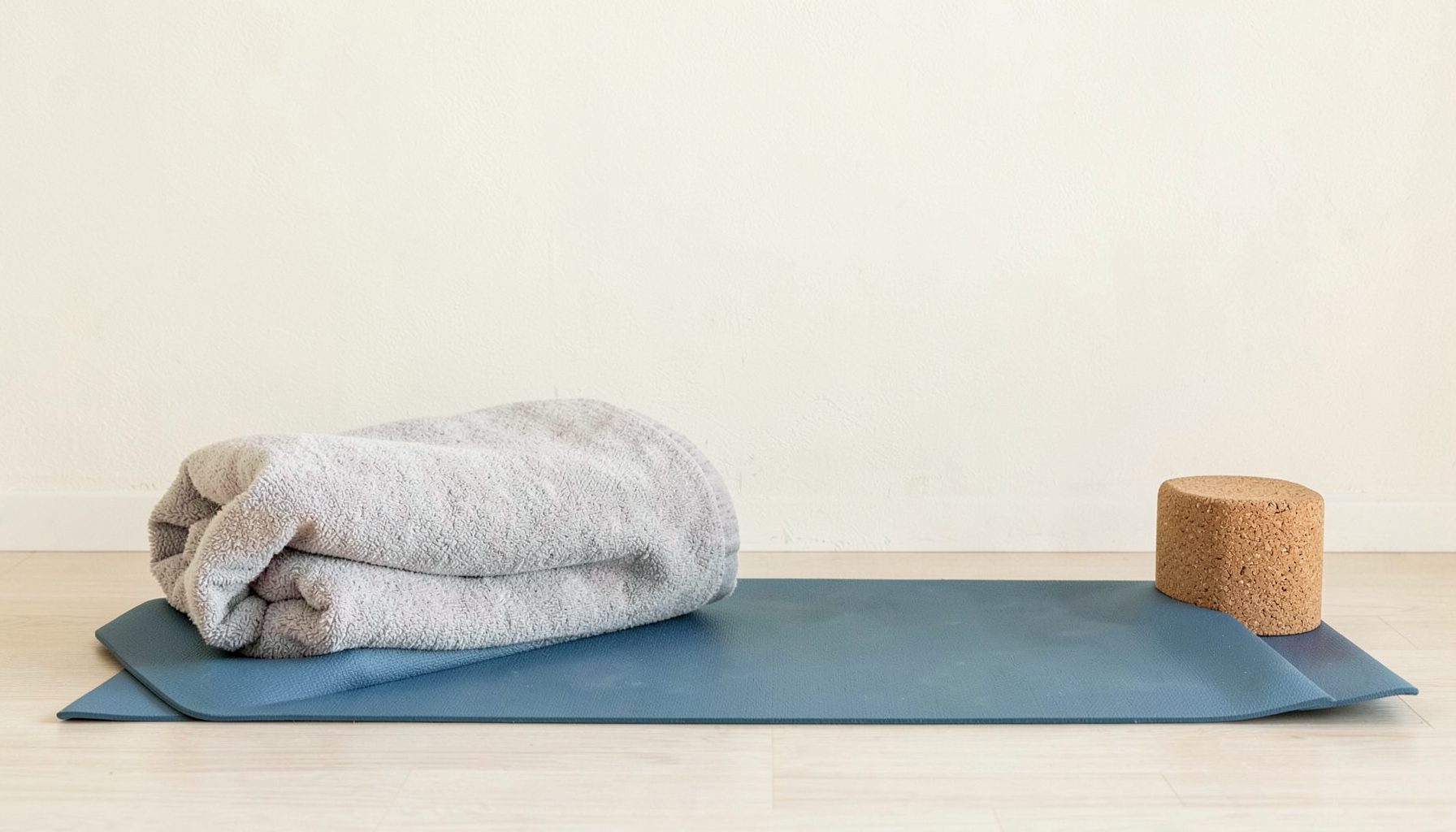
Keep props nearby and use them before you feel overwhelmed. Blocks can bring the floor closer, a folded blanket can support the knees, and a strap can offer stability without forcing a stretch. Modifications allow pacing to remain intentional when the body needs more support.
Practical Ways To Slow Down
A slower rhythm becomes easier to maintain when it is built into the design of your practice. Choose one or two adjustments rather than trying to transform every habit at once. You might begin by adding one breath to each transition or by taking a pause after every sun salutation.
Use the following ideas as simple experiments:
- Count three steady breaths in poses where you usually rush out.
- Move between postures at half your usual speed for one round.
- Replace a jump with a step and observe how your balance changes.
- Keep the gaze soft and directed toward a stable point.
- End with several minutes of rest before returning to your day.
Write down a brief observation after practicing: “My breath felt easier when…” or “I noticed tension in…” This kind of reflection helps you identify patterns without turning practice into another task to perfect. Over time, you may learn which pace supports focus, which movements need preparation, and when rest is the wisest choice.
Remember that slowing down is not a permanent rule. Some days may welcome a lively flow, while others call for gentle floor-based movement. The deeper skill is choosing deliberately instead of being carried along by habit, comparison, or the pace of a recording.
Let your next vinyasa begin with one unhurried breath. Feel your feet or hands connect with the ground, make each transition clear, and give yourself permission to pause whenever attention fades. Explore a sequence that matches your present energy, then carry that same patience into the rest of your day.