




A Personal Yoga Practice Rooted In Presence
A personal yoga practice offers a quiet place to meet yourself as you are. It does not require perfect flexibility, an impressive sequence, or a body that looks a certain way in a particular shape. It begins with attention: noticing your breath, sensing the ground, and allowing the present moment to be enough.
In a class, retreat, or few minutes beside your bed, yoga can become a relationship rather than a performance. You learn how your energy changes, where effort feels useful, and when rest is the wisest form of movement. Over time, this kind of practice creates trust between your awareness and your body.
The gift of a personal yoga practice is no judgement, just presence. It gives you room to explore movement, breathwork, mindfulness, and self-compassion without measuring your experience against someone else’s. Every session can meet a different need, from steadiness and strength to softness and restoration.
Making Space For Your Actual Experience
A personal practice begins by releasing the idea that every session should look the same. Some days may invite energising sun salutations and standing poses. Other days may call for supported shapes, meditation, gentle stretching, or lying quietly with one hand on the heart. Both are meaningful expressions of yoga.
This flexibility makes practice more sustainable. Instead of forcing yourself through a routine designed for a different body, mood, or schedule, you can respond to what is present. A short sequence completed with awareness may offer more nourishment than a demanding class approached with pressure.
Presence also means noticing the stories that arise. You may hear an inner voice saying that you are stiff, distracted, behind, or doing the pose incorrectly. Rather than arguing with that voice, you can observe it and return to a physical anchor: the breath moving through the ribs, the feet meeting the floor, or the sensation of a shoulder softening.
With repetition, this simple return becomes a skill. You begin to recognise that awareness does not depend on having a calm mind. It is available while thoughts, emotions, restlessness, and uncertainty are moving through you.
Letting Go Of Performance
Many people first encounter yoga through images of advanced postures, athletic bodies, and polished studios. These images can make practice feel like a test. Yet the value of a pose is not determined by how far the body travels or how it appears from the outside. Its value lies in the quality of attention it creates.
A posture can become an invitation to explore effort, ease, balance, and breath. You might hold a shape with a steady gaze, soften unnecessary tension, and recognise the difference between challenge and strain. This approach is explored in a guide to holding poses, where mindful effort supports a more compassionate relationship with movement.
When judgement takes over, the body often tightens. The jaw clenches, the breath becomes shallow, and the mind focuses on reaching an imagined finish line. When curiosity takes its place, sensation becomes information rather than evidence of success or failure. A pose can be adjusted, paused, or left behind without turning that decision into a personal verdict.
This is especially important for people returning to movement after illness, injury, stress, pregnancy, grief, or a long period of disconnection from the body. A gentle approach creates space for dignity. Progress may mean breathing more freely, trusting a modification, or recognising the need to rest.
Listening To The Body With Care
Body awareness is more than noticing whether a stretch feels intense. It involves paying attention to temperature, rhythm, balance, fatigue, emotional response, and the quality of your breath. These details help you understand what your body is communicating before discomfort becomes overwhelming.
A personal yoga practice can develop this listening gradually. In a forward fold, you might bend the knees to protect the back. In a twist, you might reduce the range to keep the breath smooth. In a balancing pose, you might place a hand on a wall and discover that support allows greater concentration. Adaptation is part of the practice, not a departure from it.
Pain deserves clear respect. A strong sensation may sometimes be appropriate, but sharp, sudden, burning, or alarming pain is a reason to stop and reassess. Resting in child’s pose, changing direction, or ending the session can be an act of wisdom. Yoga encourages a relationship with the body that is responsive rather than controlling.
Breath is a useful guide. If you can breathe steadily and remain present with the sensation, you may be exploring a workable edge. If the breath becomes strained or disappears into effort, the shape may need to change. This kind of self-care supports safe movement and helps cultivate inner trust beyond the mat.
Finding Practice In Ordinary Life
A yoga practice does not need to be separated from daily life. A mindful pause before opening your laptop, three slow breaths in the car, or a gentle stretch while waiting for the kettle can carry the same qualities as a longer session. The practice becomes portable because presence is portable.
Some people benefit from a regular morning sequence, while others find an evening wind-down more supportive. There is no universal ideal. The most useful rhythm is one that fits your circumstances well enough to continue. A ten-minute practice repeated with kindness can become a dependable source of grounding.
| Practice approach | What it may support | A gentle way to begin |
|---|---|---|
| Morning movement | Energy, focus, and orientation | Take five slow breaths, then explore standing poses |
| Midday reset | Release from work or mental tension | Roll the shoulders, stretch the sides, and soften the gaze |
| Evening practice | Rest, reflection, and transition | Choose forward folds, supported poses, or a short meditation |
| Restorative pause | Recovery and nervous system regulation | Use cushions or blankets and stay with easy breathing |
| Breathwork practice | Calm attention and emotional steadiness | Lengthen the exhale without forcing the breath |
| Reflective journaling | Self-understanding and intention | Write a few lines about what your body needs today |
A consistent practice can also change how you move through challenging moments. You may notice tension earlier, pause before reacting, or find a more spacious response to a difficult conversation. The mat becomes a place to rehearse patience, and daily life becomes a place to embody it.
Creating A Sustainable Personal Rhythm
Sustainability comes from making practice realistic. If your routine depends on perfect mornings, abundant energy, and uninterrupted time, it may disappear whenever life becomes busy. A more resilient approach includes several options: a full class when you have time, a short sequence when you are tired, and a single conscious breath when everything feels full.
It can help to choose an intention instead of a rigid outcome. You might practise to feel grounded, to reconnect with your body, or to offer yourself ten undivided minutes. An intention gives direction while allowing the session to unfold differently than expected.
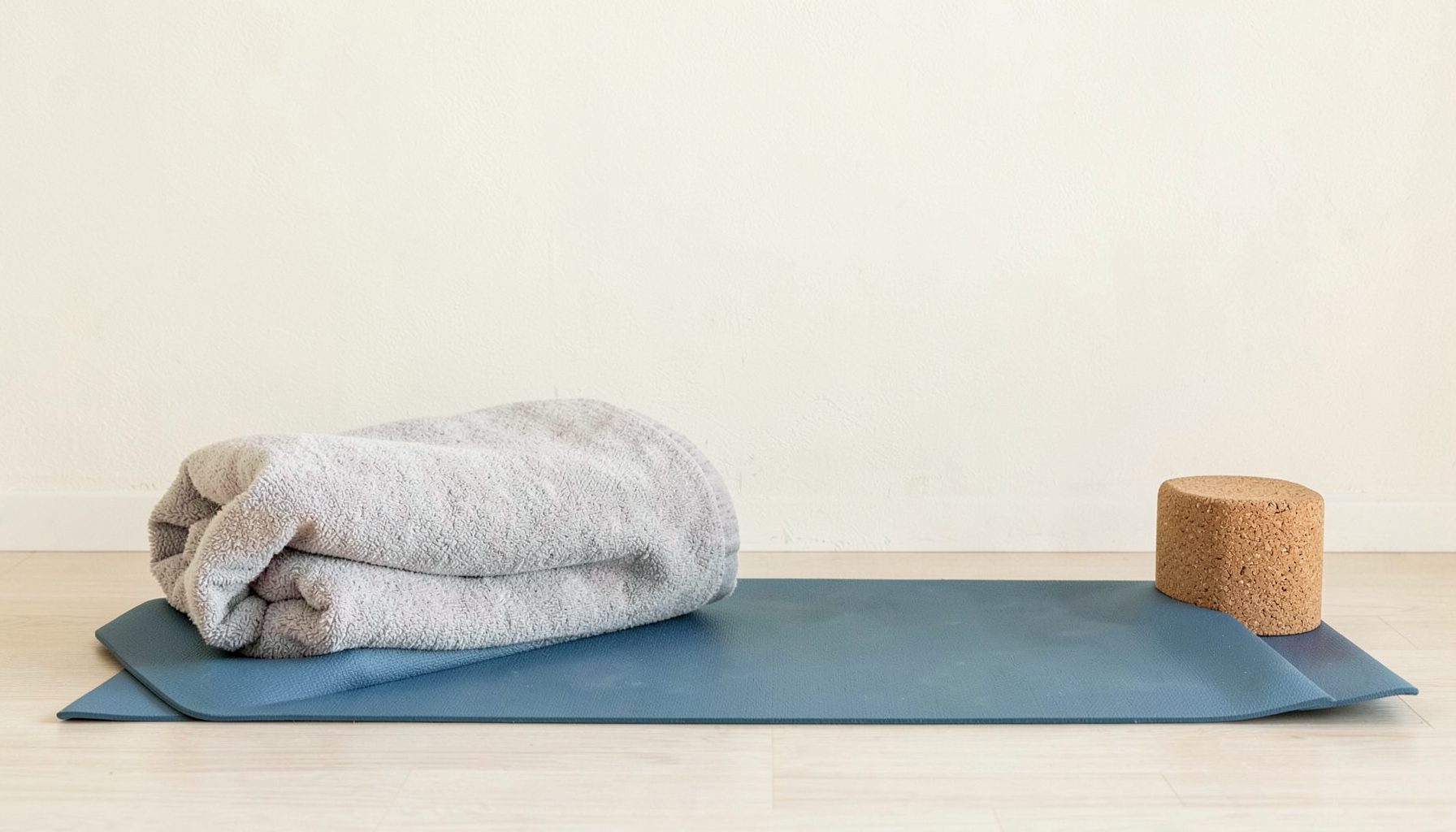
Props can make this process more accessible. A folded blanket can lift the hips, a cushion can support the knees, and a wall can make balance more secure. These tools do not lessen the practice. They help the body settle into a shape where awareness can deepen.
Digital resources, printable sequences, guided meditations, and online classes can provide gentle structure without removing choice. They offer a starting point, while your own sensations remain central. The teacher or resource can guide you, but only you can sense what is appropriate in this moment.
Gentle Principles For Returning To Yourself
The following principles can help keep personal practice rooted in compassion:
- Begin with observation before choosing movement. Notice your energy, breath, mood, and any areas asking for care.
- Let the breath influence the pace. When breathing becomes hurried or restricted, reduce the intensity or pause.
- Choose variations that support you today, even if they differ from what you did yesterday.
- Measure practice by the quality of connection rather than the difficulty of the posture.
- End with enough quiet to recognise how the practice has affected your body and mind.
These principles leave room for change. A practice may feel spacious one day and distracted the next. Both experiences can be met with patience. The aim is not to create a perfect inner state, but to become more willing to be present with the state that exists.
Self-compassion does not mean avoiding challenge. It means meeting challenge without cruelty. You can build strength, explore unfamiliar movement, and stay with discomfort while remaining attentive to your limits. In this balance, yoga becomes a form of honest care.
A personal yoga practice can begin with one breath, one supported posture, or one moment of choosing not to force. Explore classes, retreats, reflections, and downloadable resources from Camille Dodson Yoga to find practices that honour your body, your attention, and the changing shape of your life. Return whenever you need a quieter place to listen.