The art of not rushing: a slow flow for a hectic day
A busy day can make every movement feel like a task to complete. You answer one message while thinking about the next meeting, hurry through breakfast, and carry that restless momentum into the evening. Even moments intended for rest may become another item to finish quickly.
Yoga offers a different rhythm. A slow flow does not require a long studio session, advanced flexibility, or a perfectly quiet room. It can be a mindful sequence of familiar postures, steady breathing, and small pauses that help you return to your body. The purpose is not to achieve more shapes, but to experience each one fully.
The art of not rushing begins with permission. You do not have to force calm or eliminate every thought before you begin. You can arrive exactly as you are and let the practice gradually create a little more space around the demands of the day.
When speed becomes the habit
Hurrying is often treated as a practical response to a full schedule, yet the body can continue moving at that pace long after the urgent moment has passed. The jaw tightens, the shoulders rise, and the breath becomes shallow. You may notice yourself moving through ordinary actions without sensing your feet, hands, or changing energy.
A slower yoga practice interrupts this automatic pattern. It gives your attention one clear place to rest: the feeling of an inhale, the contact between your palm and the mat, or the gradual lengthening of your spine. These details are simple, but they make the present moment tangible.
Slow does not mean passive. It can include strength, heat, and purposeful movement. The difference is that each transition has time to register. You choose when to move, how far to go, and whether the next shape genuinely supports you.
Arrive before you move
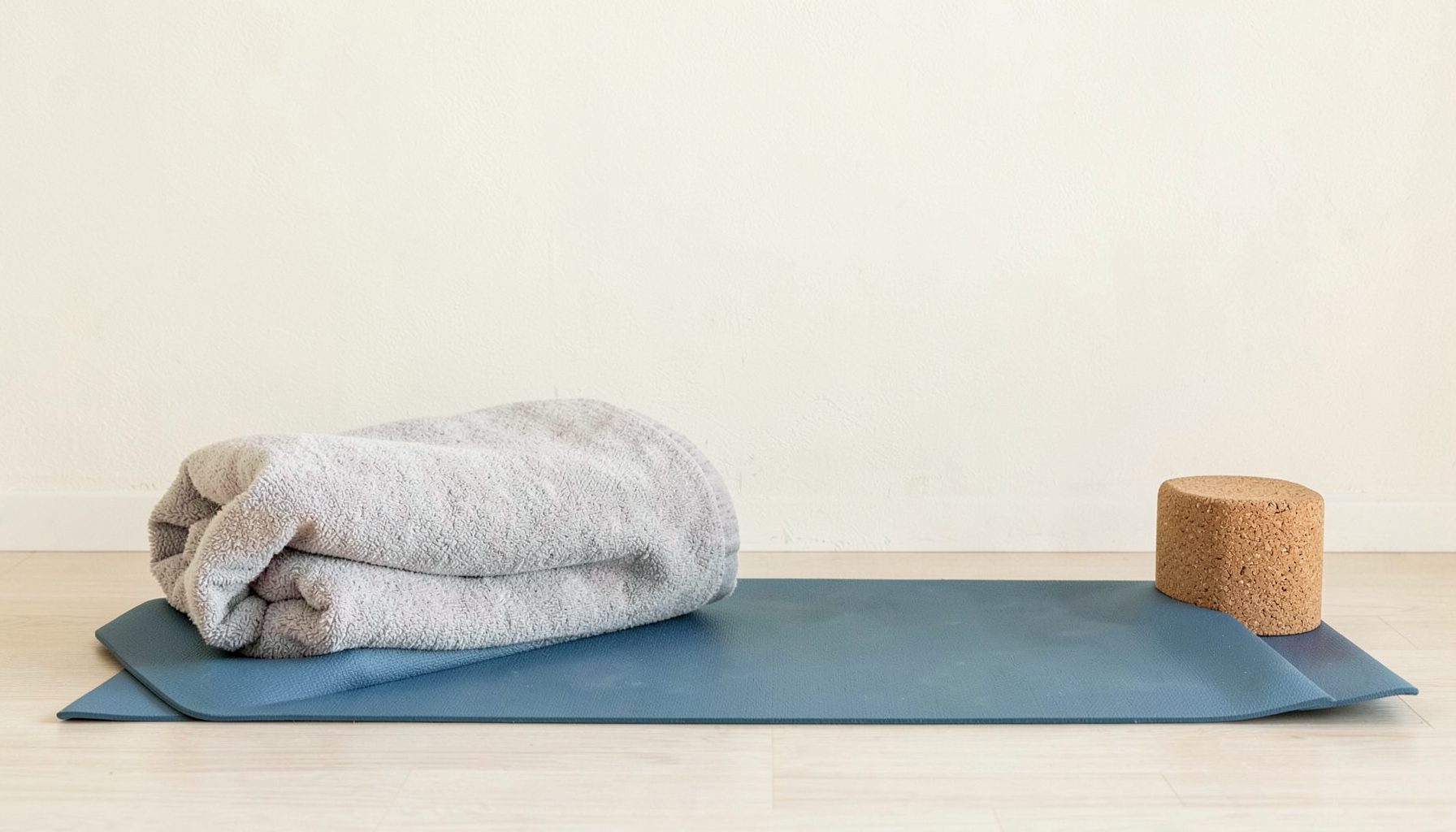
Begin by setting up a comfortable space where you will not need to search for props halfway through your practice. A mat, folded blanket, cushion, and perhaps a wall are enough. If you are replacing a worn mat or choosing one for a home practice, this guide to yoga mats can help you consider grip, cushioning, texture, and the kind of movement you enjoy.
Sit or lie down and notice the surface beneath you. Let your hands rest somewhere easy, perhaps over your ribs or lower belly. Observe the natural breath without correcting it. You might feel it moving quickly at first. That is useful information rather than a problem to solve.
Take three unhurried breaths. On each exhale, soften one area: the muscles around the eyes, the tongue, the shoulders, or the hands. Allow your attention to widen from the breath to the whole body. This brief pause changes the quality of the practice before the first posture begins.
A gentle sequence for a crowded day
A slow flow can last ten minutes or an hour. The following sequence is designed to be adaptable. Move through it with enough space to notice sensation, and remain in any posture that feels nourishing. If a movement causes sharp pain, come out of it and choose a comfortable alternative.
Start in a supported child’s pose or an easy seated position. Let the spine round naturally for a few breaths, then gradually return to upright. Move into tabletop and explore slow cat-cow movements, taking one full breath for each phase. Rather than pushing into the largest range available, let the motion be smooth and curious.
From tabletop, extend one leg back and pause. If it feels steady, reach the opposite arm forward. Keep the back of the neck long and breathe into the support of the standing hand and knee. Change sides, then return to all fours before moving into downward-facing dog or a hands-and-knees variation.
Walk slowly to the top of the mat. Fold forward with bent knees, allowing the head and arms to release. Roll up gradually, stacking the spine one vertebra at a time. From standing, explore mountain pose, a gentle side stretch, and a soft standing forward fold. Finish with a low lunge on each side, keeping the hands supported on blocks or the floor.
| Moment in the practice | Suggested movement | Quality to explore |
|---|---|---|
| Settling | Seated breathing or supported child’s pose | Grounding and ease |
| Waking the spine | Slow cat-cow | Fluidity without strain |
| Building steadiness | Extended tabletop | Balance and concentration |
| Changing levels | Deliberate walk to the top of the mat | Patience in transition |
| Releasing tension | Forward fold with bent knees | Softness and support |
| Closing | Legs up the wall or savasana | Receiving rather than doing |
After the standing sequence, lower onto your back. Place the feet on the floor or extend the legs comfortably. Let your arms rest by your sides and stay for several breaths. The final shape is less important than the unhurried attention you bring to it.
Let the breath set the pace
Breath-led movement is one of the clearest ways to practice a slower rhythm. Try inhaling as you lengthen or open the front of the body, and exhaling as you fold, soften, or settle. This does not need to be rigid. If the breath feels strained, return to a natural pattern.
You can also add a simple count. Inhale for four, then exhale for five or six, keeping the breath smooth rather than deep or forceful. A slightly longer exhale may encourage the nervous system to move toward rest, but comfort remains the guide. The aim is spaciousness, not control.
Notice the pause after an exhale if it appears naturally. Do not hold the breath deliberately. That quiet moment can become a reminder that nothing needs to happen immediately. The next inhale will arrive in its own time, just as the next movement can begin without being chased.
During transitions, ask the breath to lead. Begin moving only after the inhale or exhale has started, and complete the movement before the breath ends. This simple coordination helps prevent the body from rushing ahead of your awareness.
Make the practice fit the day
A hectic schedule may not allow a full sequence, and a sustainable practice does not depend on ideal conditions. On a morning when you are short on time, spend two minutes in standing side stretches and forward folds. At a desk, roll the shoulders, turn the palms upward, and take several slow breaths before opening the next task.
If your energy is low, choose restorative shapes such as legs up the wall, supported reclining bound angle, or a side-lying rest. If you feel agitated, gentle rhythmic movement may serve you better than stillness at the beginning. The right practice is the one that meets your current state rather than insisting that your current state change first.
You can also reduce the number of decisions involved. Keep a blanket and mat in an accessible place. Use the same opening breath each day. Repeat a familiar sequence until it feels like a dependable pathway back to yourself. Familiarity can create depth without requiring novelty.
A short practice is not a lesser practice. Five attentive minutes may influence the rest of your day more than forty minutes performed with pressure and self-criticism. Consistency grows from kindness, flexibility, and realistic expectations.
Ways to protect a slower rhythm
Rushing often returns through small habits around the practice. These adjustments can help preserve a sense of spaciousness:
- Put your phone on silent or leave it outside the practice area.
- Begin with one minute of stillness before choosing any posture.
- Take at least one full breath between shapes instead of moving continuously.
- Use props to reduce strain and make the body feel supported.
- End with a clear pause before returning to messages, chores, or work.
The transition out of yoga deserves attention too. Rather than standing immediately after savasana, roll to one side and pause. Notice the effects of the sequence: perhaps your breath is quieter, your face softer, or your mind less crowded. You do not need to produce a dramatic feeling for the practice to have value.
Carry one sensory detail into the next part of the day. Feel both feet while walking to another room. Let one exhale lengthen before you speak. Release your grip on the steering wheel at a red light. These small reminders turn slow flow into an everyday practice of presence.
Find stillness inside movement
Not rushing is not a demand to live slowly at every moment. Some days will involve deadlines, travel, caregiving, and unavoidable speed. The practice is learning to recognize when urgency is useful and when it has become a reflex.
A mindful yoga sequence gives you a place to rehearse that distinction. You move with intention, pause without guilt, and listen before deciding to deepen or stop. Over time, you may begin to sense the difference between effort that supports you and effort that comes from trying to prove something.
The most meaningful result may appear after the mat is rolled away. You may respond to an interruption with less tension, eat without scrolling, or notice fatigue before pushing past it. These changes are quiet, but they show that yoga is becoming part of how you meet daily life.
Let your slow flow be a return rather than another performance. Create enough time to feel one breath, one transition, and one moment of choice. Then carry that unhurried attention into the next hour. Explore gentle classes, reflective resources, and practices that support your real schedule through Camille Dodson Yoga, and make a little room for steadiness today.