



How to Choose the Right Yoga Mat for Your Practice
A yoga mat is more than a piece of equipment beneath your feet. It creates a defined space for movement, breathing, and attention, whether you are flowing through sun salutations, sitting in meditation, or resting quietly in Savasana. The right surface can make practice feel steadier, more comfortable, and easier to return to.
There is no single best yoga mat for everyone. Your ideal choice depends on the kinds of yoga you enjoy, how much cushioning your body needs, the amount of grip you prefer, and where you usually practise. A thick, soft mat may feel wonderful for restorative poses, while a lighter, firmer option may suit travel or a dynamic sequence.
Choosing carefully also supports a sustainable personal practice. When your mat feels comfortable and dependable, you are less likely to be distracted by slipping, sore knees, or a strong chemical smell. Instead, the mat can quietly support the mindful relationship between breath, body, and the present moment.
Start with the way you practise
Think about your regular yoga style before comparing colours, materials, or prices. A gentle hatha practice, restorative yoga, and meditation may call for a different surface than vinyasa, Ashtanga, or hot yoga. The more your practice includes transitions, weight-bearing poses, and perspiration, the more important traction and stability become.
For slower classes, comfort is often the priority. A slightly cushioned mat can make kneeling poses, seated forward folds, and longer periods of lying down more pleasant. If you practise strong standing sequences, a firmer mat with reliable grip may give you better feedback through your feet and hands.
Your location matters, too. A home practice allows you to choose a heavier, wider mat that can stay in place. If you walk, cycle, or use public transport to class, portability becomes part of the decision. A lightweight travel mat may be practical, although it may need to be placed over a studio mat for extra support.
Understand yoga mat materials
Most yoga mats are made from PVC, natural rubber, polyurethane, cork, or thermoplastic elastomer, often called TPE. Each material has a different feel, weight, durability, and environmental profile. Reading the material details helps you understand how a mat is likely to perform beyond its appearance.
PVC mats are widely available and can be durable, cushioned, and easy to clean. They often offer consistent grip, though their manufacturing process may be less aligned with the values of practitioners seeking lower-impact materials. TPE is generally lightweight and free from some chemicals associated with older foam products, but its durability and texture vary between brands.
Natural rubber can provide excellent traction, particularly for active practices. It is often heavier and may have a noticeable rubber scent when new. Anyone with a latex allergy should check product information carefully. Cork is firm, naturally resistant to odour, and often becomes grippier with moisture, although it may feel less padded during kneeling poses.
Material labels do not tell the whole story. Look for information about closed-cell construction, responsible sourcing, recyclability, and manufacturing standards. A well-made mat that lasts for years may be a more considered choice than a cheap mat that needs frequent replacement.
Match grip, texture, and stability
Grip has two meanings in yoga equipment: how well your hands and feet hold the surface, and how firmly the mat stays connected to the floor. Both are useful. A mat can feel sticky beneath your palms while still sliding across a wooden floor if its underside does not have enough traction.
Smooth, sticky surfaces can suit flowing practices because they allow hands and feet to settle quickly. Textured mats may provide more dependable traction when you sweat, while cork and some natural rubber surfaces can change character during practice. Grip should support movement without encouraging you to clench your toes or tense your fingers.
Try to distinguish between useful grip and excessive stickiness. A surface that catches your skin too strongly can make transitions awkward and may tug at the knees. If possible, test a mat with bare hands and feet, and move through Downward-Facing Dog, a lunge, and a seated posture before buying.
Choose the right thickness and size
Standard yoga mats are usually around 3 to 5 millimetres thick. This range offers a balance between connection to the floor and moderate cushioning. A 6-millimetre mat or thicker can be helpful if you have sensitive knees, wrists, or hips, though extra softness may make balancing poses feel less stable.
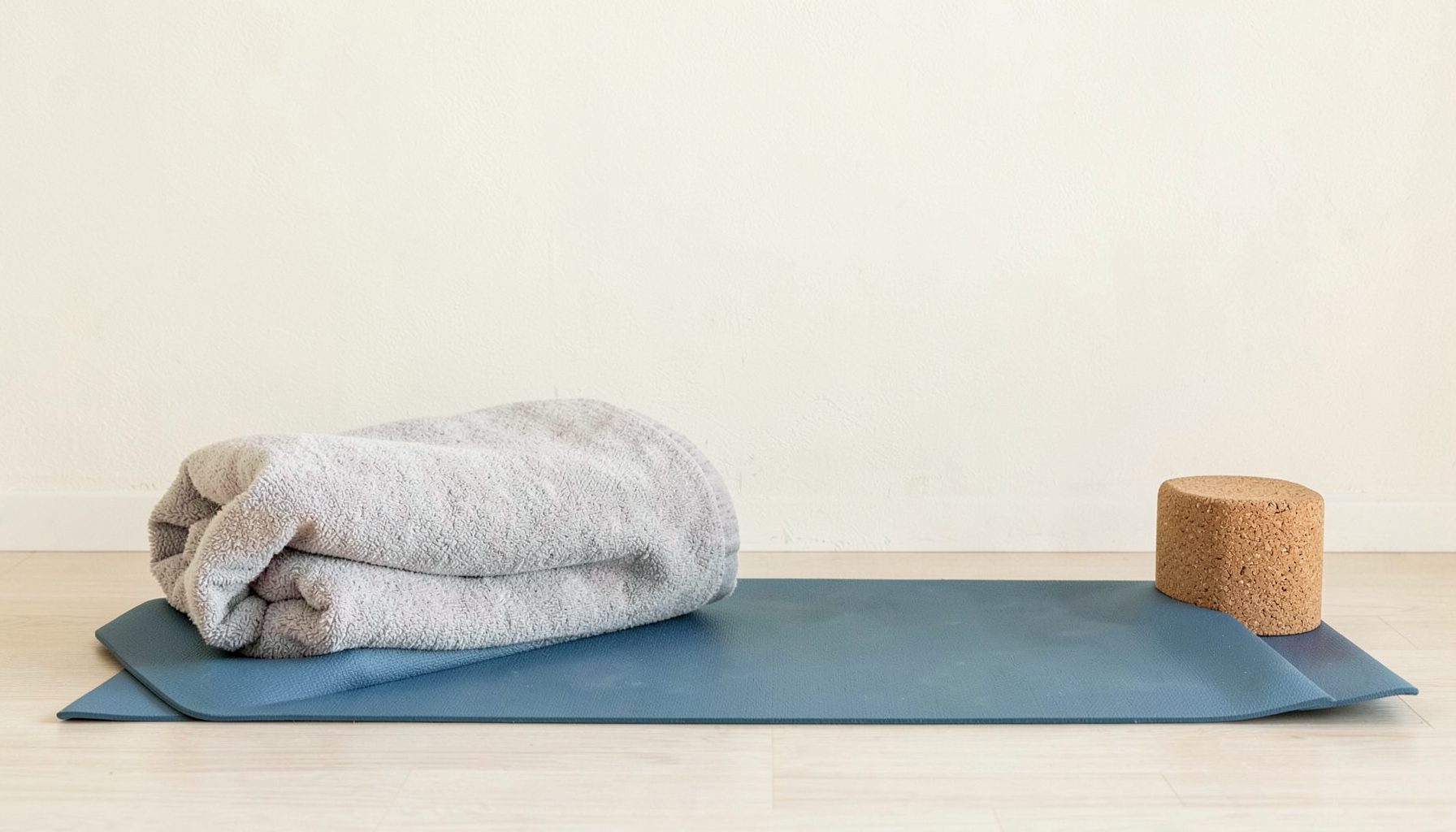
A very thin travel mat is easy to pack and gives you a clearer sense of the ground. It may be suitable for experienced practitioners, short trips, or placement over another mat. If you often experience discomfort during kneeling or tabletop positions, consider using a folded blanket or a small knee cushion alongside a thinner mat.
Length and width deserve attention as well. A longer mat gives taller practitioners room to move without hands or feet extending beyond the edges. A wider mat can feel spacious during twists and restorative poses, but it may be harder to store or carry. Measure your available floor and storage space before choosing an oversized design.
Compare options for different needs
The most suitable yoga mat is the one that supports your actual habits rather than an imagined ideal routine. Consider how often you practise, whether you attend classes away from home, and whether your body responds better to firmness or softness. Price can be useful as a guide to construction, but an expensive mat is not automatically the right mat for you.
The comparison below offers a starting point. Personal preference, allergies, floor type, and the amount of perspiration during practice can all change the final choice.
| Practice need | Useful mat qualities | Potential trade-offs |
|---|---|---|
| Gentle or restorative yoga | Moderate cushioning, soft texture, comfortable surface | May feel less stable for balancing |
| Dynamic vinyasa | Strong grip, durable construction, stable underside | Can be heavier or harder to clean |
| Hot yoga | Sweat-resistant texture, excellent traction, easy-clean finish | May require frequent washing and drying |
| Travel practice | Lightweight, foldable or rollable design, slim profile | Less cushioning and floor protection |
| Sensitive knees or wrists | Thickness around 5–8 mm, supportive density | Extra softness can affect balance |
| Eco-conscious buying | Natural rubber, cork, recycled or responsibly sourced materials | Higher cost, distinctive scent, or greater weight |
| Home meditation and stretching | Comfortable feel, enough length, low odour | May not provide the grip needed for vigorous flow |
Use the table as a way to narrow your search rather than a strict set of rules. For example, someone with sensitive knees who attends vigorous classes may prefer a firm, grippy mat with a separate knee pad instead of one very soft surface. Small additions can make a mat more versatile without compromising stability.
Pay attention to care and daily comfort
Even a high-quality mat needs regular care. Sweat, skin oils, dust, and moisturiser can reduce grip over time. After practice, wipe the surface with a suitable mat cleaner or a lightly damp cloth, following the manufacturer’s instructions. Avoid strong household chemicals unless the brand confirms that they are safe for the material.
Allow the mat to dry fully before rolling it. Storing it while damp can encourage odour and may damage some surfaces. Keep it away from prolonged direct sunlight and extreme heat, especially if it is made from rubber or a soft foam blend. Rolling the top surface outward or inward according to the manufacturer’s advice can also help preserve its shape.
Notice how the mat feels after several weeks, not just during the first few practices. A strong smell that does not fade, edges that curl persistently, or a surface that becomes slippery may indicate that the mat is not a good long-term fit. Comfort includes sensory details such as odour, temperature, and the sound of movement across the surface.
A mat can become part of the ritual that makes practice feel inviting. Keeping it accessible, clean, and ready to use removes small barriers to beginning. This simple consistency can be more valuable than owning several specialised mats that rarely leave the cupboard.
Make a thoughtful choice for your practice
Before purchasing, write down the conditions your mat needs to meet. This keeps marketing language from making the decision more complicated than it needs to be. A clear list might include the type of yoga you practise, the amount of cushioning you need, your preferred material, and whether you carry the mat regularly.
Use these points to guide your final comparison:
- Choose grip that matches your level of movement and perspiration, rather than assuming the stickiest surface is best.
- Select cushioning that protects sensitive joints while still allowing stable standing and balancing poses.
- Check the mat’s length, width, weight, odour, and storage requirements before buying.
- Look for durable materials and transparent manufacturing information if sustainability is important to you.
- Read care instructions and reviews that describe long-term performance, not just first impressions.
If you are unsure, borrow a friend’s mat or try a few options at a local studio. A short test can reveal whether your palms slide, whether your knees feel supported, and whether the dimensions suit your body. It can also show whether the texture encourages relaxation or creates unnecessary tension.
Your mat does not need to be perfect, luxurious, or expensive to support meaningful practice. It needs to help you feel safe enough to explore movement and still enough to notice your breath. As your practice changes, your needs may change with it, so choosing a mat can be an opportunity to listen to your body rather than follow a fixed rule.
Let that same awareness shape the wider rhythm of your yoga. Whether you practise at home, join a class, or take time away from familiar routines through yoga retreats, the essential support comes from creating conditions in which you can meet yourself with patience.
Take a few quiet minutes to assess your current mat and your everyday practice. Notice where you feel supported, where you feel distracted, and what would make returning to the mat easier. Then choose the surface that gives your body steadiness and your mind a welcoming place to arrive.