


Finding Your Inner Teacher Through Yoga Practice
A yoga video can be a welcome companion. It gives your practice a rhythm, offers ideas when your mind feels blank, and creates the gentle accountability of arriving on the mat. For many people, a guided class is the bridge between wanting to practise and actually beginning.
Yet following instructions for every breath and movement can sometimes make the practice feel borrowed rather than lived. Your body may be asking for stillness while the recording moves into the next posture. Your energy may be low, your attention scattered, or your breath quietly suggesting that a simpler choice would serve you better.
The inner teacher is the growing ability to notice these signals and respond with care. This is not about rejecting yoga videos or proving independence through complicated sequences. It is about learning when structure supports you, when adaptation is wise, and how mindfulness can guide decisions on the mat and beyond it.
What An Inner Teacher Really Means
The inner teacher is not a mysterious voice that delivers perfect instructions. It is a combination of body awareness, breath sensitivity, emotional honesty, and practical experience. Over time, you begin to recognise the difference between useful effort and strain, healthy challenge and self-punishment, restlessness and genuine readiness to explore.
This awareness develops through attention rather than achievement. You may notice that your shoulders lift when you are trying too hard, that your breath becomes shallow in a posture you are forcing, or that your mind settles when you make a smaller movement. These observations are valuable information. They help you move from performing a sequence to participating in your own experience.
A teacher, video, or written guide can offer a map, but a map cannot account for every body, mood, injury, or life circumstance. Inner listening helps you use external guidance intelligently. You receive the invitation, then decide whether it fits the person who has arrived today.
When A Video Gives Helpful Support
A recorded class is especially useful when you want containment. If you are new to yoga, returning after a break, or feeling mentally overloaded, following a teacher’s pacing can reduce the number of choices you need to make. The voice, transitions, and reminders to breathe can help you stay connected to the present moment.
Videos can also broaden your movement vocabulary. A familiar home practice may become repetitive, while a different teacher introduces a variation, prop arrangement, or breathing pattern you would not have considered. This does not mean every suggestion belongs in your routine. It means you can approach instruction with curiosity, selecting what feels appropriate rather than treating it as a test of obedience.
Choose a class with language that leaves room for autonomy. Clear options, pauses, and invitations such as “if this feels comfortable” encourage a responsive practice. The best guided yoga does not ask you to abandon your judgment; it helps you strengthen it.
Your choice of teacher matters as well. Camille Dodson’s gentle approach centres accessibility, mindfulness, and a sustainable relationship with movement, qualities that can make guided practice feel supportive rather than demanding. Look for teachers whose tone allows you to modify, rest, and remain present with your own needs.
Signs It Is Time To Go Off-Script
Going off-script does not have to mean improvising an elaborate flow. It might mean staying in child’s pose for five extra breaths, replacing downward-facing dog with hands and knees, or moving slowly through a familiar stretch while the video continues. A small adjustment can be a meaningful act of self-trust.
Pay attention when the instructions conflict with clear physical information. Sharp pain, pinching, numbness, dizziness, breath-holding, and sudden instability are reasons to stop or change direction. General effort can be expected in yoga, but pain is not a requirement for progress. If symptoms are persistent or concerning, seek appropriate medical advice rather than trying to work through them.
There are subtler signals too. Perhaps you feel irritated by the pace, disconnected from your breath, or pressured to keep up. Perhaps the suggested intensity suited you yesterday but feels excessive after poor sleep. These moments are opportunities to practise self-compassion. You can lower the intensity, move to a restorative posture, or end the session without calling the choice a failure.
A useful question is: “What would help me feel more present?” The answer may be movement, quiet, a prop, a shorter practice, or complete rest. Inner guidance becomes clearer when you treat your responses as information instead of judging them.
Using Structure Without Losing Choice
A balanced practice holds guidance and freedom together. You might begin with a ten-minute video, pause when you need to, and finish with your own seated breathing. You might repeat a teacher’s warm-up and then choose several poses that address how your body feels that morning. You might follow the sequence exactly on one day and adapt nearly every part of it on another.
Before pressing play, take a brief check-in. Notice your energy, mood, breath, and any areas requiring special care. Decide on one boundary, such as avoiding weight-bearing on a sensitive wrist or keeping the practice below a certain intensity. This simple preparation makes it easier to modify without feeling that you have lost the thread.
During class, use the breath as a practical reference point. If you can breathe smoothly and remain attentive, the posture may be appropriate. If you are bracing, rushing, or mentally bargaining with yourself, pause and reassess. The aim is not to make every pose comfortable, but to remain in a relationship with what is happening.
Afterwards, reflect briefly. Which instructions helped? Where did you override your own signals? Did the class leave you grounded, energised, calm, or depleted? These observations gradually create a personal library of useful practices and teach you how to choose more wisely next time.
| Situation | Let The Video Lead | Consider Going Off-Script |
|---|---|---|
| You are new or returning to yoga | Use a slow class to learn basic alignment and pacing | Pause to repeat a movement or choose a simpler variation |
| Your energy is steady | Follow the sequence while observing your breath | Add a longer rest if effort becomes excessive |
| You feel tired or emotionally full | Select a restorative or shorter recording | Skip demanding poses and prioritise breathing or stillness |
| A posture causes discomfort | Stop and review the teacher’s modification | Leave the pose, use a prop, or choose a different movement |
| You feel confident and curious | Use the class as a framework for exploration | Continue with an intuitive sequence that meets your needs |
Rest Is Part Of The Practice
Many people find it easier to trust their inner teacher when they stop treating rest as something that must be earned. If every quiet moment feels like laziness, you may continue moving long after your body has asked for less. Rest then becomes a negotiation rather than a natural part of practice.
Restorative yoga, savasana, supported postures, and gentle breathing can all be active forms of attention. They give the nervous system space to settle and allow sensations to become clearer. Sometimes the most skilful choice is to lie down, release the structure of the class, and notice what remains when you are no longer trying to improve yourself.
A compassionate resource on permission to rest can help reframe slower practice as care rather than avoidance. Rest does not cancel the work you have done. It can help you absorb it, recover from it, and return with greater honesty.
If you feel guilty when you stop, observe that reaction without immediately obeying it. You do not need to argue with the guilt or turn rest into another achievement. Stay for a few breaths and let your body experience the possibility that enough can be enough.
Building Confidence In Intuitive Movement
Intuitive movement grows through small, repeatable choices. Start with familiar poses and give yourself permission to explore within a narrow range. Notice how a cat-cow movement changes when you make it slower, how a standing fold feels with bent knees, or how a seated twist changes when you reduce the rotation. There is no need to invent a complete sequence at once.
You can create a simple three-part structure: arrive, explore, and settle. During arrival, breathe and scan the body. During exploration, choose two or three movements that respond to what you noticed. During settling, reduce stimulation and allow the effects of practice to unfold. This framework provides enough shape to prevent uncertainty while leaving room for choice.
Keep the practice modest. Five attentive minutes may teach you more about your needs than forty distracted minutes performed from obligation. Consistency gives inner cues time to become recognisable. The goal is not to become your own instructor overnight, but to develop a trustworthy conversation with your body.
Remember that intuition is not the same as impulse. An impulse may urge you to push harder because you feel competitive or frustrated. Intuition is often quieter and more specific: soften your jaw, lower your arms, take a pause, or try again with less force. It becomes easier to hear when the practice includes steadiness, breath, and reflection.
Making Guided Practice Your Own
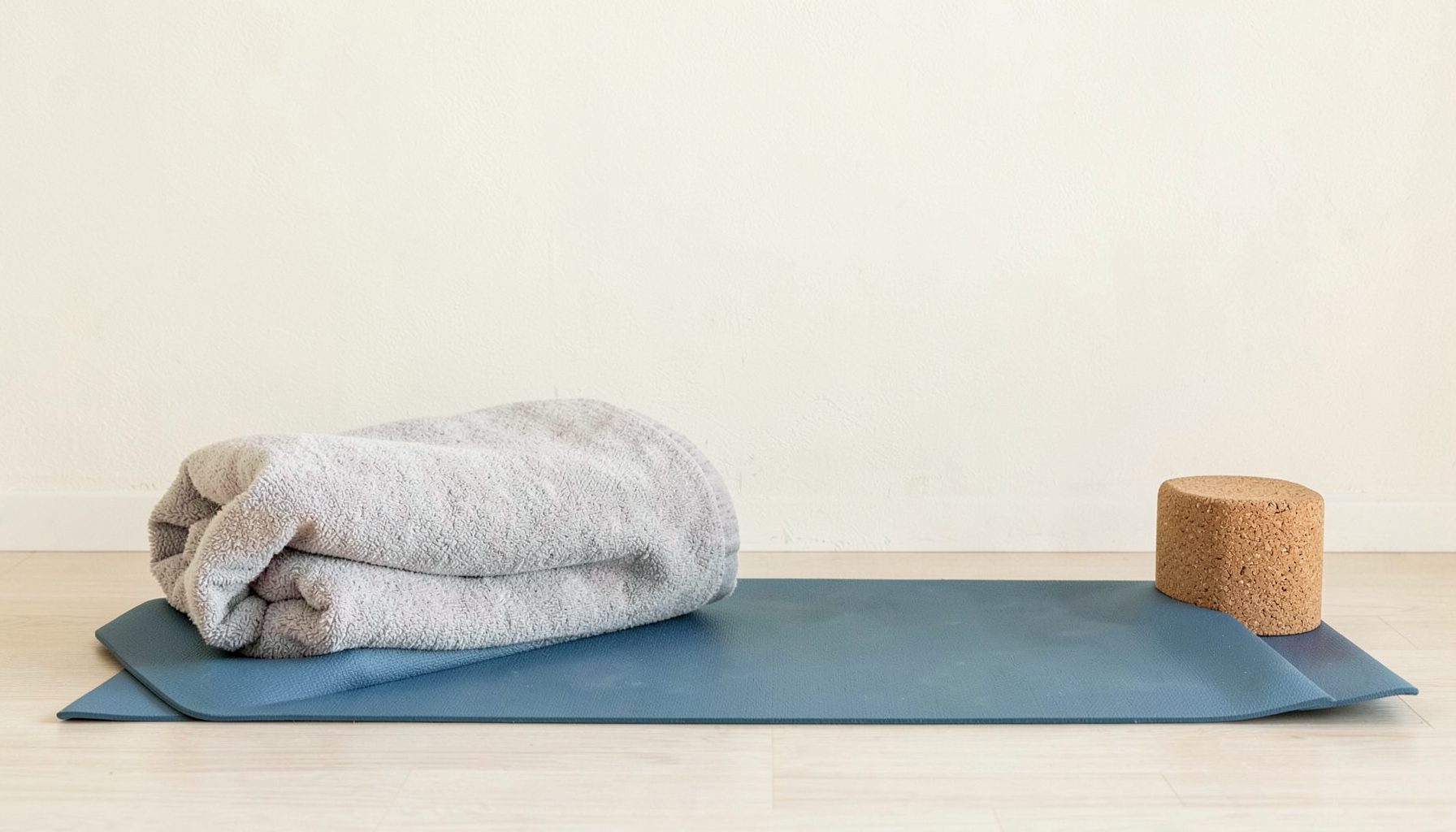
You can personalise a video without changing its entire purpose. Adjust the volume, use a blanket or blocks, practise near a wall, or choose a shorter version of the class. If the teacher offers several options, select the one that supports your present capacity rather than the one that appears most advanced.
It can also help to make a list of reliable alternatives. Replace lunges with a supported standing pose, kneeling with a chair-based variation, or a strong core exercise with constructive rest. Having options ready means you are less likely to force yourself through a movement simply because you cannot think of another choice.
When a class repeatedly leaves you feeling pressured, disconnected, or physically uncomfortable, it may be time to choose a different recording or teacher. Respectful guidance should expand your awareness, not make you suspicious of it. Your practice belongs to you, even when someone else is providing the soundtrack.
Over time, the boundary between following and improvising becomes less rigid. You may begin with external direction, notice what is needed, and respond with a personal variation. That quiet exchange is where confidence develops: the teacher offers, the body answers, and you listen closely enough to continue.
Begin your next practice with a pause before the first instruction. Feel your feet, notice your breath, and name one way you would like to care for yourself today. Follow the video when it supports that intention, and change course when your own experience offers clearer guidance.
Return to this approach regularly through a class, a short home sequence, or a few minutes of stillness. With patience, your inner teacher becomes less like a command and more like a steady, compassionate presence—one that helps you practise yoga in a way that can genuinely belong to your life.