

Breathwork to prepare for meditation
Meditation can feel less accessible when the mind is already busy. Breathwork to prepare for meditation offers a gentler doorway: use the natural movement of the inhale and exhale to settle attention before asking yourself to be still. You do not need perfect lungs, a silent room or a long retreat. A few minutes of comfortable breathing can create enough space to arrive.
This approach suits a gentle yoga practice because it begins with an experience that is already available: breathing. It asks for curiosity rather than performance, and it can be adapted to a chair, a floor seat or a supported posture. For people who find stillness uncomfortable, awareness of the breath can be a practical bridge to mindfulness, self-compassion and a more sustainable daily ritual.
The aim is not to manufacture a special state or control every physiological response. Instead, notice what is happening now, soften any unnecessary effort and let each exhale become a reset. If you feel light-headed, panicked or short of breath, return to ordinary breathing and stop. People with pregnancy, asthma or another respiratory condition should use an existing healthcare plan and seek individual advice before adding breath retention practices.
Why preparation changes how you arrive
Preparation matters because meditation does not begin the moment silence starts. Noise, unfinished tasks and physical tension can pull attention outwards. A short breathing practice gives the mind a clear, repeatable focus and lets the body recognise that slowing down is safe. It also makes the transition less abrupt: you are not forcing a restless mind into stillness; you are changing the conditions gradually.
| Approach | What it emphasises | Useful before meditation when | A gentle version |
|---|---|---|---|
| Slower breathing | Creates a steady, noticeable rhythm | The mind feels scattered or rushed | Match the exhale to the natural inhale without forcing depth |
| Extended exhales | Offers a clear cue to release effort | Tension or a busy body is distracting | Extend the out-breath by only one or two counts |
| Alternate-nostril breathing | Directs attention to a fine physical detail | You enjoy structured pranayama | Keep the nose and jaw relaxed, with no pressure or retention |
| Breath counting | Gives attention a simple object to follow | Counting helps create clarity | Use short, comfortable counts and return whenever you lose the sequence |
Choose by response, not by technique. If counting steadies you, use counting. If nostril breathing causes tension or confusion, simple extended exhales may be enough. The most useful preparation is the one that leaves you more present, not the one that sounds most advanced. Keep the practice brief enough that you can return to it consistently, especially on days when energy is low or a full diary leaves little room.
Settling the body without forcing the breath
Start by feeling where the breath is already moving. Place one hand below the ribs and one above the navel, if that is comfortable, and notice the gentle rise and fall rather than trying to expand the belly. The lower hand may move a little and the upper hand a little more; that difference is normal. Relax the jaw and let the shoulders drop away from the ears.
Then try a soft extended exhale. Breathe in through the nose without deepening the inhale, and let the out-breath last one or two counts longer. Five or six rounds are enough. Some people notice a sense of settling, a slower pace between thoughts or simply more awareness of the body. Others feel little at first, and that is also useful information rather than a failure.
The breath should remain quiet, smooth and unforced. Do not strain, hold or push air if tightness, dizziness, anxiety or nausea appears. During a difficult moment, shorten the exhale, breathe normally, or open the eyes and look around. A calm practice is built on flexibility: changing the method to suit the person is more consistent with yoga than treating any standard count as a rule.
A simple practice for an unhurried morning
A morning sequence can be short enough for the space between making coffee and leaving home. Sit with feet grounded, or rest the pelvis on a cushion. Keep the spine neither rigid nor slumped, let the hands rest, and choose a soft gaze or closed eyes. If the breath becomes audible or effortful, make the inhale smaller and the exhale easier.
One accessible pattern is four counts in and six counts out, with no retention. The ratio matters less than comfort. Count silently, and if four becomes a strain, try three in and five out, or simply listen for the natural end of each inhale and exhale. For five minutes, follow the same route each time; familiarity can reduce the mental effort of learning a new technique.
Alternate-nostril breathing is another familiar pranayama option. With a soft thumb, close one nostril gently, inhale through the other, switch, and exhale; never press hard enough to hurt. Many people use it to create a clear rhythm, but the technique should not become a test of purity. If the hand posture or switching distracts you, return to counting the whole breath.
Supporting the posture and not chasing it
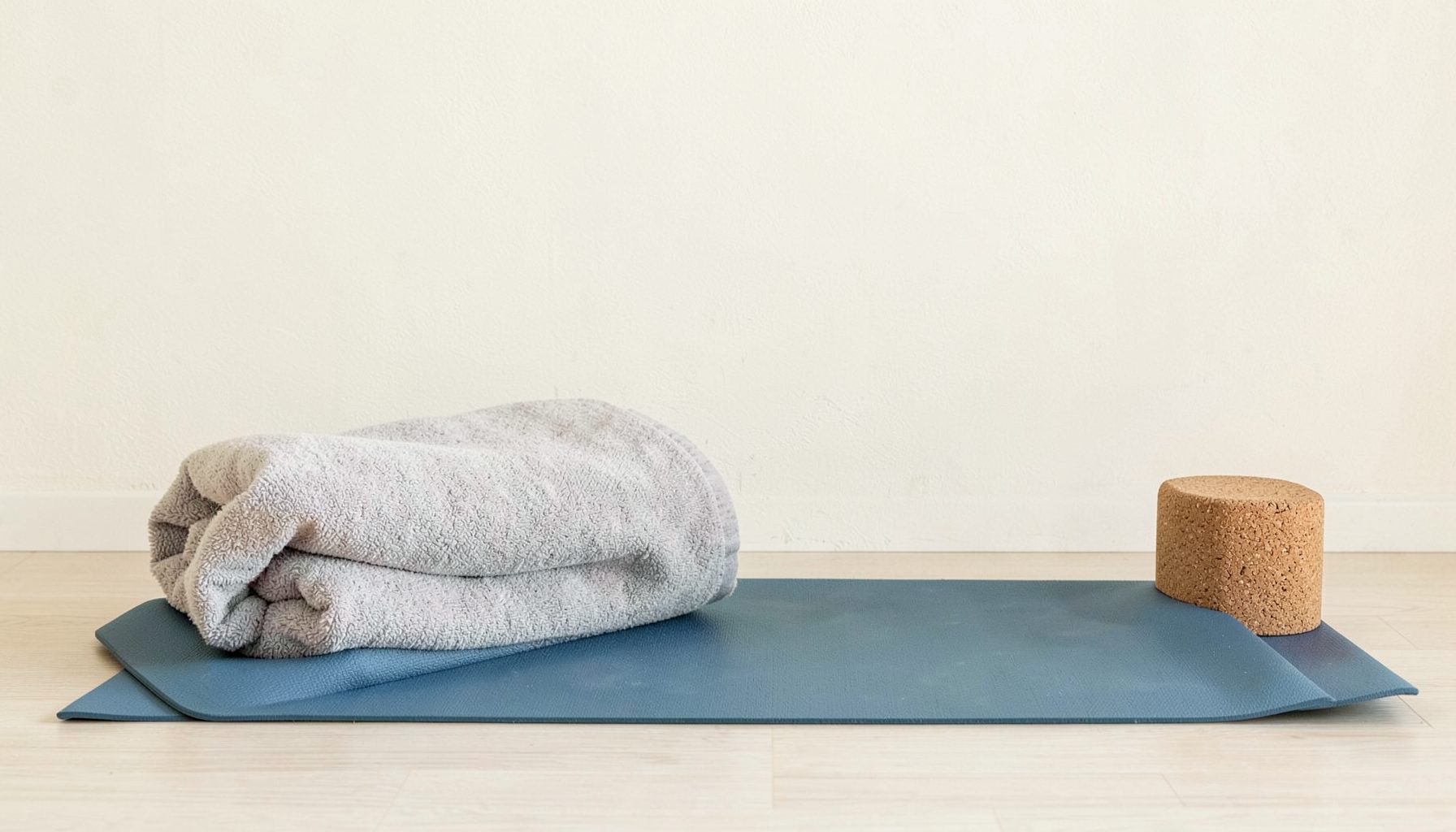
Props are valuable when they make relaxation possible. A folded towel can support the knees, while a firm cushion can raise the pelvis and make seated breathing more comfortable. The goal is not to achieve a textbook shape. It is to reduce pulling in the hips, chest or lower back so attention can settle without constant physical adjustment.
Support can also make a forward fold feel less intense. A practical reference for using a block can be found in this seated forward fold guide, with options for changing the distance between the body and the legs. Those same principles apply during breathwork: bring the body toward ease, then let the breath move naturally within that supported shape.
Use the support to soften rather than perform. Let the ribs move, unclench the teeth and release the space between the eyebrows. A brief body scan can follow: notice the floor, chair or cushion beneath you, the temperature of the air, and any contact at the feet or hands. This sensory awareness makes the transition into meditation less dependent on finding a perfect mental state.
Fitting breathwork into Australian routines
Australian routines offer realistic places to practise. Someone travelling by train in Sydney, tram in Melbourne or bus in Brisbane can use a three-minute breathing reset after a stop; someone working from home can practise before opening email. The familiar café rhythm also matters. Rather than adding pressure to a rushed coffee order, use the first quiet sip as a cue to notice one full breath.
Climate changes the practice. During hot weather, air-conditioning can encourage shallow breathing and stiff shoulders, so loosen the jaw before lengthening the exhale. Outdoors, a park, beach or coastal path can provide sensory variety, but wind, heat and traffic may also be distracting. Indoors, a chair near an open window or a cooler room may offer better conditions for sitting still.
The Australian studio and retreat market includes evening classes, weekend workshops and more flexible digital options. Destinations such as Byron Bay and the Blue Mountains are familiar choices for a change of pace, though a home practice can offer the same continuity without travel. Camille Dodson Yoga combines classes, retreats, blog material and downloadable resources; questions about a suitable format can be directed through contact Camille.
Carrying the breath into meditation
When the breathing practice is complete, do not abruptly stop noticing the breath. Let the inhale and exhale become part of a wider field of awareness. Feel the whole body, then include sounds from the room or street, followed by whatever thoughts are present. Meditation begins as attention widens; it does not require the breath to disappear.
Keeping this transition simple helps preserve the calm you have built. Some days the mind will remain loud, and that can be acknowledged without judgement. For a broader reflective reading habit alongside yoga practice, The Tribe Daily can be another source of material for a slow daily pause.
The closing skill is recognition rather than perfection. You may have breathed unevenly, lost count or noticed strong emotions, and you can still begin again without criticising the attempt. What should remain is a clear memory of the next inhale and exhale, offered with patience, self-compassion and attention. A steady breath is not a prize to win before meditation; it is a familiar, grounding path into it.