
How to use a yoga block for seated forward folds
A yoga block can make seated forward folds feel more supported, spacious, and sustainable. Rather than using the prop to force your body closer to your legs, you can place it beneath your sitting bones, under your knees, or in front of your feet to create a more comfortable relationship with gravity.
This simple adjustment is useful in poses such as seated forward fold, head-to-knee pose, wide-legged forward fold, and other hamstring-focused stretches. The block can help you sit with greater ease, maintain a long spine, and notice your breath instead of concentrating on how far you can reach.
A gentle approach matters because flexibility changes from day to day. Your range of motion may be affected by sleep, stress, exercise, temperature, and the natural structure of your hips and spine. A yoga block gives you options so your practice can respond to your body as it is today.
Why a block can change the pose
In a seated forward fold, the pelvis needs to tilt forward while the legs extend away from the body. If the hamstrings or hips feel restricted, the pelvis may roll backward. This can make the lower back round and create a sense of pulling before the stretch has had a chance to develop.
Sitting on a block raises the hips slightly above the heels. That extra height can make it easier for the pelvis to tip forward, giving the spine more room to lengthen. The goal is not to sit as high as possible. You are looking for the lowest support that allows you to breathe comfortably and maintain a sense of steadiness.
A block also offers a useful reminder that yoga is about relationship rather than performance. The prop meets you where you are, helping you explore a pose without treating intensity as proof of progress. A smaller range with relaxed shoulders and even breathing is often more valuable than a deeper shape held with strain.
Setting up your seated forward fold
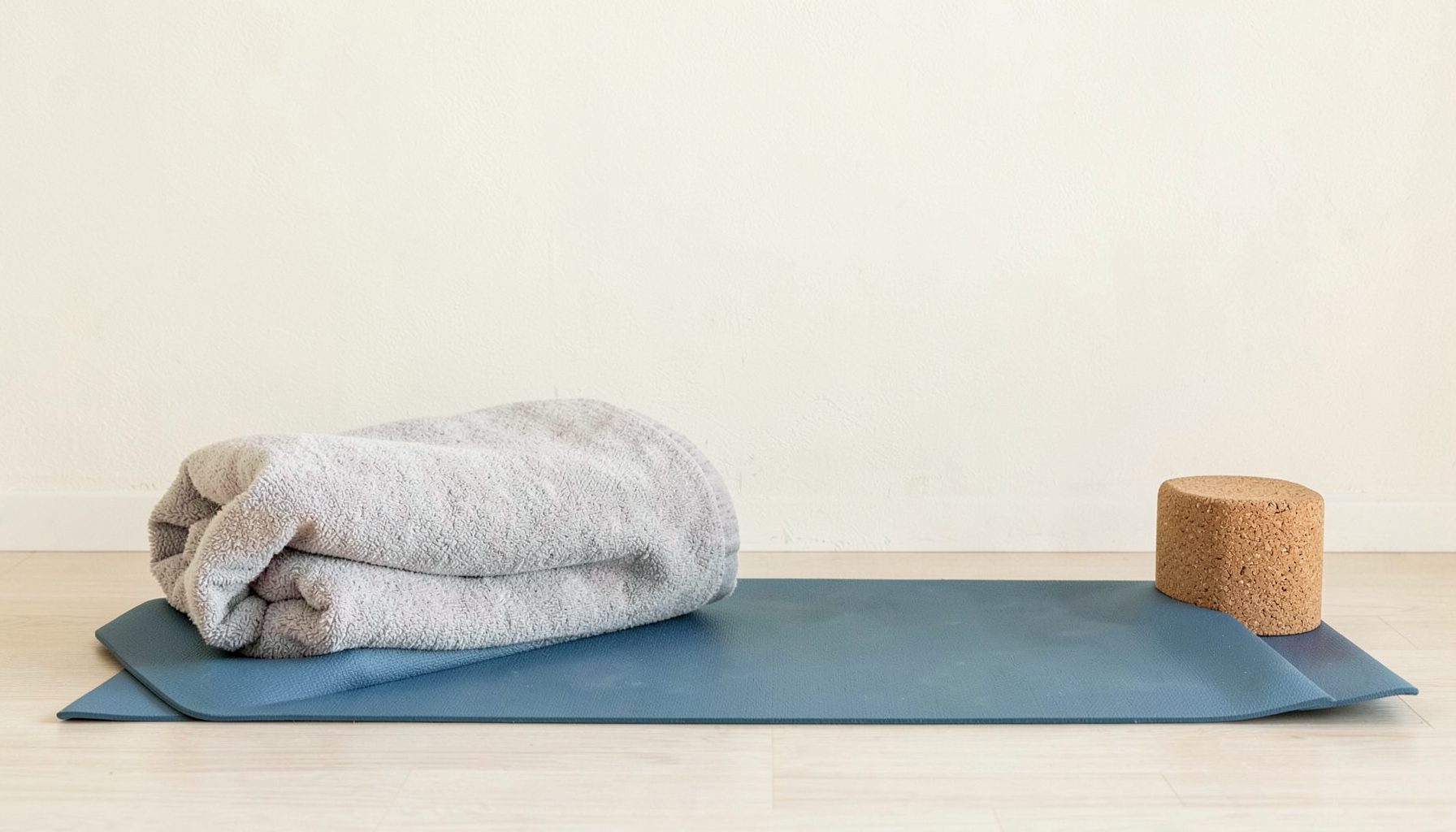
Begin on a firm, non-slip surface with one yoga block nearby. Sit with your legs extended in front of you for a classic seated forward fold. If straight legs create strong tension behind the knees, bend them slightly. This is a legitimate variation, not a step you need to overcome immediately.
Place the block on its lowest or medium height beneath the back half of your pelvis, rather than directly under the tailbone. Sit toward the front edge of the block so your sitting bones can still feel grounded. Let your legs be active without aggressively pressing them into the floor, and flex or soften your feet according to what feels supportive.
Before folding, place your hands beside your hips and take a few breaths. Notice whether your weight is balanced between both sitting bones. If the block feels unstable, lower it, use a folded blanket, or place a second block beneath the other side. Stability comes before range.
From this elevated seat, inhale as you lengthen through the crown of your head. Exhale and hinge forward from the hips, keeping the movement small at first. Your hands may rest on your thighs, shins, or the floor. You do not need to reach your feet for the pose to be complete.
Choosing the right block placement
There is no single correct way to use a yoga block during a seated stretch. Its placement depends on what you want to support. Beneath the pelvis, it changes the angle of the hips. Under bent knees, it reduces the pull on the hamstrings. In front of the feet, it gives the hands somewhere to land without requiring you to reach too far.
Use the following guide as a starting point, then adjust based on breath, sensation, and stability.
| Your experience in the pose | Block placement | What it may offer |
|---|---|---|
| The pelvis rolls backward | Beneath the sitting bones | More room to tilt the pelvis forward |
| The backs of the legs feel intensely tight | Under slightly bent knees | Less pulling through the hamstrings |
| The hands cannot reach the floor comfortably | In front of the feet | A closer, stable place for the hands |
| The lower back feels compressed | Beneath the pelvis or under bent knees | A longer spine with less rounding |
| The pose feels unstable | Beside the hips or beneath both sides of the pelvis | Additional balance and grounding |
| You are practicing wide-legged folds | In front of the torso | Support for the forearms, hands, or forehead |
A cork block can feel firm and steady, while a foam block may feel softer and lighter. For seated work, choose a prop that does not slide and can bear your weight comfortably. If your block feels too hard beneath the pelvis, place a thin folded blanket over it while keeping the foundation stable.
Avoid stacking blocks high simply to create a more dramatic lift. Excessive height can make the pelvis feel perched and may increase tension in the hip flexors. Make one small change at a time, then pause long enough to observe its effect.
Moving into the fold with care
Start with the legs comfortably extended or gently bent. Press the heels away without locking the knees, and allow the toes to point naturally. Place your palms on the floor beside your thighs or rest them on blocks in front of you.
Inhale to create length along the front of the spine. As you exhale, tip the pelvis forward and bring the torso over the legs. Think of moving from the hip creases rather than collapsing from the waist. The spine may eventually round slightly, but avoid deliberately pulling yourself down.
Once you have found your edge, stay for five to ten slow breaths. Let the neck remain relaxed and allow the head to follow the natural line of the spine. If you feel gripping in the jaw, shoulders, or hands, ease back a little and see whether the breath becomes smoother.
To come out, place your hands beside your hips or on your thighs. Inhale and press through your hands as you lift the torso gradually. Do not snap upright from the lower back. Take a moment in an upright seat before moving into a counterpose such as a gentle seated twist or a relaxed knee bend.
Helpful variations for different bodies
For a one-sided stretch such as head-to-knee pose, bend one knee and bring the sole of the foot toward the inner thigh. Sit on the block if the pelvis tends to tuck under, and place another block under the extended leg if reaching toward the foot causes strain. Turn your chest toward the straight leg before folding so the movement does not become a sideways collapse.
In a wide-legged seated fold, place the legs at a comfortable angle rather than aiming for maximum width. A block in front of you can support your hands or forearms. If the back of your pelvis feels heavy, sit on the block and keep the torso lifted for several breaths before deciding whether to fold.
If pregnancy, an injury, joint sensitivity, or a medical condition affects your practice, choose a smaller range and consider guidance from a qualified professional. Sharp pain, numbness, tingling, or a pinching sensation is a reason to come out of the pose. A stretch can feel unfamiliar or effortful, but it should not feel threatening.
You can also practice a supported version with the knees bent and the torso resting on a bolster or several folded blankets. This variation reduces the emphasis on reaching and invites a quieter experience. It may be especially useful at the end of a longer practice or when your nervous system feels overstimulated.
Making the breath part of the movement
The breath can show you whether the block is helping. When the prop is well placed, inhalations often feel more spacious through the ribs and exhalations can soften unnecessary effort. If the breath becomes shallow, hurried, or held, treat that as information rather than something to push through.
Try counting four steady breaths in and six relaxed breaths out, if that rhythm feels natural. The longer exhalation may encourage release, but it should never create a sense of breathlessness. You can also use a simple phrase such as “lengthen on the inhale, soften on the exhale” to connect movement with awareness.
Mindfulness in a forward fold does not require emptying the mind. Notice the contact between your sitting bones and the block, the texture of the floor beneath your heels, and the places where the body is working. This kind of attention can turn a familiar hamstring stretch into a practice of listening.
If you enjoy building a personal routine around breathwork and gentle movement, a printable sequence can make it easier to return to the same supportive setup. You can find the resource cart when you are ready to explore downloadable practices for home use.
Small adjustments that make a difference
Before holding the pose, spend a few moments experimenting with the block. Try the lowest height, notice your pelvic position, and then compare it with the medium height. The best option is the one that creates ease without making you feel disconnected from the floor.
Keep these practical cues in mind:
- Sit toward the front edge of the block so the pelvis can move freely.
- Bend the knees whenever straight legs cause the lower back to round sharply.
- Use blocks beneath your hands instead of reaching past your comfortable range.
- Keep the jaw, shoulders, and fingers soft while the legs remain gently engaged.
- Come out of the fold if your breath becomes strained or a sharp sensation appears.
After the fold, observe rather than judge. You may feel warmth in the backs of the legs, more space around the hips, or simply a calmer quality of attention. The effect does not need to be dramatic to be meaningful.
Building a steady home practice
A block-supported forward fold can fit into a short daily routine. Begin with a few minutes of easy movement, such as seated ankle circles, cat-cow, or gentle knee bends. Then take your supported fold for five to eight breaths, rest upright, and repeat once if it feels beneficial.
Over time, you may notice that the block becomes less necessary, or you may continue using it because it helps you practice with greater comfort. Both outcomes are valid. Props are not signs of inadequacy; they are tools for adapting yoga to changing energy, anatomy, and intention.
Keep your expectations flexible. Some days may call for an active fold with a longer spine, while other days may be better suited to bent knees and a supported torso. Sustainable yoga grows through regular, compassionate attention rather than forcing a particular shape.
Bring a block to your next seated practice and give yourself several breaths to explore its support. Choose the setup that lets you feel grounded, breathe freely, and leave the pose with more awareness than when you entered.