
A Fifteen-Minute Evening Yoga Flow to Wind Down
Evening yoga does not need to be strenuous, complicated, or perfectly quiet. A short sequence can help you shift attention away from unfinished tasks and toward the sensations of breathing, stretching, and settling. With just fifteen minutes, you can create a gentle pause between the activity of the day and the stillness of bedtime.
This evening flow combines slow movement, supported stretches, simple breathwork, and a brief rest. It is suitable for many experience levels, and each pose can be adapted to reflect how your body feels. The aim is not to achieve a deeper shape. The aim is to leave your mat feeling more comfortable, grounded, and ready to rest.
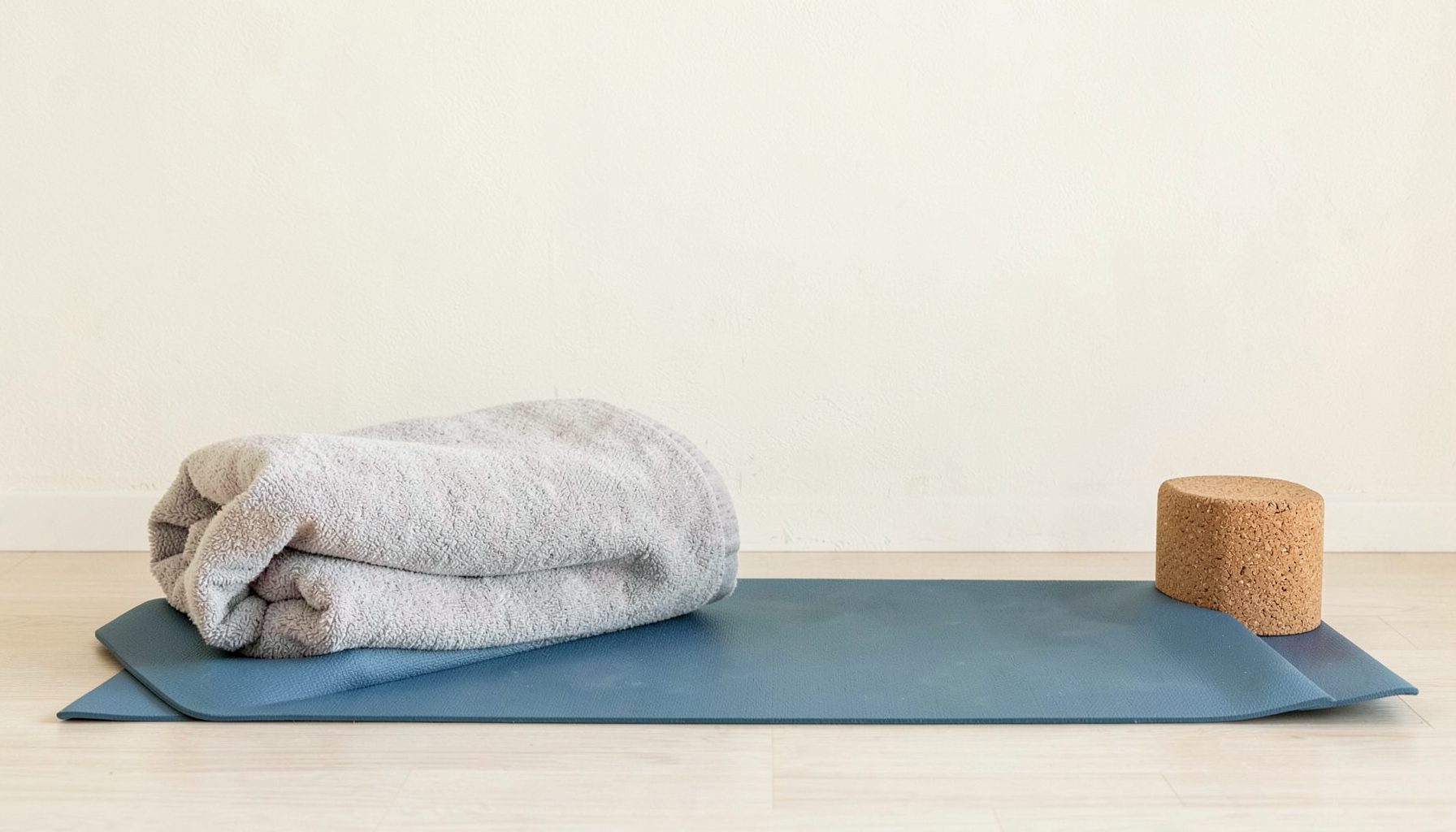
Move at an easy pace and keep the breath smooth. If a posture creates sharp pain, dizziness, numbness, or strain, come out of it and choose a more supportive position. A folded blanket, cushion, yoga strap, and wall can make this wind-down practice more accessible, though you can also complete it with no equipment.
Create A Softer Transition Into Night
Choose a place where you can practice without needing to rush afterward. Dim the lights, silence notifications, and give yourself enough floor space to lie down comfortably. You may prefer to practice in pajamas, or in loose clothing that does not restrict your ribs, hips, or shoulders.
Begin seated on a cushion or lying on your back. Let your hands rest over your abdomen or beside your body, then notice the natural rhythm of your breathing. Rather than trying to force relaxation, observe where the body feels held: perhaps around the jaw, upper chest, belly, hips, or hands.
Take three slow breaths with a longer exhale. You could inhale for a count of four and exhale for six, but there is no need to follow an exact pattern. A comfortable exhale can gently signal that the body no longer needs to stay in high-alert mode. Keep this quality of ease throughout the sequence.
Warm The Spine Without Waking Up The Body
Start on hands and knees, with wrists beneath shoulders and knees beneath hips. If kneeling does not feel comfortable, sit in a chair and move the spine from there. As you inhale, lengthen through the front of the chest and allow the tailbone to lift slightly. As you exhale, round the back and let the head lower naturally.
Continue for five unhurried rounds. Keep the movement small enough that the breath remains steady. This version of cat-cow is a way to bring circulation and awareness to the spine, rather than a test of flexibility.
From all fours, move into a gentle side stretch. Walk the right hand slightly forward and place the left hand behind your head, or keep the left palm down if that is more comfortable. Inhale toward the left ribs; exhale and soften the shoulder. Take three breaths, then change sides.
If your day involved long hours at a desk, you may appreciate a little more space across the chest before moving toward the floor. Explore these gentle backbend ideas with care, choosing only the variations that feel soothing rather than stimulating. In an evening practice, subtlety is usually more useful than intensity.
Move Through A Fifteen-Minute Sequence
The following sequence gives each movement a clear purpose and an approximate duration. The timings are flexible; you can spend less time in a pose that feels complete or repeat a movement that helps you settle. Transitions should be slow and quiet, with no need to rush from one shape to the next.
| Movement | Approximate time | Primary focus | More restful option |
|---|---|---|---|
| Seated breathing | 2 minutes | Attention and exhale | Lie down with knees bent |
| Cat-cow | 2 minutes | Spinal mobility | Seated pelvic tilts |
| Child’s pose | 2 minutes | Back-body release | Rest chest on cushions |
| Reclined figure four | 3 minutes | Hips and low back | Keep the lower leg on the floor |
| Supine twist | 2 minutes | Gentle rotation | Place cushions beneath the knees |
| Legs on a chair | 3 minutes | Quiet recovery | Rest calves on the sofa |
| Final rest | 1 minute | Stillness | Stay in any comfortable position |
After cat-cow, bring your hips toward your heels for child’s pose. Keep the knees together for a compact shape or separate them for more room around the belly and ribs. Fold forward only as far as your breath stays easy. Support your forehead with stacked hands, a cushion, or a bolster so the neck can relax.
Stay for about two minutes, breathing into the back of the ribs. Imagine the upper back widening on every inhale and the shoulders becoming heavier on every exhale. If child’s pose feels uncomfortable in the knees, lie on your back and hug one knee toward the chest at a time.
Release The Hips And Lower Back
Come onto your back with both knees bent and feet on the floor. Cross the right ankle over the left thigh for a reclined figure-four stretch. You can remain here, or draw the left thigh toward you while keeping the head and shoulders relaxed. There should be a sense of space around the outer hip, not pressure in the knee.
Take several slow breaths, then change sides. Let the legs be heavy and use your hands only as much as needed. This stretch can feel strong after a seated day, so avoid pulling the thigh close simply because the pose appears to allow it. A smaller shape with a smooth breath is often more beneficial than a deeper position held with tension.
For a gentle spinal twist, place both feet on the floor and widen the arms. Allow both knees to move slowly toward the right while the left shoulder remains heavy, or place a cushion beneath the knees to reduce the range. Turn the head only if the neck feels comfortable. After a few breaths, return to center and switch sides.
Keep the twist easy and unforced. The goal is to notice the movement of the ribs and the contact between the body and the floor. If your lower back feels compressed, reduce the angle or practice with one knee at a time. Yoga for sleep should help you feel supported rather than tested.
Use Support To Encourage Deep Rest
The final active shape is legs on a chair or sofa. Lie on your back and place your calves on the seat so the knees and hips are comfortably bent. Adjust your distance until the lower back feels neutral and the shoulders can soften. Let the arms rest by your sides, on your belly, or in a shape that feels natural.
This supported inversion is gentler than lifting the legs straight up a wall, and it can be especially helpful when the feet or legs feel tired. It also removes the effort of holding the legs in place. Stay for about three minutes, allowing the face to soften and the exhale to lengthen naturally.
If you do not have a suitable chair, place your lower legs over a stack of cushions or simply keep the feet on the floor. The restorative quality comes from feeling supported, not from recreating a particular pose. You can also practice this position in bed if getting up afterward would disturb your settled state.
Keep The Practice Simple And Sustainable
A short nighttime routine works best when it is easy to repeat. You do not need to complete every movement every evening, and you do not need to wait until you have a full fifteen-minute window. Even three quiet minutes of breathing and a supported reclined pose can reinforce the transition toward rest.
Use the following ideas to make the sequence fit your life:
- Practice at roughly the same time when possible, such as after brushing your teeth or changing into sleepwear.
- Keep a cushion and blanket near your practice space so preparation does not become another task.
- Choose slower transitions and fewer poses on nights when your energy is low.
- Record which movements help you sleep and which ones feel too activating late in the evening.
- End with at least one minute of stillness instead of checking your phone immediately.
After the final rest, roll to one side and pause before sitting up. Notice whether your breathing, posture, or mental pace has changed. There is no need to evaluate the practice as good or bad. Simply acknowledge the act of giving yourself time to pause.
Finish With Breath And Stillness
For the last minute, remain on your back or take any comfortable seated position. Let the eyes close, if that feels safe, and feel the surface beneath you. Notice the weight of the heels, pelvis, ribs, shoulders, and head. Allow the body to be held rather than asking it to hold itself.
Return to a natural breath and quietly repeat a phrase such as, “I can soften for now.” The words are optional; what matters is the permission to stop solving problems temporarily. If thoughts arise about tomorrow, notice them without following each one. Return to the sensation of the exhale or the steady support beneath you.
When you are ready, move slowly and keep the lights low. Carry the calm pace of the sequence into the rest of your evening. This is a small practice, but repeated small practices can become a reliable form of self-care, helping you meet tiredness with attention instead of resistance.
Save this sequence for an evening when your mind feels busy or your body feels compressed by the day. Set aside fifteen minutes, gather whatever support feels useful, and let each posture be an invitation to slow down. Explore more gentle practices, reflections, and downloadable resources from Camille Dodson Yoga to build a sustainable rhythm of movement, mindfulness, and rest.