



Yoga for the hands: gentle wrist circles and finger stretches
Hands are involved in nearly everything we do: typing, cooking, carrying bags, driving, writing, scrolling, and offering physical support in yoga. Because they work so consistently, the small joints and surrounding muscles can become tired before we notice. A few mindful movements can create space, warmth, and ease without requiring a long practice.
Wrist circles and finger stretches are simple forms of hand mobility that can be practiced almost anywhere. They may be useful before placing weight on the hands, after a period of computer work, or as a calming pause between daily tasks. The aim is not to force a deeper range of motion. Instead, these movements invite attention to sensation and encourage a more comfortable relationship with the body.
A gentle hand practice can also become an opportunity for breath awareness and self-compassion. Rather than treating the hands as tools that must keep performing, we can recognize how much they do and offer them a few moments of care.
Why hand mobility belongs in a yoga practice
The wrists, palms, fingers, and forearms work together through a network of small joints, tendons, muscles, and connective tissues. When the hands remain in one position for a long time, movement may feel restricted or the forearms may become tense. Repetitive gripping and extended periods of typing can add to that sense of stiffness.
In yoga, the hands often receive extra attention because they may support body weight in table pose, downward-facing dog, plank, transitions, and balancing postures. Gentle mobility before these shapes can help you notice how the wrists feel before loading them. It can also encourage a gradual, responsive approach rather than moving immediately into a strong stretch.
Hand exercises are not a replacement for medical care when there is significant pain, swelling, numbness, weakness, or an injury. A mild stretch or a feeling of warmth can be appropriate, while sharp, burning, or radiating sensations are signals to stop and seek professional guidance.
For a broader view of mindful movement and sustainable practice, Camille Dodson’s approach offers a helpful foundation rooted in accessibility, breath, and self-awareness.
Begin with breath and simple awareness
Before moving the wrists or fingers, let the arms rest comfortably. You might sit in a chair, stand with the shoulders relaxed, or kneel with the hands resting on the thighs. Allow the jaw to soften and notice whether the fingers are curled, spread, gripping, or completely still.
Take two or three unhurried breaths. On each exhale, see whether the shoulders can release a little weight. This is a useful preparation because tension in the hands is often connected with tension higher up the arms, across the shoulders, or around the neck.
Bring attention to the quality of sensation rather than trying to create a particular result. Perhaps one hand feels warmer than the other, or one wrist moves more freely. These observations are valuable. They allow the practice to be adjusted to the body you have today instead of forcing both sides to look identical.
If your hands feel cold, rubbing the palms together gently can create warmth. Keep the pressure light and avoid vigorous friction if the skin or joints are sensitive. After a few breaths, let the palms separate and prepare for slow wrist movement.
Practice wrist circles with control
Extend one arm in front of you with the elbow soft rather than locked. Let the hand remain relaxed, and slowly circle the wrist in a small range. Imagine the fingertips tracing the edge of a small plate rather than drawing the largest circle possible. Move for three to five rounds in one direction, then reverse.
Repeat with the other wrist, comparing the sensations without judging them. You can also circle both wrists together if that feels coordinated and comfortable. Keep the forearms as quiet as possible so the movement comes from the wrist joint rather than from the whole arm.
Another option is to interlace the fingers lightly and guide the hands through slow wrist circles. This variation can create a gentle stretch through the fingers and palms, but it should never involve pulling or pushing into discomfort. Keep the grip spacious and release the interlace whenever the hands begin to tense.
Use the breath as a steady rhythm. Inhale as the hands travel through one part of the circle and exhale through another, or simply breathe naturally while maintaining smooth movement. The most beneficial pace is usually slower than the first impulse. Slow circles make it easier to notice catching, resistance, or habitual gripping.
Explore finger stretches and palm release
Finger movements can be practiced one at a time or with the whole hand. Begin by opening the fingers comfortably, spreading them only as far as feels natural. Hold for one easy breath, then allow them to soften. Repeat several times, paying attention to the spaces between the fingers as well as the fingers themselves.
For an individual finger stretch, use the opposite hand to support the base of the finger and gently guide it back a small amount. The movement should be subtle. Avoid pulling from the fingertip or trying to create a strong bend. Spend one or two breaths with the finger in a comfortable position, then release and notice the after-sensation.
You can also make a soft fist by curling the fingers toward the palm without squeezing. Slowly unfold the fingers, lengthening them one by one. This is a useful counter-movement after gripping a phone, holding a steering wheel, or typing. Include the thumb by touching it lightly to each fingertip, creating a gentle thumb-to-finger sequence.
Try these variations with care:
- Spread the fingers, then relax them completely.
- Touch the thumb to the index, middle, ring, and little fingers.
- Curl the fingertips toward the palm and slowly open the hand.
- Massage the center of the palm with the opposite thumb using small circles.
- Shake the hands softly, then let them become still.
The movement should remain comfortable and unhurried. If a finger feels irritated, skip that position and continue with smaller movements elsewhere. Accessibility means allowing the practice to change according to your needs.
Match the movement to your daily rhythm
There is no single ideal time for hand mobility. A morning sequence may help you wake up to the hands and wrists before the day begins. A short pause during work can interrupt repetitive positioning. Evening movements may signal a transition away from screens and tasks.
The practice can be as brief as one minute. For example, take three breaths, circle each wrist, open and close the fingers, and rest the hands on the thighs. A longer version might include palm massage, finger-by-finger stretches, and a few shoulder rolls. Consistency matters more than duration.
| When you practice | Helpful focus | Gentle approach |
|---|---|---|
| Before weight-bearing yoga | Wrist circles and palm awareness | Keep the circles small and warm up gradually |
| During desk work | Finger opening and forearm release | Move away from the keyboard and soften the grip |
| After carrying or gripping | Hand opening and thumb mobility | Avoid force and give the fingers time to relax |
| During a mindful pause | Breath and sensory awareness | Notice temperature, texture, and ease |
| Before sleep | Slow movement and palm massage | Keep the practice quiet, comfortable, and unforced |
You might connect hand stretches with an existing habit, such as waiting for water to boil or taking a break between meetings. Linking the movements to something already in your routine makes them easier to remember without turning them into another obligation.
Bring wrist care into yoga poses
When practicing tabletop, begin by setting the hands with awareness. Spread the fingers comfortably, press through the pads of the fingers, and distribute weight across the palm rather than collapsing into the heel of the hand. The fingers do not need to be maximally wide. A relaxed, supportive shape is often more useful than an exaggerated one.
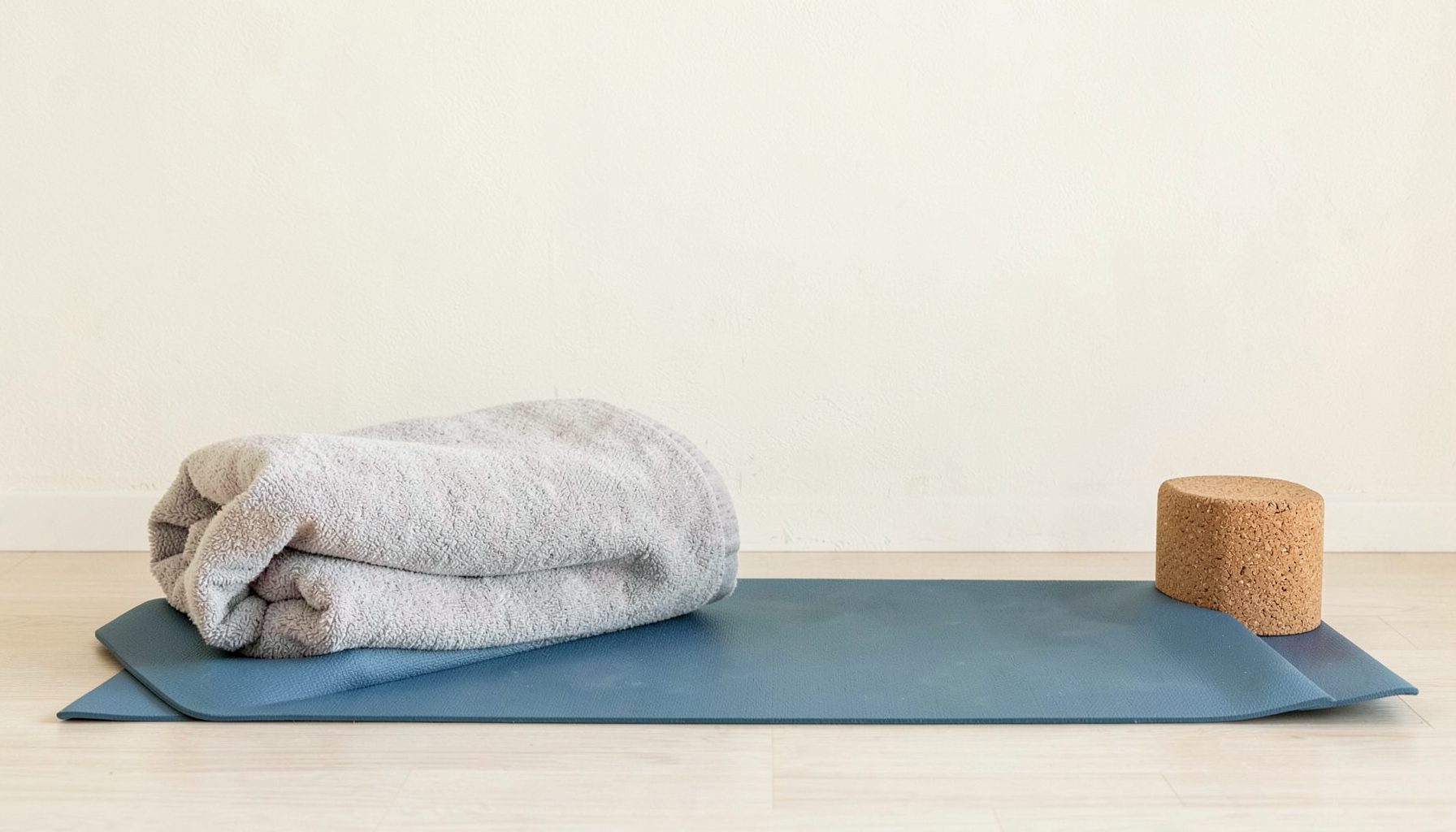
If the wrists feel tender, explore modifications. You could practice with the hands on blocks, place the forearms on the floor for certain movements, make gentle fists with the wrists neutral, or reduce the amount of weight through the hands. A wall can provide an upright alternative for some weight-bearing exercises.
In downward-facing dog, avoid treating the pose as a test of wrist flexibility. Bend the knees, shift the angle of the body, or shorten the hold if needed. Pressing the floor away should feel active but not aggressive. Keep returning to the question of whether the hands can support the posture without strain.
After a weight-bearing sequence, counterpose with the backs of the hands resting lightly on the thighs, or simply shake out and relax the fingers. There is no requirement to stretch the wrists in every direction. Rest is part of mobility practice, too.
Build a compassionate hand-care routine
A sustainable routine respects fluctuations. Hands may feel different after gardening, lifting, travel, cold weather, or a long day at a screen. On one day, wrist circles may feel fluid; on another, only finger movements and breath awareness may be appropriate. Adapting is a sign of skill, not a failure to follow the practice.
Pay attention to the difference between productive sensation and warning signs. Gentle tension, warmth, or a sense of movement can be acceptable. Stop if you notice sharp pain, increasing soreness, tingling, numbness, swelling, or loss of strength. If symptoms persist or interfere with daily activities, consult a qualified healthcare professional.
A self-compassionate practice does not demand that both sides move equally or that every joint reach a particular shape. It offers choices. You may practice with one hand, make the movements smaller, use support, or rest completely. The purpose is to improve awareness and comfort, not to prove flexibility.
A few quiet minutes can transform the way the hands feel and how you relate to them. As you move, acknowledge the work they carry throughout the day: holding, creating, communicating, comforting, and supporting. This recognition brings the physical practice into a wider experience of gratitude.
Make room for mindful hands
Wrist circles and finger stretches are small practices with a generous purpose. They can prepare the body for yoga, ease the effects of repetitive tasks, and create a pause in which breath and sensation become clear. Practiced gently, they encourage mobility without pressure and attention without judgment.
Begin today with three slow wrist circles in each direction, then open and soften the fingers for a few breaths. Continue with the variation that feels most supportive, whether that means a longer hand sequence, a quiet meditation, or a gentle yoga class. Let your hands receive the same patience and care they offer to the rest of your life.