



Yoga for Sciatica: Gentle Poses for Nerve Pain Relief
Sciatica describes pain that travels along the sciatic nerve, often from the lower back through the buttock and into the thigh, calf or foot. It may feel sharp, burning, tingling or electric, and some people also notice numbness or weakness. The source can involve an irritated spinal nerve, a disc, joint changes or tension around the hips.
Yoga may help you move with less guarding, settle muscular tension and build confidence in everyday movement. It is not a guaranteed cure, and a pose that feels soothing for one person can aggravate symptoms for another. The most useful practice is usually slow, supported and responsive rather than intense.
Australian life can make nerve pain harder to manage. Long drives between suburbs, desk-based work in Melbourne or Sydney, lifting at work, weekend gardening and extended sitting on a flight across the country can all increase discomfort. Gentle movement breaks may be more realistic than expecting one long class to fix everything.
The practices below are general education, not a diagnosis or a substitute for medical care. If your pain is severe, persistent or changing, speak with a GP or physiotherapist. A teacher can help with breathing, pacing and alignment, while a qualified health professional can assess the cause of your symptoms.
Understand what your symptoms are telling you
Sciatica often responds to changes in position. You might feel better lying down, walking or standing, yet worse after sitting. Some people tolerate a gentle backbend, while others feel relief from flexing forward. These differences matter because there is no universal “best” yoga pose for nerve pain.
Use symptom behaviour as your guide. A mild stretch in the buttock or back of the leg may be acceptable, but sharp, burning or electrical sensations are a reason to reduce the range or stop. Pay attention to whether discomfort moves further down the leg during practice. Symptoms that retreat towards the lower back or buttock may be settling; symptoms that travel farther towards the foot may indicate that the movement is too provocative.
Avoid forcing a hamstring stretch simply because the back of your leg feels tight. Nerve sensitivity can mimic muscle tightness, and pulling hard on the leg may increase irritation. Keep the knee slightly bent, move gradually and compare how you feel several minutes after the pose rather than judging it only while you are in position.
Seek urgent medical assessment if back or leg pain occurs with new loss of bladder or bowel control, numbness around the groin or inner thighs, sudden significant weakness, or rapidly worsening symptoms. Fever, unexplained weight loss, major trauma or a history of cancer also warrant prompt medical advice.
Set up a supported, calming practice
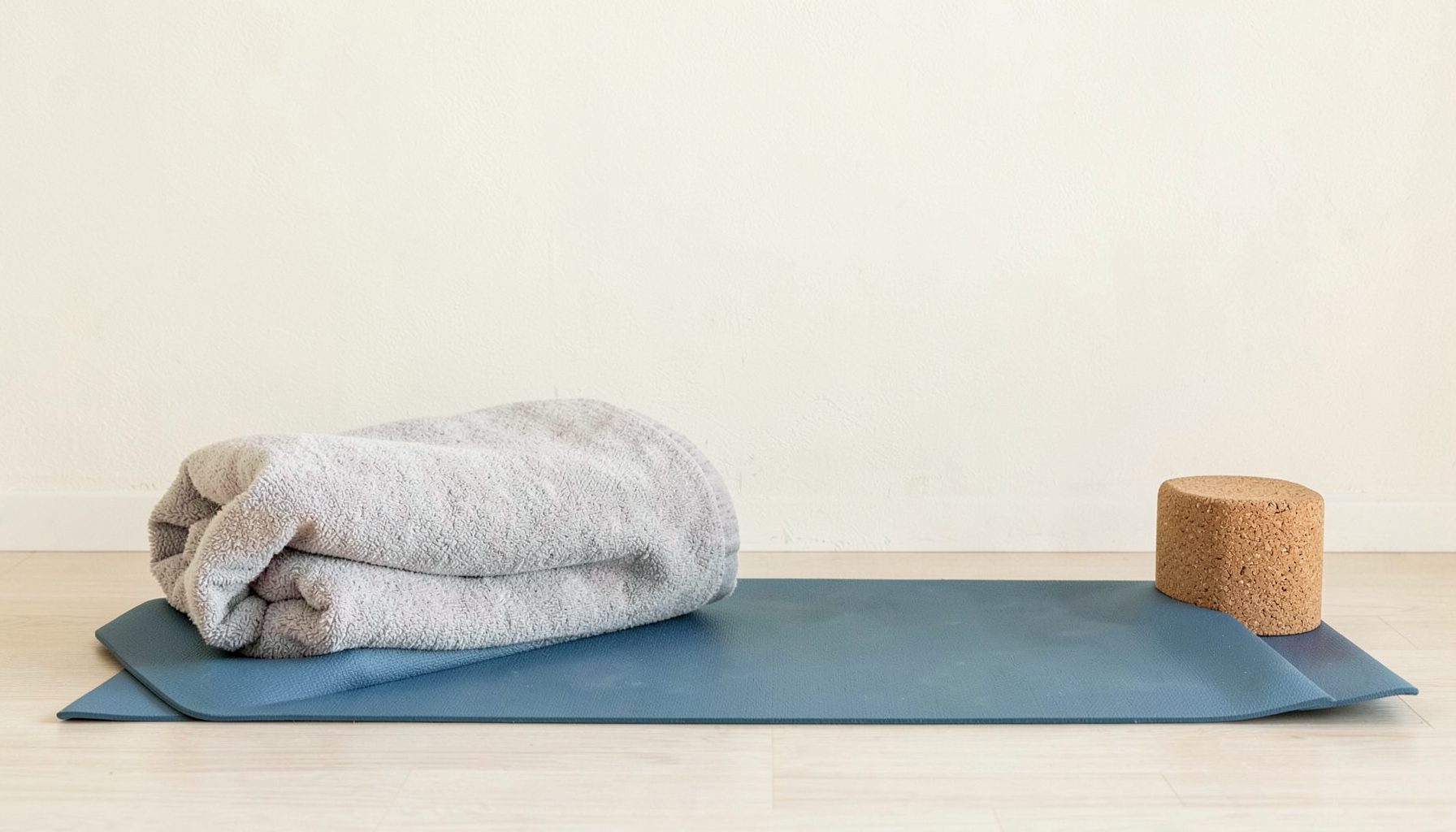
Begin with five to ten minutes in a position that lets your back and breath settle. Lie on your back with your calves resting on a sofa seat or sturdy chair, keeping your hips and knees comfortably bent. Place a folded towel beneath your head if your chin lifts towards the ceiling. This position can reduce effort through the lower back without requiring a deep stretch.
Let your breathing become quiet and unforced. Instead of trying to take the biggest breath possible, notice the ribs expanding in several directions. On each exhale, allow the jaw, shoulders and abdomen to soften. This approach can reduce protective bracing, which often makes movement feel more comfortable.
If lying down increases leg pain, try lying on your side with a pillow between your knees, or sit upright in a supportive chair. A kitchen chair can be useful during a short home practice, especially if getting down to the floor is difficult. A yoga class in Brisbane, Perth or Hobart should offer alternatives, but you are still entitled to choose the version that suits your body.
A patient attitude is part of the practice. Exploring santosha in daily life can help shift the focus from demanding immediate relief to noticing small, useful changes in comfort, breathing and mobility.
Try gentle movements before deeper poses
Pelvic tilts can introduce movement without placing your spine under much load. Lie on your back with bent knees and feet on the floor, or remain supported with your calves on a chair. Slowly tip the pelvis so the lower back becomes a little heavier, then release towards a neutral position. The movement should be small and easy, with no gripping in the buttocks or pushing through the feet.
Move through six to ten slow repetitions, resting whenever your breath becomes strained. This is not a test of how flat you can press the back into the floor. It is an opportunity to explore comfortable spinal motion and reduce fear around moving the lower back.
You can then try a gentle cat-cow variation on hands and knees. Place your hands beneath your shoulders and knees beneath your hips, using a folded blanket under the knees if needed. Slowly round and lengthen the spine within a modest range. Keep your head moving with the rest of the spine, and avoid dropping heavily into the lower back.
If weight through your wrists is uncomfortable, perform the same movement seated with your hands on your thighs. Ten small repetitions may be enough. This seated version works well during a break from a computer, though standing and walking for a few minutes may be more helpful than any stationary pose after prolonged sitting.
Explore poses that may ease tension
A supported child’s pose can be comfortable for people who enjoy gentle spinal flexion. Kneel with your knees wide or together, place your chest on cushions or a bolster, and keep the hips close to the heels only if that feels natural. You can also practise with your torso supported on a chair seat. Stay for three to five calm breaths and come out if the leg symptoms intensify.
A figure-four position may gently address tension around the outer hip. Lie on your back with both knees bent, place one ankle over the opposite thigh, and remain there without pulling the legs towards you. If the stretch is comfortable, you can hold behind the supporting thigh, but avoid forcing the crossed knee down. Stop if the sensation becomes sharp, electrical or travels farther down the leg.
Some people feel better with a mild sphinx pose. Lie on your belly and rest on your forearms, keeping the elbows in front of the shoulders rather than drawing them too far back. Lift the chest only a little and let the abdomen remain relaxed. This may suit certain disc-related patterns, while people with facet joint irritation or spinal stenosis may feel worse in extension.
A gentle standing forward fold is not automatically appropriate. If you try it, bend the knees generously, hinge from the hips and rest your hands on blocks, a bench or the kitchen counter. Avoid hanging heavily through the spine or chasing a sensation behind the knees. A physiotherapist can help identify whether flexion, extension or a neutral spine is currently best for your symptoms.
Build a practice around everyday movement
Yoga for sciatica works best when it supports the rest of your day. Change position regularly rather than sitting until pain becomes intense. During a long commute on Sydney’s trains or a road trip through regional New South Wales, shift your posture, take brief walking breaks and avoid keeping the wallet or phone in a back pocket.
A short sequence before work might include supported rest, pelvic tilts and a few minutes of easy walking. During the day, practise seated spinal movements or stand with one foot on a low step for a moment if that feels relieving. In the evening, repeat only the movements that have left you feeling the same or better, rather than adding every pose at once.
Strength and capacity matter as symptoms settle. Gradually rebuilding tolerance for walking, stair climbing, lifting and carrying is usually more useful than remaining completely still. A physiotherapist can prescribe targeted strengthening for the hips, trunk and legs, particularly if weakness or repeated flare-ups are present.
Australian students, office workers and tradespeople may access yoga through studios, community centres, workplace programs or online classes. Check whether a teacher has experience adapting practices for back pain, and remember that yoga teaching credentials do not replace clinical training. Private sessions may cost more than a group class, but they can be valuable when symptoms are complex.
Match the pose to your response
Use the following guide as a starting point rather than a rigid prescription. Hold each position briefly at first, breathe normally and assess your symptoms afterwards. The aim is a calmer nervous system and more confident movement, not the strongest stretch.
| Movement or pose | How to practise it | Potential benefit | When to modify or stop |
|---|---|---|---|
| Legs on a chair | Rest calves on a chair or sofa, with knees bent | Reduces effort and supports relaxation | Stop if numbness or leg pain increases |
| Pelvic tilts | Make a small, slow rocking movement on the back | Explores comfortable lower-back motion | Reduce range if the abdomen or back grips |
| Seated cat-cow | Move the spine gently while seated | Useful when floor work is difficult | Keep the movement smaller if symptoms spread |
| Supported child’s pose | Rest the torso on cushions or a chair | May ease back and hip tension | Avoid deeper flexion if leg pain worsens |
| Reclined figure four | Cross one ankle over the opposite thigh | May release outer-hip tension | Do not pull the legs if the sensation is nerve-like |
| Sphinx variation | Lift the chest slightly from the forearms | May suit some extension-sensitive patterns | Stop if back or leg pain becomes sharper |
Keep a simple record for several days: which movement you tried, how your symptoms felt during it, and how you felt later that day and the next morning. This can reveal useful patterns that are easy to miss in a single class. If a pose repeatedly causes symptoms to travel farther down the leg, remove it for now.
Consistency should be modest. Five minutes of comfortable movement most days can be more sustainable than a demanding ninety-minute session followed by a flare-up. Rest is appropriate during an acute episode, but prolonged bed rest may increase stiffness and reduce confidence, so aim for gentle activity within your limits.
The practical takeaway is simple: choose supported positions, move slowly, stop symptoms from escalating, and seek assessment when nerve pain is severe, persistent or associated with weakness or bladder and bowel changes. A gentle yoga practice can become one useful part of recovery when it is guided by your body’s response and combined with appropriate medical care.