




Yoga for Sciatica: Gentle Poses for the Lower Back and Hips
Sciatic pain can make ordinary movements feel surprisingly demanding. A long period of sitting, bending, driving, or standing may bring aching through the low back, buttock, and back of the leg. Gentle yoga can offer a supportive way to explore mobility, calm muscular tension, and reconnect with the breath without forcing the body into intense stretches.
Sciatica describes irritation or compression along the sciatic nerve, rather than one single condition. Symptoms may be related to the lower spine, surrounding muscles, joint irritation, or another source. This is why the same pose may feel relieving for one person and aggravating for another. A mindful practice should respond to your symptoms rather than follow a fixed idea of what the body “should” be able to do.
The most useful approach is usually steady and conservative: move within a comfortable range, avoid sharp or electric sensations, and give your nervous system time to settle. Yoga is not a replacement for diagnosis or medical care, particularly when pain is severe, persistent, or accompanied by weakness or changes in bladder or bowel control.
Understanding Sciatic Discomfort
The sciatic nerve travels from the lower spine through the pelvis and buttocks and down each leg. When nearby tissues become irritated, discomfort can include burning, tingling, numbness, or pain that travels below the buttock. Some people feel symptoms on one side, while others notice tension mainly in the hips or lower back.
A tight-feeling hamstring does not always mean the hamstring itself needs a deep stretch. Pulling firmly on the back of the leg can increase tension along the entire neural pathway. For this reason, a gentle bent-knee movement may be more appropriate than a long, straight-legged fold.
The piriformis and other deep hip rotators can also feel involved, especially when sitting is uncomfortable. Yet “tight hips” are not automatically the cause of sciatic symptoms. Treat sensations as information, not proof. A pose that creates mild, broad muscular warmth may be appropriate; a sharp, spreading, or electrically charged sensation is a reason to ease out.
Principles for a Safer Practice
Begin with several minutes of easy breathing and small movements rather than starting with a strong stretch. Lie on your back with your knees bent, or sit in a supported position, and notice whether your breathing is smooth. If you are bracing, holding your breath, or anticipating pain, reduce the range and add support.
Keep the spine in a position that feels neutral and unforced. Neutral does not mean rigid. It means allowing the natural curves of the spine while avoiding a sudden deep rounding or arching that increases symptoms. Move slowly enough to notice the first sign of discomfort, not only the point at which it becomes intense.
A useful guideline is that symptoms should stay the same or improve during practice and settle quickly afterward. Mild muscular effort can be acceptable, but numbness, tingling, weakness, or pain traveling farther down the leg deserves caution. If symptoms repeatedly worsen after yoga, pause the practice and seek advice from a qualified healthcare professional.
Gentle Poses for the Lower Back and Hips
Supported constructive rest is a simple place to begin. Lie on your back with your knees bent and feet on the floor, or rest your lower legs on a chair. Let the arms relax and take slow breaths without pressing the back into the ground. Stay for one to three minutes, allowing the hip flexors and lower back to soften gradually.
Try pelvic tilts from the same position. On an exhale, gently allow the lower back to become a little heavier; on an inhale, return toward neutral. The movement is small and should not involve gripping the abdomen or pushing through the feet. Repeat six to eight times, moving as comfortably as your breath allows.
A supported figure-four variation may create space around the outer hip. Keep both feet on the floor, cross one ankle over the opposite thigh, and pause there before deciding whether to continue. If the position feels comfortable, draw the uncrossed leg slightly toward you while keeping the head and shoulders relaxed. Use a strap behind the thigh rather than pulling on the shin, and stop if symptoms travel down the leg.
Child’s pose is not universally soothing for sciatica because deep spinal flexion can aggravate some conditions. If you try it, separate the knees, place the torso over cushions, and keep the hips relatively high rather than forcing them toward the heels. A wide-knee rest with plenty of support can provide the calming quality of the pose without requiring a deep fold.
Cat-cow can be adapted to a very small range. From hands and knees, or with the hands on a wall or countertop, gently alternate between lengthening the spine and slightly rounding it. Keep the movement smooth and avoid dropping the belly or pushing into the end range. This can be especially useful after sitting, provided weight-bearing through the hands feels comfortable.
A Short Sequence to Explore
The following sequence is intended as a gentle starting point rather than a prescription. Move from one exercise to the next only if the previous movement feels neutral or helpful. You can perform it on a mat, a firm bed, or beside a wall, using cushions and a chair to make positions more comfortable.
| Practice | How to explore it | Time or repetitions | Main purpose |
|---|---|---|---|
| Supported rest | Knees bent or calves on a chair; breathe naturally | 1–3 minutes | Settles the body and reduces unnecessary bracing |
| Pelvic tilts | Make a small rocking motion between gentle flattening and neutral | 6–8 repetitions | Builds awareness of comfortable spinal movement |
| Knee windshield wipers | With feet wide, let both knees move a little from side to side | 6–10 slow repetitions | Mobilizes the hips without a deep stretch |
| Supported figure-four | Cross ankle over thigh and keep the range easy | 3–5 breaths per side | Explores outer-hip mobility |
| Wall-supported cat-cow | Hands on a wall; round and lengthen the spine gently | 6–8 repetitions | Encourages movement after sitting |
| Easy walking | Walk slowly with relaxed shoulders and an even stride | 5–10 minutes | Supports circulation and functional mobility |
Knee windshield wipers can be a useful alternative to stronger hip-opening poses. Lie on your back with your feet wider than your mat and allow both knees to sway a few inches from side to side. Keep the movement modest, especially if rotating the pelvis changes your symptoms. You can also perform the motion seated with your feet grounded.
Finish by returning to supported rest for several breaths. Notice whether the affected side feels more settled, unchanged, or more reactive. That response is more valuable than reaching a particular stretch depth. Over time, a short routine that leaves you feeling steady is generally more useful than an ambitious session followed by a flare-up.
Movements That May Need Modification
Deep forward folds, strong seated twists, and aggressive hamstring stretches may increase nerve sensitivity for some people. This does not make them permanently forbidden, but they may need to be reduced, supported, or temporarily omitted. Keep the knees bent in a forward fold and lengthen through the spine instead of pulling the chest toward the thighs.
Backbends also deserve individual attention. A gentle supported bridge may feel strengthening and comfortable for one person, while a high bridge or forceful cobra may increase lower-back compression for another. If you explore bridge, keep the feet parallel, lift only a little, and lower immediately if symptoms spread or the back feels pinched.
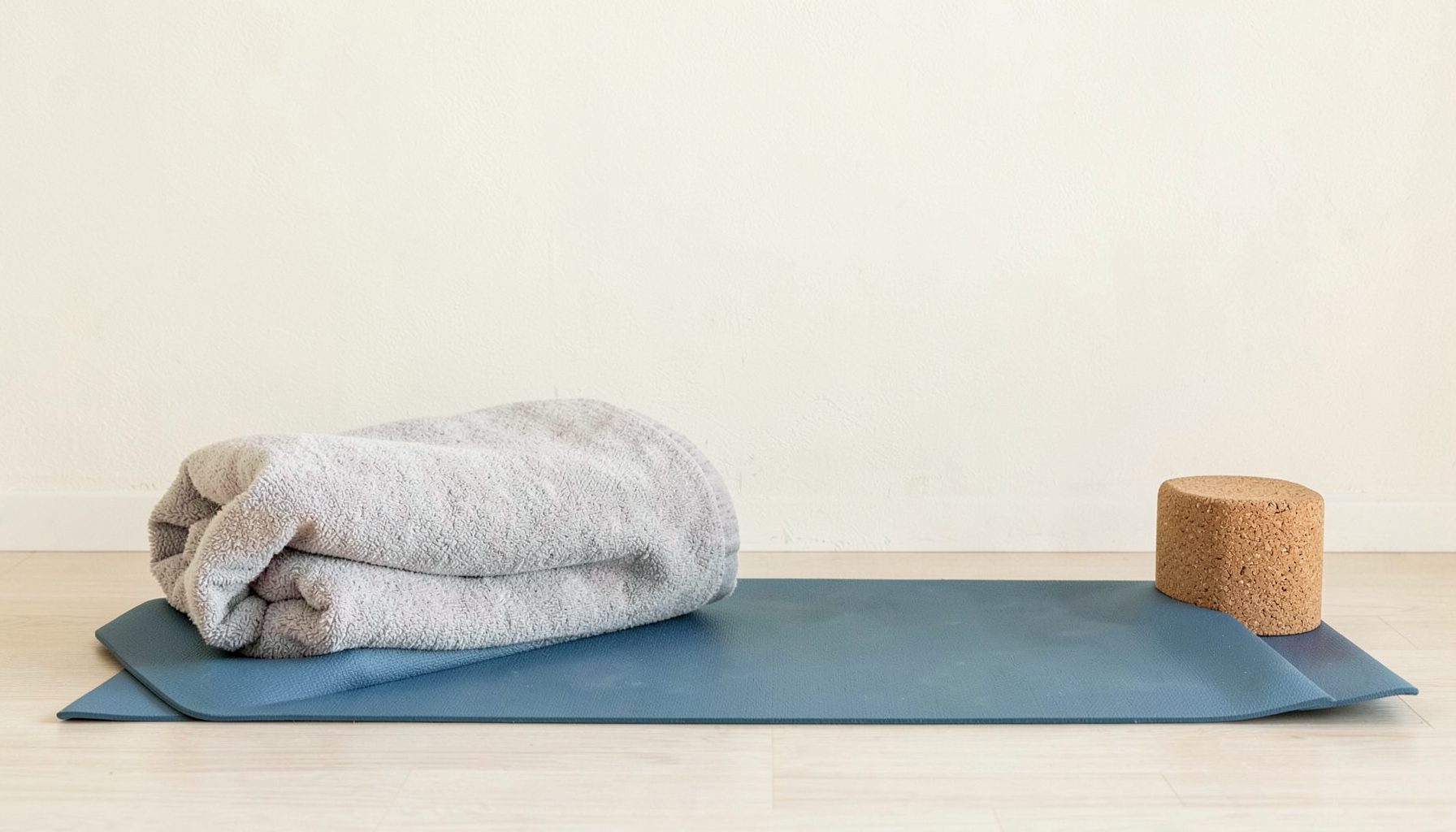
Avoid bouncing, forcing, or using yoga props to push beyond your natural range. Props should provide stability, not leverage. A chair, wall, bolster, folded blanket, or strap can help you stay relaxed, which often makes it easier to distinguish useful movement from irritation.
Seek prompt medical care for new or worsening leg weakness, significant numbness, loss of coordination, saddle-area numbness, or changes in bladder or bowel function. Medical assessment is also appropriate when pain follows a serious injury, comes with fever or unexplained weight loss, or does not improve with sensible rest and routine care.
Build a Sustainable Home Practice
Consistency matters more than intensity when you are working with lower-back and hip discomfort. A five-minute practice on several days may be more manageable than one long session each week. Pair gentle movement with habits that reduce prolonged static positions, such as standing up regularly, changing your seated posture, and taking short walks.
Use the following principles to keep your routine responsive:
- Start with breathing and supported rest before stretching.
- Choose two or three movements that feel neutral or relieving.
- Keep repetitions slow, controlled, and comfortably small.
- Check your symptoms during practice and again later that day.
- Stop and seek professional guidance if neurological symptoms intensify.
Breathwork can help reduce the protective tension that often surrounds painful movement. Try an easy inhale and a slightly longer, unforced exhale without trying to breathe deeply into discomfort. Mindfulness here is practical: notice pressure, effort, and sensation while making adjustments before the body has to demand them.
A yoga teacher can offer modifications, but a teacher should not diagnose the source of nerve pain. If you want individualized support with adapting a practice, you can contact Camille to learn more about an accessible, compassionate approach to yoga. Your healthcare provider or physical therapist can also help identify appropriate strengthening, mobility, and activity goals.
Let Movement Become Supportive Again
Yoga for sciatic discomfort works best when it creates a sense of safety rather than proving flexibility. The aim is not to force the lower back open or stretch the hips as deeply as possible. It is to build trust through gentle motion, steady breathing, and respectful attention to changing symptoms.
Begin with supported rest, explore small pelvic and hip movements, and finish before fatigue changes your form. Keep a record of which positions help and which ones increase symptoms, then shape your routine around that information. When practiced with patience and appropriate medical guidance, yoga can become one part of a sustainable plan for moving with greater ease. For further support, explore Camille Dodson Yoga’s classes, retreats, and downloadable resources to bring mindful movement into everyday life.