



Yoga for better sleep: a bedtime routine with props
A quiet evening yoga practice can help create a softer transition between the activity of the day and the stillness of night. Slow movement, longer exhales, and supportive props give the body clear signals that it is safe to release effort. The aim is not to achieve demanding poses or stretch as deeply as possible. It is to settle the nervous system and make rest feel more available.
This kind of bedtime routine can be especially helpful when your mind feels busy, your shoulders remain tense from screen time, or your body has not had a clear pause between work and sleep. A few minutes on the mat may be enough. Consistency matters more than duration, and a gentle practice can be adapted for nearly any energy level.
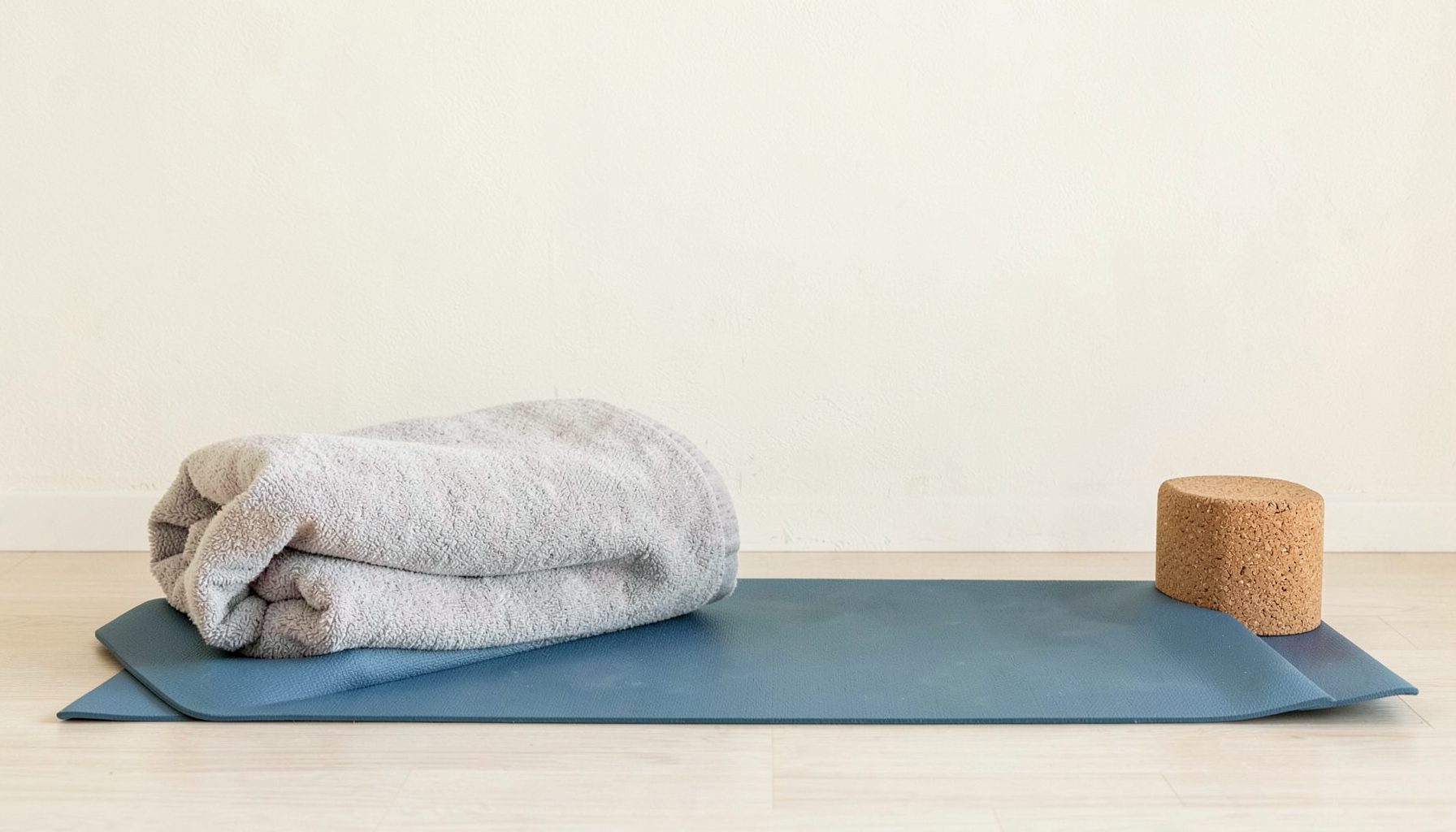
Props make the experience more comfortable and accessible. A bolster, folded blanket, cushion, strap, or pair of pillows can reduce strain and allow you to remain in restful positions for longer. When the body feels supported, there is less need to brace, fidget, or push through sensation.
Why evening yoga can support restful sleep
Sleep preparation begins before your head touches the pillow. Bright light, intense exercise, stimulating conversations, and unfinished tasks can keep the body in an alert state. A slower yoga sequence offers a deliberate change of pace, particularly when it is practiced in low light and without trying to accomplish too much.
Gentle movement may ease common areas of evening tension, including the neck, jaw, upper back, hips, and lower legs. Coordinating movement with breath also gives attention something simple to follow. Rather than rehearsing tomorrow’s tasks, you can notice the contact between your body and the floor, the rhythm of breathing, and the gradual softening of muscular effort.
The most useful intention is comfort, not performance. Restorative yoga for sleep should leave you feeling quieter than when you began. If a pose creates sharp pain, strain, tingling, or a strong urge to escape, change the position or choose a simpler alternative.
Try to finish an active yoga class or stronger practice at least an hour before bed if you notice that vigorous movement makes you feel energized. The routine below is designed for the final part of the evening, when the goal is down-regulation rather than stimulation.
Prepare a calm space with simple props
You do not need specialist equipment to create a supportive practice. A folded duvet can work as a bolster, books can raise the height of a yoga block, and two firm pillows can provide support under the knees or head. Choose materials that feel stable and comfortable rather than focusing on having a complete prop collection.
Keep the room warm enough that you will not tense against the cold. Lower the lighting, silence notifications, and place your phone out of reach if possible. If you use a candle or essential oil, keep the arrangement safe and subtle; strong scents are not necessary for relaxation and may bother sensitive airways.
A strap can help you explore a supported hamstring stretch without pulling. A blanket can cushion the knees, cover the body during longer holds, or fill the space beneath the head. A bolster or stacked pillows can support the torso in a reclined position, helping the chest and abdomen soften without forcing the back to lie flat.
For people who enjoy practicing away from home, a slow, restorative setting can make it easier to maintain these habits. A yoga retreat may offer time, quiet, and guidance for exploring mindfulness beyond a single evening; learn more about mindful yoga retreats if that kind of immersive practice fits your needs.
Begin with breathing and body awareness
Start seated on the edge of a folded blanket or lie down with your knees bent. Let your hands rest on your ribs or abdomen and notice the natural breath for several cycles. There is no need to immediately deepen or control it. First, allow your attention to recognize how you feel.
Then gradually make the exhale a little longer than the inhale. You might breathe in for a count of four and out for a count of five or six, keeping the rhythm easy. If counting feels demanding, simply imagine the breath leaving the body like a slow sigh. Stop counting if you feel light-headed, anxious, or short of breath.
A relaxed jaw can influence the rest of the body. Let the tongue rest comfortably, soften the space between the eyebrows, and allow the shoulders to move away from the ears. You can gently turn the head from side to side, staying well within a pain-free range, before returning to stillness.
Spend two to five minutes here. This opening is a form of mindfulness practice as much as a breathing exercise. Thoughts may continue to arise; the practice is to notice them and return to a physical anchor without criticism.
A supported sequence for the final part of the evening
Move slowly between positions, taking several quiet breaths in each one. The sequence can take ten minutes or half an hour, depending on your schedule. If you are already very sleepy, skip the more active movements and go straight to the supported shapes.
| Practice | Prop arrangement | Time | Primary intention |
|---|---|---|---|
| Reclined constructive rest | Pillow beneath the head; knees bent, feet on the floor | 2 minutes | Settle breathing and feel supported |
| Cat-cow or seated spinal waves | Blanket beneath knees or hips | 1–2 minutes | Release stiffness without effort |
| Supported child’s pose | Bolster or stacked pillows under the torso | 2–4 minutes | Soften the back and quiet attention |
| Reclined bound angle | Cushions beneath both thighs or knees | 3–5 minutes | Open the front body gently |
| Legs on a chair | Lower legs resting on a seat, blanket beneath head | 5–8 minutes | Reduce effort and encourage stillness |
| Supported rest | Blanket beneath knees and over the body | 3–10 minutes | Absorb the practice before bed |
Begin with constructive rest: lie on your back with your knees bent and feet comfortably apart. Place a pillow under your head if your chin tips toward the ceiling, and add a folded blanket beneath the knees if your lower back feels tight. Let the arms rest wherever the shoulders feel most relaxed.
For supported child’s pose, kneel with the big toes touching or keep the knees wider. Place a bolster or several pillows lengthwise in front of you and lower the torso onto the support. Turn the head to one side, changing sides halfway through if that feels comfortable. Anyone with knee, hip, or ankle sensitivity can practice a seated forward rest instead.
In reclined bound angle, bring the soles of the feet together only if the hips and inner thighs can relax. Support both thighs generously with cushions so the legs do not pull downward. A simpler option is to keep the legs bent, feet on the floor, or rest the lower legs on a chair.
Legs on a chair is often a more accessible alternative to legs-up-the-wall. Place the chair near a wall if needed, lie down, and rest the calves on the seat so the knees are comfortably bent. The goal is ease, not a dramatic inversion. If you have a medical condition affected by elevation or lying flat, choose another supported resting position and follow professional guidance.
Adapt the practice to your body
A restorative pose is successful when you can breathe naturally and remain reasonably comfortable. You should not have to hold yourself in place with muscular effort. Props can be moved closer, made higher, or used on both sides so the body does not have to compensate.
If lying on your back feels uncomfortable, turn onto your side with a pillow between the knees and another beneath the head. If forward folds create pressure in the abdomen or make breathing difficult, sit upright and lean back against a wall. If your hips are sensitive, avoid forcing the knees outward in bound angle and choose constructive rest instead.
People with pregnancy-related needs, recent surgery, persistent pain, dizziness, glaucoma, uncontrolled blood pressure, or other medical concerns should seek individualized advice before adding new positions. A yoga teacher with appropriate training or a healthcare professional can help adapt the practice safely.
Rest is not measured by how still you look. Small movements, changing props, or abandoning a pose are all valid choices. Self-compassion is part of the practice, especially on nights when sleep feels distant or the body is carrying more tension than usual.
Build a routine that feels easy to repeat
A sustainable evening ritual has a clear beginning and a gentle end. You might roll out the mat after brushing your teeth, prepare the props before dinner, or pair the practice with the same quiet music each night. Repeating a few familiar cues helps the routine become a natural transition rather than another task on a crowded schedule.
Start with a minimum version: three minutes of breathing, one supported posture, and a minute of stillness. On nights with more time, extend the holds or add the full sequence. This flexible approach protects the habit when energy is low and prevents an all-or-nothing mindset.
Keep the final moments especially quiet. Avoid checking messages between poses, and move from the mat to bed without adding stimulating activities. If you practice in bed, use only positions that are comfortable and safe, and avoid falling asleep with candles, electric heat devices, or unsecured equipment nearby.
For a more restorative evening rhythm:
- Choose two or three props before you begin so you do not interrupt the practice.
- Use longer, softer exhales instead of forcing deep breaths.
- Hold supported poses for comfort, not for a predetermined achievement.
- Keep the room dim and the sequence familiar as bedtime approaches.
- Record how you feel afterward rather than judging whether you fell asleep immediately.
A yoga routine cannot guarantee sleep every night, and it should not become another source of pressure. If difficulty sleeping continues for weeks, affects daytime functioning, or occurs alongside significant anxiety, pain, breathing problems, or depression, speak with a qualified healthcare professional. Yoga can complement appropriate care, while persistent sleep concerns deserve individual attention.
Let the practice be small enough to begin tonight: set out a blanket, lower the lights, and give yourself a few unhurried minutes to breathe. Return to the sequence regularly, adapt it with kindness, and allow the final supported rest to lead you toward bed.