

Yoga and Creativity: Moving Toward Fresh Inspiration
Creative work often begins with a feeling that cannot be forced. You may sit in front of a blank page, open a new design file, or return to a half-finished project, only to discover that your thoughts feel tight and repetitive. The harder you try to produce an original idea, the further away it can seem.
Yoga offers a different entry point. Through mindful movement, steady breathing, and attention to physical sensation, practice can help you step out of mental over-effort. A few deliberate movements may create enough space for an image, sentence, melody, or solution to surface naturally.
This does not mean yoga magically turns every session into a burst of productivity. Its value is subtler and more sustainable. Movement can change your relationship with uncertainty, soften perfectionism, and reconnect you with the curiosity that supports meaningful creative expression.
Why Movement Helps Ideas Emerge
The body and mind are constantly influencing each other. When you spend hours concentrating, worrying, or trying to solve a problem, your posture may become compressed without you noticing. The shoulders lift, the jaw tightens, and the breath becomes shallow. This physical pattern can reinforce a narrow mental state.
Gentle yoga interrupts that loop by bringing attention to movement and sensation. A slow spinal wave, a supported forward fold, or several spacious breaths can shift your awareness away from mental noise. You are not abandoning the creative problem; you are approaching it through a calmer nervous system.
Movement also introduces variation. Creative stagnation often involves repeating the same thought process, posture, or routine. Changing the angle of the body and the rhythm of the breath gives your attention something fresh to follow. That small shift may make it easier to see a familiar question from another perspective.
For guided support when you want structure without pressure, explore these available yoga classes, which can provide a grounded setting for mindful movement and reflection.
Creativity Begins With Permission
Many creative blocks are connected to self-judgment. You may believe that your first idea must be intelligent, beautiful, useful, or original. That expectation places evaluation at the beginning of the process, before imagination has had room to play.
Yoga can offer a practical lesson in releasing that demand. In a physical practice, you might notice that one side feels different from the other or that a familiar posture changes from day to day. Instead of treating variation as failure, you learn to observe it. This attitude translates well to writing, painting, music, problem-solving, and other forms of creative work.
A mindful practice encourages permission to begin imperfectly. You can move slowly, pause, revise, and choose a smaller range of motion. The same principles apply to a creative session: write an awkward paragraph, sketch a rough shape, collect unusual words, or make a version that no one else needs to see.
Self-compassion is especially important when inspiration feels absent. A blocked moment is not evidence that you have lost your ability. It may simply be a sign that you need rest, sensory change, emotional processing, or a less demanding way to begin.
A Gentle Practice for Unsticking the Mind
When you feel creatively stuck, choose movements that create spaciousness rather than intensity. Begin seated or standing with your feet supported. Notice the contact between your body and the floor, then let your breathing become slightly slower without trying to control every inhale and exhale.
Move through a few rounds of cat-cow, allowing the spine to flex and extend at a comfortable pace. Follow this with shoulder circles, a gentle side bend, and a standing reach that lengthens through the arms. The purpose is not to achieve a dramatic stretch. It is to make the body feel available for attention.
You might then try a low lunge on each side, a supported child’s pose, or a reclining twist. Stay long enough to notice details: temperature, pressure, sounds, and changes in your breathing. Sensory awareness can help loosen the habit of living entirely inside abstract thought.
Finish with two or three minutes of stillness. Keep your eyes closed if that feels comfortable, or soften your gaze toward one point. When the mind wanders, return to the breath and ask gently, “What is here now?” You do not need to demand an answer. Often, a useful creative direction appears after the demand for one has been removed.
Choose Movement For The Creative State You Need
Different kinds of movement can support different phases of the creative process. An energizing sequence may help when you feel dull or disconnected, while grounding postures may be more appropriate when your thoughts are racing. The most useful practice is the one that meets your actual state rather than the state you think you should have.
| Creative state | Helpful movement quality | Breath emphasis | Possible creative benefit |
|---|---|---|---|
| Mentally foggy | Gentle standing flow and rhythmic movement | Even, moderately deep breaths | Builds alertness and momentum |
| Overstimulated | Slow floor-based postures and longer pauses | Extended exhalations | Reduces mental clutter |
| Perfectionistic | Exploratory, non-repetitive movement | Natural breathing without strict counts | Encourages curiosity and flexibility |
| Emotionally flat | Heart-opening shapes and expressive gestures | Fuller inhalations | Reconnects with feeling and personal meaning |
| Physically tense | Mobility for the neck, shoulders, hips, and spine | Breath directed toward areas of tension | Creates comfort and ease for sustained work |
You do not need to use these categories as rules. They are prompts for self-observation. Before practicing, identify whether you need energy, steadiness, emotional contact, or a change in perspective. Then select a few movements that support that intention.
It can also help to alternate between stillness and motion. A brief sequence followed by freewriting may reveal more than a long practice followed by immediate pressure to produce. Creativity often benefits from transitions, especially when the transition gives the mind time to integrate what the body has experienced.
Turn Yoga Into A Creative Ritual
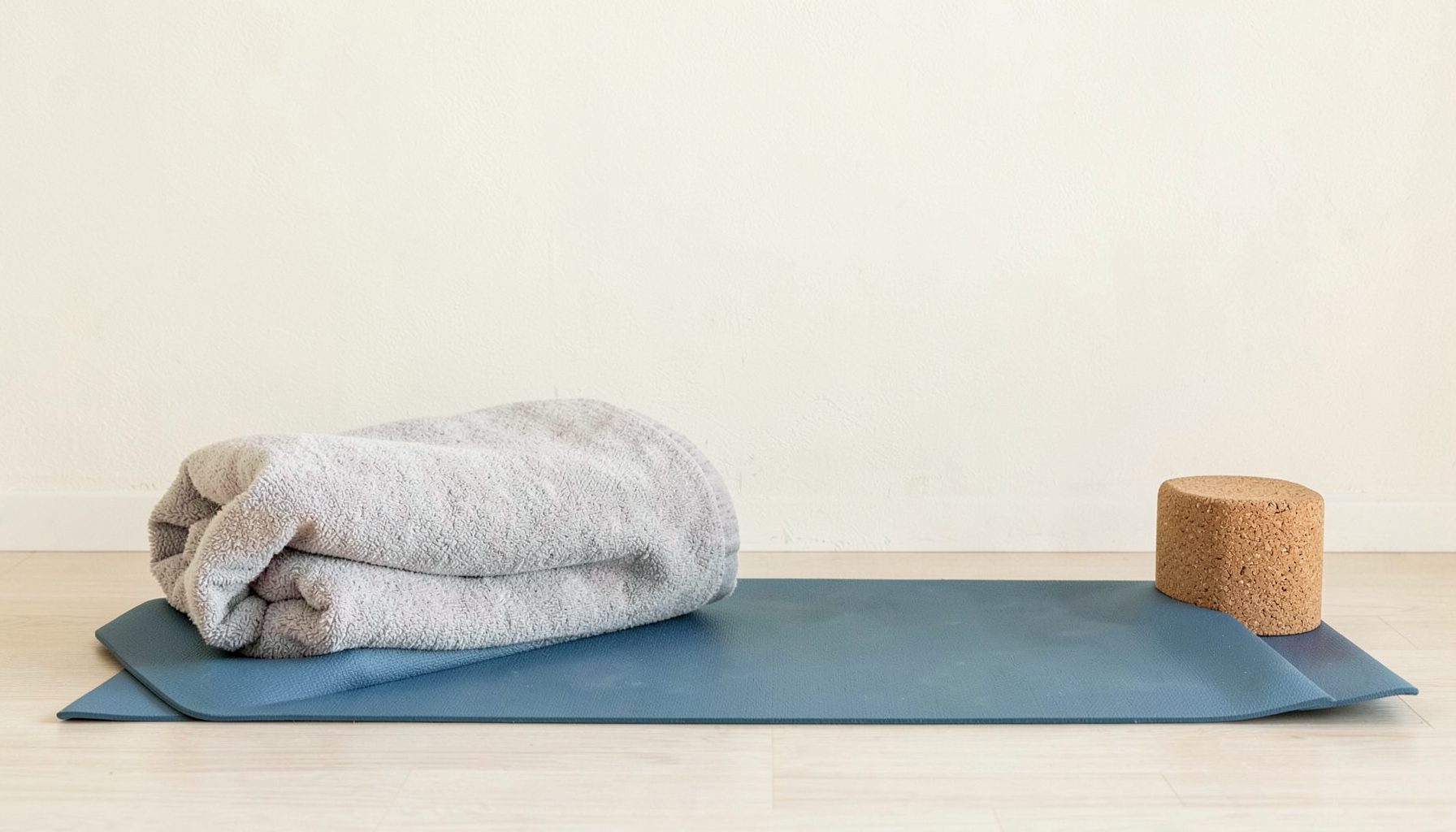
A ritual is different from a rigid routine. It gives an activity a recognizable beginning and helps the mind shift into a particular mode. Your creative ritual might start with rolling out a mat, dimming the lights, placing a notebook nearby, or choosing a short meditation. These details signal that you are entering a space for attention rather than performance.
Keep the practice simple enough to repeat. Ten minutes of mindful movement before writing may be more supportive than an ambitious hour-long sequence you rarely complete. Consistency builds familiarity, and familiarity reduces the friction involved in starting.
After moving, leave a few minutes for unfiltered reflection. Write continuously without correcting grammar or judging the content. Record sensations, fragments, questions, colors, memories, or images. This kind of stream-of-consciousness journaling is not meant to become a finished piece; it helps you notice what the practice has made more accessible.
You can also carry movement principles into the creative session itself. Change your seat, stand while reading, stretch your hands between tasks, or take a mindful walk when you reach a difficult section. A creative process does not have to happen in one fixed posture.
Practices For Protecting Creative Energy
Creative inspiration depends on attention, and attention is shaped by the way you use your energy throughout the day. Yoga can support this awareness by helping you recognize when effort is useful and when it has become strain. That distinction matters for anyone who wants to create regularly rather than rely on occasional bursts of motivation.
Build pauses into your work before you feel completely depleted. A short breathing practice, a few standing stretches, or a quiet moment with your eyes closed can prevent tension from accumulating. These pauses are part of the creative process, not evidence that you are avoiding it.
Try these practical ways to connect yoga with creative work:
- Begin with five to fifteen minutes of gentle movement before opening your notebook, instrument, or design tools.
- Match the practice to your state: energizing movement for sluggishness, grounding movement for scattered attention, and restorative postures for exhaustion.
- Keep a journal nearby and capture impressions immediately after practice, without editing or ranking them.
- Use mindful breathing during difficult moments instead of judging the block or forcing a quick solution.
- End creative sessions with a simple body scan so you can notice which kinds of effort support you and which leave you depleted.
The goal is to create a reliable relationship between embodied awareness and imagination. Over time, you may begin to recognize the early signs of resistance, fatigue, or overthinking and respond before they become a complete shutdown.
A sustainable practice also leaves room for days when movement does not produce an obvious idea. The value may be improved concentration, emotional steadiness, better sleep, or a kinder inner voice. These effects can quietly strengthen creativity even when no immediate breakthrough occurs.
When you move with attention, you give inspiration a welcoming environment rather than issuing it a command. The breath becomes a bridge between sensation and thought, while the body offers new rhythms, shapes, and points of view. This is why yoga can be such a supportive companion for creative living: it helps you return to the process with presence.
Set aside a small window this week for movement before making something. Let the practice be gentle, leave your expectations outside the room, and follow it with a few minutes of writing or sketching. Your next idea may arrive as a clear insight, a surprising image, or simply the willingness to begin.