




Why self-compassion is the foundation of a sustainable practice
A yoga practice can begin with a simple intention: to move with greater ease, breathe more fully, or create a few quiet minutes in a busy day. Over time, though, the way we speak to ourselves often shapes the practice more powerfully than the poses themselves. If every session becomes a test of flexibility, strength, consistency, or spiritual progress, yoga can start to feel like another demand to satisfy.
Self-compassion offers a different starting point. It invites you to notice your experience honestly without turning discomfort, distraction, or inconsistency into evidence that you are failing. This gentle attitude does not remove commitment. It gives commitment a steadier and more humane foundation.
A sustainable yoga practice grows through attention, patience, and repeated return. Some days that may mean a full sequence on the mat. Other days it may be a few mindful breaths, a walk, a restorative pose, or the decision to rest. Each choice can belong to the practice when it is guided by care rather than self-judgment.
The practice begins with how you meet yourself
Self-compassion is often mistaken for indulgence or a lack of discipline. In reality, it is the ability to respond to your own experience with kindness, clarity, and respect. It means acknowledging that bodies have different needs, energy changes from day to day, and life includes illness, stress, grief, work, caregiving, and unexpected interruptions.
In yoga, this may look like releasing the pressure to perform a pose in a particular shape. You might use a prop, shorten a practice, keep your gaze soft, or choose a variation that gives your body more space. These are not signs that you are doing less successfully. They are ways of staying in honest relationship with yourself.
When the inner voice becomes less critical, attention becomes more available. You can feel the difference between useful challenge and strain, between tiredness and avoidance, and between a genuine need for rest and a fear of being still. This discernment makes movement safer and mindfulness more meaningful.
Attention before achievement
Many people arrive on the mat carrying an invisible scorecard. They measure how long they practiced, how advanced a pose looked, whether they touched their toes, or how calm they managed to feel. These measures can be motivating for a short time, but they easily turn yoga into a performance. The deeper benefits of practice are often quieter and harder to quantify.
A self-compassionate approach shifts the focus from achievement to relationship. Instead of asking whether the session was impressive, you might notice whether you were present for a few moments. Did your breathing become easier? Did you recognize tension before it became pain? Did you give yourself permission to stop? These small observations are meaningful signs of embodied awareness.
Mindfulness does not require perfect concentration. The mind will wander, and emotions will surface. The practice is the gentle return: noticing what has happened, naming it without criticism, and coming back to breath or sensation. Every return strengthens attention without requiring you to scold yourself for having been distracted.
This approach also changes how progress is understood. Growth may appear as greater patience in a difficult conversation, a more respectful response to fatigue, or an ability to pause before reacting. Yoga becomes less about collecting accomplishments and more about developing a supportive way of inhabiting daily life.
Let the body set the pace
The body communicates constantly, although its signals are not always loud. Tightness, warmth, shakiness, ease, heaviness, and spaciousness can all offer information. A sustainable practice makes room for these sensations instead of forcing them into a predetermined plan.
Listening to the body does not mean avoiding all effort. Strength, mobility, and resilience can develop through gradual challenge. The important distinction is between a sensation that asks for patience and one that signals harm. A steady practice teaches you to investigate rather than override. You can reduce intensity, change direction, pause, or come out of a pose before discomfort becomes injury.
| When self-judgment leads | When self-compassion leads |
|---|---|
| Pushing to match an imagined standard | Choosing a variation that supports present needs |
| Treating rest as lost time | Recognizing recovery as part of training |
| Ignoring pain to finish the sequence | Responding early to important body signals |
| Judging inconsistent attendance | Returning without punishment after a pause |
| Measuring value through visible progress | Valuing awareness, breath, and steadiness |
This kind of body awareness is especially valuable for beginners, people returning after injury, and anyone whose energy changes with sleep, hormones, stress, or health. There is no single correct pace. A practice becomes more inclusive when it adapts to the person who is actually present rather than demanding that person conform to a fixed ideal.
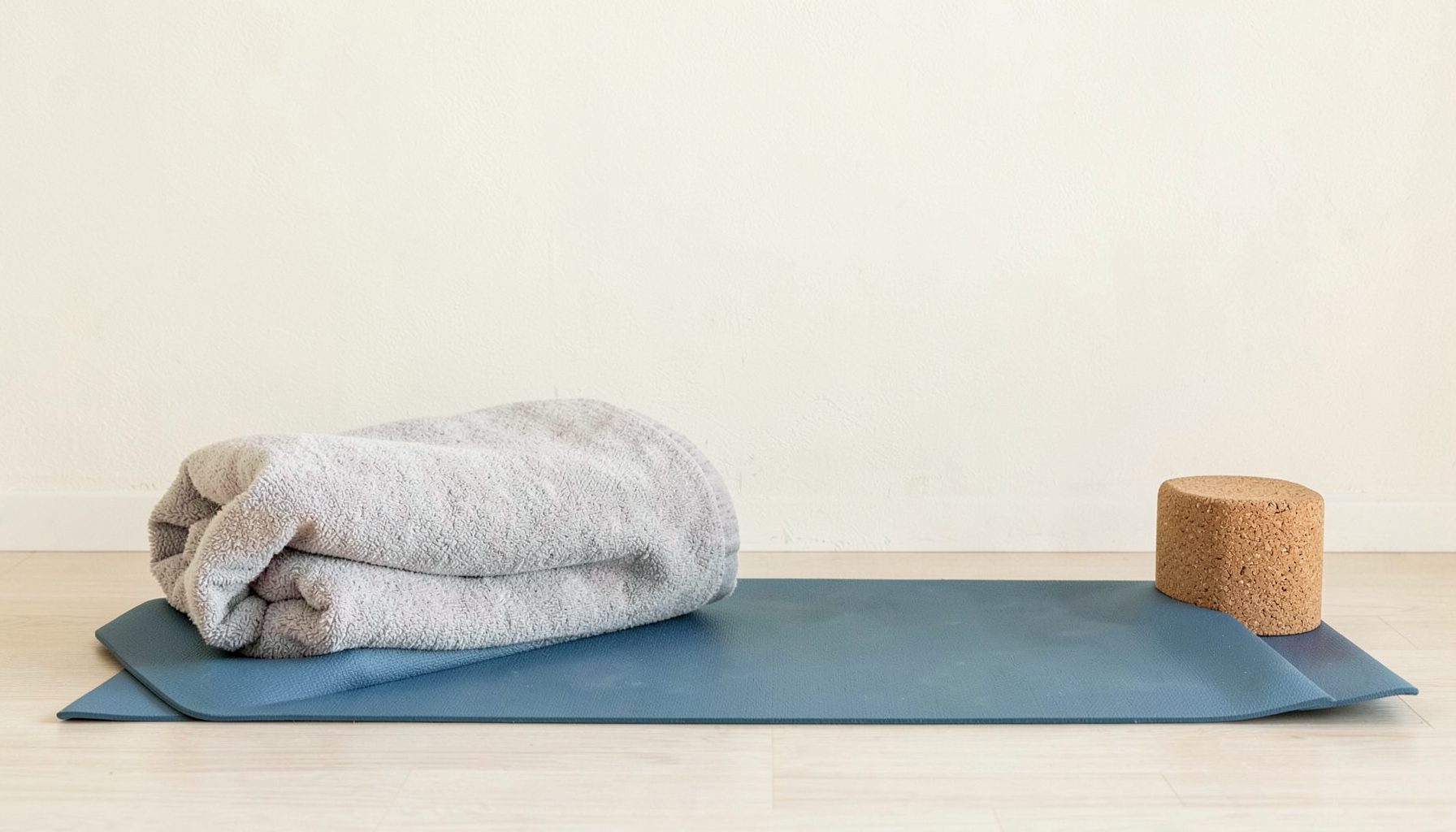
Using a blanket, block, bolster, wall, or chair can support that adaptation. Props are practical tools for communication: they help you explore a posture with enough stability to remain curious. The goal is not to prove that you can tolerate more. It is to create conditions in which your nervous system and body can participate with trust.
Breath makes room for change
Breathwork offers a direct way to practice self-kindness. When life feels pressured, breathing often becomes shallow, hurried, or held. Trying to force the breath into a perfect pattern can create another layer of tension. A gentler approach begins by noticing the breath as it is.
You might place one hand on the chest and another on the abdomen, feeling movement without trying to correct it immediately. From there, lengthen the exhale slightly if that feels comfortable, or simply follow three natural breaths. This small pause can create enough space to recognize what you need before choosing your next action.
The breath is also a reminder that regulation is gradual. One mindful breath may not erase anxiety or sadness, yet it can soften the impulse to react automatically. Repeated moments of breathing with awareness help build emotional resilience. They teach the nervous system that slowing down is available, even when circumstances cannot change right away.
Meditation works in a similar way. It is not a demand to empty the mind. It is an invitation to notice thoughts, sensations, and feelings with less struggle. A five-minute practice completed with kindness can be more nourishing than a longer session shaped by frustration. Consistency grows when the practice feels supportive enough to return to.
Build rhythms that can last
Sustainability depends less on intensity than on repeatability. A demanding routine may feel inspiring at first, but if it requires ideal conditions, it may disappear when the week becomes complicated. A modest rhythm that fits real life has a better chance of becoming a lasting source of nourishment.
Consider creating several versions of your practice. A full session might include standing poses, strengthening work, hip openers, and a longer rest. A medium practice could be a few sun salutations followed by seated breathing. A minimum practice might involve coming to the mat for two minutes, stretching the neck and shoulders, or lying down with one hand on the heart.
Having options reduces all-or-nothing thinking. You do not have to choose between completing an entire class and doing nothing. The right practice is the one that meets the capacity you have today. Sometimes that will be energizing movement; sometimes it will be restorative yoga or quiet reflection.
Planning can help, but flexibility matters just as much. You might reserve a general time for practice while allowing the content to change. If you miss several days, returning does not require repayment. There is no need to compensate with a longer or harder session. Begin again at a welcoming pace, treating the pause as part of your human experience rather than a moral failure.
Small ways to practice self-compassion
Self-compassion becomes stronger when it is translated into ordinary choices. Before beginning, ask what quality would support you today: steadiness, softness, courage, patience, or rest. During practice, let that quality influence your pace and the amount of effort you offer.
Afterward, resist the urge to evaluate the session as good or bad. Instead, notice one thing you learned. Perhaps you discovered that your shoulders were tense, that your balance improved after slowing down, or that you needed more support than usual. Reflection turns experience into wisdom without turning it into judgment.
Try incorporating these simple habits:
- Replace “I should be better at this” with “I am learning what supports me.”
- Set a timer for a short practice that feels easy to begin.
- Use props before you feel you need them, rather than waiting for strain.
- End with a few quiet breaths so rest is included in the practice.
- Keep a brief note of how you felt before and after, not how much you accomplished.
Compassion can also extend beyond the mat. It may mean taking a nourishing meal break, setting a boundary, speaking honestly about limited energy, or choosing sleep over an exercise goal. These actions reinforce the same message as a gentle yoga class: your wellbeing is worthy of attention even when you are not producing, improving, or achieving.
Bring kindness into your home practice
A home practice gives you unusual freedom. You can close the door, turn down the lights, choose calming music, or remain in one comfortable pose for as long as needed. Without the comparison that can arise in a group setting, you may begin to notice what genuinely feels restorative and what has been driven by habit or expectation.
Create a small space that makes returning simple. A rolled blanket near the sofa, a mat beside the bed, or a meditation cushion in a quiet corner can reduce the number of steps between intention and action. Keep a printable sequence or short recording available for days when decision-making feels tiring. Structure can support freedom when it removes unnecessary friction.
If guidance would help, a class or retreat can offer encouragement, community, and a chance to explore practices that are difficult to establish alone. Choose spaces that welcome questions, modifications, and varied experience. A supportive teacher does not ask you to abandon your own discernment; they help you develop it.
Resources can make this process more accessible. When you are ready to choose a class, meditation, or downloadable offering that suits your current needs, you can explore the available options through the practice resources and select something that feels realistic rather than aspirational.
A sustainable practice is built through trust. Trust grows each time you listen instead of override, pause instead of punish, and return instead of deciding that a break has disqualified you. Self-compassion is therefore not an extra theme added to yoga. It is the quality that allows movement, breath, mindfulness, and rest to remain meaningful over time.
Let your next practice be an act of meeting yourself where you are. Roll out the mat, take one unhurried breath, and choose the form of care that fits this moment. With each gentle return, you create a relationship with yoga that can continue through changing seasons of body, mind, and life.