


Three simple pranayama techniques to try today
Pranayama is often translated as breath control, but the practice can be much gentler than that phrase suggests. It is an opportunity to notice the breath, create a little more space around your thoughts, and use a steady rhythm to support mindful movement or quiet rest. You do not need advanced yoga experience, flexible muscles, or a long block of time to begin.
The three breathing exercises below are simple enough to try today. Diaphragmatic breathing can help you reconnect with natural, full breaths. Alternate nostril breathing offers a focused rhythm for settling the mind, while extended-exhale breathing encourages a slower, softer pace. Each technique can stand alone or become part of a wider yoga practice.
Approach these exercises with curiosity rather than pressure. Breathwork should feel comfortable and unforced. If you feel dizzy, anxious, or strained, return to normal breathing and rest. The purpose is to listen more closely to your body, not to achieve a perfect pattern.
Why mindful breathing matters
Breathing happens automatically, yet your breathing pattern can change with stress, concentration, tiredness, exercise, or strong emotion. You may notice shallow breaths during a busy day, a clenched jaw while working, or a tendency to hold the breath when something feels difficult. Bringing gentle attention to these habits can be the first step toward changing them.
Slow, conscious breathing may help shift your attention away from constant mental activity and toward present-moment sensations. Feeling the ribs expand, noticing the warmth of the exhale, or counting a few steady breaths gives the mind a simple point of focus. This can make breath awareness useful before meditation, after a demanding day, or at the beginning of a yoga class.
Pranayama is also a practice of self-compassion. You are not trying to force calm or remove every difficult feeling. Instead, you are creating conditions in which you can meet yourself with a little more patience. Even three mindful breaths can be meaningful when they are practiced with kindness.
Prepare your body and attention
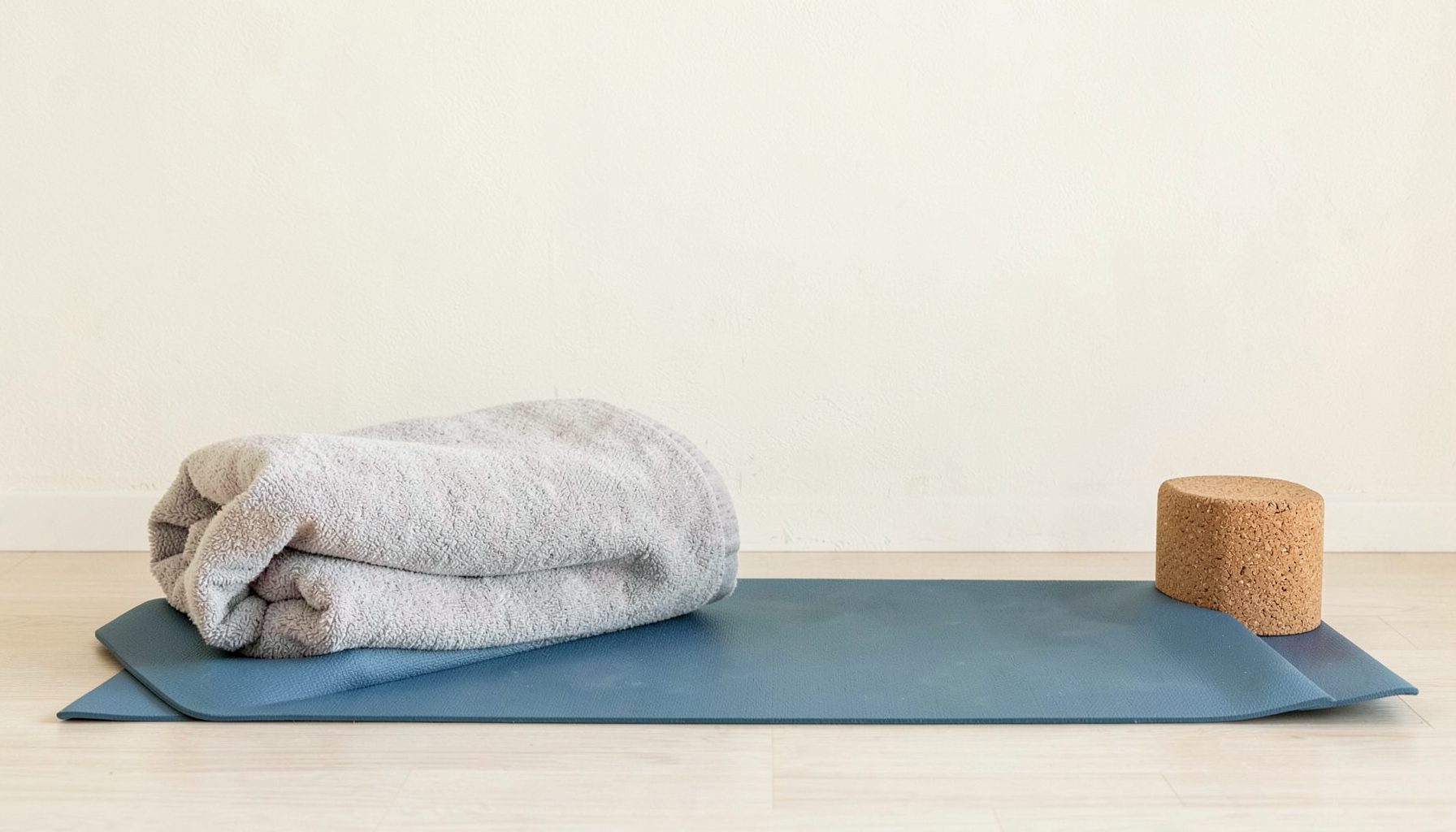
Choose a position that allows your spine to feel naturally supported. You can sit on a chair with both feet on the floor, sit cross-legged on a cushion, or lie down with your knees bent. The shoulders do not need to be pulled back, and the chest does not need to be lifted dramatically. Let the back of your neck lengthen while the rest of your body remains at ease.
Begin by observing your normal breath for several cycles. Notice whether the inhale arrives through the nose or mouth, where movement is most obvious, and whether one breath feels longer than another. This observation is part of the practice. There is no need to correct anything immediately.
Keep the face relaxed, especially around the eyes, tongue, and jaw. If nasal breathing is uncomfortable because of congestion or another physical reason, do not force it. You can breathe naturally through the mouth, pause the exercise, or choose a different form of meditation. Comfort and steadiness matter more than following a particular instruction perfectly.
Three gentle techniques to explore
Diaphragmatic breathing is a supportive place to start. Lie down or sit comfortably and rest one hand on the upper chest and the other on the lower ribs or belly. Breathe in slowly through the nose, allowing the lower hand to rise as the diaphragm moves and the ribs widen. Let the exhale leave without pushing. The upper chest may move a little, but try to keep the shoulders soft.
Continue for five to ten breaths. Rather than trying to make each inhale as large as possible, imagine creating a quiet, three-dimensional expansion through the belly, side ribs, and back body. This exercise can help you feel the physical movement of breathing and may be especially grounding when your attention feels scattered. If the belly does not visibly move much, that is completely fine; stay with ease instead of forcing a result.
Alternate nostril breathing, sometimes called nadi shodhana, adds a simple pattern of attention. Sit upright and use the right hand if that feels comfortable. Fold the index and middle fingers toward the palm, leaving the thumb and ring finger available. Close the right nostril gently with the thumb, inhale through the left nostril, then close the left nostril with the ring finger and exhale through the right. Inhale through the right, switch, and exhale through the left. That completes one round.
Repeat three to five rounds at a relaxed pace. There is no need to hold the breath between sides, especially when you are new to the practice. Keep the pressure on the nostrils light and let the breath remain smooth. If coordinating the hand movement feels distracting, simply imagine the breath alternating from side to side without touching the nose.
Extended-exhale breathing uses a slightly longer out-breath to encourage a slower rhythm. Inhale gently for a count of three, then exhale for a count of four or five. The counts are only a guide, so choose numbers that feel easy. After several rounds, release the counting and notice whether the breath has become quieter.
Never strain to lengthen the exhale. A comfortable ratio is more useful than a dramatic one. You might begin with two counts in and three counts out, practicing for one or two minutes. This form of breathwork can be a helpful transition into relaxation, evening meditation, or restorative yoga, but it should be stopped if it creates air hunger or uneasiness.
Compare the three practices
Each technique offers a different doorway into mindful breathing. Diaphragmatic breathing emphasizes physical awareness and spaciousness, alternate nostril breathing gives the mind a clear sequence to follow, and extended-exhale breathing highlights rhythm and release. You can choose according to your energy rather than following a fixed hierarchy.
The best practice is the one that leaves you feeling more settled, present, or connected to your body. Some days you may want the grounding quality of a hand on the belly. On another day, counting and alternating sides may provide useful structure. Let your experience guide you.
| Technique | Main focus | Suggested starting time | A useful moment |
|---|---|---|---|
| Diaphragmatic breathing | Full, comfortable breath movement | 1–3 minutes | When you feel scattered or disconnected |
| Alternate nostril breathing | Attention, balance, and steady rhythm | 3–5 rounds | Before meditation or focused work |
| Extended-exhale breathing | Slowing the breath and releasing tension | 1–2 minutes | During an evening wind-down |
Make the practice sustainable
A short practice repeated regularly is often easier to maintain than an ambitious routine attempted once. Try linking breathwork to something that already happens each day: sitting down with morning tea, changing into comfortable clothes after work, or getting ready for bed. One or two minutes can be enough to establish familiarity.
You might also include a brief pranayama exercise before physical yoga. Begin with diaphragmatic breathing to arrive in the body, move through a few gentle stretches, and finish with extended-exhale breathing. The transition between breath, movement, and stillness can help the practice feel integrated rather than like another task to complete.
Keep a simple record of what you notice, without judging whether the practice was successful. You could write down your energy level, emotional state, or the technique you used. Over time, these observations may show which forms of breath awareness feel most supportive. For further reflections on mindful movement and everyday practice, explore these mindful yoga reflections.
A gentle plan for today
Use the following sequence as a low-pressure starting point. You can practice seated or lying down, and you can stop whenever your body asks for a pause.
- Spend one minute observing your natural breath without changing it.
- Practice diaphragmatic breathing for five slow cycles.
- Try three rounds of alternate nostril breathing, omitting breath retention.
- Finish with one minute of extended-exhale breathing, using an easy three-count inhale and four-count exhale.
Afterward, sit quietly for a few moments and notice the effect. You may feel calmer, more alert, pleasantly neutral, or simply more aware of your current state. Every response is valid. The value of pranayama is not measured by how peaceful you look or how precisely you count; it grows through listening and responding with care.
If one technique feels especially comfortable, make it your starting point for the next week. Practice at the same time each day if possible, but allow flexibility when life changes. A sustainable personal practice has room for tired days, busy mornings, changing moods, and natural pauses.
Return to these breathing exercises as a small act of presence. Join a gentle yoga class, explore a retreat, or bring one technique into your daily routine today. Let each breath be an invitation to move with greater awareness and meet yourself with compassion.