


Three Grounding Poses for When You Feel Scattered
Some days make it difficult to feel settled in your own body. A busy schedule, too much screen time, emotional strain, or a long list of unfinished tasks can leave your attention pulled in several directions at once. When your thoughts feel scattered, yoga does not need to become another demanding project. A few deliberate movements can offer a steady place to begin.
Grounding yoga uses simple shapes, conscious breathing, and physical points of contact to bring awareness back to the present moment. You may notice your feet against the floor, the weight of your hips, or the gentle rhythm of your breath. These sensations can help create a little space between you and the rush of the day.
The three poses below are accessible options for restoring steadiness. Practise them slowly, stay curious about how your body feels, and allow the shapes to support you rather than forcing yourself into a particular version of them.
Why Grounding Helps
Feeling scattered often includes both mental and physical signs. You might move quickly from one task to another, hold tension in your shoulders, breathe shallowly, or struggle to notice what you need. A grounding practice interrupts that momentum by giving your attention one clear, manageable focus.
The aim is not to empty your mind. Thoughts may continue to appear while you practise. Instead, use the pose as an anchor: feel the floor, observe the breath, and notice areas of ease or tension without judging them. This gentle form of breath awareness can be especially helpful when paired with the four parts of breath, which guides attention through inhalation, pauses, exhalation, and the space between breaths.
Choose a quiet pace and keep the practice short if that feels appropriate. Two or three minutes can be meaningful, particularly when you approach the movements with self-compassion instead of treating them as something to perfect.
Mountain Pose For Steady Awareness
Mountain Pose, or Tadasana, is a standing posture that looks simple but offers a rich opportunity to reconnect with your body. Stand with your feet about hip-width apart, or bring them closer if that feels stable. Let your arms rest by your sides, and soften your knees rather than locking them.
Notice the three points of contact beneath each foot: the base of the big toe, the base of the little toe, and the heel. Allow your weight to spread through these points. Imagine the crown of your head lengthening upward while your feet feel heavy and rooted. Your pelvis can remain neutral, and your shoulders can relax away from your ears.
Stay for five to ten slow breaths. Rather than trying to make the pose look still, feel the subtle movement within it. Your balance may shift, your breath may change, and your attention may wander. Each time you notice that you have drifted away, gently return to the soles of your feet.
If standing feels uncomfortable, practise a seated version with both feet resting on the floor. The essential quality of the pose is the same: a supported base, an upright spine, and awareness of the present moment.
Child’s Pose For Rest And Reassurance
Child’s Pose, or Balasana, provides a low, inward-facing shape that can feel comforting when your nervous system is overstimulated. Begin on hands and knees. Bring your big toes together and let your knees widen, or keep the knees closer if that is more comfortable. Slowly send your hips toward your heels while extending your arms forward.
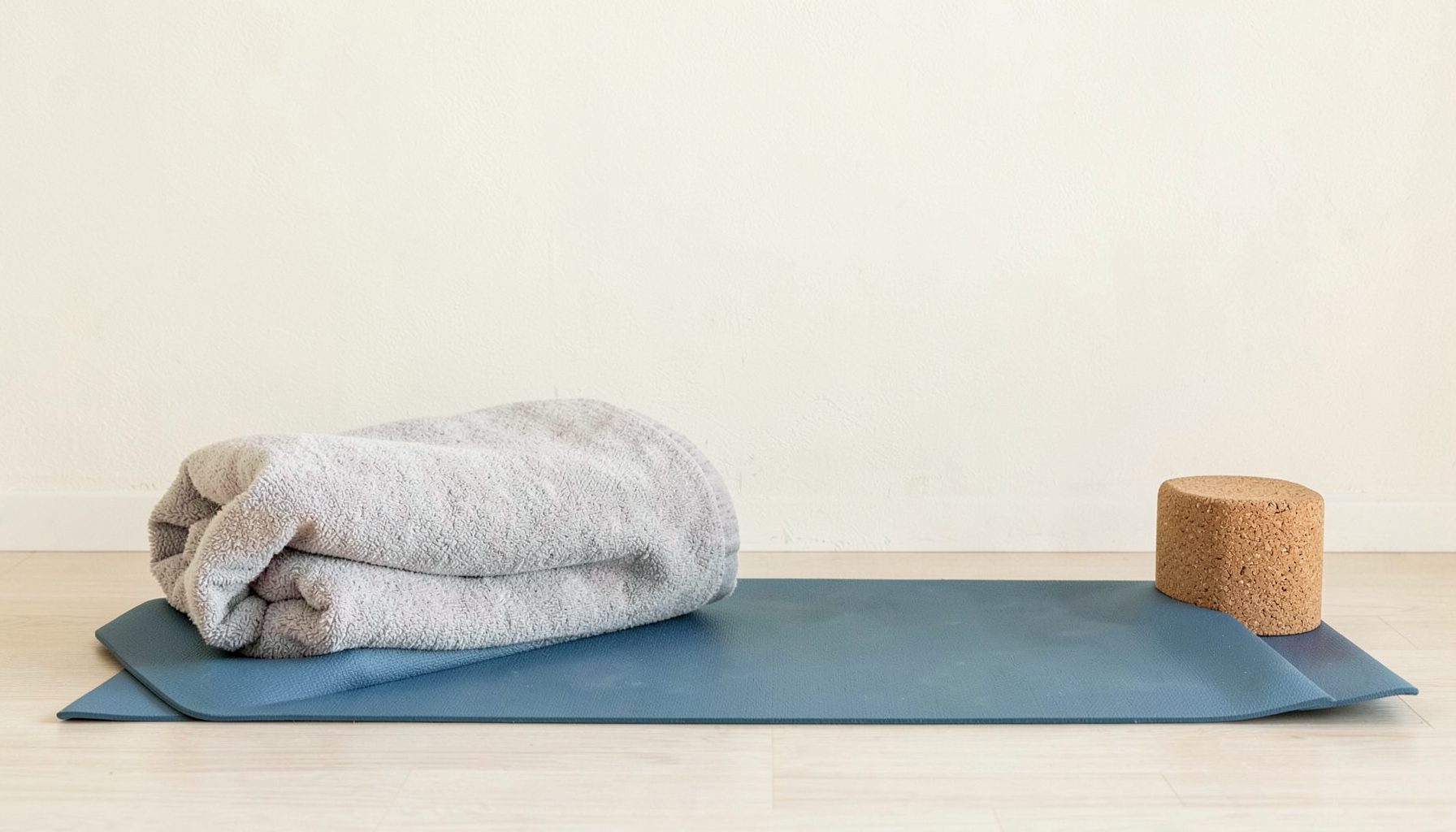
Rest your forehead on the mat, a folded blanket, or a cushion. If your hips do not reach your heels, place a pillow beneath your torso so your body can be supported without strain. You can also turn your head to one side and change sides halfway through the pose.
Remain for five to twelve breaths, noticing the expansion of your back as you inhale. On each exhalation, allow your jaw, shoulders, and belly to soften. The floor carries some of your weight here, which can make it easier to release the habit of holding yourself up and holding everything together.
For anyone with knee sensitivity, try placing additional padding beneath the knees or practising a supported seated rest instead. Leave the pose whenever you need to. Grounding comes from listening to your body, not from staying in a posture for a prescribed amount of time.
A Seated Fold For Returning Inward
A simple seated forward fold offers another way to settle attention. Sit on a folded blanket with your legs extended, or bend your knees generously. Place your hands beside your hips and lengthen through your spine before leaning forward from the hips. Let your hands rest on your thighs, shins, or the floor; there is no need to reach your feet.
Keep the movement spacious and gentle. The aim is not to pull yourself deeper, but to create a quiet shape in which your breath can become more noticeable. You might rest your forehead on a bolster or stacked cushions, allowing the support to make the pose restorative rather than effortful.
Stay for six to ten breaths. Feel the grounded points beneath your sitting bones and legs, then observe the sensations along your back as you breathe. If the back of your legs feels tight, bend your knees further. A softened posture can be more calming than an ambitious stretch.
| Pose | Main grounding focus | Suggested time | Helpful support |
|---|---|---|---|
| Mountain Pose | Feet, balance, upright presence | 5–10 breaths | Wall or chair |
| Child’s Pose | Front body, back-body breathing, rest | 5–12 breaths | Bolster, blanket, cushion |
| Seated Fold | Sitting bones, legs, inward attention | 6–10 breaths | Folded blanket or pillows |
Creating A Short Grounding Practice
You can practise these poses separately or link them into a brief sequence. Begin in Mountain Pose for several breaths, noticing your feet and allowing your gaze to settle. Move to hands and knees, then take Child’s Pose for a few comfortable breaths. Finish with the seated fold, giving yourself time to transition slowly between shapes.
There is no need to make the sequence symmetrical or complete it every day. If you have only one minute, stand and feel your feet. If you have five minutes, stay longer in the resting poses. The practice can meet you at the level of energy you actually have rather than asking you to create energy that is not available.
Breathing naturally is enough. Avoid making the breath large or dramatic if that creates tension. A slightly longer exhalation may feel soothing, but comfort comes first. For an evening practice, you can explore this sleep-focused breathwork after the poses, using the slower rhythm as a bridge toward rest.
Small Choices That Help You Feel Rooted
Grounding is supported by the details around your practice as much as by the poses themselves. Put your phone out of reach, lower the lights, or place a blanket nearby before you begin. These small preparations reduce decisions and make it easier to give your attention to the moment.
You may also choose a consistent time, such as after work, before bed, or when you first notice yourself rushing. A regular pause can help you recognise the early signs of overwhelm before they become exhausting. Even when the practice does not immediately change how you feel, it can strengthen your ability to respond with patience.
Keep these recommendations flexible:
- Use a wall, chair, cushion, or bolster to make each pose feel supported.
- Let your eyes remain open if closing them feels unsettling.
- Practise fewer breaths when your concentration or energy is low.
- Stop or change position if you notice sharp pain, numbness, dizziness, or strain.
- Return to the sensation of your feet, sitting bones, or breath whenever the mind wanders.
A grounding practice is not a test of discipline. It is a way of offering yourself a reliable point of contact when life feels noisy. Some days, that point may be the floor beneath you. On other days, it may be a single unhurried exhalation or the decision to pause before moving on.
Let these three poses become familiar options rather than another routine to complete perfectly. Save the sequence for a busy afternoon, a restless evening, or any moment when you need to reconnect with your body. Explore the variations that feel kind and sustainable, and allow a few mindful breaths to become a steady part of your day.