




The Practice of Svadhyaya Through Journaling and Movement
Svadhyaya, often translated as self-study, invites us to pay close attention to our inner experience. In yoga, this study is not an intellectual project or a search for a perfect version of ourselves. It is a steady practice of noticing thoughts, emotions, habits, physical sensations, and the stories that shape our choices.
Journaling and mindful movement offer two gentle ways to explore this process. Writing gives language to what may feel unclear, while yoga postures allow us to observe patterns through the body. Together, they create space for curiosity, self-compassion, and a more honest relationship with daily life.
Self-study does not require long meditations, advanced poses, or private hours of silence. A few minutes of conscious breathing, a simple sequence, or a handwritten page can reveal how we meet discomfort, pleasure, uncertainty, and change. The purpose is not to judge what we discover, but to become more present with it.
Understanding Svadhyaya As A Living Practice
Svadhyaya is one of the niyamas, or personal observances, described in the Yoga Sutras. It has traditionally been associated with the study of sacred texts and the study of the self. These two meanings support each other: teachings can offer a mirror, while personal experience shows how those teachings become relevant in everyday life.
In a modern practice, self-study might involve observing the breath before getting out of bed, noticing the mood that arrives on the mat, or reflecting on a recurring reaction during the day. The question is less “What is wrong with me?” and more “What is happening here?” This shift makes room for understanding rather than criticism.
The practice can also reveal the difference between awareness and identification. A thought may arise without becoming a fact. A tight hip may be present without defining the whole body. A difficult emotion may need attention without taking over every decision. Svadhyaya helps us recognize these experiences with enough distance to respond wisely.
Letting The Journal Become A Mirror
A journal can be a quiet place to notice patterns that move too quickly to see in the middle of a busy day. You might write about what you felt in a particular posture, the quality of your breathing, or the thoughts that appeared when the practice became challenging. Over time, repeated themes may become visible.
There is no required writing style. Short phrases, full pages, lists, sketches, and unfinished sentences can all support reflection. The value lies in honest attention, not polished language. Writing by hand may help slow the mind, though a digital note can serve the same purpose when that is more practical.
Try beginning with sensory details rather than analysis. Instead of writing, “I had a bad practice,” describe the heavy feeling in the legs, the shallow breath, or the urge to move quickly. Specific observations create a foundation for insight. They also help separate present experience from broad judgments.
Useful prompts include:
- What am I noticing in my body right now?
- Where do I feel ease, resistance, or numbness?
- What thought keeps returning during movement?
- How do I speak to myself when a pose feels difficult?
- What would a kinder response look like today?
A journal can hold questions without demanding immediate answers. Some reflections may feel clear at once; others may become meaningful only after several days or weeks. Let the page be a container for attention rather than another place where you have to perform.
Discovering Patterns Through Movement
Asana gives self-study a physical dimension. A posture can show how we respond to effort, balance, stillness, and limitation. For example, a standing balance may reveal the impulse to tense when stability changes. A forward fold may highlight impatience or the habit of forcing range. These observations are invitations to learn, not evidence of failure.
Move slowly enough to sense transitions. Notice what happens before the shape is reached, while you are holding it, and as you leave it. The transition may contain more information than the finished posture. You may discover that the body feels safe when the movement is gradual, or that the breath becomes restricted when you pursue a familiar depth.
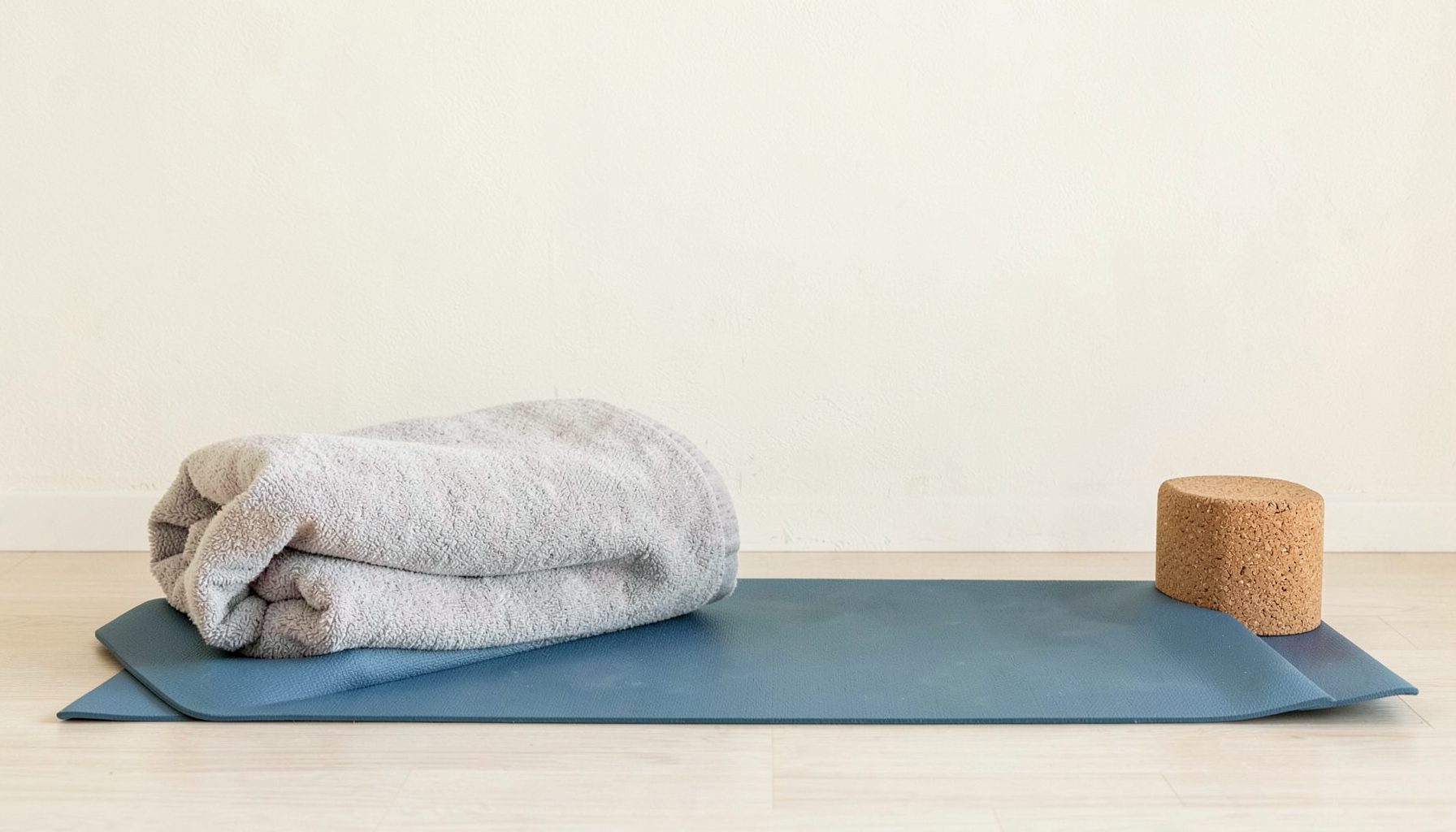
A gentle practice is especially useful for this kind of inquiry because it reduces the pressure to achieve. Support the body with a wall, blanket, chair, or bolster. Choose a smaller range of motion if that allows you to remain attentive. Accessibility does not dilute self-study; it often makes subtle information easier to perceive.
Try pairing each movement with a simple internal question. During Cat-Cow, observe whether the spine moves evenly or whether one area avoids motion. In a supported Warrior II, notice how effort changes when the jaw and shoulders soften. In a resting pose, feel whether stillness brings relief, restlessness, or both.
Connecting Breath, Feeling, And Thought
The breath can reveal the relationship between the nervous system and the mind. It may become rapid when you feel pressured, shallow when you feel guarded, or smooth when you feel supported. Watching these shifts does not mean controlling every breath. It means learning to recognize communication from the body.
Begin with natural breathing before adding a technique. Place one hand on the ribs or abdomen and notice movement without trying to improve it. After several cycles, you might gently lengthen the exhale or pause between movements. If any breath practice creates strain, dizziness, or anxiety, return to ordinary breathing and rest.
Journaling after breathwork can deepen the observation. Record whether your attention became steadier, whether emotions surfaced, or whether the mind resisted the exercise. There is no single correct response. A practice can be useful even when it reveals agitation, fatigue, or the need for a different approach.
This connection between breath and reflection can support emotional literacy. Rather than labeling an experience simply as “stress,” you may notice pressure behind the eyes, warmth in the chest, a clenched belly, and a story about needing to finish everything immediately. These details make compassionate action more possible.
Building A Sustainable Self-Study Rhythm
Self-study becomes more meaningful when it fits into real life. A short, repeatable practice usually offers more continuity than an ambitious routine that quickly becomes another obligation. Consider choosing a consistent cue, such as after brushing your teeth, before opening your laptop, or immediately after a yoga class.
The following rhythm can be adapted to your energy, schedule, and experience:
| Practice element | Suggested time | What to notice | Gentle adjustment |
|---|---|---|---|
| Arriving breath | 2–3 minutes | Breath texture, mood, physical energy | Keep the eyes open or sit supported |
| Mindful movement | 8–15 minutes | Effort, resistance, ease, transitions | Reduce range or use a chair |
| Stillness | 2–5 minutes | Urges, thoughts, sensations | Lie down if sitting feels tiring |
| Journaling | 5–10 minutes | Patterns, needs, recurring stories | Write three words instead of a page |
| Weekly reflection | 10–20 minutes | Changes across several practices | Review without grading yourself |
You can use this sequence as a complete practice or select one element. On a demanding day, three breaths and one sentence may be enough. On a quieter day, a longer movement sequence may offer deeper exploration. Consistency is measured by returning with care, not by maintaining a perfect record.
It can help to review your journal once a week rather than reading every entry immediately. Look for repeated language, changes in energy, or moments when your inner voice became gentler. Avoid turning the review into a scorecard. The purpose is to understand your experience with greater clarity.
Avoiding Self-Study That Becomes Self-Criticism
Reflection can become harsh when it is guided by the belief that every habit must be corrected. Svadhyaya asks for honesty, yet honesty does not require an aggressive inner voice. If your journal repeatedly uses words such as lazy, behind, weak, or failing, pause and consider whether the writing is describing experience or repeating old conditioning.
Try replacing evaluation with observation. “I stopped halfway through practice” is different from “I never follow through.” “I felt anxious in stillness” offers more useful information than “I am bad at meditation.” Specific language keeps the door open for change.
Self-compassion does not mean avoiding responsibility. It means creating conditions in which responsibility can be met with steadiness. You can acknowledge that a pattern is unhelpful while recognizing the need, fear, or protection beneath it. This approach often makes change more sustainable because it reduces the energy spent defending yourself from judgment.
If journaling brings up intense distress, traumatic memories, or emotions that feel difficult to contain, keep the practice brief and grounded. Feel your feet, name objects in the room, or return to a familiar movement. A trusted mental health professional can provide support when reflection reaches beyond what a personal yoga practice can safely hold.
Making The Practice Personal
There is no universal format for self-study. Some people learn through writing, while others understand themselves more clearly through walking, restorative postures, chanting, drawing, or quiet observation. The central quality is intentional attention. Choose methods that help you stay connected to present experience.
You might create a simple weekly theme such as patience, boundaries, rest, or receiving support. Let the theme appear in movement and journaling without forcing a particular conclusion. If the theme is rest, notice how you enter a supported pose, how you react to pauses, and what beliefs arise around doing less.
These recommendations can help you begin without making the practice feel complicated:
- Set a timer for five minutes and write continuously after a short breathing practice.
- Choose three familiar postures and observe the breath throughout each one.
- Keep your journal beside your mat so reflection becomes part of the practice.
- Use supportive props to explore sensation rather than chasing a deeper shape.
- End by naming one need, one appreciation, and one small act of care.
Digital resources can also provide structure when you want guidance without adding pressure. A printable sequence, meditation, or class recording may give your attention a place to settle. If you are gathering materials for your practice, you can visit the practice collection and choose what supports your current needs.
The most important measure is how the practice affects your relationship with yourself. Do you leave with more information, more patience, or a clearer sense of what you need? Even difficult discoveries can be valuable when they are met with steadiness. Self-study is less about reaching a final answer than developing the capacity to listen.
Begin with one movement, one breath, and one honest sentence. Let the journal receive what the body reveals, and let the body be treated with the same kindness you would offer a trusted friend. Return when you can, adapt when necessary, and allow your yoga practice to become a continuing conversation with your inner life.