



The myth of the perfect pose and your body’s unique range
A yoga pose can look effortless in a photograph while feeling entirely different in a living, breathing body. The image may show a dramatic backbend, a perfectly squared hip, or a forehead resting comfortably on the shin. What it cannot show is the person’s anatomy, history, warm-up, emotional state, or the many years of practice behind that shape.
This is why chasing an ideal form can distract from the deeper purpose of yoga. A pose is not a test that reveals whether you are flexible, disciplined, or spiritually advanced. It is an opportunity to notice what is happening in your body, breath, and mind at a particular moment.
Your range of motion is personal and changeable. It is influenced by bone structure, joint shape, muscle tone, connective tissue, previous injuries, stress, sleep, age, and countless other factors. When you respect those influences, yoga becomes a practice of relationship rather than performance.
Why a picture cannot define a pose
Yoga images often present a single visible shape as though it were the final destination. A body folds deeply, reaches a particular angle, or balances in a striking position, and the viewer may assume that this shape represents correct practice. Yet external appearance gives only limited information about what is happening inside the pose.
Two people can look different while practicing with equal care and awareness. One person may have a naturally deep hip rotation, while another may meet a structural limit much sooner. One may be able to place the hands flat in a forward fold because of their proportions, while another may need bent knees and blocks. Neither version is automatically more authentic.
The word “perfect” can also encourage comparison. Instead of feeling the feet, tracking the breath, or observing the quality of effort, you may begin measuring yourself against a teacher, photograph, or previous version of your body. This shifts attention away from embodied awareness and toward judgment.
A useful pose is not the one that appears most impressive. It is the one that allows you to remain present, breathe steadily, and respond intelligently to sensation. Sometimes that means moving toward greater intensity. Often it means choosing less range and more clarity.
Your range is not fixed
Flexibility is frequently treated as a permanent personal quality, but mobility changes from morning to evening and from one season of life to another. Muscles can feel guarded after stress or prolonged sitting. A poor night’s sleep may affect balance and coordination. Cold weather can make movement feel restricted, while gentle warming may create a sense of ease.
Your body also adapts over time. Strength training, injury recovery, pregnancy, illness, hormonal changes, and natural aging can all influence how a pose feels. These changes are not evidence that your practice has failed. They are information about your current circumstances.
It helps to distinguish between a temporary limitation and a structural boundary. A temporary limitation may soften with warmth, breath, and gradual movement. A structural boundary may relate to the shape of your bones or the way your joints are built. Pushing against either without attention can create strain, but especially so when you assume every limit should be overcome.
Rather than asking, “How far should I go?” you might notice, “What range is available today, and how can I explore it without losing steadiness?” This question supports curiosity and respects the body’s changing needs.
Alignment is a conversation, not a rigid formula
Alignment cues are useful when they help you distribute effort, protect vulnerable areas, and understand the intention of a pose. They become less helpful when they are treated as universal instructions that every body must reproduce in exactly the same way.
For example, a cue to keep the hips square in a standing posture may support stability for one person. For another, insisting on perfectly square hips could create unnecessary tension in the pelvis or knee. A slight adjustment may allow a more natural relationship between the feet, hips, spine, and breath.
Functional alignment asks whether the body can perform the intended action with appropriate support. A forward fold might be exploring spinal length, hip flexion, or the experience of yielding toward the ground. The shape can be modified with bent knees, a wider stance, hands on blocks, or a chair without losing the heart of the practice.
| Common assumption | A more supportive perspective |
|---|---|
| There is one correct shape for everyone | The pose can be adapted to different bodies |
| Deeper always means better | Appropriate range matters more than maximum range |
| Discomfort proves progress | Clear, manageable sensation provides better information |
| Flexibility is the main goal | Mobility, strength, breath, and awareness all matter |
| Props make a pose easier in a negative way | Props create support, access, and useful feedback |
| A modification means you are behind | A modification may be the wisest choice today |
A teacher’s role is not to force every student toward the same outline. It is to offer options, explain purpose, and help practitioners develop the discernment to choose well. When alignment becomes responsive, the practice can serve the person rather than asking the person to serve the pose.
Learn the language of sensation
Sensation is one of the clearest ways to understand your personal range, but it requires patience and precision. A broad stretch across a muscle may feel different from pinching in a joint. Warm effort may feel different from sharp pain. The ability to tell these experiences apart is more valuable than the ability to tolerate intensity.
Notice whether your breath becomes restricted, your face tightens, or your body begins bracing. These signs may suggest that the current version of the pose demands more than you can comfortably organise. You can reduce the depth, change the angle, add support, or pause. Adjusting is an active form of practice, not an interruption.
Pain should never be treated as a requirement for progress. If a sensation is sharp, sudden, electric, unstable, or lingering, move out carefully and seek appropriate professional guidance when needed. A yoga teacher can offer general movement suggestions, but persistent or concerning symptoms deserve assessment from a qualified healthcare provider.
Mindfulness creates space between sensation and reaction. Instead of immediately deciding that a feeling is good or bad, observe its location, quality, intensity, and movement. This does not mean ignoring warning signals. It means becoming familiar enough with your body to respond before discomfort becomes injury.
Build a kinder relationship with effort
Self-compassion does not make a yoga practice passive. It changes the reason you apply effort. You may work steadily because movement supports your wellbeing, rather than because you are trying to earn approval from an imagined standard.
A compassionate practice can include challenge, rest, repetition, and uncertainty. You might hold a pose long enough to explore strength, then come out before fatigue disrupts your form. You might repeat a familiar sequence with less intensity and discover details that were previously hidden by ambition.
Try these ways to explore your range safely:
- Begin with several minutes of simple movement before asking for a deeper stretch.
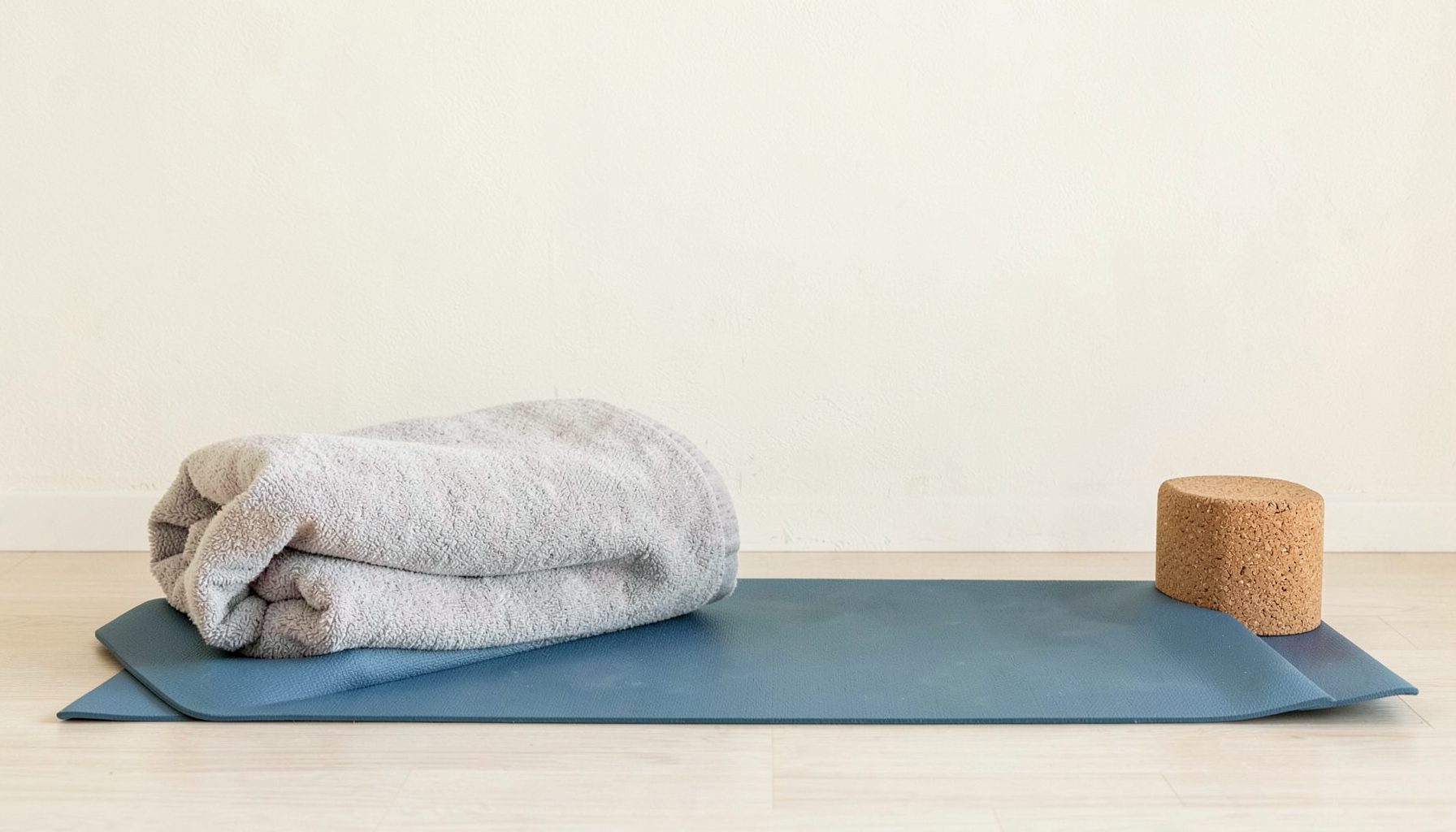
- Use blocks, straps, bolsters, blankets, or a wall to reduce unnecessary strain.
- Keep enough ease in the breath that you can speak or count slowly.
- Compare your current sensations with your own previous experience, not another person’s shape.
- Leave a little space rather than forcing the body toward its edge.
This approach supports sustainable mobility. It also makes the practice more welcoming during periods when your energy, strength, or coordination is different. A gentle variation can be exactly the right response to the body you have today.
Let props and modifications expand possibility
Props are sometimes viewed as signs that a practitioner cannot perform a pose independently. In reality, they can reveal options that are difficult to access without support. A block brings the floor closer. A strap extends reach without rounding or gripping. A bolster allows the nervous system to settle into a restorative position.
Modifications also make yoga more inclusive. A seated version of a standing pose, a chair-supported balance, or a smaller range of motion can preserve the intention of a sequence while accommodating injury, fatigue, disability, pregnancy, or limited mobility. The practice remains meaningful because awareness does not depend on complexity.
If you are developing a home practice, choose resources that explain why a modification may be useful rather than presenting it as a lesser substitute. The reflections and downloadable resources available through Camille Dodson Yoga offer a supportive context for exploring movement, breathwork, mindfulness, and self-compassion at a personal pace.
You can also experiment with changing the environment. Practicing near a wall may make balance less stressful. Using a chair can help you investigate standing strength without worrying about falling. A folded blanket under the knees or hips may transform the quality of a resting pose. Small changes often create more meaningful access than greater determination.
Make curiosity the measure of progress
Progress in yoga may be visible, but it is often quieter than a deeper fold or more advanced balance. You may notice that you recover your breath more quickly, recognise tension earlier, or choose rest without feeling guilty. You may become more willing to adapt instead of abandoning practice when your body does not match an old expectation.
A sustainable practice leaves room for ordinary life. It does not require perfect consistency or a particular level of flexibility. Five mindful minutes can be valuable when they help you reconnect with your body. A longer class can offer exploration when you have the time and energy. Both belong to a complete practice.
Before each pose, consider its purpose and your available resources. During the pose, stay interested in the relationship between effort and ease. Afterward, notice whether you feel clearer, steadier, and more connected. These observations can guide your next choice more reliably than a visual standard.
The perfect pose is a compelling image, but it is not a useful destination. Your unique range is where practice begins: changeable, individual, and worthy of respect. Step onto the mat with permission to modify, pause, breathe, and explore. Let each session become a chance to meet your body as it is, and allow that honest meeting to shape the yoga you carry into daily life.