



The gift of not knowing: yoga as exploration
Yoga is often presented as a path toward clarity, balance, and confidence. Those qualities can be meaningful, yet practice does not always give us immediate answers. Sometimes it offers a sensation, a pause, or a new question. Sometimes the most valuable discovery is realizing that we can remain present without knowing exactly what comes next.
This open-ended quality makes yoga an exploration rather than a performance. Each breath provides information, each movement reveals something different, and each practice invites us to meet the body and mind as they are today. There is no need to force a particular experience or reach a final version of ourselves.
Not knowing can feel uncomfortable in a culture that rewards certainty and measurable progress. Through mindful movement, breathwork, meditation, and self-compassion, yoga gives uncertainty a gentler setting. We can investigate without judgment, listen without rushing, and allow understanding to develop in its own time.
Making space for curiosity
A familiar yoga pose can feel completely different from one day to the next. The shape may look unchanged, but the breath, energy, mood, balance, and inner dialogue have shifted. Instead of treating this variation as inconsistency, we can approach it as useful information. Curiosity begins when we notice what is happening without immediately deciding whether it is good or bad.
Exploration asks a different question from achievement. Rather than wondering whether we are doing a pose correctly, we might wonder what happens when the feet become more grounded, the jaw softens, or the exhale lengthens. These small inquiries bring attention into the present moment. They also make practice more accessible, because there is no single sensation that everyone must find.
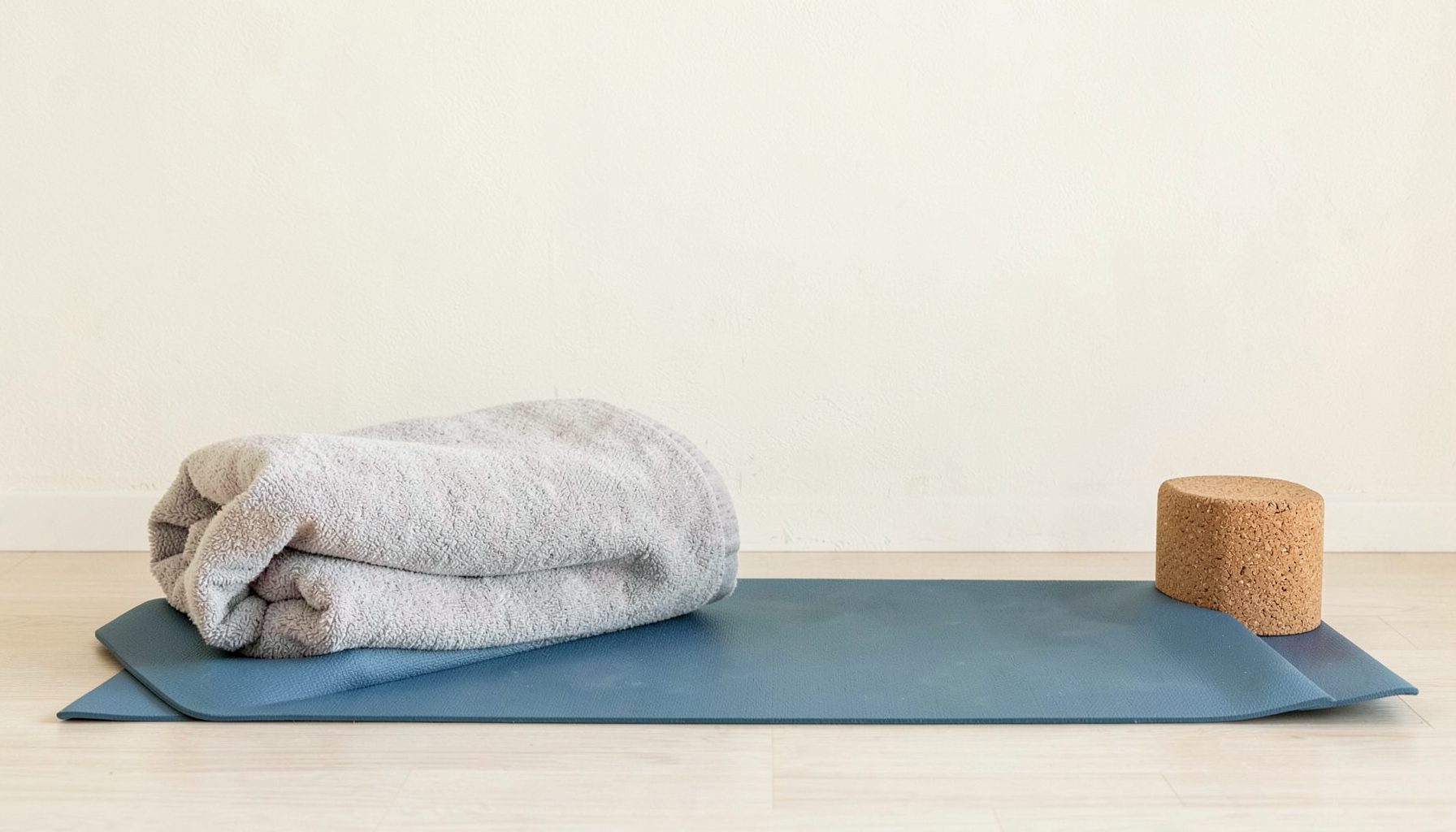
A curious approach does not mean pushing into unfamiliar territory without care. It means creating enough patience to observe. Props, modifications, pauses, and supported variations can all become part of the investigation. The practice remains responsive, allowing the body to communicate rather than demanding that it comply.
When certainty is not the goal
Many people begin yoga hoping it will resolve stress, improve flexibility, or create a dependable sense of calm. These intentions can guide practice, but they do not guarantee a particular outcome each time we step onto the mat. A session may feel peaceful, restless, emotional, energizing, or ordinary. Each experience can still belong.
The willingness to be surprised is a form of mindfulness. We notice expectations as they arise, then loosen our grip on them. This can be especially helpful during transitions, when familiar routines no longer fit and the next direction is unclear. Breath awareness gives us something steady to return to while the larger picture takes shape.
Uncertainty is present in many activities that involve choice and attention. Even a guide to blackjack in Melbourne reflects how people make decisions with incomplete information, responding to changing possibilities rather than controlling every result. Yoga offers a quieter version of that lesson: we can make a thoughtful choice, stay attentive, and release the demand to predict everything.
The point is not to become passive or careless. Not knowing can coexist with discernment. We can respect pain, consider our energy, choose a supportive variation, and still leave room for discovery. A mindful practice teaches us to respond to what is actually present instead of following an outdated assumption about what should be happening.
Listening through the body
The body communicates through sensation, rhythm, temperature, tension, ease, and breath. These signals are not always simple to interpret, especially when we have learned to override them. Yoga creates a structured opportunity to listen again. A slow transition may reveal fatigue, while a steady standing pose may uncover a sense of strength that had gone unnoticed.
Listening is different from searching for perfection. It does not require us to analyze every sensation or turn practice into a problem-solving exercise. We can feel the contact of the feet with the floor, recognize a tight shoulder, and notice the movement of the ribs without needing to explain why everything is happening.
This kind of embodied awareness supports self-compassion. If the body feels different today, we do not have to criticize it for failing to repeat yesterday’s performance. We can adapt the sequence, rest in a constructive position, or spend several minutes breathing. Responding kindly is itself a meaningful form of progress.
The body may also challenge our assumptions about strength and limitation. A gentle practice can be deeply demanding when it asks for patience, restraint, or sustained attention. An exploratory mindset respects subtle changes, recognizing that a smaller range of motion can still contain learning.
| Familiar approach | Exploratory approach |
|---|---|
| Measures success by shape, duration, or intensity | Notices sensation, breath, and quality of attention |
| Seeks a predictable result | Allows the experience to change |
| Treats pauses as interruptions | Uses pauses as part of the practice |
| Compares today’s body with an ideal or previous performance | Responds to the body that is present today |
| Pushes toward certainty | Builds comfort with observation and possibility |
Letting breath lead the way
Breathwork can become a bridge between the known and the unknown. We may begin with an intentional rhythm, such as a smooth inhale and an unhurried exhale, then observe how the nervous system responds. The aim is not to control every breath but to create conditions in which breathing can become more natural.
A longer exhale may invite softness, while a fuller inhale may awaken energy. Yet these effects are not universal or fixed. The same practice can feel different after a demanding day, during a period of grief, or in the middle of a new season of life. This is why breath awareness is an exploration rather than a formula.
When attention wanders, we do not need to treat that as failure. The return to breathing is part of the practice. Each return strengthens our ability to notice distraction without being carried away by it. Over time, this can influence daily life: we may pause before reacting, sense when we are overwhelmed, or create a little more space around a difficult thought.
Breathing also helps us remain with incomplete experiences. A feeling does not need to be named immediately. A decision does not have to be finalized during a quiet moment. With the breath as an anchor, we can acknowledge uncertainty while allowing clarity to emerge gradually.
Building a sustainable personal practice
Exploration becomes more nourishing when it is sustainable. A personal yoga practice does not need to be long, complex, or perfectly consistent. Ten attentive minutes can offer more connection than an hour performed from obligation. The most useful routine is one that can meet real life, including busy mornings, low-energy afternoons, and days when stillness is the wisest choice.
It can help to create a flexible menu rather than a strict schedule. One day might include gentle stretches and a body scan. Another might call for standing poses, rhythmic movement, or a short meditation. This approach preserves consistency while leaving room for changing needs. A practice becomes dependable because it is adaptable, not because it never changes.
Learning more about a teacher’s values and approach can also help practitioners find language that feels supportive. Camille Dodson Yoga shares more about its purpose and offerings on the about page, including a gentle perspective that welcomes mindfulness, movement, breath, and self-kindness. A supportive context can make it easier to explore without feeling judged.
Sustainability also means allowing practice to evolve. The sequence that once felt essential may no longer be useful. A new meditation may open an unexpected perspective. Returning to basics is not moving backward; it can be a way of meeting the present with greater honesty.
Practising curiosity off the mat
The attitude cultivated in yoga can follow us into ordinary moments. We may notice how quickly we label a conversation, predict an outcome, or assume we know what someone else means. Curiosity gives us another option. We can listen for a little longer, ask what information is missing, and allow a response to be more considered.
This does not mean suspending all judgment or ignoring practical knowledge. It means distinguishing between what we know, what we assume, and what remains open. That distinction can reduce unnecessary tension. When a plan changes, we can acknowledge disappointment without deciding that the entire day is ruined.
Mindful exploration is especially valuable during personal transitions. A change in work, relationships, health, or identity may bring a period when old answers no longer provide direction. Yoga cannot remove the uncertainty, but it can help us develop steadiness within it. Movement gives the body a way to process experience, while stillness offers space to hear what has been overlooked.
Small experiments can make this quality tangible. Try taking three conscious breaths before opening a message, walking without listening to anything, or noticing the sensations that appear during a familiar task. These practices are simple, but they interrupt automatic patterns. They remind us that attention can turn toward life with freshness.
Gentle ways to explore your next practice
Exploration works best when it includes clear boundaries and kind attention. The following ideas can help create a practice that feels open without becoming overwhelming:
- Begin with a short check-in: notice energy, mood, breath, and any areas asking for care.
- Choose one quality to investigate, such as steadiness, spaciousness, softness, or balance.
- Use props and modifications freely, treating support as a resource rather than a limitation.
- Leave a few quiet minutes at the end to observe what changed, even if the change is subtle.
- Record one sentence after practice about what you noticed, without judging the experience.
A journal entry does not need to be profound. “My breath felt shallow,” “I wanted to rush,” or “Resting felt supportive” is enough. Over time, these small observations reveal patterns and help develop trust in personal experience.
It is also useful to notice when exploration turns into pressure. If the desire to discover becomes another demand to improve, return to a familiar grounding practice. Feel the floor, soften the gaze, and make the next breath uncomplicated. The gift is not constant novelty; it is the freedom to meet each moment honestly.
A yoga practice rooted in exploration does not promise certainty. It offers something more practical: the capacity to stay connected while answers are forming. With movement, breath, mindfulness, and compassion, we can become more receptive to the body’s wisdom and less threatened by change.
Begin with one unhurried breath and a movement that feels supportive today. Join a gentle class, make space for a quiet home practice, or explore a meditation and printable sequence that invites attention without pressure. Let the next step be small enough to take, open enough to teach you something, and kind enough to sustain.