



The art of savasana: lying still without falling asleep
Savasana can look simple from the outside. You lie on your back, close your eyes, and allow the body to become quiet. Yet this apparently effortless posture asks for a particular kind of attention: soft enough to release effort, steady enough to remain present.
For many practitioners, the first few minutes of stillness reveal how much activity has been happening beneath the surface. The mind reviews conversations, the body searches for comfort, and tiredness arrives with surprising force. Falling asleep is understandable, especially after a demanding day, but conscious rest offers a different experience from ordinary sleep.
The purpose is not to perform perfect relaxation or prevent every thought. Savasana is an invitation to notice what happens when you stop managing each moment. With patience, it can become a practice of mindfulness, nervous system regulation, and self-compassion rather than a test of concentration.
Why stillness can feel so active
Movement gives the mind a clear task. You place a foot, lift an arm, balance, stretch, or coordinate breath with posture. When those instructions end, mental habits that were less obvious during asana may become easier to notice. Planning, remembering, judging, and anticipating can all appear in the quiet.
This does not mean that you are doing savasana badly. Awareness of mental activity is part of the practice. The aim is not to empty the mind by force, but to recognize thoughts without following each one into a story. A simple internal phrase such as “thinking” or “planning” can create enough space to return to the feeling of breathing.
Physical stillness can also bring attention to sensations that movement temporarily covered. You may notice a tight jaw, a restless foot, warmth in the hands, or the weight of the back against the floor. Instead of immediately correcting every sensation, let your awareness meet it with curiosity. Sometimes the body settles when it no longer feels pressured to change.
Set up the conditions for conscious rest
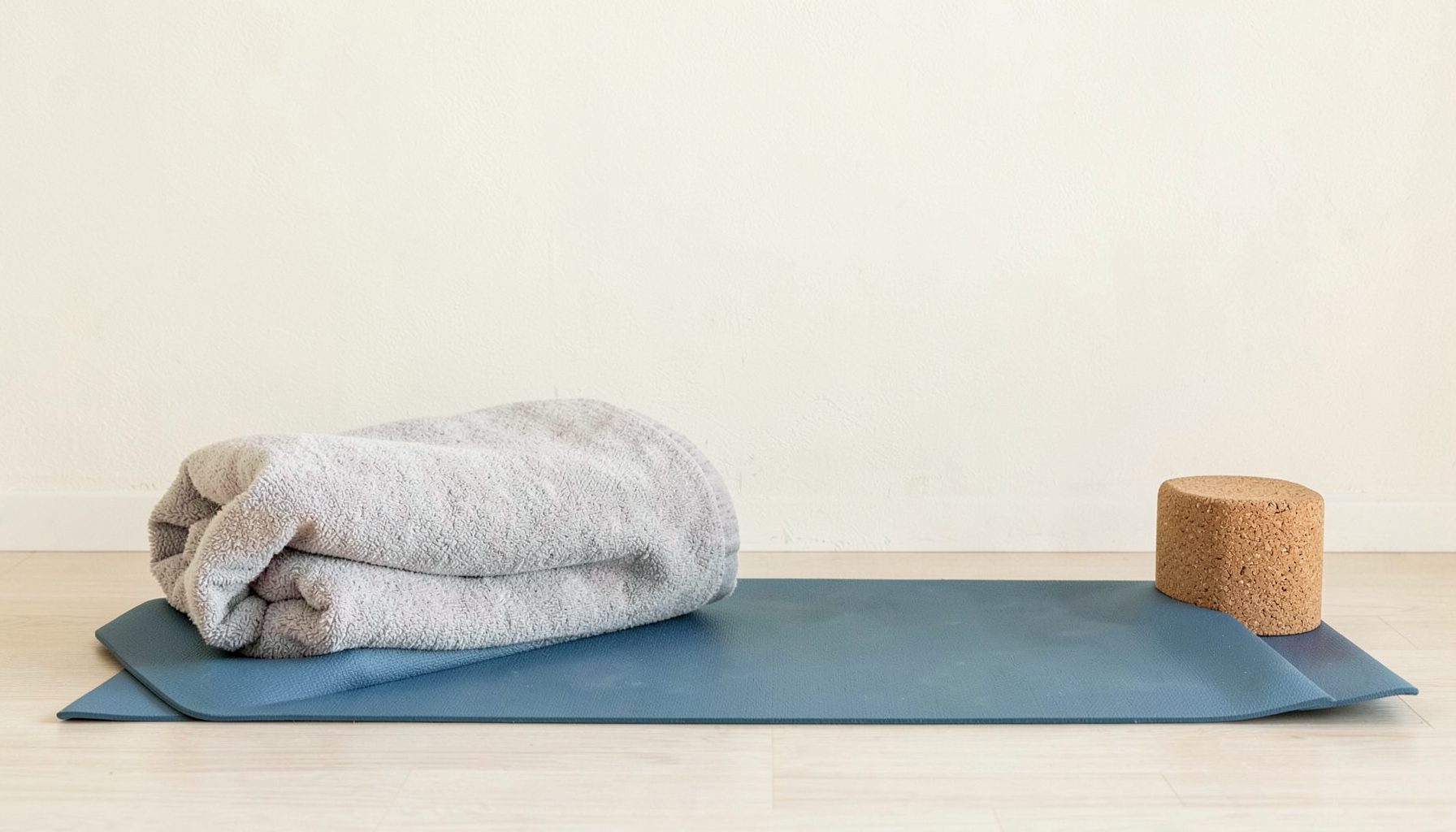
Savasana begins before you lie down. A cool room, a comfortable surface, and enough time can make it easier to remain awake without becoming tense. If your lower back feels strained, place a bolster or folded blanket beneath the knees. Support beneath the head may help if the chin lifts or the neck feels compressed.
Your choice of clothing matters as well. Layers that are too tight, a waistband that presses into the abdomen, or a room that is too cold can keep the nervous system subtly alert. These practical details are not distractions from yoga. They are ways of communicating safety and care to the body.
The transition into stillness deserves attention. Rather than dropping quickly from the final posture onto the mat, pause, feel the floor, and allow the breath to lengthen naturally. You might take two or three slow exhalations, release the tongue from the roof of the mouth, and soften the muscles around the eyes. There is no need to manipulate the breath into a rigid pattern.
Mindful preparation also includes food and energy. Practising immediately after a heavy meal may create discomfort, while practising when severely hungry can make relaxation difficult. This guide to eating mindfully around yoga offers a helpful way to consider nourishment before and after practice without turning food into another set of rules.
Stay awake with a gentle anchor
The balance in savasana is subtle. Too much effort can keep the body braced; too little engagement may lead quickly to sleep. An anchor gives the mind somewhere to rest without demanding constant concentration. The breath is a natural choice, although the points of contact between the body and the floor can work just as well.
Try feeling the movement of the abdomen as you inhale and exhale. You do not need to count breaths or make them deeper. Simply notice the beginning, middle, and end of each breath. When attention drifts, return to one small detail, such as the coolness of the inhale or the softness that follows an exhalation.
If the breath feels distracting, sense the support beneath you. Notice the heels, calves, pelvis, ribs, shoulders, hands, and back of the head. You can imagine the floor receiving your weight without needing to hold yourself up. This kind of body awareness often keeps consciousness present while encouraging the muscles to release.
It is also perfectly acceptable to adjust your position. Staying awake does not require enduring pain, numbness, or persistent discomfort. Move slowly and deliberately, then settle again. The mindful transition is part of savasana; it does not interrupt the practice.
| Experience during savasana | A supportive response |
|---|---|
| Thoughts move quickly | Label the activity gently and return to one breath |
| The body feels restless | Notice the strongest sensation and make one considered adjustment |
| Drowsiness becomes heavy | Open the eyes slightly, deepen awareness of the room, or lengthen the inhale |
| Emotions arise | Allow feeling to be present without needing to explain or solve it |
| Time feels difficult to track | Use a quiet timer so the mind does not keep checking the clock |
| The body cannot lie flat comfortably | Use blankets, a side-lying position, or another supported variation |
Let the mind wander without leaving the practice
A wandering mind is not a failure of mindfulness. It is the mind behaving like a mind. The moment you recognize that attention has moved to a memory or imagined future, awareness is already returning. That moment of recognition is a small success, even if it happens dozens of times.
You can work with thoughts by giving them a light touch. Imagine placing each one on a leaf floating downstream, or picture opening a mental browser tab and choosing not to click it. These images are not meant to suppress thought. They help you observe mental movement without treating every thought as an instruction.
Some days, feelings appear more strongly than thoughts. Sadness, irritation, relief, or vulnerability may surface when the usual distractions become quiet. You do not need to turn savasana into an emotional analysis. Notice the feeling as a changing bodily experience, offer yourself kindness, and seek additional support when something feels overwhelming or persistent.
A useful phrase might be, “This is here, and I can meet it gently.” Self-compassion keeps the practice from becoming another performance. You are not required to be serene. You are learning to stay in relationship with your experience without immediately pushing it away.
Know the difference between rest and sleep
Sleep is a valid need, and sometimes the most caring choice is to let yourself drift off. If you are chronically exhausted, savasana may reveal that your body is asking for recovery rather than more discipline. There is no virtue in forcing wakefulness when you have not had enough rest.
The distinction is useful when you have enough energy to remain conscious but find yourself slipping away from the practice. Sleepiness often feels heavy, hazy, and narrowing. Conscious relaxation has a little more brightness: you can sense the room, feel the breath, and notice changes in the body even while deeply at ease.
If you want to stay present, make a small adjustment rather than trying to overpower drowsiness. Open the eyes a fraction, allow more light in, place the hands on the abdomen, or take a slightly fuller inhale. You might also practise earlier in the day or shorten the final rest until remaining aware feels more accessible.
For some people, lying flat is strongly associated with bedtime. A seated meditation, constructive rest with the knees bent, or a side-lying position can provide a similar quality of pause while reducing the pull toward sleep. The form can change while the intention remains: receive rest with awareness.
Carry the practice beyond the mat
Savasana has value because it changes how you relate to pauses in ordinary life. The practice develops a capacity to stop adding effort for a moment, to notice what is already happening, and to respond with less urgency. Those skills can appear while waiting for a kettle, sitting in traffic, or taking one quiet breath before answering a message.
This is part of practising yoga off the mat: bringing attention, steadiness, and care into familiar moments rather than limiting them to a class. A short pause before a busy task can be a miniature savasana, especially when you feel your feet, release your shoulders, and stop trying to solve everything at once.
The posture also offers a different understanding of productivity. Rest does not have to justify itself by making you more efficient. When you stop measuring every minute by output, the body may begin to trust stillness. From that trust, clarity can emerge naturally, but it does not need to be demanded.
A regular practice can be brief. Five conscious minutes after movement may be more sustainable than twenty minutes that feel like a daily struggle. Consistency grows through kindness and realistic choices. The best duration is one that allows you to return willingly.
Simple ways to deepen your practice
A few practical experiments can help you discover what supports alert relaxation. Try one change at a time so you can notice its effect rather than turning the final rest into a complicated routine.
- Practise savasana at different times of day and observe when your awareness feels naturally clearest.
- Use a bolster under the knees, a blanket beneath the head, or an eye pillow to reduce physical distractions.
- Choose one anchor, such as the breath, contact with the floor, or the soundscape around you.
- If sleepiness arrives, open your eyes slightly or take three more attentive breaths instead of criticising yourself.
- Keep a short, consistent closing ritual so your body begins to recognize stillness as a safe transition.
Afterward, leave the posture gradually. Wiggle the fingers and toes, bend the knees, roll to one side, and pause before sitting up. Notice whether your perception of the room has changed. There is no need to rush immediately into the next activity; the transition is an opportunity to carry some of the quiet with you.
Make room for the pause
The art of lying still with awareness develops over time. Some practices will feel spacious, others distracted, and some will end in sleep. Each one can teach you something about your energy, your habits, and the kind of support you need that day.
Create a small, welcoming space for this form of rest in your own practice. Explore gentle classes, use a guided meditation or printable sequence, and give yourself permission to begin with only a few minutes. Let savasana be less about achieving stillness and more about receiving the moment you are already in.