



A Practical Guide to Fitting Yoga Into a Busy Australian Life
A yoga practice does not need a quiet studio, a full hour, or an impressive sequence. It can be a few mindful breaths before the kettle boils, a stretch beside your desk, or a slow walk that brings your attention back to your surroundings. When time is limited, the most useful practice is usually the one that feels simple enough to repeat.
Busy schedules are familiar across Australia. A Sydney commute, school drop-off in Melbourne, a shift in Brisbane, or a hot afternoon in Perth can make a traditional class difficult to attend. Short, adaptable sessions can support mobility, calm and self-awareness without turning yoga into another task to complete.
Start by changing what counts as practice
Many people imagine yoga as a 60-minute class involving a mat, special clothing and a sequence of recognisable postures. That image can make practice seem unavailable during a crowded day. A more sustainable definition includes movement, breathing, meditation and mindful attention. Five minutes of any of these can be meaningful.
Begin by choosing a minimum practice that feels almost too easy to miss. This might be three minutes of breathing, five gentle standing movements, or one quiet minute with your hands resting on your ribs. The purpose is to create continuity rather than achieve a particular level of flexibility. A small practice repeated regularly can be more supportive than an ambitious session attempted once every few weeks.
It also helps to separate “movement snacks” from a complete class. A movement snack could happen after brushing your teeth, while waiting for a video call, or before getting into the car. Roll your shoulders, circle your wrists, fold forward with bent knees, or rise onto your toes. These small intervals can ease stiffness caused by driving, laptop work or long periods of sitting.
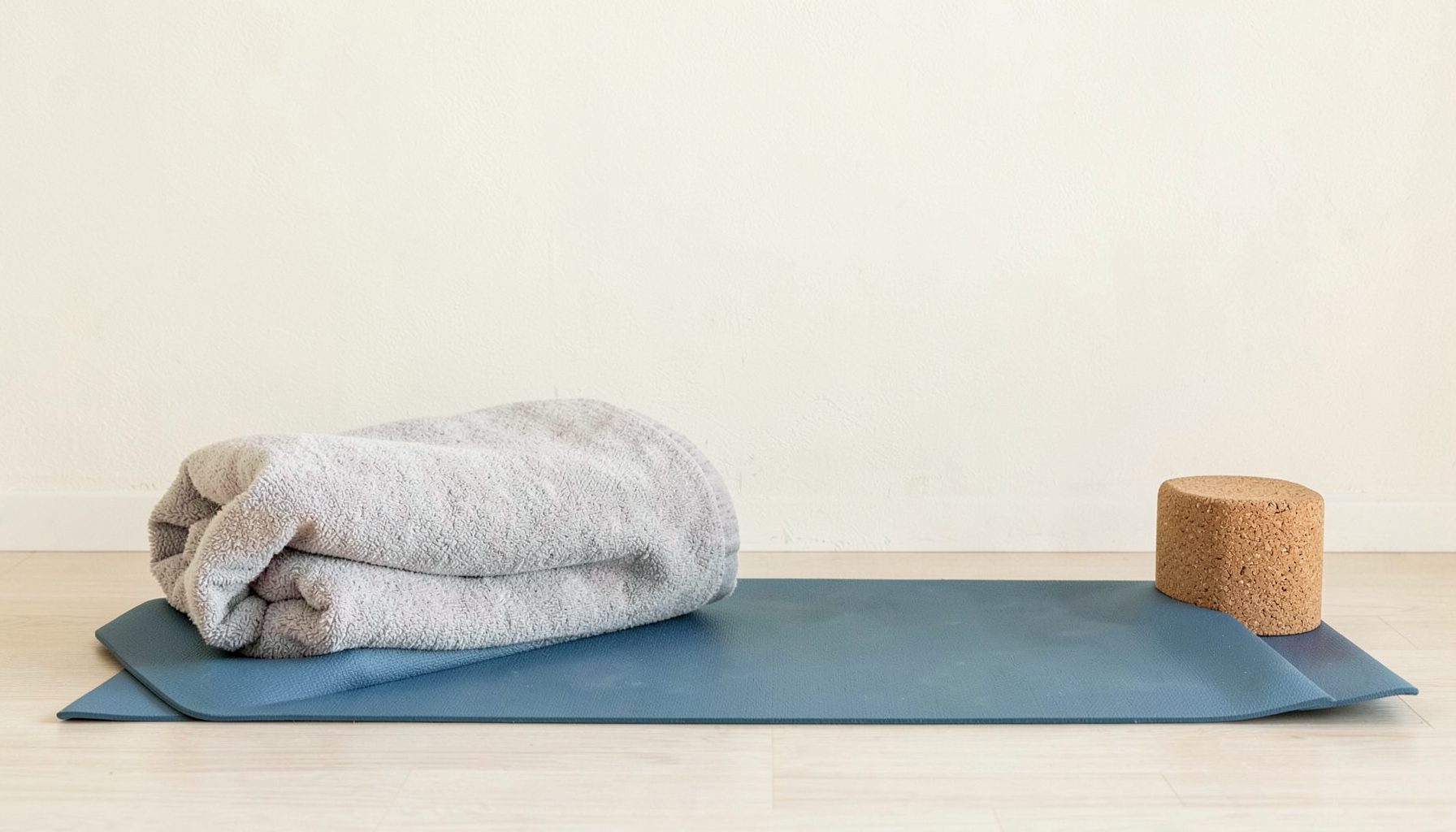
Keep the threshold low by leaving a mat or towel visible, storing comfortable clothes near your work area, and saving a short sequence on your phone. If you practise in a shared home, you do not need to rearrange the room. A clear patch of floor beside the bed is enough.
Build short sessions around your real day
Rather than searching for an empty block of time, connect yoga with routines that already happen. After making coffee, you might take six slow breaths and move through standing side bends. Before lunch, try a seated twist and a few ankle circles. At the end of the workday, pause at the front door for a forward fold and a deliberate exhale before switching into home mode.
This approach is especially helpful for people with irregular schedules. A nurse finishing a late shift, a hospitality worker in Adelaide, or a parent managing school activities may not have the same available hour each day. Use flexible anchors instead of fixed times: after waking, between appointments, after commuting, or before sleep. The sequence can change while the habit remains familiar.
Breathwork is a practical option when movement is not possible. Sit comfortably and notice the natural rhythm of inhaling and exhaling. Gradually make the exhalation a little longer without forcing it. Two minutes of this can offer a transition between tasks. If breath retention or strong breathing techniques create discomfort, return to normal breathing and choose a gentler method.
Mindful walking can turn a necessary trip into a moving meditation. Notice the contact of your feet with the ground, the swing of your arms and three sounds around you. For an outdoor practice that suits a local footpath, park or beach, explore this mindful walking practice. It can be particularly useful when indoor space is limited or the weather makes a conventional studio session less appealing.
Match the practice to your energy
A short yoga session should respond to your current state rather than punish you for having a busy day. If you feel tired, choose supported forward folds, gentle spinal movement, legs resting on a chair, or a brief body scan. If you feel restless, try standing poses, rhythmic arm movements or a brisk mindful walk. If you feel emotionally overloaded, begin with stillness before adding movement.
The following options show how different time limits can serve different needs. They are examples rather than rules, and each posture should remain comfortable and unforced.
| Available time | Suitable focus | Simple sequence | Best time to use it |
|---|---|---|---|
| Two minutes | Settling | Relax the jaw, breathe slowly and feel both feet | Before a meeting or appointment |
| Five minutes | Mobility | Shoulder rolls, side bends, cat-cow and a gentle fold | After desk work or driving |
| Ten minutes | Whole-body movement | Mountain pose, chair pose, low lunge, down dog or tabletop, then rest | During a work break |
| Fifteen minutes | Strength and calm | Warm-up, standing poses, balance, seated stretch and breathing | Before dinner or after work |
| Twenty minutes | Reset | Slow sun-breath movements, hip and spine mobility, relaxation | On a quieter morning or evening |
Avoid measuring success by intensity. A sweaty session is not automatically more valuable than a quiet one. On a hot Australian day, especially in places such as Darwin or inland New South Wales, practising in a cool room and reducing the pace may be the wiser choice. Hydrate, avoid stretching aggressively when overheated, and choose an early morning or evening session if the temperature is high.
Pain is a reason to stop and reassess, not a sign that the posture is working. People with injuries, pregnancy-related concerns or ongoing health conditions may need individual guidance from an appropriately qualified health professional. Online classes and downloadable sequences are useful, but they cannot account for every personal circumstance.
Make short yoga financially and practically sustainable
Time-saving yoga does not have to mean buying another subscription or filling your home with equipment. A towel can replace a mat for some gentle work, a wall can support balance, and a folded blanket can provide comfort. Free community sessions, library spaces and outdoor areas may also offer accessible ways to practise, while local studios often provide casual classes for people who cannot commit to a weekly timetable.
The Australian yoga market includes boutique studios, gym memberships, livestream classes, recorded libraries and independent teachers offering digital resources. Compare these options according to how often you will realistically use them. A lower-cost recording that you return to twice a week may be more valuable than an expensive membership that creates pressure. Look for clear information about class length, teaching style, accessibility and cancellation terms.
Work schedules matter as well. Under Australia’s Fair Work system, meal and rest break arrangements generally depend on the relevant award, enterprise agreement or employment contract; there is no universal right to take a yoga break whenever you choose. A brief stretch during an unpaid break may be practical, but follow workplace policies and do not treat yoga as a substitute for required rest. Work health and safety duties also vary by setting, so employers and workers should use proper ergonomic and safety guidance rather than assuming a few poses solve every physical strain.
Privacy deserves attention when choosing an online service. Read how a provider handles email addresses, payment information and any health details collected through registration. Australian privacy obligations can apply differently depending on the organisation and its activities, so avoid sharing sensitive information unless it is necessary. A teacher who explains accessibility, modifications and data practices clearly is more useful than one who simply promotes advanced poses.
Create a routine that can survive interruptions
A routine built around perfect conditions will often disappear when life becomes unpredictable. Instead, prepare three versions of your practice: a tiny version for hectic days, a moderate version for ordinary days and a longer version for weekends or leave. This removes the need to decide from scratch when you are already tired.
A two-minute version might include standing, breathing and a shoulder release. A 10-minute version could move from the floor to standing and back again. A longer session might include meditation, restorative postures or a full recorded class. The content can change, but keeping the three options familiar makes it easier to continue through travel, deadlines, illness or family responsibilities.
Use a simple tracking method that measures presence rather than performance. Mark a calendar when you practise, write one word about how you felt, or note whether your body needed energy or rest. Do not turn the record into another source of judgement. Missing several days does not erase earlier effort; it simply gives you a clear place to begin again.
Simple ways to protect your practice
- Choose a daily minimum of two to five minutes.
- Keep one short sequence saved offline for busy or low-connectivity days.
- Pair practice with an existing habit such as making tea or finishing work.
- Use a chair, wall or folded blanket to make movements more comfortable.
- Schedule longer classes for days when your energy and calendar allow them.
- Stop when you feel sharp pain, dizziness or unusual strain.
- Review your routine each month and remove steps that create unnecessary friction.
Let consistency be gentle and specific
The most effective busy-day practice is often less visible than a studio class. It may be a few breaths before replying to an email, a conscious release of the shoulders while waiting at a pedestrian crossing, or a short sequence in the living room before the rest of the household wakes. These moments can strengthen the connection between awareness and everyday action.
A sustainable approach also leaves room for enjoyment. Some days you may want a strong flow; other days, mindful walking, restorative movement or meditation may be the right choice. Yoga becomes easier to maintain when it supports your life rather than demanding that your life be rearranged around it.
For the next seven days, place a timer for five minutes after one existing daily habit, practise three gentle movements followed by six unhurried breaths, and record the time you finished.