


Yoga In A Small Apartment Without Feeling Foolish
Practicing yoga at home can sound serene until you unroll your mat beside the sofa, bump your hand against a coffee table, and notice that the only available wall is covered with laundry. In a compact apartment, the physical setting can make movement feel awkward before you have even begun. You may worry that your poses look strange, that the downstairs neighbor can hear every transition, or that you are somehow doing home yoga incorrectly.
Those feelings are common, but they are not evidence that you lack ability or discipline. Yoga does not require a studio, a designer room, or a large uninterrupted floor. It asks for attention, curiosity, and a willingness to meet your body as it is today. A small space can become a useful place for a short, steady practice when you remove the pressure to perform.
The aim is not to make your apartment resemble a retreat center. It is to create enough room for safe movement, quiet breathing, and self-compassion. With a few practical adjustments, you can build an accessible yoga routine that feels private, grounded, and genuinely yours.
Make A Small Practice Area
Start by looking for the smallest clear patch that allows you to lie down and extend your arms without striking furniture. You may have to move a chair, fold back a rug, or slide a coffee table toward the wall. This does not need to be a permanent yoga corner. A temporary setup that takes two minutes to arrange is often more realistic than waiting for an ideal room to appear.
Check the floor for slipping hazards, sharp edges, and objects that could catch your fingers or toes. If your mat cannot fit lengthwise, turn it diagonally or use a folded blanket for seated work. When space is especially limited, practice on the floor beside your bed, in a hallway, or with your mat partly under a dining table. The best home practice area is the one you can use safely and consistently.
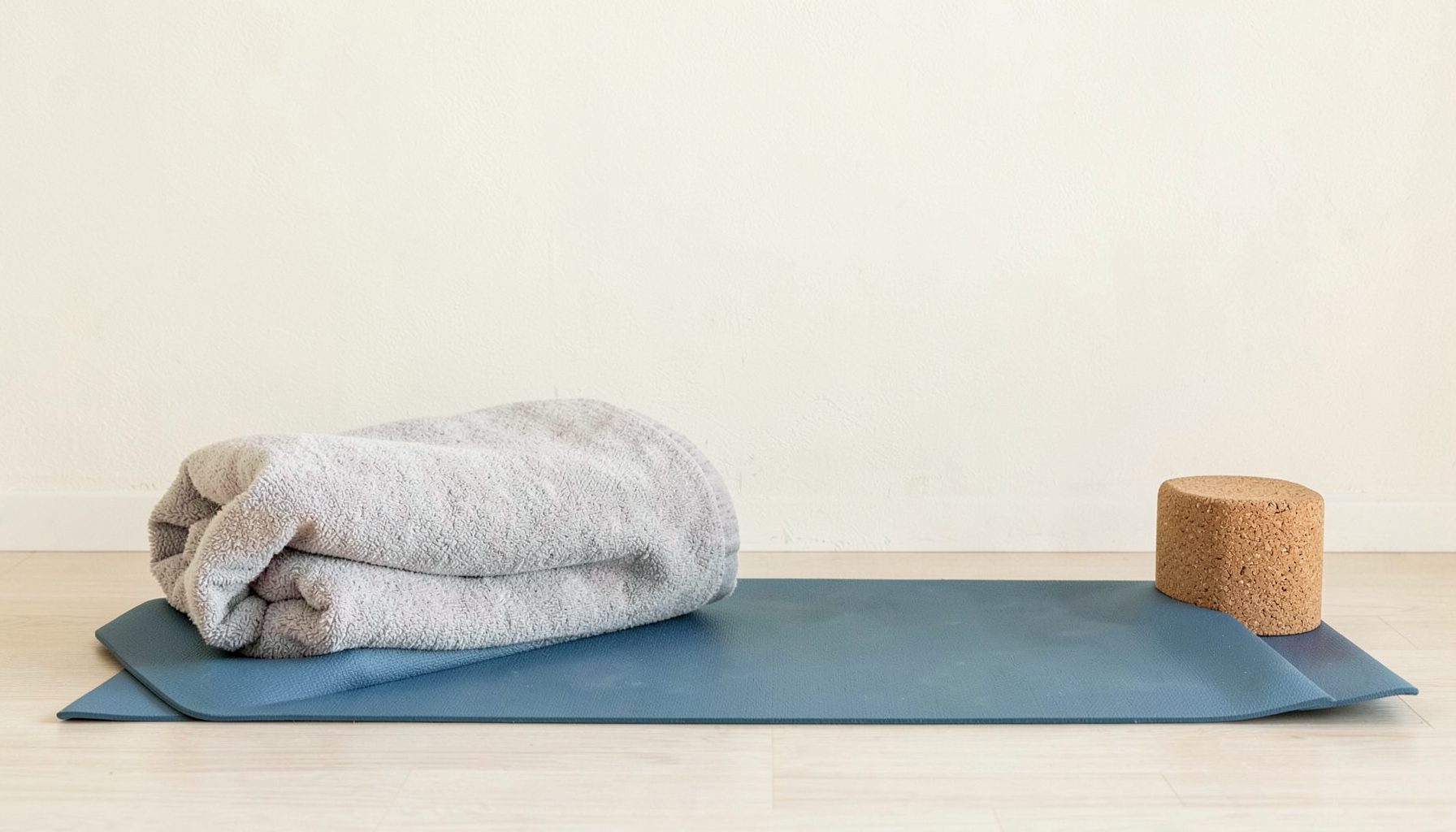
Keep a small basket or shelf nearby with the items you use most: a strap, cushion, blanket, and water bottle. If equipment is difficult to store, ordinary household objects can help. A firm cushion may support the hips, books can raise the hands in a standing fold, and a rolled towel can replace a bolster for gentle reclining poses.
Let Go Of The Performance Feeling
Feeling foolish often comes from imagining an invisible audience. You may picture a teacher correcting every angle or compare your movements with polished videos online. At home, however, there is no requirement to look graceful. A wobble, an unsteady transition, or a pose that feels completely different from the demonstration is part of learning how your own body moves.
Try replacing visual goals with sensory ones. Instead of asking whether your Warrior II looks impressive, notice whether your front knee feels stable, whether your breath is smooth, and whether your shoulders can soften. In a forward fold, focus on the length of your spine rather than touching the floor. These choices shift yoga away from display and toward mindful movement.
It can also help to practice with the lights slightly lower or with a familiar playlist at a quiet volume. Privacy is not about hiding a failure; it is about giving your nervous system fewer signals to monitor. If you laugh when you lose balance or need to pause, let that moment pass without turning it into a judgment about your ability.
Choose Movements That Suit Your Layout
A compact room is well suited to practices that stay close to the floor or use a small amount of forward-and-back movement. Cat-cow, child’s pose, low lunges, seated twists, bridge pose, supine leg stretches, and breathing exercises can create a complete session without requiring large transitions. Slow movement is especially useful when furniture limits your options.
Standing poses still work, but adapt them to the room rather than forcing the room to accommodate them. Keep your stance slightly narrower, turn sideways if the mat is short, and use the wall for balance. Instead of flowing rapidly from one pose to another, pause between shapes and reset your feet. A deliberate transition can be just as valuable as a flowing one.
Avoid placing hands or feet on unstable furniture. A sofa may look convenient for support, but its soft surface can make balance less predictable. If you need assistance, choose a clear wall, a sturdy countertop, or a heavy chair that cannot slide. You can also practice many strengthening and mobility exercises seated or lying down while you build confidence.
| Your Space Or Concern | Useful Adjustment | Practice Benefit |
|---|---|---|
| Narrow floor area | Turn the mat diagonally or practice facing sideways | Makes room for standing poses without forcing a wide stance |
| Low ceiling or hanging lights | Choose kneeling, seated, and floor-based movements | Reduces the risk of knocking into fixtures |
| Slippery flooring | Use a stable mat or folded blanket with a non-slip base | Gives hands and feet more reliable support |
| Noise-sensitive neighbors | Slow transitions and avoid jumping | Keeps movement quiet while maintaining focus |
| Little storage | Keep a strap, cushion, and blanket in one basket | Makes regular practice easier to begin |
| Limited balance support | Practice near a clear, sturdy wall | Adds confidence without depending on unstable furniture |
Build A Quiet And Sustainable Routine
Apartment yoga does not need to be loud, athletic, or long. If jumping and fast transitions disturb neighbors, choose a quiet sequence with controlled steps. Lower your knees gently, place your hands down rather than dropping into them, and use a blanket under the mat if the floor amplifies sound. Breathwork, meditation, and restorative poses can make a meaningful practice even when the building is busy.
The time of day matters too. Early morning may offer privacy, but a small apartment can carry sound in ways you do not expect. If your schedule allows, test a few different periods and notice when you feel least rushed. A ten-minute session after work may be more sustainable than an ambitious hour that is constantly postponed.
Create a simple starting ritual. Move one object, unroll the mat, sit for three breaths, and decide what your body needs. Some days that may be a gentle stretch; other days it may be a few standing poses and a longer rest. A routine becomes sustainable when it leaves room for changing energy, soreness, mood, and available time.
Use Props And Digital Guidance Wisely
Props are tools for comfort and awareness, not proof that you are advanced. A strap can make seated leg stretches more accessible, while a cushion can help you sit with less strain. A wall gives useful feedback in standing poses, and a blanket can support the knees or keep you warm during relaxation. Use what helps you sense the pose clearly, then remove anything that creates clutter or distraction.
When following an online class, choose guidance that acknowledges different bodies and environments. A short video or printable sequence may be easier to use in a narrow room than a fast, elaborate flow. If you want a quiet resource for home practice, explore these downloadable yoga resources, which can support meditation, mindful movement, and simple sequences without requiring a studio setup.
Before pressing play, preview the session and check whether it includes jumps, wide lunges, or equipment you do not have. You can always substitute a slower variation. Pause the video when necessary, repeat a section, or skip a pose that does not suit your body. Digital guidance should serve your practice, not make you hurry to keep up.
Make Self-Compassion Part Of The Practice
A small apartment can bring up more than logistical frustration. You may feel exposed by your own lack of flexibility, annoyed by interruptions, or embarrassed when a pose feels clumsy. These reactions deserve attention without becoming the central story. Notice the thought, name the feeling, and return to a physical sensation such as the soles of your feet or the movement of your breath.
Self-compassion does not mean ignoring discomfort or avoiding challenge. It means distinguishing useful effort from unnecessary strain. A strong pose can feel demanding while still allowing you to breathe and adjust. Pain, numbness, dizziness, or sharp sensations are reasons to come out of the shape and reassess. The goal is a relationship with movement that can continue over time.
Try using language that supports learning. “My balance is changing today” is more accurate and kinder than “I am terrible at yoga.” “This variation is right for me now” leaves room for development without treating the current version of your body as a problem. Such phrases may sound simple, yet they influence whether home practice feels like care or another performance test.
A Simple Apartment-Friendly Sequence
A useful sequence can be short enough to fit into an ordinary evening. Begin seated or lying down and take several unforced breaths. Move through gentle neck and shoulder releases, cat-cow, and child’s pose. Continue with a low lunge on each side, a narrow-footed standing stretch, and a supported squat or chair pose if it feels stable.
Return to the floor for bridge pose, a reclining twist, and a hamstring stretch with a strap or towel. Finish with legs resting on the bed or floor and allow a few minutes of quiet. This sequence includes mobility, light strength, grounding, and rest without requiring a large amount of space or complicated equipment.
You can shorten or expand it according to the day. On a busy morning, practice only the breathing, cat-cow, and low lunges. On a quieter weekend, repeat the standing poses or add a longer meditation. Consistency comes from making the practice flexible enough to survive real life.
Small Changes That Make Practice Easier
- Clear the floor before you begin so you are not negotiating with clutter during a pose.
- Keep your movements slow and quiet when sound travels easily through the building.
- Use a wall, sturdy chair, or folded blanket for support rather than forcing balance.
- Choose a practice length that feels repeatable, even if it is only ten minutes.
- End with rest so your session feels complete rather than abruptly interrupted.
The room does not determine the value of your yoga. A narrow strip of floor can hold a thoughtful practice when you approach it with patience, practical awareness, and respect for your body’s signals. You do not need to look polished, remember every pose, or create a perfect atmosphere. You only need enough space to breathe and make one considerate movement at a time.
Set aside a small patch of floor this week, gather one supportive prop, and begin with a few quiet breaths. Let your apartment become a place where practice is ordinary rather than performative—an environment where you can move, pause, and return to yourself without needing to look foolish or impressive.