


How to Incorporate Yoga into Your Lunch Break
A lunch break can be more than a pause between meetings. In Sydney, Melbourne, Brisbane, Perth and Adelaide, office workers often have only a short window to eat, move and return to a screen. Incorporating yoga into that window does not require a studio or a change of clothes; it begins with a few minutes of attention to the body and breath.
The most useful midday practice is the one that fits the day you are actually having. Some breaks offer forty-five minutes, while others are squeezed between a sandwich and a call. A short sequence of seated stretches, gentle spinal movement, shoulder opening and slow breathing can still create a meaningful reset when the rest of the day is busy.
A gentle approach keeps the practice accessible and sustainable. There is no need to force a pretzel pose, hold your breath or follow an ideal schedule. Choose movements that feel steady rather than impressive, notice what your body needs, and let the lunch break restore enough energy for the afternoon.
Start With the Time You Actually Have
Begin by timing the gap between work commitments rather than borrowing an imaginary hour from the day. A fifteen-minute practice might contain five minutes of breathing, six minutes of seated mobility and two minutes of stillness. If you have half an hour, add a supported fold, a gentle hip stretch and a short rest. Even five mindful minutes can interrupt the mental momentum of a screen-heavy morning.
Choose one clear purpose for the break. It might be to release your shoulders, move your hips and spine, or arrive at the next meeting with more attention. One purpose makes a short session easier to follow and keeps you from trying to address every tired area at once. A simple plan also lets you stop without feeling that the practice was incomplete.
Protect the edges of the break with a small routine. Put your phone on silent, fill a water bottle and set a timer for five minutes before you start. Allow a moment to transition from eating or working, and another few minutes to return slowly. If colleagues share the break, mention that you are using its final minutes for quiet movement.
Choose a Calm and Practical Space
You do not need a dedicated yoga room to practise. A clear patch of floor, the side of a car, a sturdy chair or a quiet corner of a communal area can be enough for a seated practice. Check that the surface is stable, that nobody will need to walk through you and that you have enough room for your hands and knees if you use them.
At work, an empty meeting room may be useful during a known gap, while a small office alcove can serve for breathing and upper-body stretches. Avoid noisy walkways and unstable chairs. Outdoors, choose a sheltered spot away from paths if you would rather keep your gaze soft than monitor passing pedestrians.
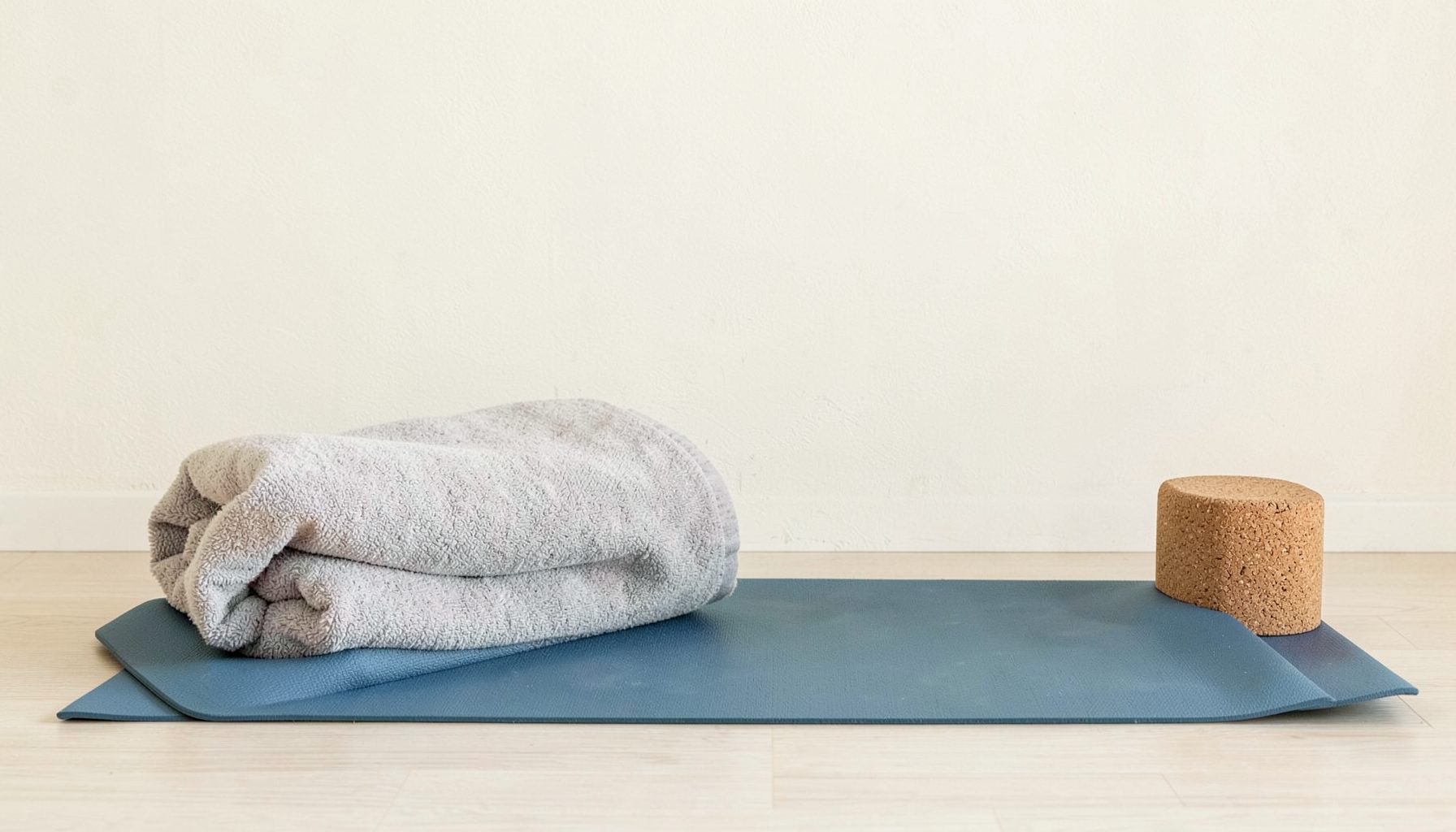
At home, keep the setup deliberately simple: a mat or carpet, a folded towel, a cushion and a wall can replace most studio props. If you are building a small practice area, a guide to practical yoga props can help you choose useful items rather than decorative ones. A strap can extend your reach, and a firm cushion can raise your hips during a forward fold.
Build a Gentle Midday Sequence
Start with arrival instead of jumping straight into the hardest shape. Sit with both feet supported, notice the contact of your body with the chair or floor, and take five unhurried breaths. From there, move through a few rounds of cat and cow, either on hands and knees or seated with your hands on your thighs. These simple actions wake up the spine without requiring a flexible body or a fast pace.
A practical half-hour sequence can follow a steady arc. Spend three minutes breathing, four minutes on spinal flexion and extension, five minutes in seated twists and side bends, five minutes in a supported forward fold, and six minutes on gentle lunges or hip-flexor stretches. Finish with chest and shoulder opening, then allow two or three minutes to lie down, sit comfortably or rest against a wall.
Keep the intensity conversational. Bend only as far as you can breathe comfortably, soften the knees, and use a cushion beneath your pelvis when a forward fold feels intense. If your knees, wrists or lower back object, choose seated alternatives or support your hands on blocks, towels or chair arms. Rest is part of a useful midday sequence; it is not wasted time once the body has changed position.
Let Breath Reset the Nervous System
Slow breathing gives the practice a clear centre. Try inhaling for a count of four and exhaling for six, without straining or holding your breath. The longer exhale often helps the physical sense of urgency soften, which can be useful before a demanding conversation or a long block of computer work. Stop counting if it makes you tense and return to a comfortable rhythm.
Pair the breath with plain attention. Notice the temperature of the air, the sound of the room and the feeling of your feet on the floor. This sensory check brings awareness away from the task that preceded lunch and into the present moment. It also makes the practice easier when you are in a borrowed office, a noisy café or an unsettled home.
There is room for self-compassion in the breathing itself. A sighing exhale can be useful after a rushed morning, while longer exhales may settle a visibly busy body. If breathing exercises intensify anxiety or dizziness, breathe normally and focus on external sights or sounds instead. The aim is steadiness, and a brief practice can end when calm has returned.
Fit the Practice Into Australian Workdays
Australian office lunches often sit between morning and afternoon meetings, so keeping the session brief matters. Many people bring a packed lunch, while others buy a sandwich or café meal nearby. If you plan to move after eating, choose something light and give your body a few minutes to settle. You can also practise first and eat afterwards, especially before a heavier café lunch.
The seasons shape the setting as much as the schedule. During the Australian summer, midday heat can make an outdoor mat uncomfortable while indoor air-conditioning makes a spare room practical. In winter, a sunny courtyard or sheltered park may be inviting, although Sydney’s rain, Melbourne’s changeable weather and Brisbane’s humidity call for a reliable indoor backup. Keeping both options in mind prevents weather from deciding whether you practise at all.
Green space can turn the break into a gentle walk as well as a yoga session. Sydney’s Botanic Garden, Melbourne’s riverside parks, Brisbane’s river paths, Perth’s foreshore and Adelaide’s parklands offer room to pause near many central workplaces. Check opening hours and local council guidance before travelling farther, and bring water in warmer months. Even ten minutes of walking can complement the stretches and make a screen-free lunch feel more spacious.
Hybrid and remote work adds another local rhythm. Some days you can step away from a kitchen table and use a nearby living room; other days you are working from a shared office with a background of calls. A seated version is useful in both settings, and headphones may make five minutes of breathing feel more private. The flexibility to change location is part of making the habit durable.
Adapt for Desk Work and Daily Life
Desk work tends to keep the head, shoulders, wrists and hips in familiar positions. A midday practice can counter that by opening the front of your chest, rotating the upper spine and moving the hips gently. Keep the range modest, especially if you have been sitting for hours, and notice the difference between useful sensation and pain. Your body should feel more available at the end, not depleted.
Your work outfit does not have to restrict you. Seated cat and cow, shoulder rolls and standing side bends can be done in regular clothes, while a forward fold works well over long trousers. At home, use a towel if the floor feels cold, and choose a room where interruptions are least likely. If colleagues are nearby, a brief walk can become the first part of your reset before a short seated practice.
Match the practice to your energy and appetite. A busy morning may call for slow movement and longer exhales, while a restless afternoon might benefit from walking and joint circles. Strong coffee on an empty stomach, a heavy meal or an imminent deadline can all change how you feel. Adjusting the session is more useful than forcing a standard sequence that does not suit the day.
Make the Habit Easy to Keep
Consistency grows from making the practice easy to locate and easy to stop. Keep a mat beside a desk, a chair ready in a spare room or a five-minute routine saved on your phone. Use a calendar reminder linked to lunch, and begin with the version you can perform on a difficult day. Repeating a modest practice builds trust in your schedule more effectively than an ambitious routine that is regularly abandoned.
Australia’s market for studio classes, retreat experiences and digital yoga resources gives practitioners several ways to learn. For a structured starting point, the Camille Dodson Yoga website brings classes, retreats, blog reflections and downloadable meditations and printable sequences together. A planned session can give a short break direction, while downloadable material offers a way to prepare in advance and practise without travelling across town.
The most lasting rhythm is one that leaves you feeling more spacious. On some days that may mean twenty-five minutes of floor-based yoga; on others, it may be two minutes of steady breathing beside the sink. Let each version count, and let the practice reflect the pressures and preferences of your own working life. The habit worth remembering is a lunch break that returns you to your body with kindness and to your afternoon with greater attention.