




How to create a calm morning yoga ritual in five minutes
A morning practice does not need a dedicated studio, a long playlist, or an hour of uninterrupted time. Five thoughtful minutes can create a small pause between sleep and the demands of the day, helping you notice your body, steady your breathing, and choose how you want to move forward.
The purpose is not to perform an impressive sequence. A calm morning yoga ritual is a simple, repeatable invitation to arrive in the present moment. You might stretch beside your bed, sit on a folded blanket, or move gently on the floor while the kettle warms.
This approach reflects the spirit of Camille Dodson Yoga, where mindfulness, self-compassion, breathwork, and accessible movement support a sustainable personal practice. With a few deliberate choices, your five minutes can feel spacious rather than rushed.
Why five minutes can be enough
A short practice works because consistency often matters more than duration. When a routine takes only five minutes, there are fewer barriers to beginning. You do not need to negotiate with your schedule, change into specialist clothing, or decide which full class to follow. You simply make room for a brief connection with yourself.
Those minutes can also influence the quality of the hours that follow. Slow breathing may soften the transition out of sleep, while gentle movement can reduce stiffness from lying in one position. A few moments of awareness may help you respond to messages, work, and household tasks with slightly more steadiness.
Keep the intention modest. You are not trying to solve every physical discomfort or achieve a particular pose before breakfast. You are creating a reliable doorway into the day. Some mornings that doorway may include standing stretches; on others, it may be mostly breathing and quiet attention.
Prepare your space and attention
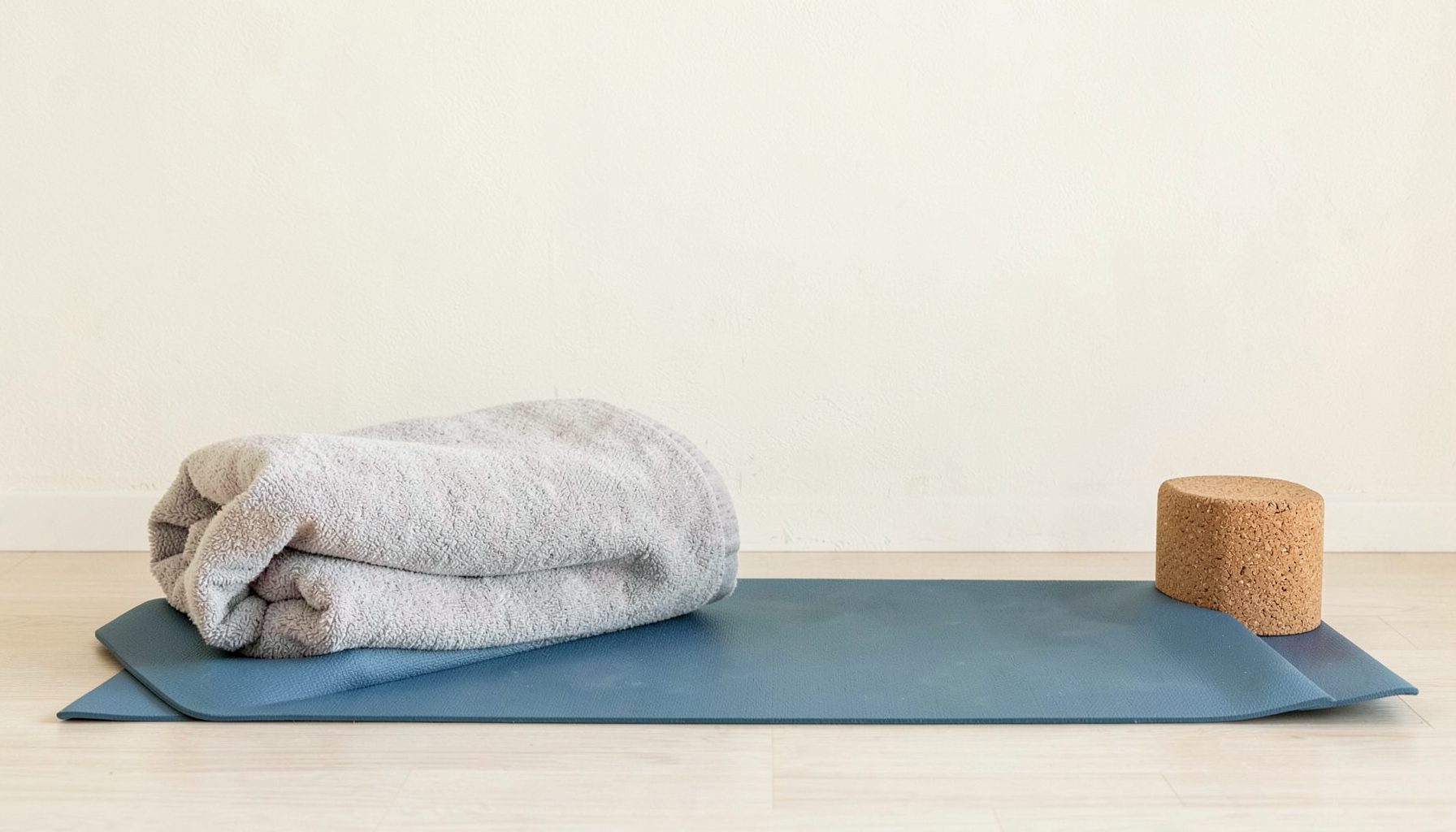
Make the ritual easy to begin by choosing one location in advance. A bedside area, a corner of the living room, or a clear patch of carpet can work well. If you use a mat, leave it visible rather than storing it somewhere that adds extra steps. A cushion, folded towel, or blanket can provide enough support for seated movement.
Avoid turning preparation into a project. Dim light, silence notifications, and keep the first few minutes free from news or social media if possible. You may enjoy a candle, a warm drink, or soft music, but none of these are essential. The central feature is a space that encourages you to slow down.
Before moving, notice your starting point. Are you tired, restless, sore, or already mentally busy? Let that information guide the intensity of your practice. A calm ritual begins with listening rather than forcing the body into a predetermined shape.
Build the sequence around breath
A useful five-minute sequence has four qualities: it begins gently, includes simple whole-body movement, gives attention to the breath, and ends with a moment of stillness. You can move from lying down to sitting or standing, depending on what feels natural. The sequence should leave you feeling more present, not depleted.
Start with three slow breaths. Let the inhale arrive without strain and allow the exhale to lengthen slightly. Then add movements that create space through the spine and shoulders, such as reaching overhead, circling the arms, or moving between a rounded and lengthened back. Keep your jaw relaxed and your shoulders away from your ears.
For shoulder-focused ideas, you can explore this guide to scapular engagement, which offers useful awareness around shoulder blade movement and release. The goal is not to pull the shoulders into a rigid “correct” position. Instead, notice how the shoulder blades glide as the arms lift, lower, widen, and rest.
Finish with one grounding gesture. Place a hand over the heart or abdomen, feel both feet on the floor, or pause in a comfortable seated position. Take one final unhurried breath and recognize that the practice is complete.
A simple five-minute map
The timing below is a framework rather than a rule. You can stay longer with any section that feels supportive and shorten anything that does not suit your body. Moving slowly is often more beneficial than trying to fit in many poses.
| Time | Focus | Suggested movement | Quality to encourage |
|---|---|---|---|
| 0:00–1:00 | Arrive | Sit or stand comfortably and take three to five slow breaths | Attention and ease |
| 1:00–2:00 | Wake the spine | Gentle side bends, seated twists, or cat-cow movements | Fluidity without force |
| 2:00–3:00 | Mobilize the shoulders | Arm circles, cactus arms, or reaching overhead | Spaciousness across the chest |
| 3:00–4:00 | Connect breath and movement | Slow forward fold, half lift, or supported standing stretch | Steady rhythm |
| 4:00–5:00 | Settle | Stand quietly or sit with one hand on the body | Calm and intention |
If you are practicing beside your bed, you might begin with ankle circles, wrist movements, and a gentle stretch through the arms before standing. If you already feel alert, try a few rounds of a slow standing flow. There is no requirement to use every movement listed. Choose the option that matches your energy.
Breathing remains the thread that joins the sequence together. Let movement follow the breath rather than rushing ahead of it. For example, inhale as the arms rise and exhale as they lower. If coordinating breath and movement creates tension, return to natural breathing and simplify.
Adapt the ritual for your body
Morning stiffness is common, especially in the hips, back, neck, and shoulders. It is a reason to move with more patience, not a reason to push harder. Reduce the range of motion, bend the knees, use a wall for support, or practice from a chair. A smaller movement can offer meaningful awareness.
If a forward fold feels uncomfortable, keep the spine long and place your hands on your thighs or a stable surface. If kneeling does not suit your knees, choose standing or seated alternatives. When the wrists are sensitive, make fists, use forearms, or skip weight-bearing positions. Accessible yoga is built through adaptation.
Pain that feels sharp, intense, or unfamiliar is a signal to stop and reassess. Gentle stretching may create mild sensation, but it should not require bracing, holding the breath, or overriding clear discomfort. When you are recovering from an injury, living with a health condition, or pregnant, seek appropriate professional guidance for your practice.
Self-compassion is part of the physical technique. Instead of judging how flexible or energetic you feel, ask what kind of movement would offer support today. Some mornings, that may be a few standing reaches. Other mornings, rest and breathing may be the wisest practice.
Make the habit easy to keep
A ritual becomes sustainable when it fits your real life. Attach it to an existing action, such as brushing your teeth, starting the coffee maker, or opening the curtains. The familiar cue can remind you to pause before the day becomes crowded. If five minutes are unavailable, use one minute rather than abandoning the practice completely.
Prepare a small menu of options so that you do not need to make decisions while sleepy. One version can be energizing, one can be soothing, and one can be suitable for low-energy days. This creates flexibility without losing the dependable shape of the habit.
Use the following principles to keep the ritual welcoming:
- Choose a minimum version that takes one minute and can be practiced anywhere.
- Keep props simple, such as a wall, cushion, folded blanket, or chair.
- Let your breath set the pace instead of using intensity as a measure of success.
- Repeat a familiar sequence for several days before changing it.
- End with a clear finishing moment so the practice feels complete.
You may also record a short reflection after moving: one word for your energy, one sensation you noticed, or one quality you want to carry into the day. This turns the ritual into a gentle mindfulness practice rather than another task to complete.
Carry the calm into the day
The final breath does not have to mark a sharp return to rushing. Take a few seconds to notice the room, the support beneath you, and the steadiness you have cultivated. Then move into your next activity with the same unhurried attention, even if only for the first few moments.
A five-minute morning yoga ritual can change over time. You may discover that certain movements help your shoulders, that longer exhales settle your thoughts, or that stillness is more valuable than stretching on busy days. Let those observations shape the practice. Its success is measured by how well it supports your life, not by how closely it follows a fixed sequence.
Set out your mat or cushion tonight, choose tomorrow’s starting movement, and give yourself five quiet minutes when morning arrives. Return to the ritual often enough for it to become familiar, gentle, and genuinely yours.