




How To Build A Morning Practice When You Are Not A Morning Person
A morning yoga practice does not have to begin at sunrise, last an hour, or involve feeling cheerful before your first cup of tea. For many people, waking slowly is part of their natural rhythm. The aim is not to turn yourself into someone who leaps out of bed at 5 am, but to create a gentle transition from sleep into the day.
A sustainable routine can be as simple as a few mindful movements, several steady breaths, or a short meditation beside the bed. With the right amount of preparation, your practice can support energy, focus and self-compassion without becoming another task to fail at. The most useful routine is one that fits your body, your schedule and the reality of your mornings.
Start With Wakefulness, Not Willpower
If mornings feel heavy, forcing yourself into an ambitious routine can make yoga feel like punishment. Sleep inertia, early work starts, medication, parenting and natural chronotypes all affect how alert you feel after waking. A slow start is not a character flaw. It is information about the kind of practice you need.
Begin by lowering the threshold. You might sit on the edge of the bed for three breaths, roll your shoulders, or stretch your arms overhead before standing. These small actions create a bridge between rest and movement. Once you are upright, you can decide whether your body wants more.
It also helps to separate consistency from duration. Practising for six minutes on weekdays may support you more effectively than planning a demanding forty-minute session that happens once a fortnight. Your morning routine should be easy enough to repeat when you are tired, busy or less motivated.
Make The First Ten Minutes Easier
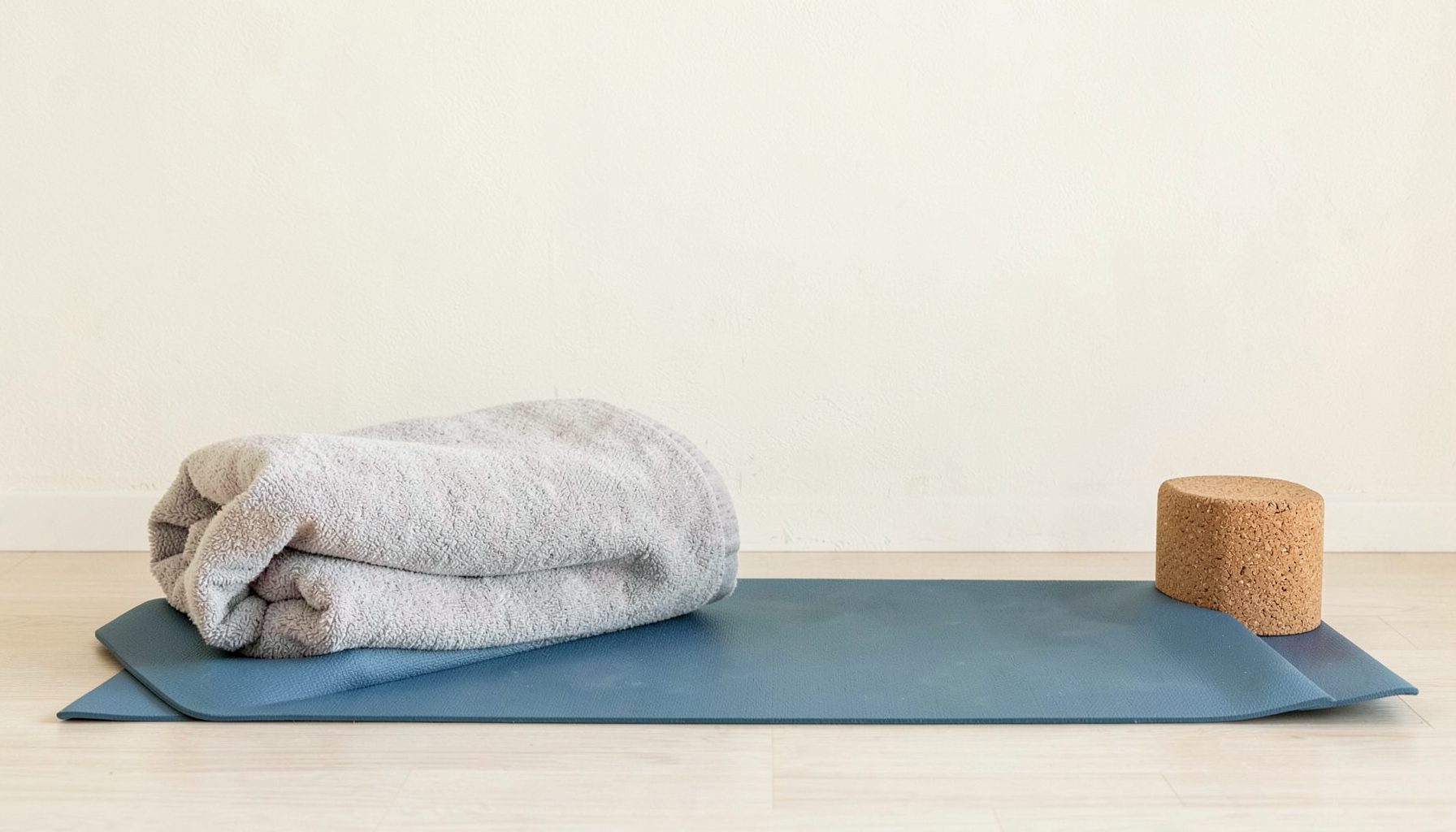
Morning habits are shaped before you wake. Put your mat somewhere visible, keep a cardigan nearby for cool mornings, and place a glass or bottle of water where you can reach it. If you use a meditation recording, download it in advance rather than relying on a slow internet connection or a last-minute search.
Avoid creating too many decisions. Choose a small menu of options: mobility for stiff days, breathwork for scattered days, and a longer sequence when you have more time. The decision can then be based on how you feel rather than on whether you are “good” at keeping a routine.
Your phone may be the alarm, but it does not need to become the first object that receives your attention. If possible, use a basic alarm or place your phone across the room with notifications muted. A few minutes without news, messages or social media can protect the quiet quality of your practice.
Choose A Practice That Meets Your Body
A morning session can include several different elements. Gentle joint circles and spinal movements may help you feel less stiff after sleep. Standing postures can create a sense of steadiness and warmth. Slow forward folds, supported child’s pose or legs-up-the-wall may suit mornings when you feel depleted rather than energised.
If you wake with a busy mind, begin with breath awareness rather than vigorous movement. Try inhaling naturally and making the exhale slightly longer, without straining or holding the breath. Five rounds can be enough to settle your attention. If breath retention makes you dizzy or uncomfortable, return to ordinary breathing.
There is no requirement to perform advanced poses before breakfast. A sustainable yoga practice might involve cat-cow, low lunges, a supported twist and a few moments of stillness. On some days, a seated meditation will be more appropriate than a full sequence. Listening closely is a central part of the practice.
Match The Practice To Your Australian Morning
Australian mornings vary considerably. A humid Brisbane start may call for calm floor-based movement, while a cold Melbourne winter morning may make a warm, flowing sequence more appealing. In Sydney, an early commute from the inner west or the Northern Beaches can leave little room for a long session. Your routine needs to work within those conditions rather than imitate someone else’s lifestyle.
Daylight saving can also shift your experience of time across New South Wales, Victoria, Tasmania, South Australia and the ACT, while Queensland, Western Australia and the Northern Territory follow different arrangements. A sunrise routine will not feel the same in Hobart as it does in Darwin. Use the clock, temperature and available light as practical guides.
| Morning situation | Helpful practice | Suggested length |
|---|---|---|
| You wake stiff and cold | Bed-based stretches, cat-cow and slow lunges | 5–10 minutes |
| The weather is hot or humid | Seated breathing, gentle twists and a short meditation | 5–12 minutes |
| You have an early Sydney or Melbourne commute | Standing mobility and three calming breaths | 3–7 minutes |
| You work shifts or irregular hours | Practice after waking, whenever that occurs | 5–20 minutes |
| You feel rested on a quiet weekend | A full mindful sequence followed by relaxation | 20–40 minutes |
Outdoor practice can be lovely, but it does not need to happen on a beach at dawn to count. A shaded veranda, a quiet park in Adelaide or a patch of floor near an open window can provide enough space. In summer, avoid treating heat and bright sun as proof of commitment; choose an indoor or cooler time when necessary.
Build A Rhythm That Can Survive Real Life
A reliable routine has a minimum version and an extended version. The minimum might be two minutes of breathing and three movements. The extended version might include sun salutations, standing poses, hip openers and a short meditation. Both belong to the same practice, so a busy day does not erase your progress.
Attach the routine to something that already happens. Practise after brushing your teeth, before putting the kettle on, or once school drop-off is complete. Some people will find that “morning” means 6:30 am; for a nurse, hospitality worker or FIFO employee, it may mean the first hour after waking in the afternoon. The body responds to regular cues more readily than to an idealised schedule.
Track how you feel rather than collecting perfect streaks. You could note your energy, mood and physical comfort in three words. Over a few weeks, patterns may appear: a brisker practice works well before a desk day, while restorative movement is better after poor sleep. This turns routine-building into self-study rather than self-judgement.
Use Breath And Attention To Become Present
The value of a morning practice is not limited to flexibility. It can help you notice the quality of your attention before the day begins making demands. Start by feeling your feet on the floor, the support beneath your sitting bones, or the movement of your ribs. These simple points of contact bring awareness out of planning and into the body.
A short grounding practice might include five slow breaths, a scan from the jaw to the shoulders, and one intention such as “move with patience” or “leave space between tasks”. The intention is not a promise to remain calm all day. It is a reminder of how you want to meet whatever appears.
Meditation can be especially useful for people who dislike energetic mornings. Sit comfortably, set a timer for three to ten minutes, and notice sounds, sensations and thoughts without needing to solve them. When the mind wanders, gently return to the breath. That return is the practice, not a sign that you have done it incorrectly.
For guidance that feels spacious rather than demanding, you can explore the classes, reflections and gentle yoga resources available through Camille Dodson Yoga. A guided recording can remove the need to plan a sequence when your concentration is still coming online.
Keep Your Practice Kind And Adaptable
Self-compassion is practical when you are building a habit. If you miss several mornings, resume with the smallest version instead of attempting to make up for lost time. If your wrists, knees, lower back or shoulders are uncomfortable, modify the movement or choose a restorative option. Pain is a reason to pause and seek appropriate professional advice, not something to push through.
These habits can support a morning practice that stays realistic:
- Set a two-minute minimum for tired or time-poor days.
- Prepare your mat, clothes and water the night before.
- Keep three options available: energising, steady and restorative.
- Practise after waking, even if your waking time changes.
- Leave your phone on silent until the session is complete.
- Finish with one breath or pause that marks the beginning of your day.
The practice may change with the seasons. You might enjoy a longer sequence during a bright summer break, then shift to bed-based mobility during a dark winter week. Retreats, classes and downloadable sequences can offer fresh structure when your personal routine feels repetitive, while your simplest home practice remains the foundation.
A morning routine becomes sustainable when it supports the life you actually live. It can fit around school runs, public transport, hot weather, shift work and the occasional late start. The goal is not to become a morning person in someone else’s image. It is to meet yourself with enough awareness to choose what will help today.
Tomorrow, place your mat beside the bed and complete two minutes of easy movement before checking your phone.