



Building a Fifteen-Minute Home Practice That Fits Any Day
A home yoga practice does not need a quiet studio, an hour of free time, or an ambitious sequence to be worthwhile. Fifteen intentional minutes can create a meaningful pause in a busy day, helping you reconnect with your body, steady your breathing, and notice what you need before moving on.
The most sustainable routine is one that can adjust to real life. Some days call for energising movement, while others invite gentle stretches, restorative postures, or a few minutes of mindful breathing. A flexible home practice gives you room to respond rather than forcing your body into the same routine every day.
The aim is consistency without pressure. When movement, breathwork, and mindfulness become accessible choices instead of obligations, a short practice can support your physical wellbeing and emotional balance over time.
Begin With A Clear Intention
Before stepping onto your mat, take a moment to identify the quality you want to cultivate. You may want to feel more awake, release tension from your shoulders, settle an overactive mind, or create space between work and evening responsibilities. This intention gives your practice direction without turning it into a performance.
Sit or stand comfortably and notice your natural breathing pattern. There is no need to change it immediately. Observe whether your breath feels shallow, hurried, smooth, or restricted. This brief check-in is a form of mindfulness and can help you choose movements that suit your present state.
You might begin with one simple phrase, such as “I am making space” or “I can move with care.” Keep the words supportive and realistic. Self-compassion is more useful than demanding that your body feel calm, flexible, or focused before you have begun.
Create A Simple Practice Framework
A fifteen-minute sequence works best when it has a dependable shape. A helpful framework includes grounding, warm-up movements, a few strengthening or stretching postures, and a quiet finish. The structure can remain familiar while the specific poses change according to your energy and needs.
Spend the first two or three minutes arriving. Sit, lie down, or stand with your feet supported. Let your shoulders soften and follow several slow breaths. From there, add gentle movements such as shoulder rolls, wrist circles, cat-cow, pelvic tilts, or an easy side bend. These transitions warm the body without demanding too much too soon.
Use the middle portion for approximately eight minutes of purposeful movement. You could include low lunges, a supported downward-facing dog, a slow sun salutation, standing strength work, or seated hip and hamstring stretches. Finish with two or three minutes of rest, breathing, or a brief meditation so the nervous system has time to absorb the practice.
Match Movement To The Day
A useful home sequence should have more than one setting. On an energetic morning, you might choose repeated standing movements, gentle twists, and balance poses. Keep the pace steady rather than rushed, allowing the breath to lead each transition. This can create alertness while preserving a sense of ease.
When you feel tired or overstimulated, reduce the intensity. Child’s pose, legs supported on a chair, reclined bound angle, a constructive rest position, and slow spinal movements can offer comfort without requiring effort. A restorative practice is still a complete practice when it helps you listen to your body.
For stiffness, focus on gradual mobility instead of pushing toward a deeper range. Move slowly through the neck, shoulders, hips, and ankles, pausing where you notice sensation. If pain appears, change the position or stop. Yoga at home should support a respectful relationship with the body, not encourage you to ignore its signals.
Choose A Sequence For Your Energy
The following options can help you decide what to practise without spending several minutes searching for the perfect class. Each version fits within fifteen minutes, and each can be adapted with props, a chair, or a smaller range of motion.
| Your starting point | First few minutes | Main movement | Quiet finish |
|---|---|---|---|
| Low energy | Seated breathing and ankle circles | Cat-cow, child’s pose, supported lunges | Legs supported on a chair |
| Restless mind | Standing breath awareness | Slow sun salutation and gentle twists | Extended exhale breathing |
| Tight shoulders | Shoulder rolls and neck release | Puppy pose, eagle arms, thread-the-needle | Reclined rest with hands on ribs |
| Stiff hips | Pelvic tilts and knee-to-chest movements | Low lunge, figure-four stretch, bridge | Supine breathing |
| Need for focus | Mountain pose and steady breathing | Warrior II, balance pose, mindful transitions | Seated meditation |
Avoid treating these options as fixed prescriptions. A low-energy day may still benefit from a few standing poses, while a restless day may need more grounding on the floor. Use the framework as a starting point, then adjust the duration, intensity, and order to reflect your experience.
If you prefer guidance, keep a short sequence nearby so beginning feels easy. Camille Dodson Yoga offers downloadable yoga resources that can support a calm, accessible practice when you want something practical to follow.
Let Breath Shape The Practice
Breathing can turn a collection of stretches into a more attentive practice. Try inhaling as you lengthen through the spine or open the front of the body, then exhaling as you fold, soften, or move toward a stable position. The breath does not need to be perfectly coordinated with every movement; it simply provides a steady point of attention.
When you feel anxious or overstimulated, lengthen the exhalation gently. For example, inhale for a comfortable count of four and exhale for five or six, repeating for several rounds. Stop if the technique creates strain or light-headedness. Natural breathing is always an appropriate choice.
For a morning practice, allow the breath to become slightly fuller while keeping the jaw and shoulders relaxed. For an evening routine, prioritise smooth, quiet breaths and longer pauses in supported postures. Breathwork should feel nourishing rather than forced, especially when practising without a teacher present.
Make The Routine Easy To Return To
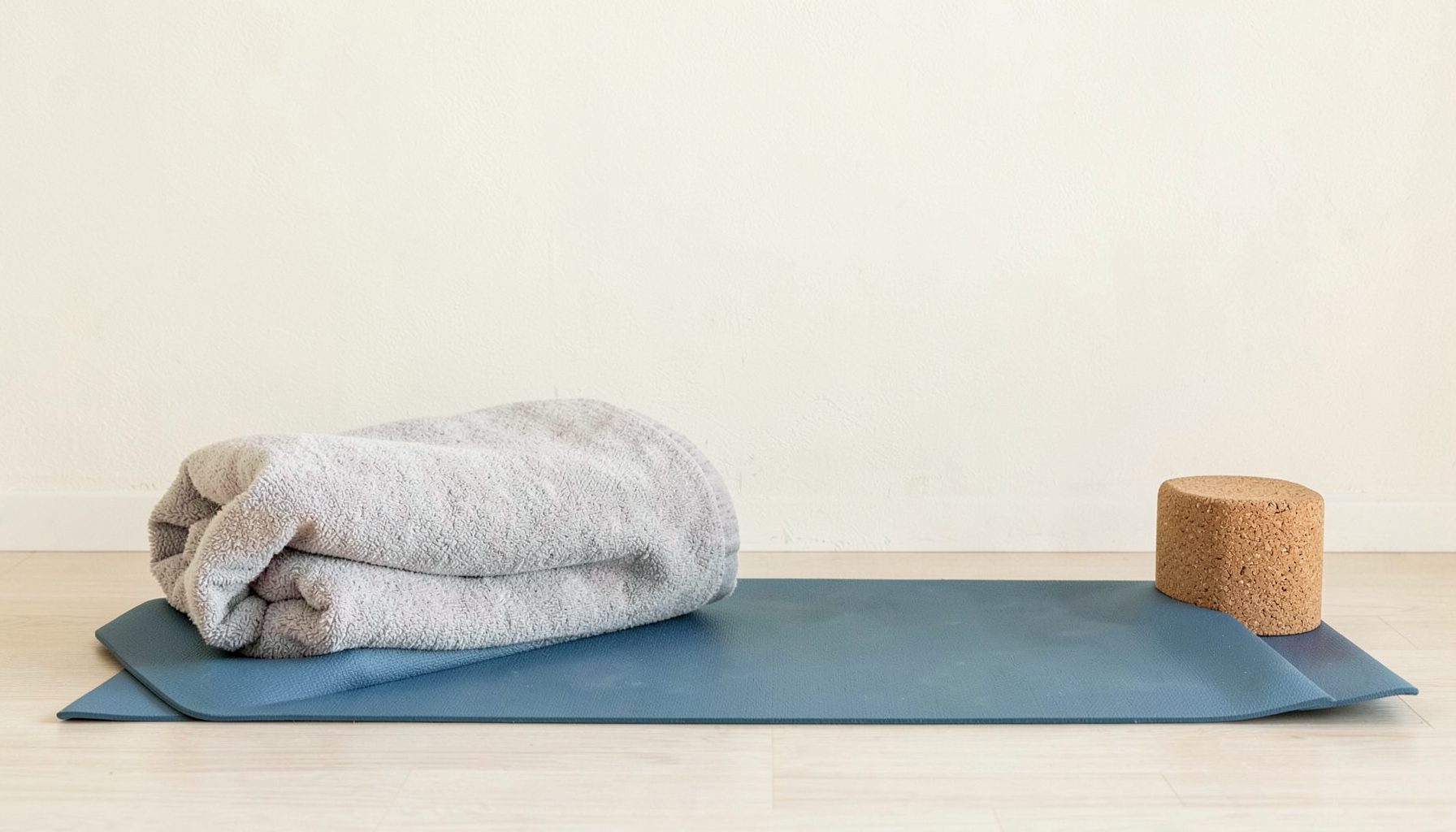
The practical details surrounding your practice have a strong effect on whether it becomes a habit. Leave your mat visible, store a blanket or cushion nearby, and choose a regular time that already connects with your day. You do not need a perfect home yoga space; a clear patch of floor beside the bed or sofa is enough.
Give yourself permission to practise in ordinary clothes and with limited equipment. A wall can support balance, a chair can modify standing poses, and folded towels can provide comfort under the knees or head. Accessibility increases the chance that you will begin, especially on days when preparation feels like a burden.
It can help to define a minimum version of the routine. On a full day, your practice might include three breaths, one gentle stretch, and a minute of rest. This shorter option keeps the relationship with practice alive without creating guilt. When more time or energy returns, you can naturally expand it to fifteen minutes.
Build A Rhythm That Feels Sustainable
Consistency does not require identical sessions. Consider planning a broad weekly rhythm: energising movement on selected mornings, mobility work after long periods of sitting, restorative yoga before bed, and a longer session when your schedule allows. This approach keeps your routine varied while preserving a familiar foundation.
Track how you feel before and after practice rather than measuring success by flexibility or difficulty. You might notice better concentration, easier breathing, less physical tension, or a greater ability to pause before reacting. These subtle changes are valuable signs that your practice is supporting daily life.
Treat missed days with kindness. Returning after a break is part of a sustainable practice, not evidence that you have failed. Begin with a few minutes, reconnect with your breath, and let momentum rebuild gradually.
Keep These Habits In Place
- Choose a consistent time cue, such as after waking, before lunch, or when you finish work.
- Prepare two or three adaptable sequences for energising, releasing tension, and resting.
- Keep props simple and use a wall, chair, cushion, or blanket whenever they make movement more comfortable.
- Finish with stillness so the practice includes reflection, breath awareness, or meditation.
- Measure progress by how regularly you return and how respectfully you respond to your body.
A fifteen-minute home practice can become a reliable anchor within a changing day. Begin with a breath, choose movements that match your current energy, and leave enough time to notice the effects. Roll out your mat today, set a gentle timer, and let a small, attentive practice be enough.