

A sequence to celebrate the changing seasons
The shift from one season to another can be felt in subtle ways: the quality of morning light, a cooler breeze against the skin, changes in appetite, or a growing desire to move differently. Yoga offers a thoughtful way to notice these transitions rather than rushing past them. A seasonal practice can become a quiet ritual for acknowledging what is changing within the body, the mind, and the surrounding world.
This gentle sequence is designed to support that awareness. It does not require advanced flexibility, a particular level of fitness, or a long period of free time. Instead, it combines mindful movement, steady breathing, grounding postures, and a few moments of stillness. You can practise it at the beginning of a new season, or whenever your energy feels ready for a reset.
Move slowly and let comfort guide you. The aim is not to create the most impressive shape or complete every posture exactly as described. The aim is to build a sustainable personal practice that helps you meet change with curiosity, self-compassion, and presence.
Begin with seasonal attention
Before moving into the physical sequence, take a few moments to arrive. Sit on a cushion, lie down, or stand with your feet comfortably apart. Let your hands rest wherever they feel natural and notice the contact between your body and the floor. Allow your eyes to close if that feels supportive, or soften your gaze toward one steady point.
Observe the season without trying to label the experience as good or bad. Perhaps you feel energised, sluggish, unsettled, hopeful, or tired. You may notice that your usual routines no longer fit as easily. There is no need to solve these observations. Simply recognise them as information and give yourself permission to begin from where you are.
Take five slow breaths, allowing the exhalation to lengthen naturally. You might silently repeat, “I can meet this moment gently.” On each inhale, sense space around the ribs and collarbones. On each exhale, release unnecessary effort in the jaw, shoulders, and hands. This breathwork establishes a calm rhythm for the movement that follows.
Warm the body with mindful movement
Start on hands and knees, with wrists beneath shoulders and knees beneath hips. If kneeling is uncomfortable, practise seated movements or place extra padding under the knees. Move through a slow cat-cow variation, inhaling as the chest opens and the tailbone lifts, then exhaling as the spine rounds. Let the movement follow the breath rather than forcing the breath to match a fixed pace.
After several rounds, bring your hips toward your heels for a brief pause, or rest in a supported child’s pose with a cushion beneath the torso. Then return to all fours and extend one leg back at a time, keeping the hips level. Add the opposite arm if it feels steady. This simple balance awakens the core and encourages concentration without demanding intensity.
Come to standing through a low squat or by walking the hands toward the feet. Rise slowly into mountain pose, with the feet grounded and the crown of the head lifting. Circle the shoulders, stretch the arms overhead, and fold forward with soft knees. Repeat this standing wave two or three times, making the transition between postures smooth and unhurried.
Move through the seasonal sequence
The central practice combines familiar yoga poses with choices for different energy levels. Hold each shape for three to five breaths, or stay for less time if the body asks for a change. A restorative option can be just as meaningful as a stronger variation; both create space for awareness.
| Movement | How to practise | Seasonal quality |
|---|---|---|
| Mountain pose | Stand tall with relaxed shoulders and even weight through both feet | Grounding and steady |
| Standing side stretch | Reach one arm overhead and lengthen gently to the opposite side | Spacious and receptive |
| Low lunge | Step one foot forward, lower the back knee, and support the hands as needed | Opening and adaptable |
| Warrior II | Turn the back foot down, bend the front knee, and extend the arms | Rooted and energising |
| Wide-legged forward fold | Take the feet wide, soften the knees, and let the head release | Quiet and reflective |
| Supported bridge | Lie on your back and lift the hips, using a block or cushion if helpful | Restorative and renewing |
| Knees-to-chest | Draw the knees in and breathe into the back body | Comforting and inward |
| Savasana | Rest with the legs supported and arms easy | Integrating and spacious |
From mountain pose, take a standing side stretch on each side, then step back into a low lunge. Keep the back knee down and place the hands on blocks, books, or the floor. Move through a gentle lunge twist if it feels comfortable, keeping the rotation spacious rather than forceful. Change sides slowly, noticing whether one side feels different from the other.
Continue into warrior II on each side, staying aware of the relationship between effort and ease. The front knee can remain less deeply bent, and the arms can rest by the sides if the shoulders become tired. After the second side, bring the feet wide for a supported forward fold. Bend the knees generously and let the upper body become heavy. Pause here long enough to feel the effect of slowing down.
Balance grounding and renewal
Seasonal transitions often invite a balance between holding steady and allowing change. After the standing work, come down to the floor for supported bridge pose. Lie on your back with the knees bent and feet planted. Press into the feet to lift the hips, then place a yoga block on a comfortable height beneath the sacrum. Let the pelvis settle onto the support rather than gripping through the glutes or lower back.
If bridge pose is unsuitable, rest with the legs over a chair or place a cushion beneath the knees. These alternatives offer similar opportunities to soften the front body and regulate the nervous system. Stay for five to eight breaths, then remove the support and lower down slowly, giving the spine time to respond.
Draw the knees toward the chest and make small circles with the legs. You might rock gently from side to side, massaging the lower back against the mat. This is a useful transition between active and restful movement. As the body settles, notice whether the breath feels more spacious, warmer, or quieter than it did at the beginning.
Let the season shape your practice
The same sequence can feel different in spring, summer, autumn, and winter. In spring, you may choose a brighter pace, adding gentle sun salutations or standing balance poses. In summer, practise earlier or later in the day, keep the flow spacious, and avoid treating heat or effort as a measure of success. A cooling breath and longer pauses may support you better than a vigorous routine.
Autumn can invite grounding postures, longer exhalations, and forward folds that encourage reflection. Winter may call for warmth, support, and rest: practise near a wall, use blankets, and spend more time in restorative shapes. These are invitations rather than rules. Your own energy, health, environment, and daily responsibilities should guide the choices.
A personal yoga practice does not need to look the same every week. The values behind Camille's approach place importance on mindfulness, self-compassion, breath, and accessible movement, making it easier to adapt a sequence without losing its purpose. You can shorten the practice, remain seated, or repeat one posture that feels particularly supportive.
Finish with a few minutes in savasana. Let the legs rest on a chair or bolster if that helps the lower back release. Notice the support beneath you and allow the breath to return to its natural rhythm. Before sitting up, acknowledge one quality you would like to carry into the changing season, such as patience, courage, spaciousness, or trust.
Make the practice your own
A sequence becomes more sustainable when it fits real life. You might practise for twenty minutes on a quiet morning, choose three postures during a work break, or use the breathing and closing rest as a standalone ritual. Consistency can mean returning regularly with kindness, rather than following a demanding schedule.
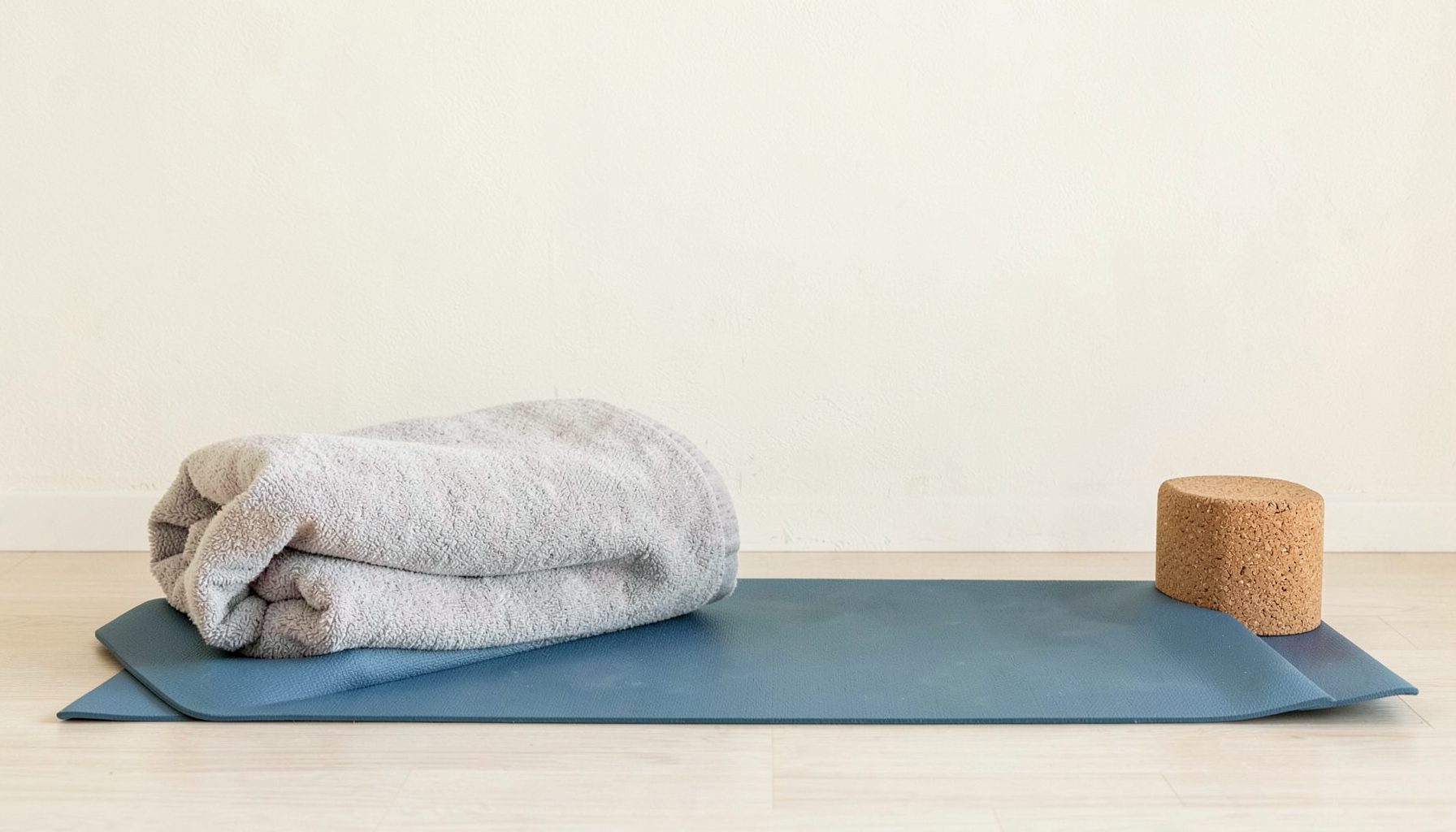
Props can make the practice more accessible. A folded blanket can support the knees, a wall can assist with balance, and a sturdy chair can replace the floor for many poses. If a posture creates sharp pain, numbness, dizziness, or strain, come out of it and choose a more comfortable alternative. Gentle yoga still deserves attentive boundaries.
Use these simple recommendations when adapting the sequence:
- Choose two or three movements that match your energy instead of completing every posture.
- Keep the breath smooth and reduce the range of motion whenever effort becomes gripping.
- Practise with seasonal support, such as a blanket in colder weather or a cooler, shaded space in summer.
- End with at least two minutes of quiet rest so the benefits of movement can settle.
- Record a brief note about how you felt before and after practising to notice changing needs.
Close with stillness and intention
After savasana, roll to one side and pause before sitting. Bring your hands together at the heart or place one hand on the chest and one on the abdomen. Feel the natural movement of the breath and remember that transitions do not have to be managed all at once. A new season can be welcomed through one attentive breath, one grounded movement, and one compassionate choice.
Return to this sequence whenever the calendar changes, your routine feels unsettled, or you need a gentle connection with yourself. Explore it alongside yoga classes, retreats, meditations, and printable resources to create a practice that supports your life as it is. Begin with the version that feels possible today, and let that be enough.