A Gentle Flow to Bridge Work and Home Life
The end of a working day rarely happens in a clean line. Meetings spill over, inboxes keep blinking, and the mind keeps rehearsing the next morning's priorities. By the time you step away from the laptop, your nervous system is often still running as if the day has not ended. A deliberate practice of moving, breathing, and pausing can offer a soft landing between the parts of your life that usually blur together.
For many people in Australia, the boundary between work and home has become more porous since the rise of hybrid and remote arrangements. Even those who commute into the Sydney or Melbourne CBD often find themselves carrying the city home on the train, sitting in stand-still traffic on the M1, or thinking about a late email while stirring the dinner. A short, gentle flow is one way to reclaim the seam between the two.
This sequence is not about a workout. It is about unwinding the shoulders, lengthening the spine, and softening the breath so that you arrive home feeling more like yourself. It draws on accessible shapes from a slower style of yoga, suitable for complete beginners and seasoned practitioners alike, and can be done in a small living room, on a back patio, or even in a quiet corner of the office before you log off.
The piece that follows offers a simple framework you can shape to your own day: a few minutes of preparation, a flowing sequence of about fifteen minutes, a short breath practice, and a brief rest. You can find more reflections on everyday yoga on the blog if you would like to keep exploring after you have read through.
Why a Gentle Transition Matters Now
There is a growing conversation in Australia about the Right to Disconnect, which came into effect for many employees in August 2024. While the legislation focuses on protecting people from after-hours contact, the spirit of it speaks to something many of us feel intuitively: the body needs a buffer between professional demands and personal life. A yoga flow can be that buffer, a tactile ritual that says to the nervous system, this part is finished, and a new part is beginning.
The work-from-home era has blurred the geography of the day. Someone in Brisbane who used to walk through the CBD now walks from the kitchen to the study. Someone who used to catch the train into the office now finishes a video call and is immediately in the same room where dinner will happen. Without a transition, the body stays in a state of low-grade alertness, which over weeks and months can show up as shallow sleep, tight neck muscles, or a vague sense of never quite resting.
A flow does not need to be long to be effective. Even five minutes of conscious movement, paired with slow breathing, can shift the autonomic nervous system from sympathetic to parasympathetic dominance. In plain language, this means moving out of fight-or-flight mode and into the rest-and-digest state where the body can actually repair itself. The benefits accumulate quietly, the way a regular walk does.
Setting a Threshold for Your Practice
The first step is not a pose but a choice. Before you begin, take a moment to close the laptop with intention, switch the phone to silent, and let anyone who needs to know that you are taking a brief period for yourself. If you work from home in any kind of dwelling, this might mean closing a door. If you are about to walk through your own front door after a long day in the office, it might mean standing on the porch for a few breaths before going inside.
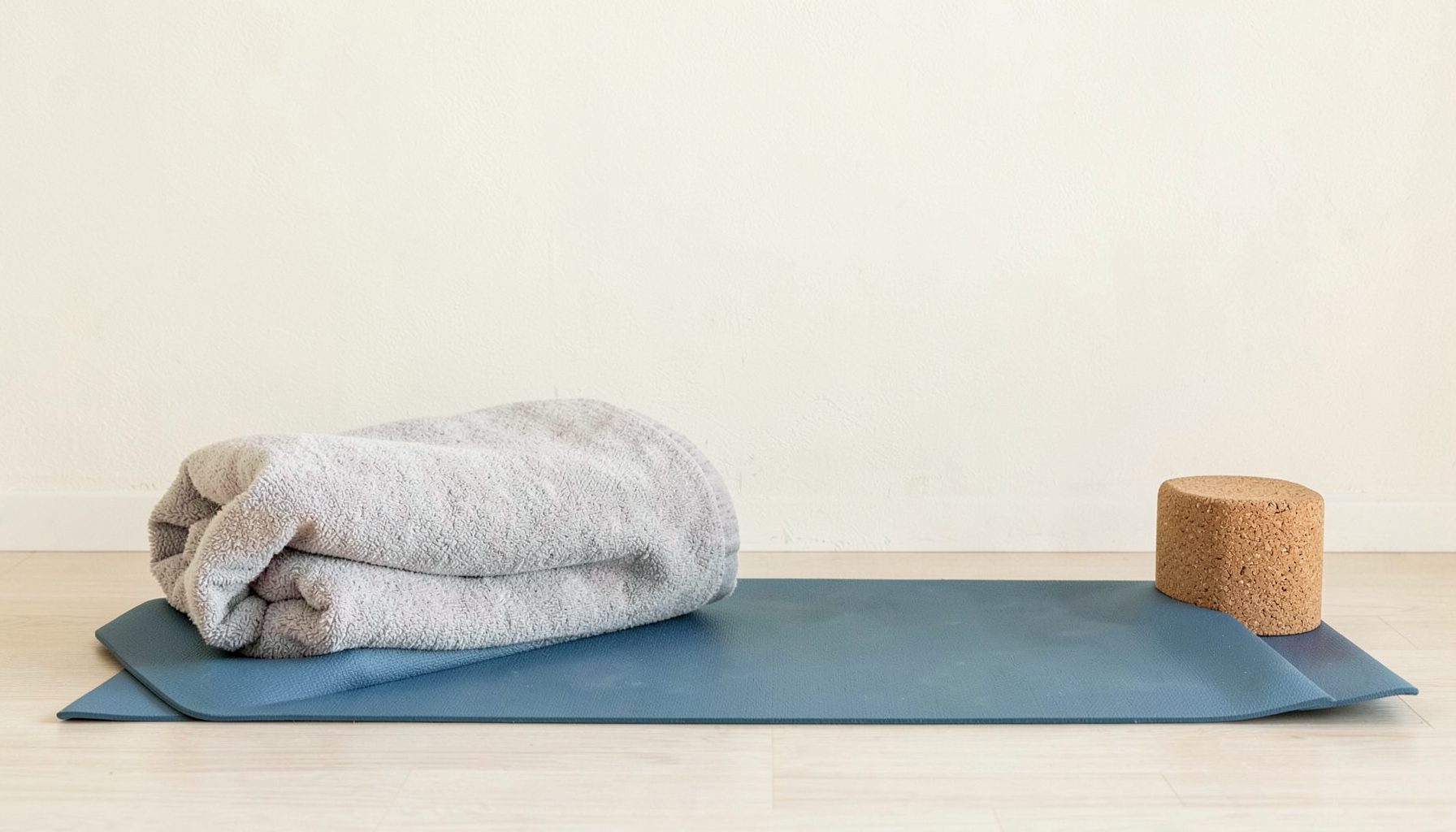
Choose a space where you can lie down with your arms stretched out to the sides. A rug, a yoga mat, or even a folded blanket will do. If you have just come in from a warm afternoon and the house is holding the heat, open a window or step onto a shaded spot outdoors. The Australian light at the end of the day can be surprisingly supportive for a slow practice, especially in the warmer months when golden hour arrives later than you might expect.
Gather a few props if you like: a cushion or folded towel for under the head, a belt or scarf for a shoulder stretch, and a chair nearby in case you want to use it for balance. The aim is to remove small frictions so that once you begin, you are not hopping up to fetch things. Comfortable clothing, bare feet, and a glass of water within reach will all help you settle.
A Soft Sequence From Head to Heart
Begin standing at the front of your mat or in the middle of your chosen space. Take a few slow breaths and let the eyes soften. On an inhale, reach the arms overhead and look up gently, as if greeting the ceiling. On an exhale, fold forward and let the hands rest on the shins, the knees, or the floor, whichever feels honest today. Repeat this reaching and folding three or four times, matching the rhythm of the breath.
From the fold, come halfway up with a long spine, then step the right foot back into a low lunge. Let the back knee come to the ground if that feels right, and soften the hips. Stay here for three breaths, then step the left foot back to meet the right and press back into a downward-facing dog or, if the shoulders are tired, simply step the feet forward again and rise. Repeat on the second side.
Move next to a wide-legged standing position and hinge from the hips, letting the hands slide down the legs or rest on a block. Let the head hang heavy and the breath be long. When you feel ready, walk the hands back up the legs and stand slowly, taking a moment to notice how the body feels. Round out the sequence with a simple seated forward fold, or simply sit cross-legged with a straight spine and a soft face.
Throughout the sequence, let the breath lead rather than the poses. If you notice yourself holding the breath, soften the exhale. If a shape feels like effort rather than ease, choose a smaller version of it. The point is not to perform the sequence well but to use it as a way of telling the body, you are allowed to settle now.
Breath as the Bridge Between Doing and Being
Once the moving part of the practice is finished, sit or lie down and bring the attention to the breath. Allow the inhale to be easy and the exhale to be a little longer, perhaps counting to four on the breath in and to six on the breath out. This simple adjustment signals safety to the nervous system and is one of the fastest ways to come down from a busy day.
A practice that many people find grounding is nadi shodhana, alternate-nostril breathing. Using the thumb and ring finger, close the right nostril and breathe in through the left, then close the left and breathe out through the right. Continue for about two minutes, keeping the breath smooth and unhurried. If the nose is congested from a long day in air-conditioned offices, simply breathe through the mouth in a slow, relaxed rhythm instead.
You can stay with this breath for as long as feels nourishing, returning to the natural breath whenever the mind wanders. It is common for thoughts about work to drift in, especially for those whose role involves late emails with teams in Asia or Europe. Rather than chase them away, let them pass like clouds and gently return to the sensation of the breath at the nostrils or the rise and fall of the belly.
Closing the Practice with Stillness
The final part of the transition is simply to be still. Lie down on your back if you can, with the knees bent and the feet flat on the floor, or extend the legs long with the arms resting by your sides. Let the body be heavy and the jaw be soft. Stay here for five to ten minutes, allowing the practice to integrate.
If the mind is busy, you might place a hand on the heart and the other on the belly and breathe into the warmth of the hands. Some people like to set a short timer so that they do not have to keep checking the clock. Others prefer to listen to a guided meditation or a piece of music they have saved for this moment. Either way, the invitation is the same: to allow the day to be over, fully, before the evening begins.
When you are ready, roll onto one side and rest there for a few breaths before slowly coming up to seated. Notice how the body feels compared with how it felt when you began. Take a sip of water, and when you stand, move a little more slowly than usual. The transition is not yet finished just because the practice is. It continues into the first moments of cooking dinner, helping a child with homework, or simply sitting on the back step watching the sky change colour.
To make this practice a steady part of your week, try doing it at the same time each day for a week, even if only for five minutes. Notice what shifts in your sleep, your mood, and your sense of being present when you get home.